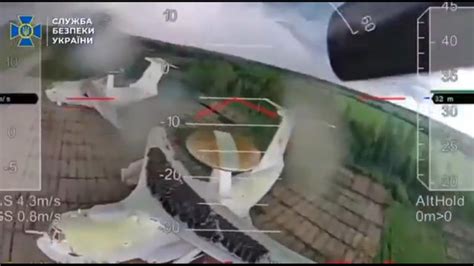
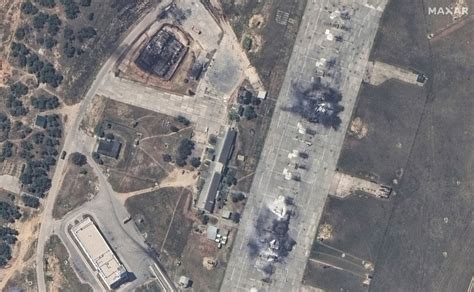
Ukraine’s stunning drone blitz across Russian territory has delivered more than just a battlefield blow — it’s exposed a seismic weakness in how global superpowers protect their air forces. With over 100 AI-guided drones launched deep into Russian territory, Ukraine struck at the heart of Russia’s airpower infrastructure, destroying or damaging over 40 aircraft and five military bases. While the tactical success of Ukraine’s operation is a military marvel, the real shockwave was felt thousands of miles away — in the Pentagon.
The footage of Russian bombers ablaze, immolated while resting defenseless on open tarmacs, has ricocheted through U.S. military channels and political circles alike. For Washington, this isn’t just Ukraine’s triumph. It’s a harsh mirror, showing just how exposed American military aircraft are to the same threat.
A Technological Tipping Point in Modern Warfare
Senator John Boozman didn’t mince words. Reflecting on Ukraine’s precision drone assault, he noted how “the Ukrainians defeated the Russian navy without owning any ships, and now they’ve decimated their air force with virtually no air force of their own.” His statement doesn’t just highlight the asymmetry of modern warfare — it underscores the efficacy of low-cost, high-impact drone warfare in the 21st century.
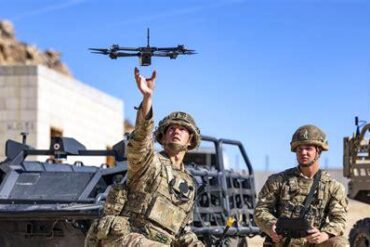
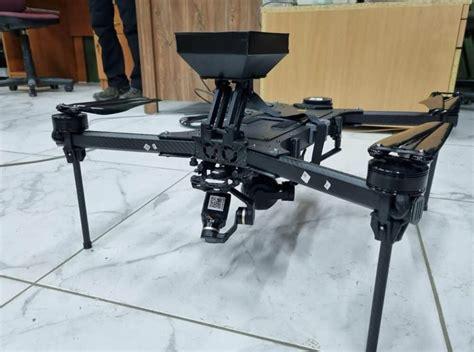
The drones used in the strikes were AI-enhanced, capable of autonomous navigation and coordination in hostile environments. This technological leap enabled Ukraine to breach Russian defenses with precision and minimal human oversight. The strategic implications are profound. No longer do adversaries need billion-dollar fleets to dominate the air. A swarm of intelligent, inexpensive drones can achieve similar — or even more decisive — results.
U.S. Airbases: Vulnerable by Design
The American military’s reliance on open-air aircraft storage is now facing unprecedented scrutiny. Across U.S. and allied bases — particularly in the Pacific — warplanes sit vulnerable, exposed on concrete aprons with minimal protective infrastructure. These practices, rooted in Cold War-era logistics and cost considerations, are being challenged in real-time by the brutal efficiency of drone strikes.
General David Allvin, the Air Force Chief of Staff, acknowledged the vulnerability in a public address, stating, “Seemingly impenetrable locations, maybe, are not.” The financial toll of Ukraine’s drone success — estimated at $7 billion in Russian military losses — reinforces the strategic urgency. Allvin called it a “wake-up moment”, a call to reimagine American airbase design and defense postures.
The Pacific Theater: A Pressure Cooker of Threats
Concerns are especially acute in the Indo-Pacific, where U.S. military bases lie within striking range of China’s advanced missile and drone capabilities. A revealing report by the Hudson Institute painted a bleak contrast: while China has constructed over 400 hardened aircraft shelters, the U.S. has added only 22 in the entire region. This glaring disparity leaves American aircraft not just exposed but deliberately vulnerable.
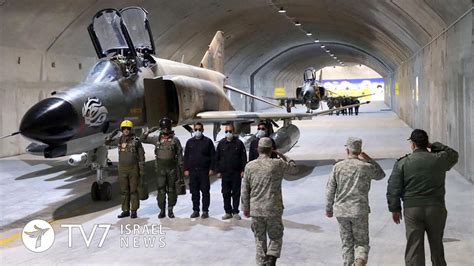
Timothy Walton, co-author of the Hudson report, warned that “large numbers of American bombers sit open on the tarmac, just like the ones we saw in those videos.” His call for robust defensive upgrades is echoed across military and legislative bodies, where many now see drone resilience not as a luxury, but a necessity.
Bipartisan Alarm in Washington
The response to Ukraine’s drone offensive has united both sides of the aisle in Congress. Senator Chris Coons (D-Del.), a senior member of the Senate Defense Appropriations subcommittee, confirmed that drone defense is now front-and-center in budgetary discussions. “I have been raising this and pressing this in every meeting with every senior military leader, how to speed up procurement, speed up deployment,” he said. The attacks, he added, validate the growing urgency.
Meanwhile, Senate Armed Services Chair Roger Wicker (R-Miss.) pointed out that many existing aircraft shelters were designed for weather protection, not to withstand explosives or hostile aerial incursions. “It should be a wake-up call to the public,” Wicker emphasized. “I’m not sure that it is much of a surprise to our military strategists.”
Trump’s Strategic Response: The Dome Defense Initiative
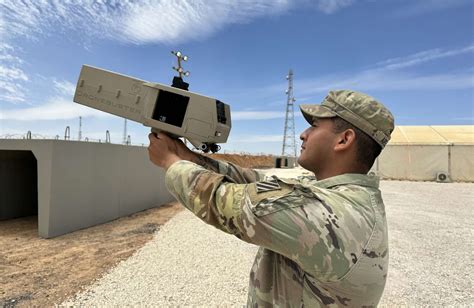
Former President Donald Trump, through a statement via White House spokesperson Karoline Leavitt, confirmed awareness of the drone threat and outlined initiatives aimed at countering it. Chief among these is a proposed “Golden Dome” missile shield — a sweeping aerial defense infrastructure designed to detect and neutralize incoming drones and missiles.
Trump’s push for what he describes as “one big beautiful bill”, a tax-and-spending package infusing $150 billion into the Pentagon, is in part a response to this new era of aerial warfare. Embedded within that package are significant allocations toward counter-drone technologies, rapid deployment systems, and hardened base infrastructure.
Tactical vs. Strategic Defense: Where the U.S. Falls Short
Despite decades of planning and theoretical preparation, the U.S. military appears underprepared for the real-world threat of AI-driven drone warfare. The Air Force has acknowledged the threat and pointed to ongoing investments in layered air and missile defense, but critics argue these systems remain too slow-moving to keep pace with evolving threats.
U.S. defenses largely rely on traditional radar systems and reactive strategies ill-suited for low-signature, high-speed autonomous drones. These systems, often flying low and evading detection, can bypass even sophisticated defense arrays. Unless new detection technologies — possibly powered by AI and machine learning — are integrated, adversaries will continue to enjoy an asymmetric advantage.
Virginia’s Military Nexus and the Rising Stakes
The state of Virginia, home to a sprawling network of military installations and defense contractors, has taken particular interest in the Ukraine drone episode. Senator Tim Kaine (D-Va.) referred to the strikes as a “case study in battlefield innovation,” urging an immediate reevaluation of domestic military infrastructure. His comments signal a broader concern about how even U.S.-based facilities could be compromised in a future conflict.
Fellow Virginian Senator Mark Warner (D-Va.), Chair of the Senate Intelligence Committee, disclosed that following the attack, he received satellite imagery of U.S. airbases showing aircraft exposed — eerily similar to their Russian counterparts. “The Ukrainians are redefining warfare,” Warner said. “We have to learn from this.”
The Future of Base Defense: Innovation or Complacency?
Ukraine’s drone strike has triggered more than policy discussions — it’s catalyzed a broader rethink of what military defense should look like in the AI age. Experts and lawmakers are now discussing:
- Expanded use of AI in base surveillance and rapid threat assessment
- Deployment of autonomous counter-drone systems with multi-layered detection and kill-chain capabilities
- Accelerated construction of hardened aircraft shelters across all vulnerable U.S. installations
- Integration of camouflage and decoy technologies to obscure and mislead targeting systems
Failure to respond swiftly and effectively could leave the U.S. military increasingly susceptible to the very tactics it once helped pioneer. The ability to project power across oceans means little if that power can be neutralized before it even leaves the runway.
Conclusion: Learning From Kyiv’s Drone Doctrine
Ukraine has revealed more than the weakness of Russian air defenses — it has inadvertently exposed the American military’s own blind spots. Its success with low-cost, AI-guided drones has reshaped how militaries around the world understand power projection, deterrence, and resilience. For the United States, the implications are existential.
If the world’s most technologically advanced military cannot protect its aircraft at home and abroad, then every forward operating strategy, every deterrence doctrine, every trillion-dollar weapons system sits under a cloud of doubt.
Washington must now make a choice: innovate urgently or face the consequences of tactical inertia in a rapidly changing battlefield. The drone age is no longer emerging — it has arrived, and it demands a new defense paradigm built not on legacy systems, but on the reality of 21st-century warfare.