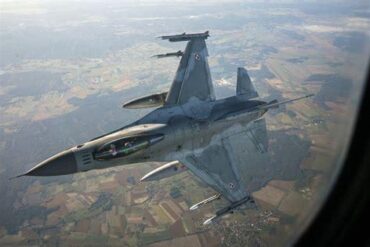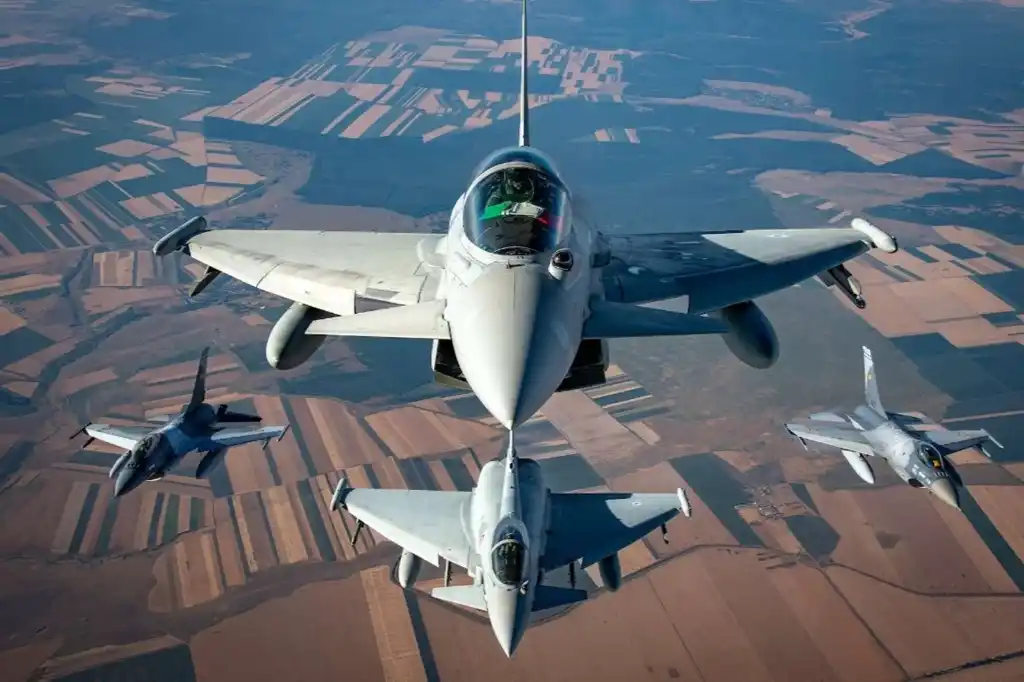
Romania’s swift decision to deploy F-16 Fighting Falcons and German Eurofighter Typhoons after two drones pierced its national airspace on 25 November 2025 marks one of the most consequential air-defense moments on NATO’s eastern flank this year. The breach occurred near the Ukrainian border—an increasingly volatile zone shaped by frequent spillover from Russia’s ongoing drone and missile strikes on Ukraine. What unfolded above the Danube delta was not a routine air-policing event but a reflection of how deeply integrated and alert NATO’s defenses have become in the face of rising drone activity.
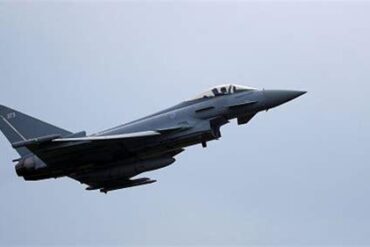
The rapid activation of fighters underscored Bucharest’s shift from reactive posture to permanent vigilance. Romania, once reliant on ageing MiG-21 LanceR jets, now fields a modernized F-16 fleet and has validated its 48th Fighter Squadron for NATO air-policing duties alongside the established 53rd Squadron. This latest scramble also showcased Germany’s enhanced commitment: five Eurofighter Typhoons and 170 personnel currently operate from Mihail Kogălniceanu Air Base in an eight-month rotation. These deployments ensure a continuous allied presence over Romanian skies, linking national sensors and radars with NATO’s regional command-and-control backbone.
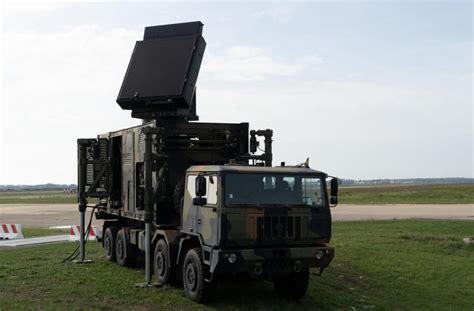
This layered system of fighters, radars, and ground-based air-defense units—such as the French-led Mission Aigle SAMP/T MAMBA detachment—forms a network increasingly tested by drone incursions. Since mid-2023, the Black Sea region and the lower Danube corridor have seen a rise in uncrewed aerial systems crossing into NATO territory, often linked to Russian attack waves targeting Ukrainian infrastructure. Romania, Estonia, and Poland have all reported such breaches. In Romania’s case, the 25 November event echoes a September 2025 episode when F-16 pilots nearly engaged a suspected Russian drone that hovered inside national airspace for nearly an hour. Fire was withheld to avoid risk to civilians in nearby towns—an approach that reveals Bucharest’s cautious balance between deterrence and escalation management.
Neighbouring Poland has taken a decidedly firmer stance, authorizing shootdowns of Russian drones crossing its border—an indicator of how geography and national risk tolerance shape NATO responses. Yet despite these differences, Germany, Italy, and Spain have continuously rotated Eurofighter detachments through Romania, turning what was once symbolic air-policing into a routine operational shield against low-altitude threats.
As drone incursions multiply, European officials increasingly interpret them as elements of hybrid warfare—a means of probing NATO readiness, sowing uncertainty, and testing political cohesion. Romania, which shares a 650-kilometre border with Ukraine and hosts a multinational NATO battlegroup, faces persistent pressure. A future drone incident causing casualties or damaging critical infrastructure along the Danube corridor would shift the calculus dramatically, potentially forcing the Alliance to revisit engagement thresholds.
At NATO headquarters, each violation strengthens the case for expanding low-altitude radar coverage, tightening protocols for drone interception, and linking national alert systems like RO-Alert more deeply with NATO’s air-defense network. There is rising concern that scrambling high-end fighters against inexpensive drones is unsustainable, renewing interest in cost-effective counter-UAS solutions—from automated interceptors to electronic-warfare suites—to complement traditional fighter responses.
The breach on 25 November represents more than a startling moment on a radar screen. It highlights the transformation of Romanian airspace into an active operational theatre where NATO forces operate in tight coordination. Every scramble adds urgency to ongoing debates in Brussels and Bucharest about deterrence strategy, escalation risks, and the resilience of European air defenses. As long as conflict rages across the Ukrainian border, drone incursions—whether intentional probes or collateral spillover—will continue to stress NATO’s eastern shield, making the cohesion and adaptability of its collective defense architecture the true measure of security in the region.