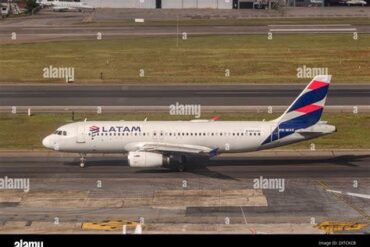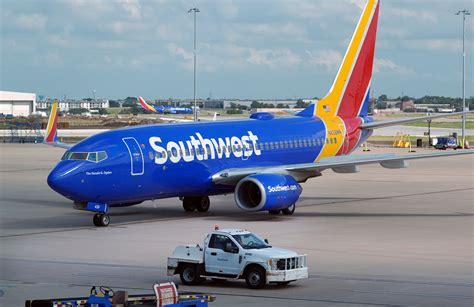
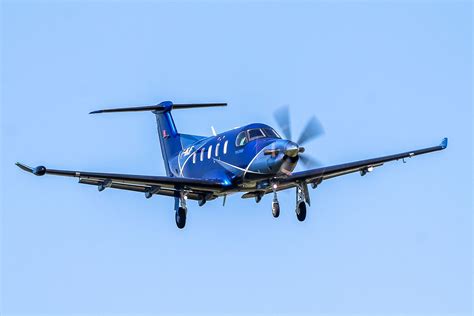
Southwest Airlines Flight 4996 was accelerating for departure from San Antonio International Airport when a Pilatus PC-12 turboprop mistakenly entered the runway, forcing the Boeing 737-800 crew to abort takeoff in a high-stakes split-second decision. The near-collision unfolded after the Southwest aircraft had already begun its takeoff roll, a phase of flight where reaction time is compressed and margins for error shrink rapidly.
The turboprop’s wrong turn placed it directly in the path of the accelerating jet, creating a dangerous runway incursion scenario that aviation safety experts rank among the highest-risk categories in commercial flight operations. Although no injuries or aircraft damage were reported, the incident delayed the flight by approximately an hour and pushed arrival two hours behind schedule, according to flight tracking data.
San Antonio’s aviation community quickly acknowledged the seriousness of the event. Airport Director Jesus Saenz emphasized that while the 2,000-foot separation observed was not standard, safety procedures functioned as intended when the Southwest crew rejected the takeoff to prevent a catastrophe.
The near-miss adds to a growing list of runway safety concerns in recent years, underscoring how human factors, airfield complexity, and procedural gaps can converge into moments of extreme risk.
A High-Speed Decision at the Edge of Safety
The aborted takeoff occurred during one of the most critical phases of flight. A Boeing 737-800 typically accelerates to nearly 185 mph (297 km/h) before lifting off, leaving minimal time for pilots to detect anomalies and act. When the crew spotted the turboprop ahead, standard procedure required an immediate Rejected Takeoff (RTO), a maneuver that demands precise braking and thrust reverser deployment to stop the aircraft safely.
In this case, the two aircraft came within 2,000 feet of each other, far below the standard 6,000-foot runway separation requirement for aircraft of this category. At such speeds, even a few seconds of hesitation could have resulted in a catastrophic collision, with the heavier jetliner potentially crushing the smaller aircraft.
This moment illustrates why aviation training places enormous emphasis on situational awareness and decisiveness. Pilots rehearse RTO scenarios repeatedly in simulators, but real-world incursions add layers of unpredictability—unexpected traffic, communication delays, and human error.
Runway Incursions: A Persistent Threat in Modern Aviation
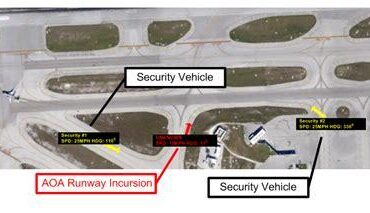
Runway incursions occur when an aircraft, vehicle, or person enters a runway without authorization or situational awareness. Despite advances in technology and procedure, they remain a leading risk factor in aviation safety. The Federal Aviation Administration (FAA) classifies them among the top five contributors to fatal aviation accidents, especially when combined with high-speed phases like takeoff or landing.
The San Antonio incident echoes a broader pattern. In October 2025, another Southwest 737 reportedly had to maneuver during approach to avoid a potential collision, highlighting how even major airlines with rigorous safety cultures are not immune to runway hazards.
Airports today are complex ecosystems. Multiple runways, taxiways, and aircraft categories coexist, and a single miscommunication or navigation error can place aircraft on a collision course. Advanced surface radar systems and cockpit alerts help, but pilot judgment and controller clarity remain the final safety barrier.
Investigators Begin a Multi-Layered Safety Review
Following the incident, airport authorities began coordinating with the FAA to conduct a comprehensive investigation. High-severity runway incursions trigger a structured review process involving the National Transportation Safety Board (NTSB), air traffic controllers, airport management, and flight crews from both aircraft.
Investigators will analyze Cockpit Voice Recorders (CVR) and Flight Data Recorders (FDR) to reconstruct the timeline of events, including pilot inputs, aircraft speed, and braking performance. Air traffic control recordings and radar logs will be reviewed to determine whether the incursion resulted from pilot deviation, controller error, signage confusion, or procedural breakdown.
The goal is not merely assigning responsibility but identifying systemic weaknesses. Findings often lead to airfield design changes, updated taxiway markings, revised controller procedures, or enhanced pilot training modules. Aviation safety advances incrementally, often built upon lessons from near-disasters like this one.
The Physics of a Near Catastrophe
The difference in mass between the two aircraft involved underscores how severe the outcome could have been. A Boeing 737 can weigh over 150,000 pounds during takeoff, while a Pilatus PC-12 weighs roughly 10,000 pounds. At takeoff speeds, kinetic energy increases exponentially, meaning even a low-speed impact could unleash devastating forces.
A collision would likely have ruptured fuel tanks, ignited a post-impact fireball, and potentially caused the jet’s landing gear to collapse. The 737 might have slid along the runway on its engines or fuselage, scattering debris and risking engine ingestion of turboprop fragments. Such scenarios often cascade into secondary fires and structural failures.
Historical precedent reinforces the stakes. In 1991, a 737 collided with a smaller turboprop at Los Angeles International Airport, resulting in fatalities aboard the smaller aircraft and significant casualties on the jetliner due to fire and smoke inhalation. Investigations later revealed that evacuation bottlenecks and toxic smoke accounted for many of the deaths, not the initial impact itself.
These case studies shape modern evacuation standards, cabin material requirements, and crew training protocols, yet they also remind the industry that prevention remains the most effective safety measure.
Operational Delays and Passenger Impact
While no one was injured in the San Antonio incident, passengers experienced substantial disruption. Flight 4996 departed roughly an hour after its scheduled pushback and arrived two hours behind its original arrival time. For travelers, this translated into missed connections, schedule changes, and ripple effects across the network.
From an airline operations perspective, aborted takeoffs trigger inspections to ensure brakes, tires, and structural components remain within safety limits. Maintenance teams must verify that the aircraft can safely return to service, further contributing to delays.
Airlines also face reputational implications. Near-misses, even when handled correctly, attract scrutiny from regulators, passengers, and industry analysts. Transparency and rapid investigation are essential to maintaining public trust in commercial aviation safety systems.
Aviation’s Safety Culture in Action
Despite the alarming nature of the incident, it also demonstrates the strength of modern aviation safety culture. The Southwest crew followed procedures precisely, and the layered defenses—pilot training, standardized protocols, and air traffic oversight—prevented a potential disaster.
Aviation operates on the principle that accidents are rarely caused by a single failure. Instead, they emerge from multiple small errors aligning in a dangerous sequence. In this case, the chain was broken when the flight crew executed the rejected takeoff, illustrating how redundancy and training work together to preserve safety.
San Antonio officials emphasized accountability and continuous improvement, signaling that findings from the investigation will translate into concrete actions. This iterative process—incident, investigation, improvement—is the backbone of aviation’s remarkable safety record.
Why This Near-Miss Matters for the Industry
Runway safety has become a central focus for regulators worldwide as air traffic volumes rebound and airports grow more congested. The San Antonio event serves as a vivid reminder that ground operations are as critical as in-flight safety, and that the most dangerous moments often occur on the runway, not at cruising altitude.
Technologies such as runway incursion alert systems, enhanced surface movement guidance, and cockpit situational displays are expanding, but human factors remain central. Pilots and controllers must navigate complex environments under time pressure, making training, communication clarity, and ergonomic airfield design essential.
This incident will likely influence broader discussions on airfield layout, signage standardization, and pilot taxi training, particularly for mixed operations involving large jets and smaller turboprops.
The near-collision in San Antonio ended without casualties, but it offered a stark glimpse into how close routine operations can come to disaster—and how critical it is that every layer of the aviation safety system continues to evolve.