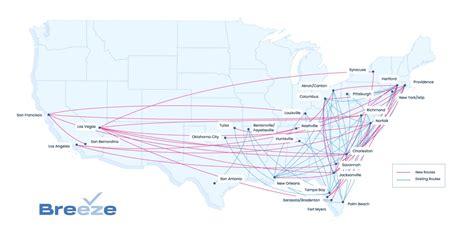
Breeze Airways continues to execute one of the most deliberate and quietly disruptive growth strategies in the U.S. airline industry. Since launching operations in 2021, the carrier has avoided congested legacy hubs and instead focused on underserved secondary cities, building a point-to-point network that minimizes direct competition while unlocking latent demand. As Breeze pushes deeper into 2026, industry signals strongly suggest that Atlantic City, New Jersey, and San Antonio, Texas could soon appear on its expanding route map.
The timing is no accident. Breeze has already crossed a major threshold by launching international flights earlier this year and announcing additional overseas routes for later in 2025. At the same time, its domestic network has continued to grow steadily, with new California routes and the unexpected addition of Twin Falls, Idaho—an airport that has historically struggled to sustain long-term national service. This combination of calculated risk and market discipline has defined Breeze’s growth story, and it frames why Atlantic City and San Antonio make strategic sense.
Breeze Airways’ Expansion Blueprint Remains Consistent
Rather than chasing volume, Breeze has prioritized connectivity gaps—markets with strong underlying demand but limited nonstop options. This strategy reduces fare wars, supports healthier yields, and appeals directly to leisure travelers and small-business passengers who value nonstop convenience over hub connections.
By 2026, Breeze’s network philosophy appears unchanged. Internal evaluations and airport-level signals indicate the airline is exploring incremental additions rather than sweeping expansions. The focus remains on cities that can support multiple weekly frequencies without the overhead costs associated with larger hubs.
Atlantic City International Airport Gains Momentum
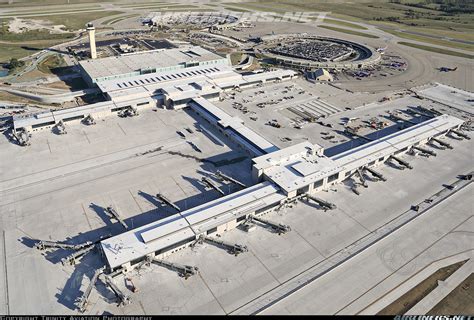
Atlantic City International Airport has emerged as one of the most intriguing candidates. Airport officials have publicly confirmed that a new commercial airline will be announced shortly, describing the forthcoming service as a move that will strengthen regional connectivity and deliver long-term economic impact. While the airline has not been named, industry reporting strongly points to Breeze Airways.
Atlantic City aligns naturally with Breeze’s leisure-forward model. The city’s economy revolves around gaming, entertainment, and seasonal tourism, producing demand patterns well suited to point-to-point service. Currently, Spirit Airlines maintains a strong presence with Florida-focused routes, while Allegiant operates several seasonal services. Breeze’s potential entry would diversify the airport’s airline mix while targeting a different customer profile.
Reports suggest Breeze is evaluating a nonstop route from Raleigh–Durham International Airport, a market where the airline has already invested heavily. Raleigh–Durham functions as a strategic anchor within Breeze’s network, feeding both leisure and visiting-friends-and-relatives traffic. A nonstop connection to Atlantic City would open a new corridor with minimal direct competition and strong seasonal upside.
San Antonio Emerges as a Strategic Growth Market

San Antonio represents a different, but equally compelling, opportunity. According to aviation industry reports, Breeze is expected to add two new nonstop routes linking San Antonio with Raleigh–Durham and Memphis. Both routes address long-standing connectivity gaps.
Nonstop service between San Antonio and North Carolina has been a recurring objective for regional economic leaders, particularly due to the strong life sciences, defense, and research ties between Texas and the Research Triangle. At present, American Airlines serves the market indirectly via Charlotte, while past attempts by Frontier Airlines to sustain nonstop service proved short-lived.
Breeze’s cost structure and flexible fleet deployment place it in a stronger position to succeed where others struggled. By tailoring frequencies to demand and avoiding hub dependency, the airline can test and refine these routes with lower financial exposure.
The proposed Memphis–San Antonio route also fills a notable void. Today, nonstop air service between Tennessee and San Antonio is largely limited to Nashville, where Southwest Airlines operates multiple daily flights. Delta Air Lines previously served Memphis–San Antonio but exited the market after dismantling its Memphis hub following the Northwest merger. Breeze’s entry would restore direct connectivity between two culturally and economically significant cities.
International Growth Adds Another Layer
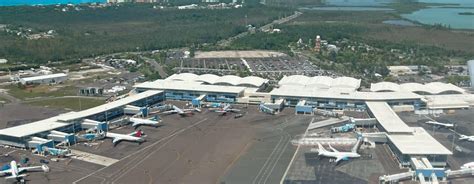
Breeze’s domestic ambitions are unfolding alongside a carefully staged international expansion. After receiving approval from the U.S. Department of Transportation to operate under Open Skies agreements, the airline launched flights to Cancun, Montego Bay, and Punta Cana. These routes validated Breeze’s ability to compete in short-haul international leisure markets.
Attention is now shifting to what could become Breeze’s fourth international destination: Nassau in the Bahamas. Tampa International Airport has signaled an imminent announcement of a new international route, fueling speculation that Breeze may launch Tampa–Nassau service. The market fundamentals are compelling. According to Cirium data, seat capacity to Nassau has increased by more than 77% compared with 2021, reflecting surging leisure demand.
Competition on Florida–Bahamas routes is already active, with American Airlines, JetBlue, Southwest, Bahamasair, and others in the market. However, Breeze’s appeal lies in its ability to stimulate new demand through nonstop access from secondary airports and competitively priced fares.
What Atlantic City and San Antonio Signal for 2026
If confirmed, the addition of Atlantic City and San Antonio would reinforce Breeze Airways’ reputation as one of the most methodical network builders in U.S. aviation. Rather than chasing scale for its own sake, the airline continues to prioritize profitability, market fit, and long-term sustainability.
These potential additions suggest that Breeze’s 2026 strategy will emphasize precision growth, expanding its footprint city by city while deepening connectivity between overlooked markets. For travelers, that means more nonstop options. For airports, it represents a rare opportunity to attract service that is both durable and strategically aligned. For the industry, it underscores that smart expansion—not aggressive saturation—remains the most resilient path forward.