As drone warfare reshapes modern combat, two aging warhorses—the U.S. A-10 Warthog and the French Mirage 2000D—are finding a new lease on life. Once icons of Cold War-era strike missions, these aircraft are now being reimagined as frontline drone hunters, defending skies from the ever-expanding threat of low-cost, expendable unmanned aerial systems (UAS). Their transformation marks a pragmatic shift: adapting proven airframes to meet a technological revolution that traditional fighter design never anticipated.
The New Reality of Drone Warfare
The Russia–Ukraine conflict and Middle Eastern flashpoints have made one thing clear—drones now dominate the battlespace. From Iranian Shahed-136 loitering munitions to improvised quadcopters dropping grenades, unmanned threats are multiplying faster than nations can field new countermeasures. Conventional surface-to-air missiles (SAMs), such as the Patriot or SAMP/T, remain too costly to intercept $30,000 drones. Militaries worldwide are now searching for efficient, airborne solutions.
This evolving environment has reopened the book on older aircraft that were once facing retirement. Instead of being relegated to museums, these jets are being retooled for counter-drone missions, leveraging their endurance, ruggedness, and low operating costs to protect critical infrastructure and forces.
A-10 Warthog: The Tankbuster Turned Drone Slayer
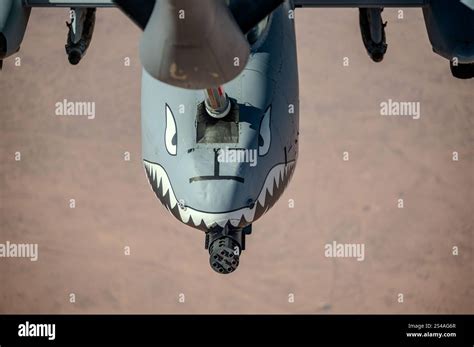
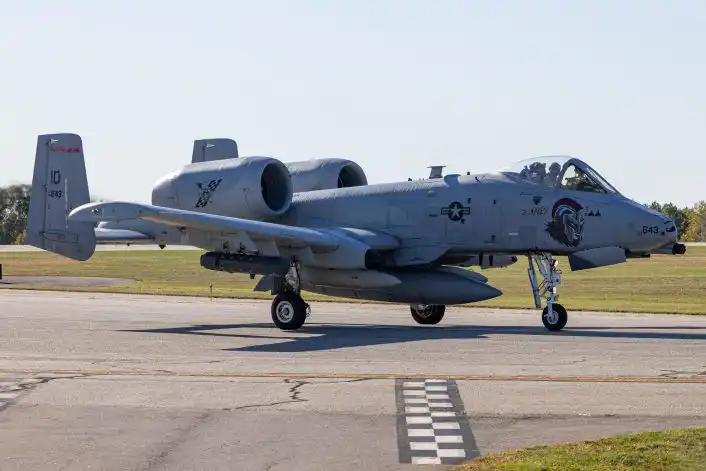
The A-10 Thunderbolt II, affectionately nicknamed the Warthog, was built to destroy Soviet armor columns with its 30mm GAU-8/A Avenger cannon. Decades later, its low-speed agility, survivability, and extended loiter time have made it unexpectedly ideal for hunting slow, small drones.
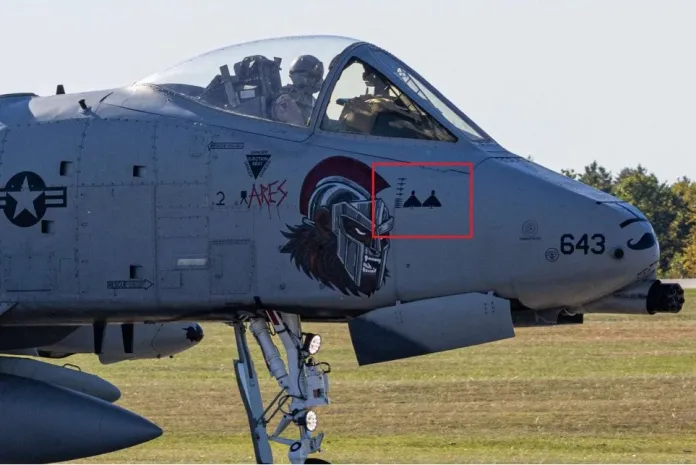
Recent photos taken at Portsmouth Air Base revealed an A-10 adorned with two drone kill markings, hinting at its operational success in the Middle East. Deployed under CENTCOM’s Operation Inherent Resolve, the aircraft likely engaged Iranian- or Houthi-launched drones over the Red Sea—a theater increasingly saturated with Shahed-type UAVs.
These combat markings confirm what defense analysts have speculated: the A-10 is now a combat-proven drone interceptor.
Precision Rockets Over Missiles: The APKWS Advantage
To adapt for its new mission, the A-10C employs the Advanced Precision Kill Weapon System II (APKWS II)—a low-cost, laser-guided upgrade to the standard 70mm Hydra rocket. Integrated with FALCO (Fixed-Wing Air-Launched Counter-UAS Ordnance) software, these rockets can track and neutralize small, fast-moving aerial targets. Crucially, each APKWS round costs less than one-tenth of a standard air-to-air missile, making them economically sustainable for prolonged engagements against drone swarms.
The A-10’s massive payload capacity allows it to carry dozens of such rockets, giving it the ability to engage multiple targets during a single sortie. Combined with its GAU-8 Avenger cannon, capable of firing 65 rounds per second, the Warthog’s mix of precision and brute force makes it uniquely suited to intercept both improvised and military-grade drones.
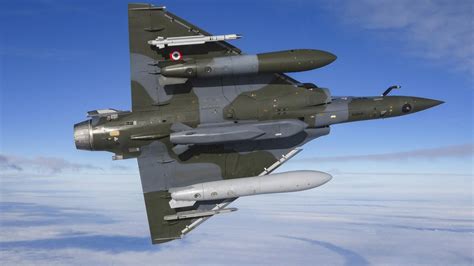
Mirage 2000D RMV: France’s Counter-Drone Vanguard
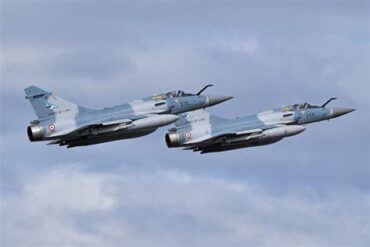
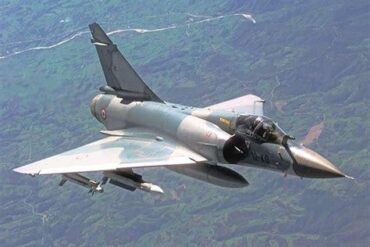
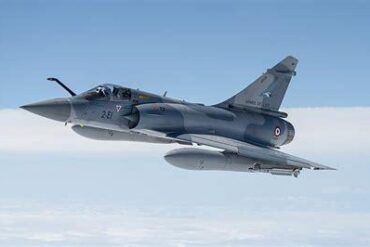
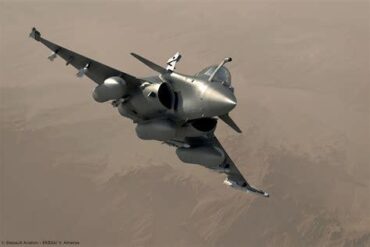
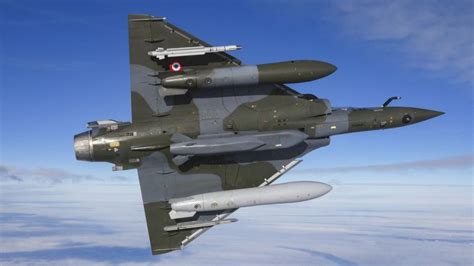
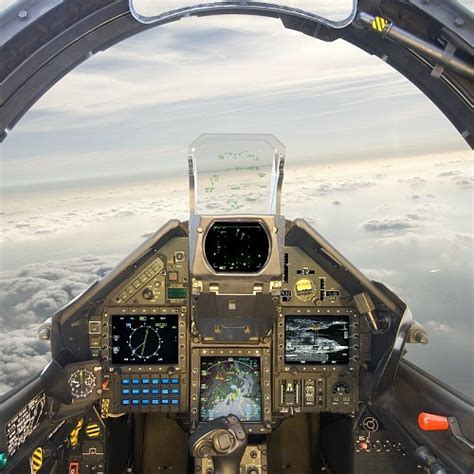
Across the Atlantic, France’s Mirage 2000D RMV (Rénové à Mi-Vie) modernization program is following a parallel trajectory. The Armée de l’Air et de l’Espace (AAE) is extending the Mirage 2000D’s operational life beyond 2030, updating avionics, sensors, and weapons to complement the more advanced Rafale. But its most intriguing development lies in counter-drone adaptation.
General Jérôme Bellanger, Chief of Staff of the French Air and Space Force, emphasized that “the Mirage 2000D has not had its last word.” France is actively studying low-cost air-to-air weapons capable of neutralizing Iranian Shahed-style drones, which are now appearing in European and Middle Eastern theaters. Rather than expend costly MICA or Meteor missiles, France is exploring options like Thales’ ACULEUS-LG laser-guided rockets, designed for precision counter-drone strikes.
Why Old Jets Work So Well Against New Drones
The resurgence of legacy aircraft in this new role isn’t coincidental. The A-10 and Mirage 2000D share characteristics that are paradoxically perfect for drone interception:
- Subsonic speed: Unlike Mach 2 interceptors, these jets can operate effectively at low altitudes and slower speeds, aligning with drone flight envelopes.
- Durability: Both aircraft were engineered for resilience—A-10s can fly with damaged wings; Mirages can withstand extreme G-loads and sand ingestion.
- Large payloads: Their multiple hardpoints enable carrying an array of guided rockets, gun pods, and sensors, enhancing flexibility against varied drone threats.
- Cost-effectiveness: Operating legacy jets as drone hunters is far cheaper than deploying fifth-generation fighters for low-end missions.
In essence, these aircraft bridge the gap between ground-based air defenses and high-end interceptors, offering a scalable, sustainable counter-drone layer in modern air defense architecture.
The Red Sea and Ukraine: Testing Grounds for Counter-Drone Operations
Both the U.S. and France have validated these concepts in active combat zones. In the Red Sea, where Houthi rebels have launched swarms of Iranian-origin drones, Mirage 2000Ds and A-10s have reportedly taken part in interdiction missions alongside naval and Patriot missile batteries. Their rapid response time and ability to patrol extended sectors made them valuable complements to static defenses.
Meanwhile, the Ukrainian theater has further underscored the need for adaptive air assets. NATO’s air forces, watching the conflict closely, recognize that drone saturation—as seen with Russia’s nightly Shahed-136 launches—can overwhelm traditional defense systems. Upgraded Mirage 2000Ds and potential A-10C redeployments could act as mobile drone shields, filling coverage gaps in contested airspace.
Economical Lethality: The Logic Behind the Strategy
Deploying a $4 million missile to destroy a $30,000 drone makes no fiscal sense. Hence, militaries are shifting toward “cost-per-kill efficiency” as a decisive metric. The A-10’s use of APKWS rockets and the Mirage’s potential adoption of ACULEUS-LG exemplify this logic.
Furthermore, these jets act as force multipliers, reducing dependence on surface-to-air systems and freeing high-end fighters for priority missions. Each interception not only saves a missile battery for a greater threat but also extends strategic endurance in prolonged conflicts.
Could This Role Extend the Life of the A-10?
Despite the U.S. Air Force’s plan to retire the A-10 fleet by 2026, its performance as a counter-drone platform might spark a re-evaluation. Analysts argue that repurposing even a limited number of A-10Cs could be invaluable for regional air policing, base defense, and naval escort operations. The platform’s low operational cost and combat-proven architecture make it an ideal fit for Air National Guard units or allied forces needing affordable counter-drone assets.
The A-10’s unique flight characteristics—low stall speed, high survivability, and long endurance—are unmatched by modern fighters like the F-35 or F-15EX, which are optimized for high-speed, stealth-based missions. In low-intensity drone warfare, the Warthog remains irreplaceably practical.
NATO’s Broader Counter-Drone Roadmap
The lessons from the A-10 and Mirage programs are resonating across NATO. Several member states are now exploring ways to retrofit fourth-generation aircraft for airborne drone defense. The concept dovetails with the alliance’s ongoing Integrated Air and Missile Defense (IAMD) framework, which envisions a multi-tiered approach—from directed-energy weapons and jammers to conventional fighters equipped with lightweight precision munitions.
The Mirage 2000D RMV stands as a test case for European adaptation, while the A-10’s operational data will inform U.S. doctrine for future counter-drone engagements. Both paths highlight an emerging truth: legacy platforms still matter, provided they evolve with the battlefield.
Beyond Mirage and Warthog: The Future of Airborne Drone Defense
While these programs dominate headlines, other air forces are taking note. The Royal Air Force, for instance, is exploring counter-UAS loads for the Eurofighter Typhoon, while Italy’s AMX and Spain’s F/A-18 Hornets could see similar repurposing. This wider movement suggests the birth of a new aircraft category—Drone Interceptor Fighters (DIFs)—designed not for dogfights, but for drone eradication.
The long-term future might see integration of AI-assisted targeting pods, miniature air-to-air missiles, and even microwave-based weapons on legacy jets. Until then, laser-guided rockets and adaptive software suites like FALCO and ACULEUS-LG remain the frontline tools of this emerging aerial discipline.
Conclusion: Reinventing Relevance in the Drone Age
The transformation of the A-10 Warthog and Mirage 2000D into dedicated drone hunters represents a strategic renaissance for aircraft once deemed obsolete. It reflects a broader military philosophy shift—adapt rather than replace—maximizing existing assets for modern needs. As drone threats proliferate, these retrofitted veterans demonstrate that ingenuity, not age, defines battlefield relevance.
From the deserts of the Middle East to the skies of Eastern Europe, old jets are proving that even in the age of stealth and autonomy, legacy still kills—efficiently, economically, and with unmistakable precision.