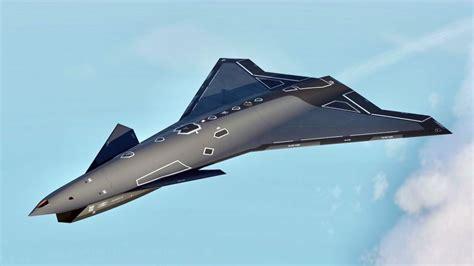
Air combat is no longer defined by the romanticized image of two fighter pilots locked in a supersonic dogfight above the clouds. The battlefield that once belonged almost exclusively to highly trained aviators flying million-dollar aircraft has fractured into something far more chaotic, technological, and economically brutal. Today’s wars are fought simultaneously by stealth bombers guided by artificial intelligence, remotely piloted drones circling targets for more than a day without landing, and improvised propeller aircraft hunting enemy UAVs with rifles and machine guns. The contrast is startling, yet it reveals the central truth of modern military aviation: victory increasingly depends not only on technological superiority, but also on sustainability, adaptability, and cost.
For decades, military planners believed the future of airpower would revolve around increasingly sophisticated aircraft capable of dominating enemy skies through stealth, speed, and sensor integration. That future undeniably arrived. The Lockheed Martin F-35 Lightning II and Northrop Grumman B-21 Raider represent the most advanced combat aircraft ever created, combining data fusion, electronic warfare, and network-centric operations into flying command centers capable of coordinating entire battlespaces. Yet while the Pentagon pursued sixth-generation warfare concepts, conflicts in Ukraine and the Middle East exposed another reality entirely. Cheap drones costing less than a family sedan began exhausting missile defenses worth millions of dollars per shot.
The result is an unprecedented transformation of military doctrine. Modern air warfare now spans a spectrum ranging from ultra-stealth aircraft carrying bunker-busting weapons to improvised counter-drone platforms assembled by volunteers under wartime pressure. The future belongs neither entirely to elite stealth aircraft nor entirely to disposable drones. Instead, warfare is evolving toward layered systems where crewed aircraft, autonomous wingmen, and low-cost interceptors operate together in a constantly shifting ecosystem of attrition and technological adaptation.
The F-35 Lightning II And The Rise Of The Flying Data Network
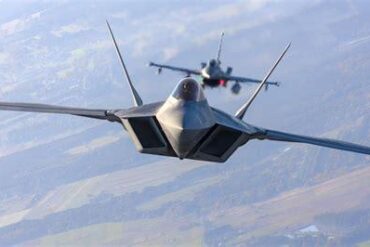
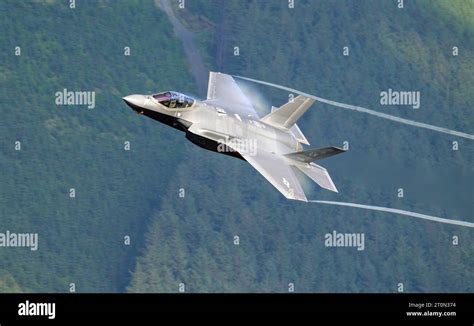
The Lockheed Martin F-35 Lightning II has fundamentally altered the concept of what a fighter aircraft is supposed to do. Previous generations of fighters focused primarily on speed, maneuverability, and weapons performance. The F-35 was designed around information dominance. It acts less like a traditional jet fighter and more like an airborne intelligence hub capable of collecting, processing, and distributing battlefield data in real time across multiple military platforms.
At the heart of the aircraft lies a sensor fusion architecture unlike anything fielded before it. The AN/APG-81 AESA radar, Distributed Aperture System, and Electro-Optical Targeting System work together to create a seamless 360-degree awareness bubble around the aircraft. Pilots receive a continuously updated picture of the battlespace through the Helmet Mounted Display System, which effectively allows them to “see through” the aircraft itself. Instead of relying on isolated sensors or verbal communications, pilots operate inside a digitally integrated combat environment where threats, targets, and friendly forces appear instantly on their visor.
The sheer financial scale of the F-35 program reflects how central it has become to American military planning. The aircraft’s projected lifecycle cost of approximately $2.1 trillion makes it one of the most expensive defense programs in history. More than 1,800 suppliers across 45 states contribute to its production ecosystem, transforming the fighter into both a military platform and an industrial enterprise. Unit costs vary by model, ranging from roughly $80 million to over $110 million per aircraft, while sustainment costs alone are projected to exceed $1.5 trillion over the coming decades.
Despite criticism surrounding delays and expenses, combat operations have demonstrated why military strategists remain committed to the platform. During Operation Midnight Hammer in June 2025, F-35As reportedly penetrated deep into Iranian airspace to suppress surface-to-air missile networks before escorting B-2 bombers toward hardened nuclear targets. The mission showcased the aircraft’s intended role perfectly: opening corridors through sophisticated air defense systems while remaining difficult to detect.
Unlike older fighters that primarily carried out kinetic missions independently, the F-35 thrives as part of an interconnected force. It can relay targeting data to naval vessels, guide missile strikes launched from hundreds of miles away, and coordinate with drones operating beyond visual range. In practical terms, this transforms the aircraft into the aerial equivalent of a battlefield quarterback, orchestrating combat rather than simply participating in it.
Operation Midnight Hammer And The Return Of Strategic Air Penetration
Operation Midnight Hammer marked one of the clearest demonstrations of twenty-first-century air warfare doctrine. The operation reportedly involved F-35 stealth fighters conducting Suppression of Enemy Air Defenses missions ahead of B-2 Spirit bombers carrying Massive Ordnance Penetrator bombs aimed at heavily fortified Iranian nuclear facilities.
The tactical significance of the mission extended far beyond the destruction of individual targets. It demonstrated how modern stealth aircraft operate as layered systems rather than isolated strike platforms. The F-35s entered contested airspace first, using sensor fusion and electronic warfare capabilities to neutralize radar sites and missile batteries. Only after those defenses were degraded could the B-2 bombers safely proceed toward strategic targets.
This approach reflects a profound shift from Cold War-era bombing doctrine. Earlier strategic bombers depended heavily on speed, altitude, and escort fighters to survive. Modern stealth operations instead rely on minimizing detection entirely while maintaining continuous digital coordination across the battlespace.
The mission also illustrated the increasing importance of survivability in an era dominated by advanced integrated air defense systems. Nations such as Iran, China, and Russia have invested heavily in layered radar networks, infrared tracking systems, and long-range missile batteries specifically designed to challenge Western air superiority. Penetrating these environments now requires aircraft capable of reducing signatures across multiple spectrums simultaneously.
The B-21 Raider And The Future Of Strategic Bombing
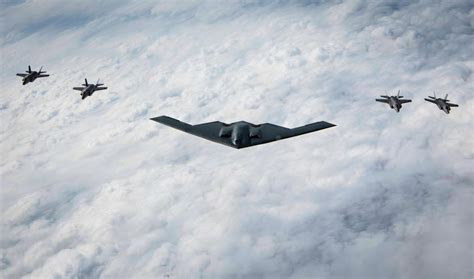
If the B-2 Spirit represented the pinnacle of stealth during the late twentieth century, the Northrop Grumman B-21 Raider represents an attempt to survive the battlefield conditions of the next several decades. Designed to operate inside heavily contested environments saturated with AI-enabled surveillance systems, cyber warfare threats, and multispectral sensors, the Raider is expected to become the backbone of future American long-range strike capability.
The B-21 differs from its predecessor in philosophy as much as technology. While the B-2 relied on highly specialized hardware and complex maintenance requirements, the Raider incorporates open mission systems architecture allowing rapid software upgrades and modular integration of new technologies. This flexibility matters enormously because modern warfare evolves faster than traditional procurement cycles. Aircraft expected to remain operational for decades must continuously adapt to emerging threats.
One of the Raider’s most strategically significant features is its anticipated role as a battle management node for autonomous systems. Rather than operating alone, the bomber is expected to coordinate swarms of drones and unmanned wingmen capable of conducting reconnaissance, electronic warfare, decoy operations, and strike missions. This transforms the aircraft into a command platform directing distributed combat assets across vast operational areas.
The aircraft’s stealth profile reportedly extends beyond radar reduction into multispectral survivability, addressing threats posed by infrared tracking satellites and advanced sensor fusion networks. Combined with GPS-denied navigation capability and sophisticated electronic warfare systems, the Raider is designed to function in environments where communications and satellite navigation may be heavily disrupted.
Military planners increasingly view this distributed approach as essential because traditional concentrated force packages are becoming more vulnerable. Future combat operations may involve smaller numbers of crewed aircraft orchestrating much larger networks of autonomous systems capable of overwhelming defenses through scale and coordination.
The MQ-9 Reaper And The Era Of Persistent Drone Warfare
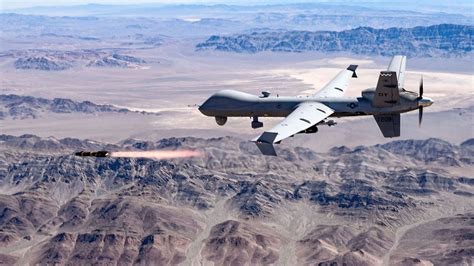
Before cheap kamikaze drones flooded battlefields, the MQ-9 Reaper symbolized the rise of unmanned warfare. The aircraft became synonymous with counterterrorism campaigns across the Middle East and North Africa, where its ability to remain airborne for more than 27 hours transformed surveillance and precision strike operations.
Unlike fast-moving fighter jets designed for brief engagements, the Reaper excels through persistence. Its operators can observe targets continuously, analyze behavioral patterns, and launch strikes at precisely chosen moments. Equipped with Hellfire missiles, laser-guided bombs, and advanced ISR capabilities, the drone became one of the defining weapons of post-9/11 warfare.
Yet conflicts involving technologically capable adversaries exposed the platform’s vulnerabilities. In contested environments protected by layered missile defenses and electronic warfare systems, relatively slow and non-stealthy drones become far easier to target. During the 2026 Iran crisis, reports indicated multiple MQ-9 losses, underscoring how platforms optimized for counterinsurgency operations struggle against peer-level military threats.
The financial implications became equally important. A fully equipped MQ-9 system can exceed $60 million in procurement costs when accounting for support infrastructure and ground control stations. Meanwhile, many one-way attack drones used by adversaries cost only tens of thousands of dollars. This imbalance created an alarming cost-exchange ratio where advanced militaries expended enormously expensive interceptors against comparatively disposable threats.
The strategic problem is brutally simple. Even if missile defenses successfully intercept incoming drones, defending forces may still lose economically during prolonged saturation attacks. Modern warfare increasingly rewards actors capable of imposing unsustainable costs on technologically superior opponents.
The Cost-Exchange Crisis Reshaping Airpower Doctrine
The economics of air warfare have become impossible to ignore. For much of modern military history, advanced nations assumed superior technology would guarantee dominance regardless of cost. Recent conflicts shattered that assumption.
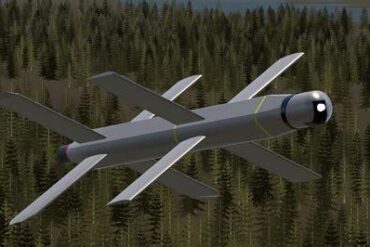
Patriot missile systems provide a powerful example. Each interceptor missile can cost several million dollars, yet many drones they destroy cost less than a luxury SUV. Adversaries recognized this imbalance and began exploiting it systematically through saturation tactics involving large numbers of inexpensive UAVs and loitering munitions.
This phenomenon has forced military planners to rethink the very structure of air defense. Traditional doctrine prioritized destroying every incoming threat regardless of expense. That logic becomes unsustainable when cheap drones can be mass-produced faster than expensive interceptors can be replenished.
The problem extends beyond missile defense. High-end stealth aircraft remain extraordinarily capable, but they are also limited in quantity and expensive to maintain. Losing even a handful during prolonged conflict could dramatically reduce operational capacity. As a result, militaries increasingly seek layered solutions combining exquisite platforms with cheaper autonomous systems capable of absorbing attritional pressure.
This shift mirrors historical patterns in warfare where mass and affordability eventually challenge concentrated technological superiority. Battleships gave way to aircraft carriers. Expensive heavy cavalry became vulnerable to disciplined infantry formations. Today, the drone revolution threatens to impose similar disruptions across military aviation.
Collaborative Combat Aircraft And The Loyal Wingman Revolution
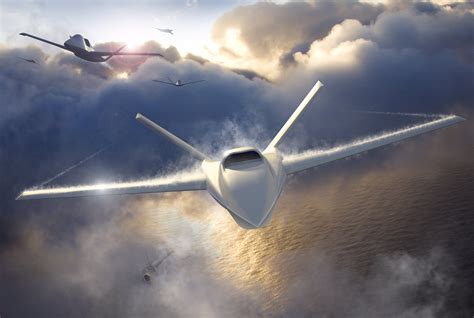
The United States Air Force’s Collaborative Combat Aircraft initiative represents one of the clearest acknowledgments that future warfare cannot rely exclusively on expensive crewed aircraft. The concept revolves around autonomous or semi-autonomous drones operating alongside human pilots as force multipliers, decoys, sensors, and strike assets.
These “Loyal Wingmen” are expected to accompany fighters such as the F-35 and eventually sixth-generation NGAD aircraft into contested environments. A single pilot may command multiple unmanned systems simultaneously, directing them toward dangerous areas while remaining farther from immediate threats.
This dramatically changes force composition. Instead of deploying small numbers of elite aircraft independently, future missions could involve distributed formations combining manned fighters with swarms of autonomous platforms carrying sensors, electronic warfare packages, or precision weapons.
The doctrinal implications are enormous. Autonomous wingmen could absorb enemy missile fire, conduct reconnaissance deep inside defended territory, or overwhelm radar systems through sheer numerical complexity. Even if several drones are lost, the overall mission may remain successful at far lower financial and political cost than losing crewed aircraft.
Artificial intelligence plays a crucial role in making these concepts operationally viable. Human pilots cannot manually control dozens of drones during high-intensity combat. Instead, AI systems must handle navigation, threat prioritization, and tactical coordination while allowing human operators to supervise broader mission objectives.
Ironically, the logic behind Loyal Wingman programs closely resembles lessons emerging from Ukraine’s improvised air war. Both approaches recognize the same reality: placing human pilots inside expensive platforms at the point of maximum danger is increasingly difficult to justify when autonomous or expendable systems can perform many of the same functions.
Ukraine’s Improvised Air War And The Return Of Primitive Aerial Combat
While advanced militaries invested billions into stealth technology and AI-driven warfare, Ukraine demonstrated that adaptation and affordability can sometimes matter just as much as sophistication. Faced with relentless drone attacks, Ukrainian forces developed remarkably improvised counter-drone tactics using aircraft never intended for combat.
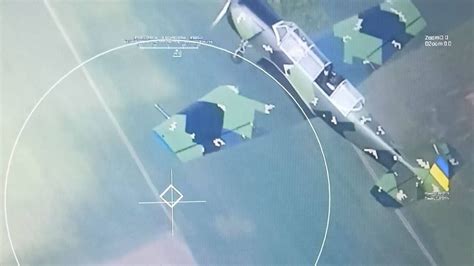
The Yakovlev Yak-52 became one of the most unusual symbols of this transformation. Originally designed as a Soviet aerobatic trainer, the piston-powered aircraft found new purpose intercepting reconnaissance drones over Ukrainian territory. Footage from 2024 showed pilots circling enemy UAVs while rear-seat gunners fired rifles and machine guns through open canopies.
The scenes looked astonishingly similar to aerial combat during World War I, when pilots and observers engaged enemy aircraft with pistols before synchronized machine guns existed. Yet despite the primitive appearance, the tactic proved surprisingly effective against slow-moving drones.
Economics again played a decisive role. Operating a Yak-52 costs only a few hundred dollars per flight hour, while many drones it targeted were worth well over $100,000. The financial asymmetry strongly favored the defenders.
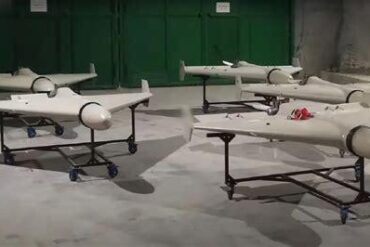
Even more remarkable was the adaptation of the Antonov An-28 transport aircraft into an airborne drone hunter equipped with a six-barrel M134 Minigun, infrared cameras, and night-vision systems. Civilian volunteer crews reportedly used radar guidance to intercept incoming Shahed drone swarms before destroying them with controlled bursts of gunfire.
By 2026, these improvised aircraft reportedly accumulated hundreds of confirmed drone kills. Their success demonstrated that technological elegance alone does not determine battlefield effectiveness. Sometimes survivability, simplicity, and operational sustainability matter far more.
Why Modern Air Warfare Is Becoming Simultaneously High-Tech And Primitive
One of the strangest aspects of current military aviation is how advanced and primitive systems now coexist on the same battlefield. Stealth bombers coordinating AI-enabled drone networks operate in the same wars where volunteers fire rifles from propeller aircraft at enemy UAVs.
This apparent contradiction actually reflects the underlying pressures shaping modern warfare. High-end stealth platforms remain essential for penetrating sophisticated defenses and conducting strategic strikes. No improvised aircraft could replace an F-35 during deep suppression missions against integrated air defense networks.
At the same time, low-cost systems increasingly dominate attritional warfare. Cheap drones can exhaust expensive missile inventories, overwhelm defenses through sheer quantity, and force advanced militaries into economically unfavorable engagements.
The future therefore belongs to layered force structures combining both extremes. Elite stealth aircraft will coordinate operations, destroy hardened targets, and maintain strategic deterrence. Autonomous drones and inexpensive interceptors will provide scale, persistence, and sustainability.
Military doctrine is evolving accordingly. Instead of pursuing a single dominant platform capable of handling every mission, air forces increasingly seek ecosystems of interoperable assets optimized for different operational requirements and cost structures.
The Psychological Transformation Of Air Combat
Beyond technology and economics, the drone era is also transforming the psychology of warfare itself. Traditional fighter pilots once relied heavily on aggression, situational awareness, and maneuvering skill during close-range engagements. Modern combat increasingly emphasizes data management, remote coordination, and network integration.
Drone operators may conduct missions from thousands of miles away while autonomous systems make split-second navigational decisions independently. Human pilots increasingly function as mission commanders supervising interconnected combat networks rather than solitary warriors engaged in direct aerial duels.
This shift carries profound cultural implications for military aviation communities historically built around elite pilot identity. The mythology of the ace fighter pilot remains powerful, but future conflicts may reward software integration and distributed autonomy more than individual flying prowess.
At the same time, Ukraine’s improvised drone hunters revealed that older forms of combat intuition still matter. Pilots visually tracking small UAVs at low altitude rely on instincts and improvisation that no algorithm fully replicates. Modern warfare has not eliminated human adaptability. Instead, it has forced humans and machines into increasingly complex partnerships.
The Future Battlefield And The End Of Airpower Certainty
The defining characteristic of modern air warfare may ultimately be uncertainty. For decades, Western military dominance created assumptions about technological superiority and uncontested airpower that no longer hold universally true. Advanced missile defenses, electronic warfare systems, and mass-produced drones have complicated every aspect of aerial operations.
Future conflicts will likely involve dense sensor networks, cyber attacks, autonomous swarms, and rapid attritional exchanges occurring simultaneously across enormous geographic areas. Victory may depend less on possessing the single most advanced aircraft and more on sustaining operational tempo while imposing disproportionate costs on adversaries.
The F-35 and B-21 Raider remain extraordinary achievements representing the cutting edge of aerospace engineering. Yet the same battlefield also rewards improvised turboprops, 3D-printed interceptor drones, and decentralized volunteer innovation. Air warfare is no longer moving toward a singular technological endpoint. Instead, it is fragmenting into a diverse ecosystem where adaptability matters as much as sophistication.
In this new environment, a stealth bomber directing autonomous drone formations and a civilian volunteer firing at a reconnaissance UAV from an aging trainer aircraft are part of the same strategic evolution. Both reflect the central reality of twenty-first-century combat: survival belongs not simply to the strongest or most advanced force, but to the side capable of balancing technology, affordability, resilience, and scale in a world where the cost of dominance keeps rising while the barriers to disruption keep falling.