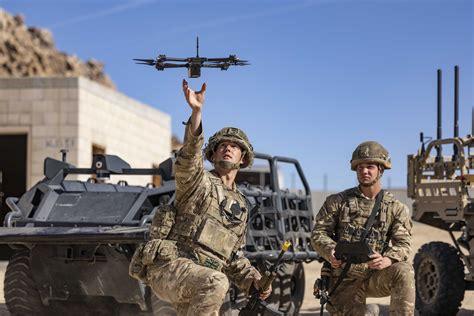
As geopolitical tensions escalate and the specter of full-scale conflict between Israel and Iran intensifies, the United States Army is racing to reinvent battlefield intelligence and strike capability through drone innovation. Leading that charge is Staff Sgt. Garrett Butts, an expert from the Army’s 1st Cavalry Division, whose hands-on approach is shaking up traditional procurement systems and catapulting the Army’s drone capabilities into a new era.
In the shadow of emerging warfare that increasingly favors speed, autonomy, and cost-efficiency, Butts and his small unit have embarked on an ambitious mission: to design, build, and deploy cost-effective, high-performance small unmanned aircraft systems (SUAS) from scratch—all while maneuvering through the legal and logistical labyrinth that typically slows military innovation to a crawl.
The Warfighter’s Perspective: From Policy Gridlock to Airborne Innovation
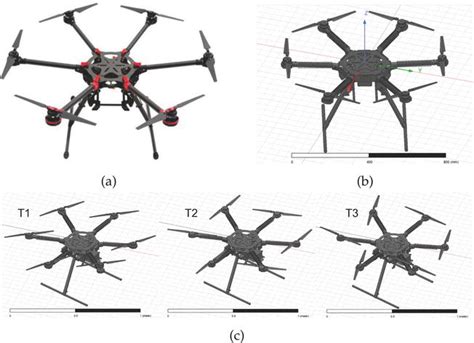
Butts’s team isn’t waiting for defense contractors or top-down directives to shape the future of drone warfare. Instead, they’re taking a ground-up approach, combining tactical urgency with technical ingenuity. “We’ve been charged with innovating our own SUAS platforms in-house,” he explains, “to cut procurement costs and timelines.” That philosophy has driven the unit to engineer functional drones using 3D-printed components, first-person view (FPV) flight systems, and parts sourced through a painstaking legal process that took nearly a year to decipher.
“There are a lot of laws and policies that govern procurement of SUAS systems,” Butts said. “It took us the better part of nine months to crack the code of what is legal and how we can procure UAS systems legally.” The irony is stark: while wars evolve faster than ever, the systems built to supply the warfighter remain mired in bureaucratic inertia.
In some cases, his team had to seek special legal clearance simply to acquire drone parts that mimic those used by potential adversaries. This highlights the growing chasm between battlefield needs and the often-antiquated rules that dictate defense logistics.
Why Small Drones Are Becoming Big Game-Changers
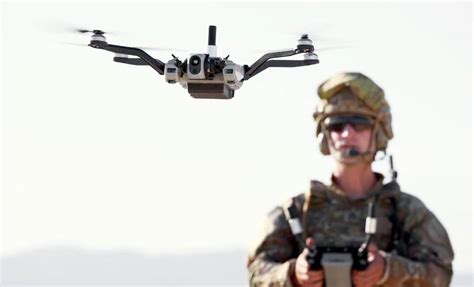
In the context of modern military operations, SUAS platforms offer not just surveillance advantages but also the potential to become low-cost precision strike assets. The frontline utility of these drones is multifaceted:
- Reconnaissance: Real-time intelligence over terrain, urban structures, or hostile positions.
- Obstacle Navigation: Enhancing soldier safety by allowing units to assess areas before movement.
- Tactical Strikes: Equipping drones with guided munitions for precision attacks at a fraction of traditional costs.
“Put a camera up, look at the objective or over an obstacle… to ensure their safety,” Butts said. That kind of situational awareness can mean the difference between mission success and catastrophe in dense, unfamiliar, or hostile terrain.
Perhaps the most groundbreaking application lies in arming drones with cost-effective munitions. “You can arm some of these systems and basically create a cost-effective precision-guided munition,” Butts explained. “At a fraction of the cost.” In a world where expensive guided bombs can cost tens of thousands of dollars per unit, being able to retrofit a $2,000 drone with strike capability is nothing short of revolutionary.
Project Pegasus Charge: A Living Laboratory for Combat Innovation
The Army’s forward-leaning experimentation is being operationalized under Project Pegasus Charge, a new tactical initiative designed to field-test future combat technology. It’s where theory meets reality, and Butts’s unit is operating at the bleeding edge of that intersection.
“We are going to innovate, experiment, test and develop different tactics, techniques and procedures,” he said. Pegasus Charge aims to answer a critical question: how do heavy combat units evolve to meet the demands of tomorrow’s battlefield?
In addition to in-house prototyping, the project is laying the groundwork for eventual collaboration with private sector developers, especially once funding becomes available to scale innovations. Until then, soldiers like Butts are doing the heavy lifting—quite literally—by soldering circuit boards, printing drone frames, and training operators.
Global Battlefield Lessons from Europe to the Middle East
Butts’s perspective isn’t theoretical. He and his team spent nine months training in Poland and Germany, where they refined drone tactics in real-world conditions. Their work offers valuable parallels to the drone-driven tactics seen in Ukraine, Gaza, and Syria—conflicts that have evolved into proving grounds for unmanned warfare.
The U.S. military’s attention is now pivoting sharply toward these emerging drone threats, including FPV “kamikaze” drones used by irregular forces. According to defense analysts, such platforms are redefining the cost-value equation of modern combat. What was once a multimillion-dollar air strike can now be replicated with a few hundred dollars of off-the-shelf tech and tactical know-how.
AI Integration: Reducing the Training Burden, Increasing Autonomy
The next frontier, Butts suggests, will be the integration of artificial intelligence into drone operations. Currently, SUAS operators require rigorous and ongoing training, particularly in navigation and target acquisition. But AI promises to streamline that cognitive workload, enabling faster deployment with fewer errors.
“If we’re able to integrate AI solutions that could mitigate for that training or replace that training,” he noted, “that would be a huge step in the right direction.”
AI would also allow SUAS units to autonomously track targets, analyze environmental data, and even adapt flight patterns based on mission dynamics—bringing the military closer to fully autonomous systems that are still compliant with ethical engagement rules.
The Human Factor: From Drone Operator to Battlefield Visionary
Butts’s story is emblematic of a broader transformation occurring within the Army. Originally uncertain about a long-term military career, he accepted a role as a drone operator almost by chance. That decision became pivotal—not just for his career, but for the future of how the Army fights.
“It’s shown me what I’m truly capable of,” he said. “Being at the forefront of it is pretty incredible. Watching how the technology is evolving in front of your eyes… it really sparks ingenuity.”
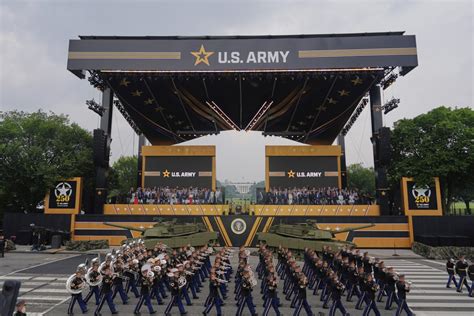
The message resonates beyond his team. As the Army celebrates its 250th anniversary, there’s a palpable sense that these innovations are not just stop-gap measures, but foundations for a new doctrine—one where agility, cost-efficiency, and frontline innovation guide operational decisions.
The Future of Drone Warfare: Strategy, Speed, and Scalability
As the Middle East simmers and global fault lines deepen, the U.S. military’s ability to innovate quickly—and legally—is emerging as a strategic imperative. Projects like Butts’s and initiatives like Pegasus Charge represent more than technological upgrades; they reflect a philosophical shift in how the military must approach innovation.
No longer can it rely solely on decades-long procurement cycles or off-the-shelf solutions from massive defense contractors. The battlefield is changing too quickly for that. Instead, innovation must be organic, adaptive, and immediate—built by soldiers, for soldiers.
What makes this transformation especially potent is its scalability. Once validated, these grassroots innovations can be standardized across divisions, embedded in joint operations, and integrated into broader interoperability frameworks with allied forces.
Conclusion: Preparing for the Next Conflict Before It Starts
With the looming threat of expanded regional warfare and the ever-increasing sophistication of adversarial drone technology, the work being done by Staff Sgt. Butts and his team isn’t just tactical—it’s strategic. Their innovations signal a paradigm shift in how the U.S. military thinks about aerial dominance, infantry support, and battlefield intelligence.
“Our military is innovating,” Butts said. “And it’s truly incredible to watch.”
As global instability surges and the next major war becomes less a question of if and more a question of when, it will be these eyes in the sky, built from scratch in dusty garages and battlefield tents, that may provide the decisive edge.