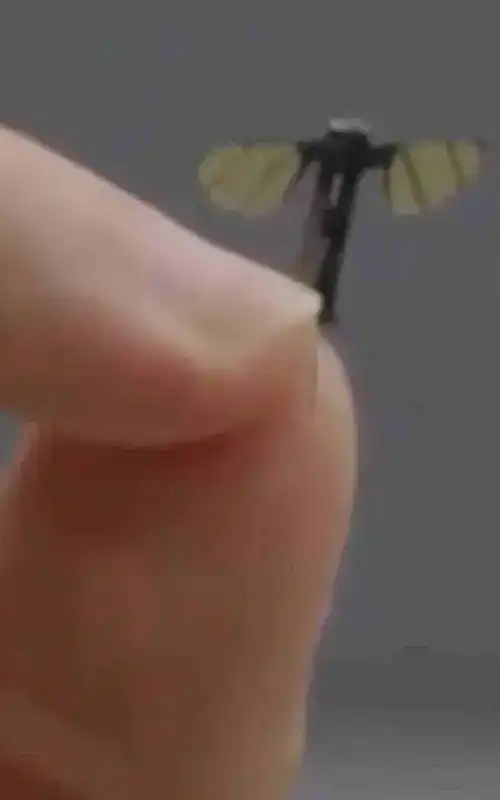
China’s latest foray into microdrone warfare has captured global attention after unveiling a mosquito-like spy drone designed for covert surveillance operations. Revealed on CCTV-7, the drone’s unique design and minute scale mark a significant leap in the integration of biology-inspired engineering and modern military surveillance. With a body no larger than a human fingernail, the drone is being hailed by some as a potential game-changer in urban reconnaissance, while others question its real-world practicality.
The Unveiling of the Micro-Drone
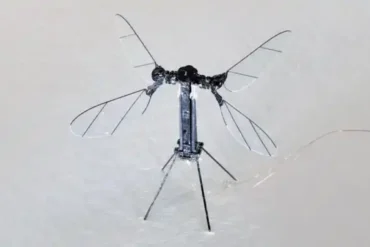
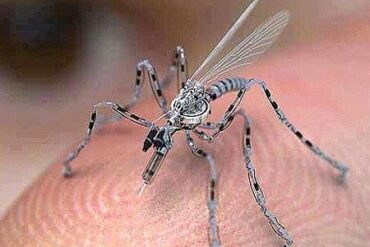
Developed by the National University of Defense Technology, the insect-like drone was publicly showcased last month, signaling China’s persistent push toward military micro-technologies. The drone mimics the appearance and flight mechanics of a mosquito — featuring delicate, leaf-like wings, a stick-thin chassis, and spindly legs — allowing it to blend seamlessly into urban or indoor environments where larger UAVs cannot maneuver.
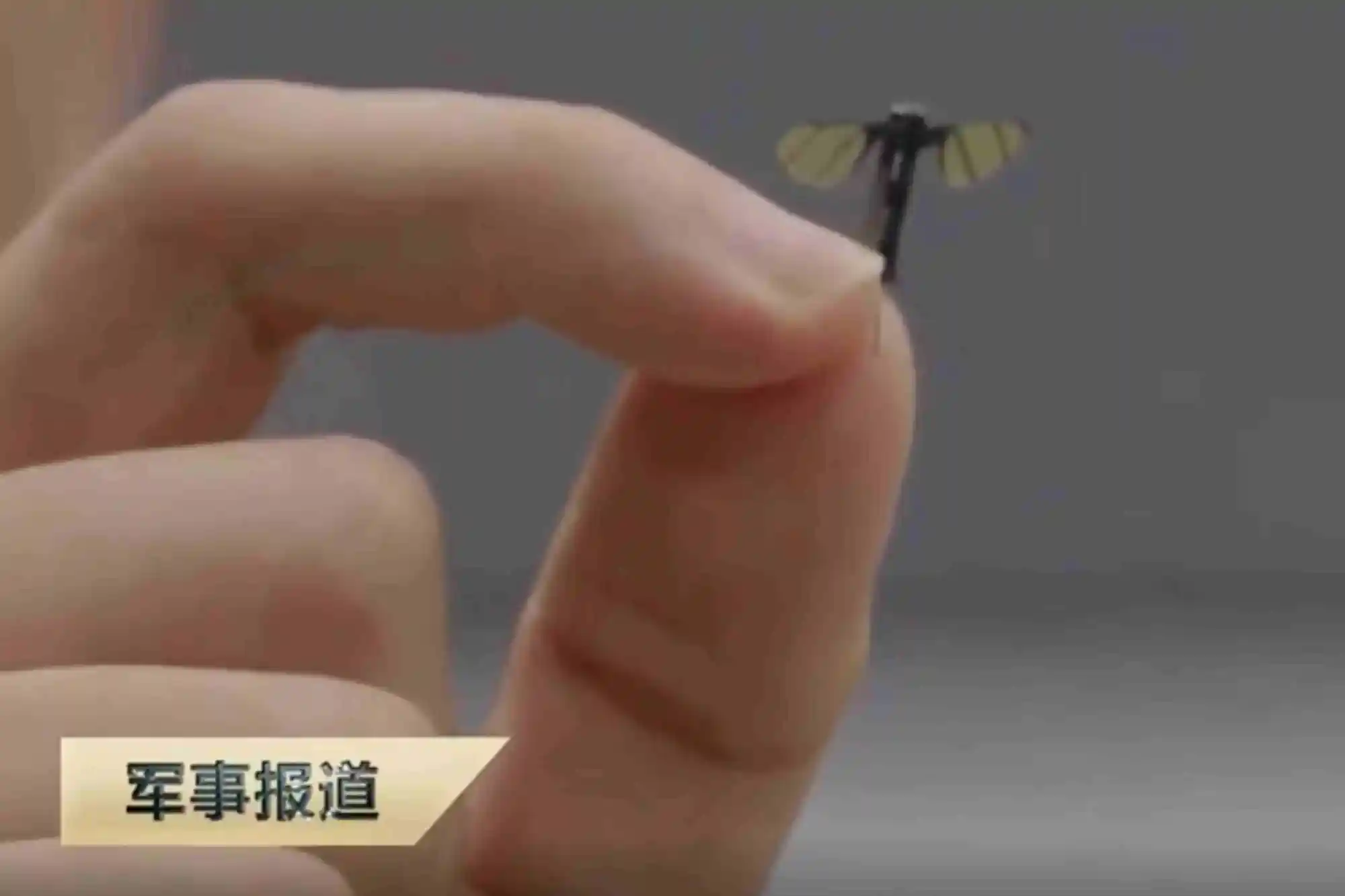
According to early reports, the micro-drone is built specifically for stealth surveillance and indoor reconnaissance, where its small size offers advantages in slipping through tight corridors, vents, or windows unnoticed. Despite its barely visible profile, analysts point out that this scale presents a double-edged sword, offering plausible infiltration capabilities but also a host of operational limitations.
Expert Analysis: Functionality vs. Theatrics
Military analysts remain divided over the true potential of the mosquito drone. Herb Lin, a senior research scholar at Stanford’s Center for International Security and Cooperation, notes that the concept is intriguing, especially for espionage within buildings. “As a drone to surveil buildings, especially on the inside, I can imagine it being quite useful for video feeds,” he explained.
However, Lin raised significant concerns over its limited endurance. “If it’s real, and powered conventionally with a battery, its longevity in the air will be limited by battery capacity. Also, it’s very light and therefore easily buffeted by winds.” This makes the drone unsuitable for open terrain or wide-area reconnaissance, where weather conditions would render it nearly useless.
Samuel Bendett, a drone expert and advisor at the Center for Naval Analyses, expanded on the environmental limitations. Even in indoor settings, he warned that airflows from air conditioning, open windows, or even slight breezes could seriously impair the drone’s performance. “The smaller an aerial drone is, the more susceptible it is to such conditions,” he emphasized. Moreover, communication systems in a drone of this scale are inherently compromised by space and power limitations. Advanced encryption, live HD feed transmission, or autonomous navigation modules might be too bulky or energy-intensive to include.
Engineering Feasibility and Technical Challenges
While the physical resemblance to an insect may attract attention, the true benchmark of utility lies in its performance envelope. Tiny drones face unique hurdles in propulsion, power management, and data transmission:
- Battery Limitations: Current lithium-polymer micro batteries offer short flight times, often under five minutes for sub-gram drones.
- Wind Vulnerability: The lower mass of micro UAVs makes them highly unstable in breezy conditions.
- Sensor Constraints: Miniaturization of high-quality cameras, thermal sensors, or audio mics is still a challenge without degrading output quality.
- Signal Interference: Dense urban or indoor environments can disrupt control signals and GPS tracking, especially for low-powered transmitters.
China’s engineers must confront each of these issues if the mosquito drone is to be deployed in any meaningful capacity. As of now, the drone’s full flight endurance, payload specs, control systems, and deployment protocol remain classified, leaving military observers to speculate.
Strategic Implications and Doctrinal Use Cases
Despite its technical drawbacks, the micro-drone represents a strategic paradigm shift in surveillance philosophy. Instead of brute-force air superiority or heavy strike capability, this drone embraces the principle of invisibility and infiltration. Potential scenarios where such a drone could be deployed include:
- Indoor reconnaissance in urban combat zones
- Close-quarters surveillance of embassies, bunkers, or tunnels
- Remote intelligence gathering in denied environments
- Border monitoring inside buildings and cave networks
Michael Horowitz, a senior fellow specializing in technology and innovation at the Council on Foreign Relations, stated, “This shows Chinese researchers in particular want to push forward technological innovation in drones.” He noted the importance of this development as part of a larger Chinese effort to stay ahead in emerging dual-use military technologies.
Yet Horowitz also voiced caution. “It remains unclear how real the capability is, how soon China could field the tech, or the type of missions it could use them for.” That sentiment reflects the broader skepticism: Is this drone a real platform ready for near-term field deployment — or merely a proof-of-concept showcasing bio-mimicry potential?
China’s Broader Drone Strategy
China’s unveiling of this drone cannot be seen in isolation. It fits within a broader doctrine of asymmetric warfare and technological leapfrogging. Over the last decade, China has rapidly expanded its UAV fleet, producing large platforms like the Wing Loong, CH-4, and WZ-series stealth drones. Now, it appears Beijing is scaling down its ambitions—literally—in an attempt to dominate the next generation of micro and nano unmanned systems.
This trend is particularly notable in China’s focus on bio-inspired robotics, where researchers are mimicking insects, birds, and marine animals to develop versatile surveillance platforms that evade traditional detection methods. As urban warfare and indoor operations become more central to modern conflict, such innovations could prove decisive in narrow tactical settings.
Espionage, Export Concerns, and Ethical Boundaries
The potential use of such a mosquito-like drone is not limited to conventional battlefields. Espionage applications loom large in the minds of Western military and security experts. The drone’s unobtrusive appearance makes it a natural fit for surveillance missions in diplomatic buildings, private residences, or even secure government facilities.
Such potential raises serious international concerns over both the proliferation of spy drones and the regulatory vacuum surrounding their use. If exported or reverse-engineered, similar systems could be used for corporate espionage, surveillance of political dissidents, or privacy violations with no clear framework for accountability.
The Future of Insect-Inspired Warfare
China’s mosquito drone may be more symbolic than operational today, but it sends a clear message about where the future of surveillance is heading. The era of bulky UAVs buzzing over enemy skies may soon be complemented — or even supplanted — by micro-scale, low-observable drones capable of slipping through the cracks, literally and figuratively.
For now, military experts around the world are watching closely, waiting to see whether China can overcome the engineering bottlenecks inherent in such minuscule flight platforms. If it can, the battlefield of the future may well be one where the most dangerous eye in the sky is no larger than a mosquito — and just as hard to detect.