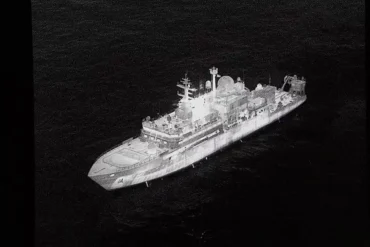
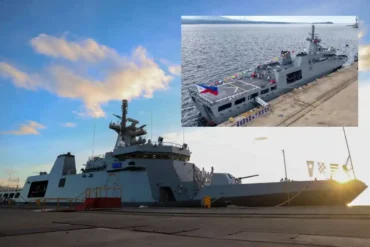
On July 12, 2025, the Philippine Coast Guard (PCG) confirmed the detection and monitoring of the Chinese People’s Liberation Army Navy (PLAN) Type 815G electronic reconnaissance vessel Tianwangxing (AGI-853) operating inside the Philippine exclusive economic zone (EEZ). This highly advanced spy ship was shadowed by the BRP Teresa Magbanua (MRRV-9701) approximately 69.31 nautical miles west of Cabra Island, off the coast of Occidental Mindoro. The incident unfolded just as U.S. Air Force F-35A stealth fighters arrived in the Philippines for the Cope Thunder 2025 aerial combat exercise, marking a strategically charged convergence of military assets in the region.

Chinese Spy Vessel Ignores Warnings in Philippine Waters
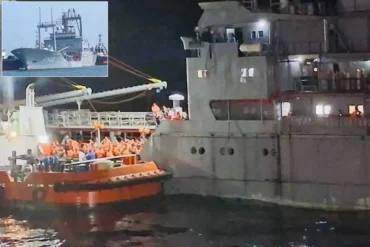
The PCG made multiple attempts to hail the PLAN warship Tianwangxing, hull number 793, via radio. The vessel failed to respond, a tactic consistent with prior behavior exhibited by Chinese surveillance units operating in contested waters. Accompanying the spy ship was China Coast Guard (CCG) vessel 4203, which issued a direct verbal challenge asserting China’s jurisdiction over the maritime area. This assertion was promptly rebuffed by Philippine authorities, who underscored that the location lies firmly within the Philippine EEZ under the provisions of UNCLOS, the 2016 Arbitral Tribunal ruling, and the Philippine Maritime Zones Act.
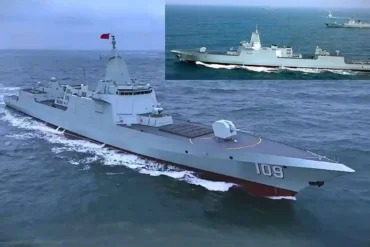
As the PCG shadowed the Tianwangxing and the CCG vessel, a third vessel appeared—a PLAN Type 052D-class guided missile destroyer, Guilin (hull number 164). The warship launched helicopter landing exercises on its flight deck, indicating a clear projection of force and surveillance coordination with the reconnaissance vessel. PCG sources confirmed that repeated radio challenges to all Chinese units were ignored throughout the operation.
Strategic Timing: Arrival of U.S. F-35As for Cope Thunder
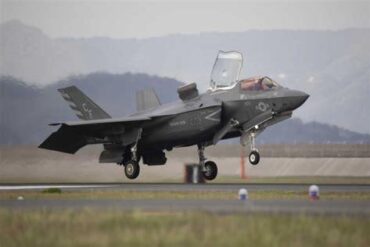
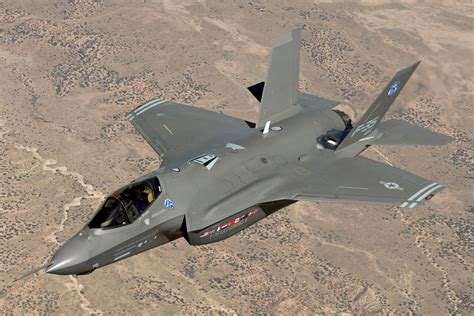
The deployment of the Tianwangxing coincided with the arrival of F-35A Lightning II stealth fighters on Philippine soil for the Cope Thunder 2025 exercises, held jointly by the United States and the Philippines. This marked the first deployment of the fifth-generation jets to Philippine territory and represented a major leap in defense interoperability. The presence of the Chinese spy ship during such a high-profile multinational exercise underscores Beijing’s intent to collect real-time electronic intelligence and track the operational capabilities of U.S. and allied forces.
Tianwangxing: Anatomy of a Modern Spy Ship
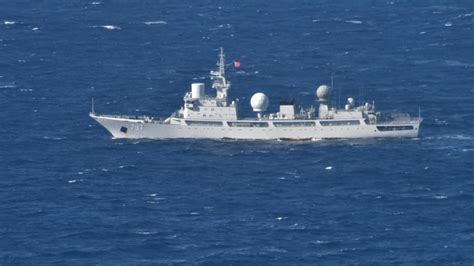
The Tianwangxing (AGI-853) is the first commissioned ship of the Type 815G Dongdiao-II class, entering PLAN service on December 1, 2010. Built by Hudong-Zhonghua Shipbuilding in Shanghai, this 6,000-ton vessel measures 130 meters in length, with a beam of 16.4 meters and a draft of 6.5 meters. Powered by twin SEMT-Pielstick diesel engines and equipped with adjustable-pitch propellers, the vessel reaches speeds of up to 20 knots. It carries a standard crew of around 250 personnel and features a helipad and hangar, often operating the Harbin Z-9 helicopter.
Its intelligence suite is extensive:
- Type 756 Fin Curve Mod radar, modeled on the Decca 1229, with a range of 46.3 km
- Ballistic missile tracking radar, with a capability of up to 5,185 km
- COMINT and ESM systems, effective within 926 km
- Electro-optical trackers, including third-gen visual TV systems and laser designators, with tracking ranges between 18.5 km to 185 km
- Satellite communication systems, likely enabling real-time intelligence sharing and UAV coordination
For defense, the vessel is armed with:
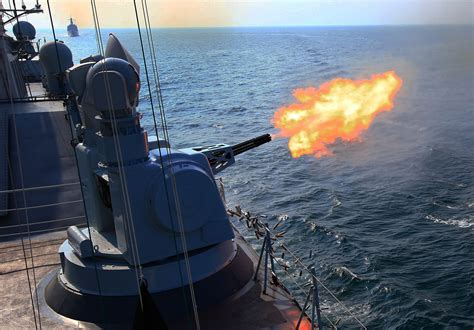
- One twin-barrel 37mm Type 76 naval gun
- Two twin-barrel 25mm Type 61 anti-aircraft guns
Pattern of Intelligence Operations in Disputed Waters
The Tianwangxing’s presence near Cabra Island is part of a broader strategic pattern. Chinese intelligence-gathering ships, especially from the Type 815G class, have been documented repeatedly entering foreign EEZs to monitor military activities:
- In 2022, its sister ship Haiwangxing (AGI-852) operated inside the Sulu Sea and was shadowed by the Philippine Navy.
- During Balikatan 2024, Tianwangxing was spotted near joint naval exercises involving U.S., French, and Philippine forces.
- It has previously conducted surveillance around Talisman Sabre exercises in Australia.
- Indian officials tracked its operations inside the Andaman and Nicobar Islands EEZ, where it remained for nearly two weeks.
The PLAN justifies these missions under the guise of “freedom of navigation,” but nations like the Philippines, India, Japan, and Australia view them as violations of sovereign maritime rights. The Chinese government has consistently refrained from responding to communications when their vessels are challenged inside other countries’ EEZs.
Surveillance During Military Exercises: A Calculated Strategy
Deployment of the Tianwangxing during Cope Thunder is emblematic of Beijing’s strategic use of signal intelligence ships during multinational exercises. These deployments are designed to gather telemetry, command/control signals, radar emissions, and potentially satellite uplink/downlink data. The goal is to improve Chinese electronic order-of-battle awareness and tactical intelligence on U.S. fifth-generation fighter performance.
The U.S. F-35A, equipped with Active Electronically Scanned Array (AESA) radars, sensor fusion systems, and low observability technologies, represents a significant intelligence interest for the PLAN. Capturing electronic signatures or communications traffic from these jets during joint drills would be a valuable asset to Chinese military planners.
Philippine Sovereignty Challenges Continue
The PCG’s actions in monitoring and shadowing Chinese vessels highlight growing maritime law enforcement responsibilities for Manila. Commodore Jay Tarriela, the PCG’s spokesperson on West Philippine Sea concerns, emphasized the need to enforce Philippine maritime rights under international law. The unwillingness of the Chinese ships to respond to radio hails—and their continued presence during a U.S.-Philippine exercise—underscores the confrontational maritime behavior employed by Beijing.
The Philippine response has drawn international attention, particularly among regional allies wary of Chinese expansionism. Philippine officials have repeatedly stated that their goal is not escalation but defense of sovereign rights and maintenance of lawful maritime order. The presence of the PLAN destroyer Guilin, alongside a spy ship and coast guard unit, illustrates an increasingly gray-zone approach by China, blending military and paramilitary assets to apply pressure without triggering open conflict.
Estimated Costs and Strategic Value of Type 815G-Class Vessels
The Type 815G ships, including Tianwangxing, are believed to cost between $300 million to $500 million each. These ships are not frontline combatants but play a vital role in modern warfare: information dominance. Their sophisticated COMINT and ELINT arrays enable the PLAN to passively monitor activities, collect electronic signatures, and analyze patterns of behavior by foreign naval forces.
Each vessel is assigned to one of China’s three regional fleets:
- East Sea Fleet
- South Sea Fleet
- North Sea Fleet
With four known ships in the 815G class and additional vessels in the more advanced 815A subclass, China now possesses a persistent surveillance capability across the Indo-Pacific.
Outlook: Heightened Regional Tensions
The interception of the Tianwangxing by BRP Teresa Magbanua is not an isolated episode but part of a systematic pattern of regional friction. Chinese naval intelligence platforms continue to shadow foreign exercises, operate within contested maritime zones, and assert jurisdiction in violation of established international rulings. As the U.S.-Philippines alliance deepens, especially with joint air and naval deployments, the presence of Chinese surveillance ships is likely to become even more routine and confrontational.
The events of July 12, 2025, underscore not only the strategic value of the Philippine archipelago but also the delicate balance of power playing out in the South China Sea. With both advanced Chinese electronic warfare platforms and U.S. fifth-generation fighters operating in close proximity, the theater is rapidly becoming a flashpoint in the broader Indo-Pacific security contest.
Maintaining peace in the region will require not just vigilance and coordination, but a robust reaffirmation of international maritime law—something the Philippines and its allies appear increasingly prepared to assert.