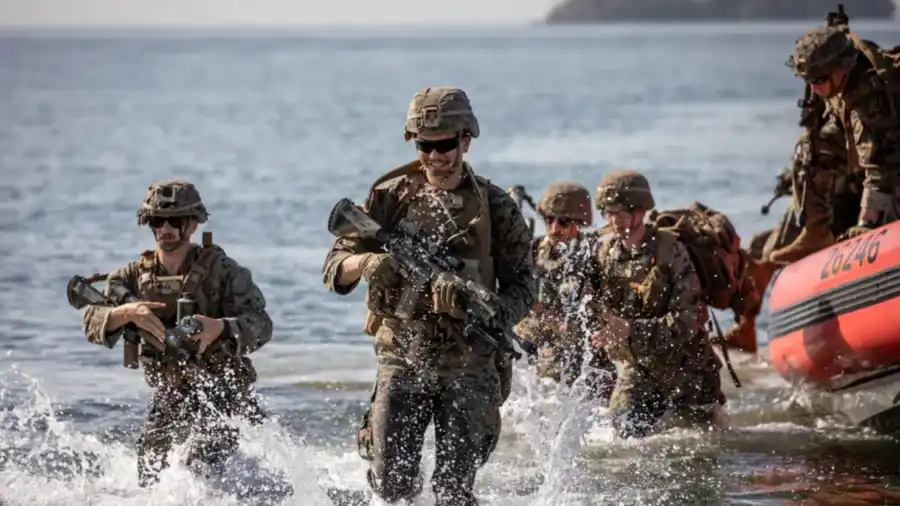
Amid escalating regional tensions and growing U.S. support for Guyana, the U.S. Marine Corps’ 22nd Marine Expeditionary Unit (MEU) has embarked on a high-stakes joint military exercise with the Trinidad and Tobago Defence Force (TTDF). Conducted from November 16 to 21, these drills—though framed as routine cooperation—send a clear geopolitical message to Caracas as they unfold just miles from Venezuelan territorial waters, against the backdrop of the contentious Essequibo dispute.
Strategic Location and Timing: A Clear Regional Signal
Positioned off Venezuela’s coast, these exercises fall within a sensitive corridor marked by geopolitical friction. While officially categorized as a continuation of past engagements, the proximity to Venezuelan territory, particularly near the Orinoco Delta, suggests more than simple training.
The dispute over Essequibo, a resource-rich region claimed by Venezuela but administered by Guyana, has intensified in 2023. Venezuela’s assertive moves—such as contested votes and naval deployments—have drawn scrutiny and diplomatic friction. The United States, in response, has amplified its security guarantees to Georgetown, deploying naval forces and boosting Caribbean engagements. This joint training with Port of Spain offers both a strategic deterrent and a signal of alignment with nations choosing regional cooperation over unilateral claims.
The 22nd Marine Expeditionary Unit: A Versatile Combat Formation
The 22nd MEU, comprising approximately 2,200 Marines and Sailors, is built around the Marine Air-Ground Task Force (MAGTF) structure. This balanced and flexible unit includes ground, aviation, logistics, and command elements, allowing it to operate independently for up to 30 days, ranging from combat scenarios to humanitarian missions.
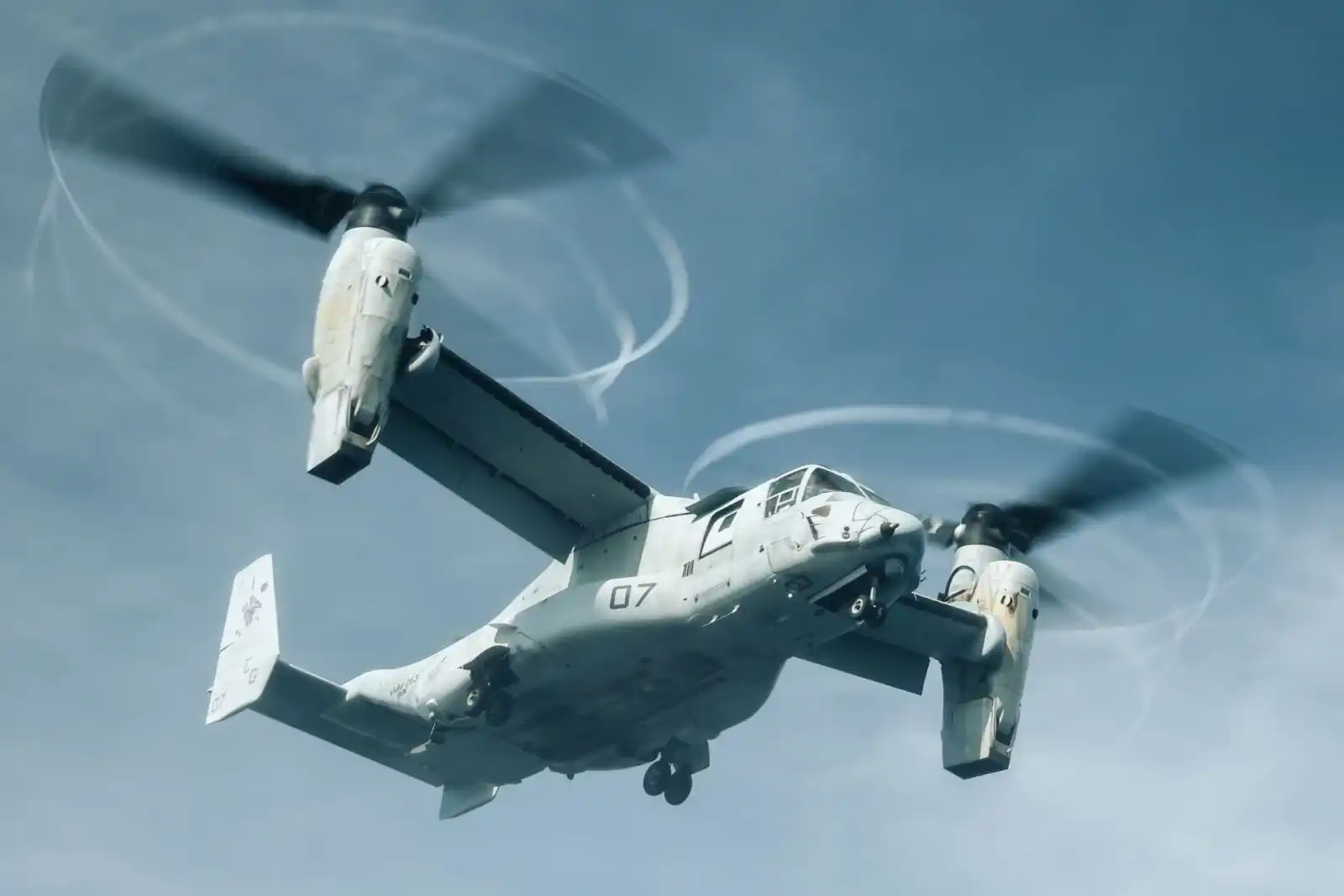
Central to this deployment is the unit’s aviation superiority. Aircraft like the MV-22B Osprey, AH-1Z Viper, and UH-1Y Venom provide unmatched operational reach, firepower, and tactical versatility:
- MV-22B Osprey: Capable of speeds exceeding 300 knots and a range over 1,000 nautical miles, it can transport 20 troops or 9 tons of cargo. Its tiltrotor design merges vertical lift capabilities with fixed-wing performance, ideal for over-water insertions and inter-island logistics.
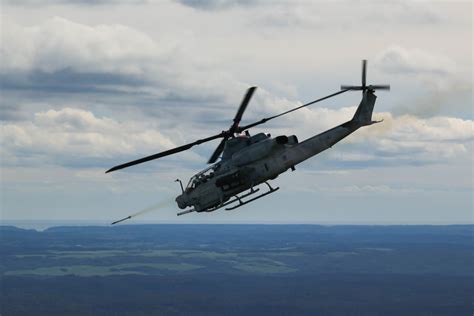
- AH-1Z Viper: Armed with 20 mm cannons, Hellfire missiles, and guided rockets, this attack helicopter ensures day-and-night support, guided by advanced optronic targeting systems.
- UH-1Y Venom: A multi-role aircraft with composite rotor blades and a digital cockpit, suitable for light transport, armed escort, medical evacuations, and command support.
Coastal and Night Operations: Tactical Precision and Interoperability
The synergy between these platforms enables precision operations along Trinidad and Tobago’s coastal and urban environments, including insertion missions, convoy drills, urban patrols, and rugged terrain movements. These maneuvers not only simulate real-world scenarios faced by the TTDF—such as countering narcotics trafficking and urban crime—but also serve as a stress test for joint interoperability in contested maritime zones.
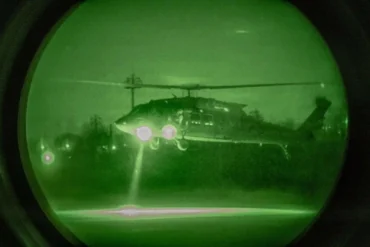
Night operations, in particular, emphasize electromagnetic control (EMCON). Osprey and Venom aircraft execute silent approaches into narrow and obscured landing zones, with strict discipline around light, noise, and electronic signatures. Meanwhile, the Viper integrates into broader surveillance networks, feeding live sensor data to enhance the Recognized Maritime Picture (RMP) and Common Operational Picture (COP) shared by both forces.
This tactical fusion is bolstered by joint terminal attack controllers (JTACs) from the TTDF and U.S. fire support teams, who align targeting protocols and communication frameworks. The result is a more synchronized strike and support capability, adaptable for roles spanning internal security, counter-smuggling, humanitarian relief, or maritime interdiction.
Trinidad and Tobago’s Growing Role in Regional Security
For Port of Spain, this exercise is not an isolated event but part of a broader strategic alignment with U.S. Southern Command (SOUTHCOM). The Caribbean nation has long grappled with transnational threats—from drug trafficking routes to arms smuggling corridors. In response, it has progressively embraced U.S. military cooperation, capacity building, and multi-domain coordination.
By welcoming the 22nd MEU, Trinidad and Tobago signals a clear intent to:
- Fortify maritime approaches against illicit incursions
- Modernize internal security tactics
- Participate in regional security networks capable of multi-threat response
This alignment extends beyond drills. It reshapes the Caribbean’s evolving defense architecture, where island states become littoral security hubs, vital to enforcing international norms and counterbalancing authoritarian postures.
Caracas Watches Closely: The Venezuelan Response
Unsurprisingly, Venezuelan officials have denounced the drills as “provocative.” From President Nicolás Maduro’s perspective, these exercises underscore Washington’s support for Guyana, reinforcing a regional order that opposes unilateral claims over disputed territory. Caracas continues to frame U.S. activities in the Caribbean—especially near the Gulf of Paria and offshore energy zones—as destabilizing.
Yet this response masks a deeper concern: the growing isolation of Venezuela’s security stance. As neighbors increasingly collaborate with U.S. forces on rules-based maritime operations, Venezuela’s posture appears more adversarial. The Trinidad-U.S. exercise, though limited in duration, symbolically situates Port of Spain as a frontline stakeholder in managing the strategic tension across the southern Caribbean basin.
Operational Readiness and Long-Term Impact
While one week of maneuvers may seem transient, the training effects endure. The ability to execute night insertions, air-ground integration, and coastal surveillance in a contested environment lays the foundation for future rapid reaction deployments. U.S. expeditionary forces gain terrain familiarity and partner rapport, while TTDF units deepen their doctrine development, especially in integrating aviation assets and fire support.
Importantly, the drills establish standardized procedures for:
- Call-for-fire alignment
- Shared communications architecture
- Joint response to natural disasters or transnational threats
Such frameworks are pivotal in a region increasingly marked by hybrid risks—from state-sponsored sabotage to climate-induced displacement. Training under realistic, high-stakes conditions ensures both forces remain agile and interoperable.
Conclusion: An Exercise Beyond the Surface
The joint U.S.-Trinidad and Tobago military exercise off Venezuela’s coast is more than a training event. It is a strategic message delivered through operational precision. It showcases how coalition building, even on a modest scale, can project stability and deterrence across a sensitive region. As the United States tightens security ties with partners like Guyana and Trinidad and Tobago, the Caribbean transforms into not just a transit zone, but a strategic frontier—one where diplomacy, deterrence, and interoperability converge.
And as Caracas continues to challenge regional norms, it finds itself counterbalanced not by direct confrontation, but by the calculated cooperation of neighboring states determined to preserve maritime order, national sovereignty, and peace through joint capability and strategic readiness.