Nighttime aviation is often a subject of confusion for many pilots, especially when it comes to knowing the precise times and conditions under which night flight and night landings can be logged. The Federal Aviation Administration (FAA) sets specific regulations regarding what constitutes ‘night time’ and the associated requirements for logging flight time and performing landings. In this article, we will explore the FAA’s definitions and guidelines, helping you understand when exactly you can log your night flight hours and complete night landings, ensuring full compliance with aviation standards.
FAA Regulations on Night Time
The FAA distinguishes night from day in a way that might seem complicated at first, but it is based on clear time periods and specific criteria. To begin, it is important to note that night time is not defined simply by the clock but rather by the relationship between the position of the sun and the horizon. According to the FAA’s regulations (FAR 1.1), night is the time between the end of evening civil twilight and the beginning of morning civil twilight. But what does that mean in practice?
Sunset to Sunrise
From sunset to sunrise, you are required to have certain lights on, namely the position lights and, if equipped, the anticollision lights. These regulations apply regardless of whether you are flying or on the ground. If you are flying during these hours, you need to ensure that your aircraft is properly equipped with night lighting systems, which must be turned on.
The actual time of sunset and sunrise varies depending on your location, so it’s important to check these times before planning any night flight. For example, tools like ForeFlight provide a convenient way to check sunset and sunrise times for your specific location. Sunset occurs when the upper limb of the Sun is tangent to the horizon, while sunrise occurs when the Sun’s center reaches the horizon. This definition is more technical than just observing the time, and pilots should rely on accurate tools to determine these times.

Civil Twilight
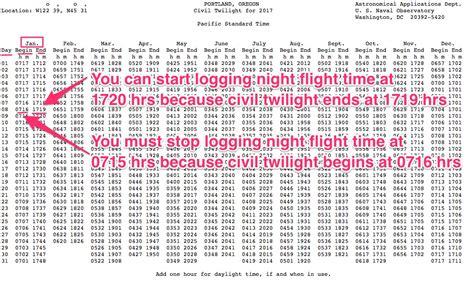
Civil twilight is another key concept when it comes to night flight and landings. This period begins and ends when the Sun is geometrically 6 degrees below the horizon. The FAA defines ‘night’ as the period between the end of evening civil twilight and the beginning of morning civil twilight. This period is crucial because it is the time when you can start logging your night flight hours.
Civil twilight ends roughly 20 to 35 minutes after sunset and begins approximately 20 to 35 minutes before sunrise. This variance can impact how pilots calculate their available night flying time. To ensure you have accurate information, you can use sources like the Navy’s Air Almanac, which publishes these times in local hours. For example, at Rocky Mountain Metro Airport (KBJC), civil twilight might end at 6:31 PM and begin again at 6:58 AM the next day. This means that night flight time could be logged during this window, as long as the aircraft is equipped for night VFR.
Logging Night Flight Time
When it comes to logging night flight time, the key factor is ensuring that the flight occurs between the end of evening civil twilight and the beginning of morning civil twilight. This allows you to count the time as night flight hours. Importantly, the aircraft must be night- VFR (Visual Flight Rules) equipped during these hours. This means your aircraft should have functioning lighting systems and instruments necessary for safe night flying.
For instance, if you are flying at an airport like KBJC, you could begin logging night flight time any time after 6:31 PM, when civil twilight ends, until 6:58 AM the following day, when civil twilight begins again. These times will vary depending on the airport, so it’s essential to have a reliable method of tracking these critical moments.
Night Landings and Passengers
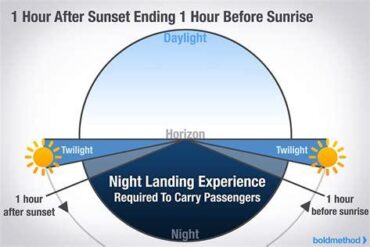
A common area of confusion for many pilots involves night landings, especially when it comes to carrying passengers. According to FAR 61.57(b), in order to carry passengers at night (from one hour after sunset to one hour before sunrise), you must have made at least three full stop landings and takeoffs during this time period in the preceding 90 days. This requirement ensures that the pilot is current and proficient in landing at night, where visibility and other factors may differ significantly from daylight operations.
These landings must occur during the specific window from one hour after sunset to one hour before sunrise. For example, if sunset occurs at 6:03 PM, you can begin your required landings at 7:03 PM. It’s important to track these times carefully to ensure that you remain current on your night landings and are legally able to carry passengers after dark.
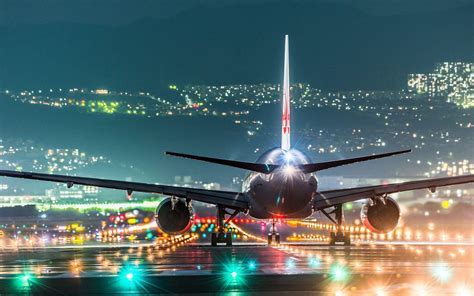
Combining All the Elements
So, when can you log night flight time and landings? To summarize, the key elements are as follows:
- Position lights must be on from sunset to sunrise, and anticollision lights should be used unless safety requires them to be turned off.
- You can log night flight time after the end of evening civil twilight and before the beginning of morning civil twilight, assuming your aircraft is night-equipped.
- Night landings, to carry passengers, require three takeoffs and landings in the preceding 90 days, occurring during the time between one hour after sunset and one hour before sunrise.
These rules and timeframes provide clarity on when and how to log your night flight and landing times, ensuring that you meet all the necessary requirements for safe and legal operations. By using tools like ForeFlight or consulting the Navy’s Air Almanac for civil twilight times, you can accurately track your flying hours and maintain compliance with FAA regulations.
Conclusion
Understanding when you can log night flight and night landings is crucial for every pilot, whether you’re a beginner or an experienced aviator. By adhering to the FAA’s guidelines and using accurate tools to track times, you can confidently log your night hours and ensure your aircraft is equipped for safe operations. Whether you’re flying for fun or carrying passengers, knowing the rules of night flying is a key part of becoming a better, more proficient pilot.
Night flying is a unique challenge that requires careful planning and attention to detail. However, with the right knowledge and preparation, it can be an exciting and rewarding aspect of your aviation career.