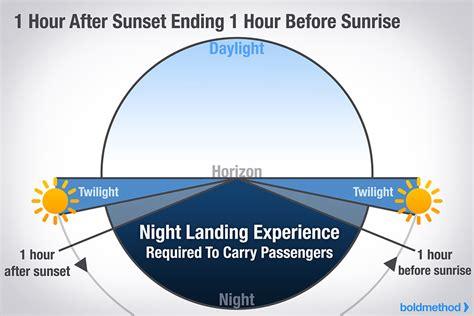
Flying at night is a crucial skill for pilots, yet it remains one of the most misunderstood aspects of flight logging. The Federal Aviation Administration (FAA) has set forth three distinct definitions of night, each relevant to different regulatory purposes, including lighting requirements, logbook entries, and passenger-carrying currency. Understanding these distinctions is vital for ensuring compliance and safety during night operations.
The answer to “When can you log night time flying?” depends not on a single rule but on an interplay of regulatory timeframes:
-
Sunset to sunrise (for aircraft lighting)
-
End of evening civil twilight to beginning of morning civil twilight (for logging night flight time)
-
One hour after sunset to one hour before sunrise (for passenger-carrying currency)
Each of these has a distinct regulatory basis and purpose, and failing to differentiate them can lead to noncompliance, especially during check rides or inspections.
Sunset to Sunrise: The Start of Night for Lights
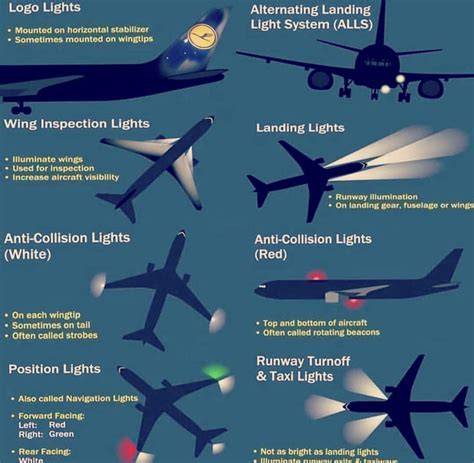
According to FAR 91.209, aircraft must have position lights illuminated from sunset to sunrise. Additionally, if equipped, anticollision lights must also be operational during this period, unless deemed unsafe—for example, while on the ramp or in dense cloud cover.
The official FAA definition of sunset is based on the moment the upper limb of the Sun appears tangent to the horizon under standard conditions. While the science behind this involves complex celestial calculations, modern pilots rely on digital tools like ForeFlight, which accurately lists sunrise and sunset times for any airport.
Civil Twilight: Logging Night Flight Time
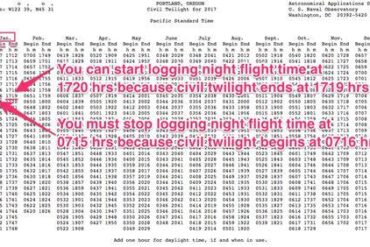
The FAA’s definition of “night”, for the purpose of logging night flight time, is found in 14 CFR §1.1. It is the period between the end of evening civil twilight and the beginning of morning civil twilight. During this timeframe, pilots may record flight time in their logbooks as night flying.
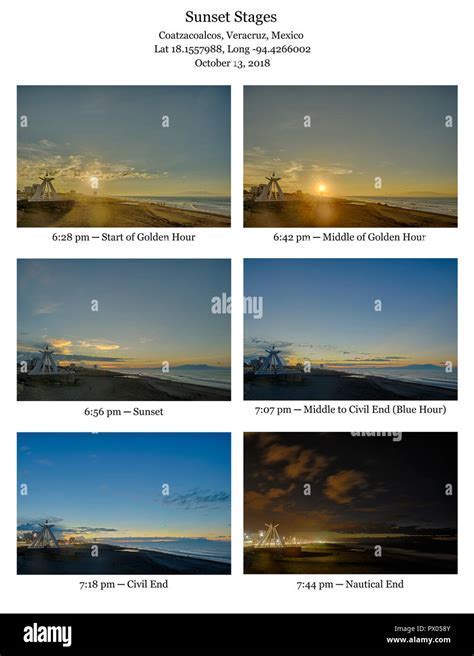
Civil twilight is defined as the period when the Sun is between 0° and 6° below the horizon. It generally ends 20–35 minutes after sunset, depending on atmospheric conditions and latitude. To determine this precisely, pilots are encouraged to consult the U.S. Naval Observatory’s Air Almanac or aviation apps that incorporate this data.
At Rocky Mountain Metropolitan Airport (KBJC), for instance:
-
Sunset: 6:03 PM
-
Civil twilight ends: 6:31 PM
Therefore, pilots can begin logging night flight time at 6:31 PM.
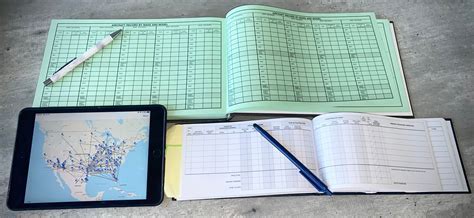
This distinction is critical, especially for training flights or for meeting minimum hour requirements for ratings or endorsements. Logging night time before the end of civil twilight would be considered noncompliant under FAA rules.
One Hour After Sunset to One Hour Before Sunrise: Night Currency for Carrying Passengers
The third and most stringent definition comes from FAR 61.57(b), which states that to carry passengers at night, a pilot must have completed three takeoffs and landings to a full stop within the previous 90 days, during the period beginning one hour after sunset and ending one hour before sunrise.
Using the KBJC example again:
-
Sunset: 6:03 PM
-
Night landing currency window begins: 7:03 PM
Landings conducted prior to this window—even if it’s already dark—do not count toward maintaining night passenger-carrying currency. This precise cutoff often surprises even experienced pilots and can lead to unintentional regulatory violations.
These landings must be to a full stop and logged accordingly. Touch-and-goes, while useful for practice, do not fulfill this requirement. As a result, pilots planning to carry passengers during late evening flights must be deliberate in scheduling currency landings during this regulatory window.
The Alaska Exception: Visibility Over Chronology
In Alaska, due to its unique daylight conditions, the FAA modifies the standard lighting requirement. According to the FARs, aircraft must display position lights when a prominent unlighted object cannot be seen from a distance of three statute miles, or when the sun is more than 6° below the horizon. This exception acknowledges the prolonged twilight hours in northern latitudes and adapts safety rules accordingly.
This special provision underscores the geographic variability in interpreting FAA regulations and reinforces the importance of checking location-specific guidance.

Integrating All Three Definitions for Compliance
To ensure full regulatory compliance, pilots must understand how all three of the FAA’s night definitions interrelate:
-
Use position and anticollision lights from sunset to sunrise
-
Log night flight time only after civil twilight ends
-
Log night takeoffs/landings for currency only one hour after sunset and before one hour before sunrise
Failing to adhere to the precise cutoffs may lead to logbook discrepancies, or worse, a regulatory violation during an FAA audit. It is advisable for pilots to rely on tools like ForeFlight, LogTen Pro, or the Naval Observatory to track these dynamic times accurately.
Practical Scenarios and Misconceptions
Let’s examine a common scenario:
A student pilot departs at 6:20 PM, with sunset at 6:03 PM and civil twilight ending at 6:31 PM. The instructor logs this flight as night time beginning only at 6:31 PM, even though the entire flight took place in darkness. This approach is correct—the darkness outside is irrelevant; only the civil twilight cutoff matters.
In another case, a pilot conducts three full-stop landings at 6:30 PM with sunset at 6:03 PM. These do not qualify for night currency because they occurred before the one-hour post-sunset window. While visually dark, they fall outside the regulatory definition.
Such scenarios highlight the importance of precise logbook discipline and real-time time tracking.
Why It Matters: Safety, Legality, and Professionalism
The FAA’s tiered system of night definitions isn’t mere bureaucracy—it exists to enhance safety. Civil twilight represents the threshold at which ambient lighting becomes insufficient for VFR navigation. Similarly, night currency requirements ensure that pilots carrying passengers are proficient in night operations, where visual cues are limited and reaction time is crucial.
Moreover, for commercial pilots or those pursuing advanced certifications, logbook integrity is paramount. Errors in night time logging can result in denied checkrides, legal penalties, or loss of insurance coverage during claims.
Conclusion: Know Your Definitions, Fly with Confidence
Understanding when you can log night time flying requires precision, not guesswork. The FAA’s three definitions serve specific regulatory purposes:
-
Sunset to sunrise: Light requirements
-
Civil twilight: Logbook night flight entries
-
One hour after sunset: Night landings for currency
By respecting these distinctions and using accurate resources, pilots uphold both legal compliance and flight safety.
FAQ
Can I log night time if it’s already dark before civil twilight ends?
No. According to the FAA, you may only log night flight time after evening civil twilight ends, regardless of how dark it appears outside. Visual darkness does not override the regulatory definition.
Do touch-and-go landings count for night passenger currency?
No. To meet FAR 61.57(b) requirements for carrying passengers at night, landings must be to a full stop and performed during the specified one-hour-after-sunset to one-hour-before-sunrise window.
What tools help determine exact night logging times?
Digital flight apps like ForeFlight and LogTen Pro are highly effective. They calculate sunset, civil twilight, and night currency times automatically, minimizing guesswork and ensuring logbook accuracy.