Flying at night presents a dramatically different challenge from flying during the day. The absence of sunlight, the complexity of light-based illusions, and the limited visibility of terrain mean that pilots must rely on specialized training, sophisticated equipment, and carefully designed lighting systems to navigate safely. From the moment the aircraft powers up on a dimly lit runway to cruising miles above a sleeping city, every step is aided by technology and discipline designed to make night operations just as safe as those in daylight.
The Role of Lighting Before Takeoff
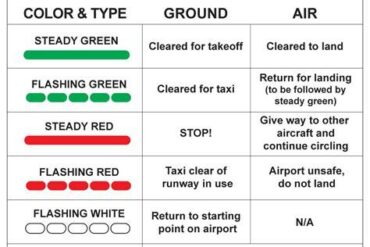
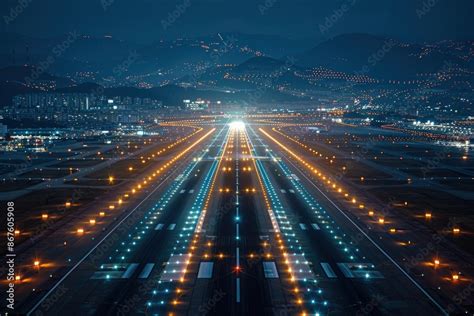
Before the wheels ever leave the ground, runway lighting systems play a crucial role. Airports around the world use a standardized array of lights to signal direction, boundaries, and position:
- Runway Edge Lights (white) help define the edges of the runway.
- Taxiway Lights (blue) mark the designated paths for moving aircraft.
- Runway End Identifier Lights (REILs) offer flashing cues to show the beginning of usable runway.
- Approach Lighting Systems (ALS) extend from the end of the runway into the approach path to guide incoming aircraft.
These lighting systems are especially critical during night departures or arrivals in bad weather, when visual references are limited or completely absent.
Cockpit Lighting: Subtle Illumination for Maximum Awareness
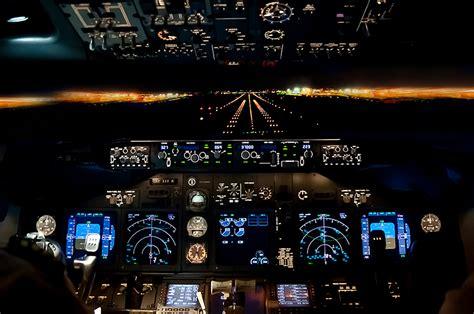
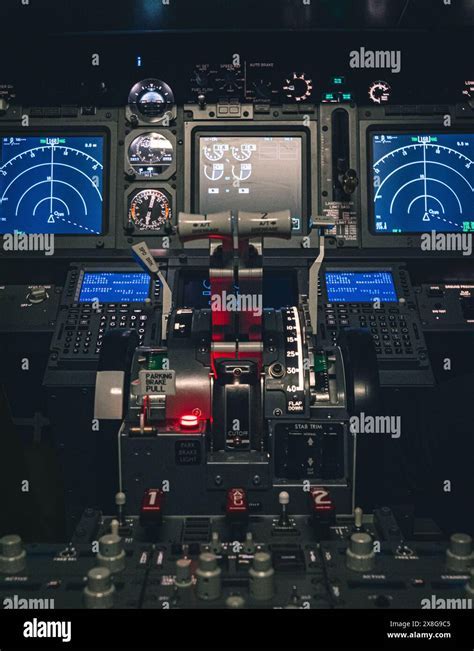
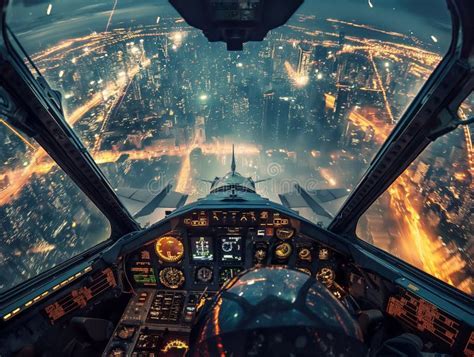
Inside the cockpit, pilots work under a carefully engineered lighting setup. Unlike the bright overheads in a car or a home, cockpit lights are dimmed to preserve night vision. The instrument panel is softly backlit with red, green, or white light to provide clarity without glare. Adjustable overhead lights and map lights offer selective illumination for reading checklists or navigation charts.
This controlled lighting helps avoid sudden light exposure, which can temporarily blind a pilot. The eyes, once adjusted to the dark, require up to 30 minutes to fully recover from a bright flash — a delay that can be dangerous mid-flight.
Night Vision Challenges in the Sky
As the aircraft climbs and the urban glow recedes behind, pilots face a visual landscape that is often deceptive. At higher altitudes, depth perception weakens, and terrain becomes difficult to distinguish. Isolated lights on the ground can appear to move, while clusters of city lights may resemble celestial constellations.
Spatial disorientation is a significant threat. The body’s internal cues—such as balance and direction—can become unreliable without clear visual anchors. Pilots may perceive a climb when they’re actually descending or believe they’re banking when level.
To overcome this, pilots depend heavily on their instruments:
- Attitude Indicator: Shows the aircraft’s orientation relative to the horizon.
- Altimeter: Measures the aircraft’s altitude above sea level.
- Heading Indicator: Displays the direction of flight.
- Airspeed Indicator: Tracks the speed relative to the air.
These tools provide a true picture of the aircraft’s behavior, regardless of what the eyes suggest.
Technologies That Help Pilots Navigate in the Dark
Modern aircraft are equipped with a suite of advanced technologies designed specifically to support night navigation and terrain awareness. These include:
- GPS Navigation Systems: Provide precise position data.
- VORs (Very High Frequency Omnidirectional Range): Ground-based stations that emit signals aircraft use for navigation.
- Synthetic Vision Systems (SVS): Create a computer-generated image of the terrain ahead based on topographical databases.
- Infrared Cameras and Enhanced Vision Systems (EVS): Offer real-time imaging that can detect heat signatures, improving visibility of runways, terrain, and obstacles.
These systems transform invisible surroundings into actionable visuals, giving pilots confidence in what lies beyond the windshield.
The Anti-Collision Beacon: A Small Light With Big Purpose
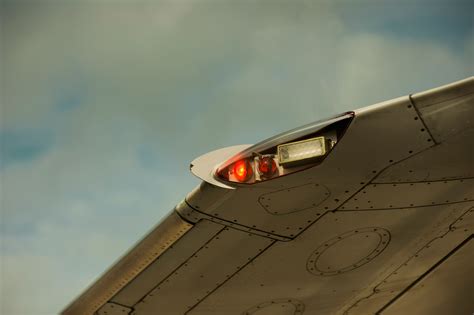
If you’ve seen a plane blinking red as it flies overhead at night, that’s not just for show. The anti-collision beacon is a critical part of aircraft safety. Located on top and bottom of the fuselage, these rotating red or white lights make the aircraft visible to others sharing the same airspace, significantly reducing the risk of mid-air collisions.
Pilots also use navigation lights—red on the left wing, green on the right, and white on the tail—to help determine the aircraft’s direction relative to the viewer.
How the Human Body Affects Night Flying
Flying at night isn’t just a technical challenge — it’s a physiological one too. At altitude, the reduced oxygen levels can lead to mild hypoxia, even at altitudes as low as 5,000 feet. Symptoms include impaired night vision, slowed reaction times, and fatigue.
To counter this, the Federal Aviation Administration (FAA) recommends supplemental oxygen for night flights above this threshold. Additionally, pilots are trained to scan the sky using off-center vision, a technique that compensates for the retina’s poor performance in dim light. Instead of staring directly at an object, they glance slightly to the side, allowing rod cells (better suited to low-light vision) to capture the image.
Night Flight Training Requirements
Night flying is a core part of pilot education. In the U.S., FAA regulations require aspiring private pilots to complete:
- At least 3 hours of night flight training.
- 10 takeoffs and landings conducted after sunset.
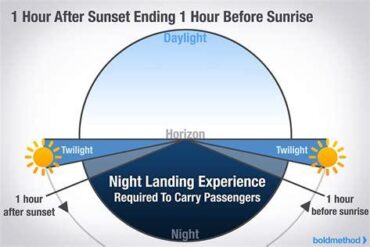
The aim is to prepare pilots to operate without visual references, relying on instruments, lighting systems, and ATC communication. Even after obtaining a license, pilots must maintain currency. To carry passengers at night, the pilot must have logged three full-stop night landings within the last 90 days.
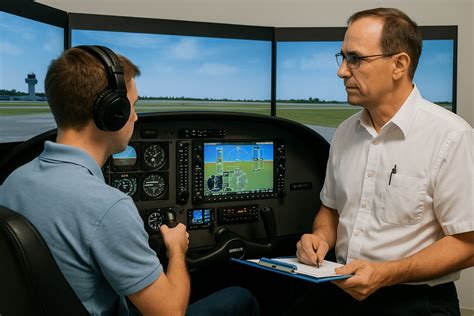
Simulators also play a role in training, providing a safe environment to practice handling night-specific scenarios, such as electrical failures or navigation in complete darkness.
Autopilot and Crew Rest During Long Night Flights
On long-haul flights, especially those exceeding eight hours, cockpit crews operate in shifts. The aircraft’s autopilot system handles the bulk of flying at cruising altitude, allowing pilots to take regulated rest breaks in crew rest compartments or designated seating areas. This ensures the crew remains alert for takeoff, landing, and emergencies.
Fatigue is managed through rigorous scheduling. Before each flight, pilots are expected to be well-rested, and airlines must adhere to Flight Duty Period (FDP) regulations to prevent overwork.
Air Traffic Control: The Invisible Guardian at Night
Pilots are never alone in the sky. Night or day, air traffic controllers guide the flight with precise instructions on altitude, heading, and approach. At night, this relationship becomes even more vital. Controllers provide updates on weather changes, nearby aircraft, and any potential hazards.
Many airports also use runway status lights (RWSL), an automated system that warns pilots when a runway is unsafe for takeoff or crossing. These lights operate independently of ATC, providing an extra safety layer.
Why Night Flying Can Be Safer Than You Think
Despite the challenges, night flying is not inherently dangerous. In fact, the reduced air traffic, cooler air, and generally stable atmospheric conditions at night often create smoother flights. With proper training, equipment, and vigilance, pilots can navigate the night skies with a high degree of safety.
Still, no system is foolproof. That’s why continual training, physiological awareness, and teamwork between pilots and ATC remain the foundation of safe night operations. As aviation technology continues to evolve, the already high safety standards of nighttime flight are only expected to rise.
Final Thoughts
Flying in the dark is a seamless orchestration of human expertise, technological precision, and procedural discipline. Pilots don’t simply rely on eyesight — they interpret data, listen to instructions, monitor systems, and adjust to their body’s natural limitations. Every blinking beacon and softly glowing instrument serves a purpose, guiding them through a realm where streetlights don’t exist, but safety must remain absolute.
Thanks to decades of innovation and strict regulatory oversight, passengers can rest assured: when it comes to flying at night, pilots see more than meets the eye.