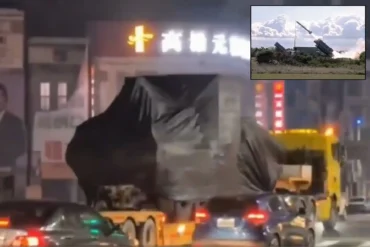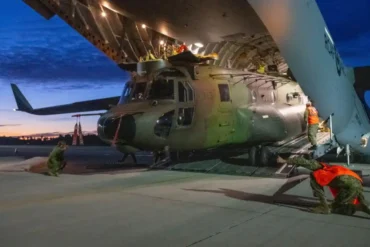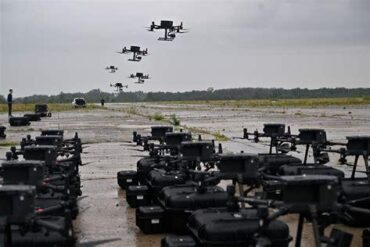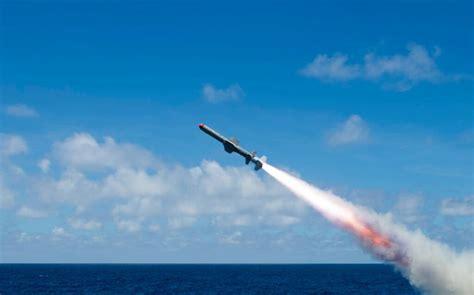
On June 28, 2025, Taiwan marked a pivotal moment in its evolving defense posture with the arrival of the first five U.S.-supplied Harpoon Coastal Defense Systems (HCDS). This initial delivery, part of a broader $2.37 billion arms package, includes five mobile missile launcher vehicles and one radar truck, signifying a transformative step in Taiwan’s efforts to fortify its coastline against increasing Chinese naval assertiveness.
The delivery underscores a significant escalation in the strategic chess match unfolding across the Taiwan Strait. With cross-strait tensions reaching their highest levels in decades, the inclusion of land-based Harpoon Block II anti-ship missiles into Taiwan’s arsenal is not only timely but also emblematic of a broader shift toward asymmetric warfare doctrines aimed at offsetting the numerical superiority of the People’s Liberation Army Navy (PLAN).
Taiwan’s Strategic Pivot to Mobility and Precision
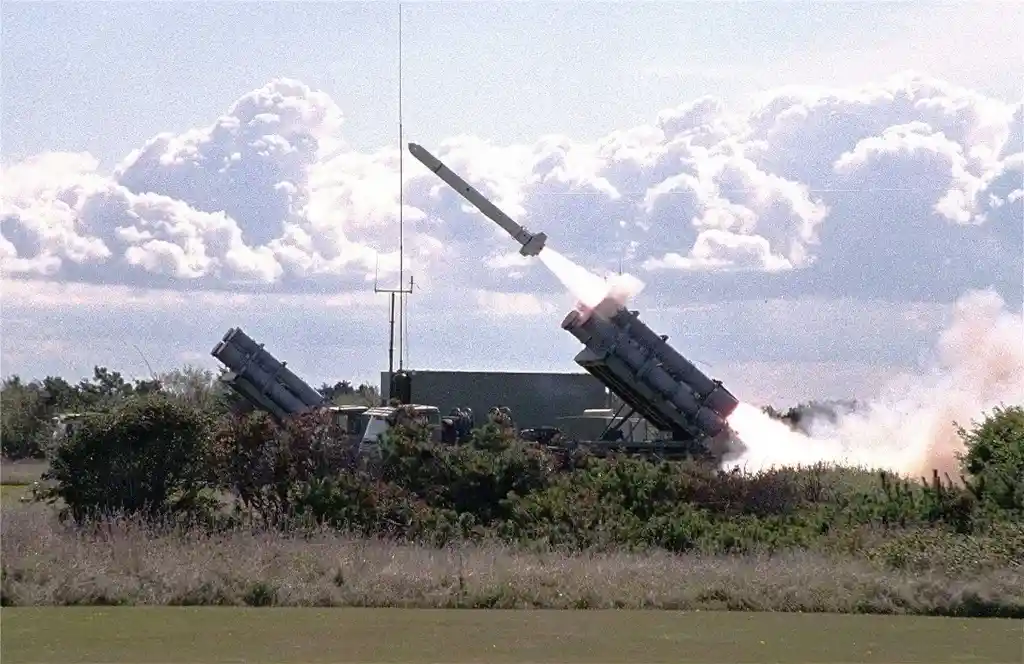
Unlike legacy coastal artillery systems, the Harpoon Coastal Defense System is built around mobility, survivability, and rapid redeployment. Mounted on heavy-duty tactical vehicles, the system provides Taiwan’s armed forces with the ability to dynamically reposition launchers across rugged coastal terrain, complicating adversary surveillance and targeting efforts.
This tactical flexibility is further enhanced by the integrated radar truck, which enables real-time threat detection and engagement without requiring reliance on external sensor networks. In practice, this makes Taiwan’s missile batteries more resilient to electronic warfare, satellite jamming, and first-strike decapitation attacks—all core elements of a potential Chinese A2/AD (Anti-Access/Area-Denial) campaign.
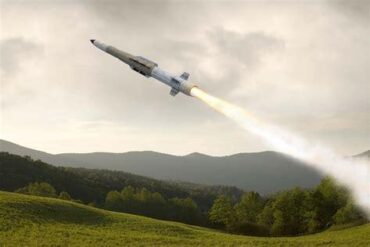
Each RGM-84L-4 Harpoon Block II missile brings formidable capabilities to Taiwan’s defense grid. Utilizing GPS-aided inertial guidance, active radar seekers, and a sea-skimming profile, the missile is engineered to evade sophisticated shipboard defenses while delivering a 221 kg high-explosive warhead to targets up to 124 kilometers away. This provides Taiwan with an ability to interdict Chinese naval forces far beyond its territorial waters, potentially deterring amphibious assault formations before they close within striking distance.
A Symbol of U.S.-Taiwan Security Collaboration
This delivery is part of a broader strategic alignment between Washington and Taipei, rooted in decades of security cooperation and reaffirmed by the Taiwan Relations Act. The full Foreign Military Sales (FMS) agreement—approved by the U.S. Defense Security Cooperation Agency (DSCA) in October 2020—encompasses:
- 100 Harpoon launcher vehicles
- Up to 400 RGM-84L-4 Harpoon Block II missiles
- 4 RTM-84L-4 training variants
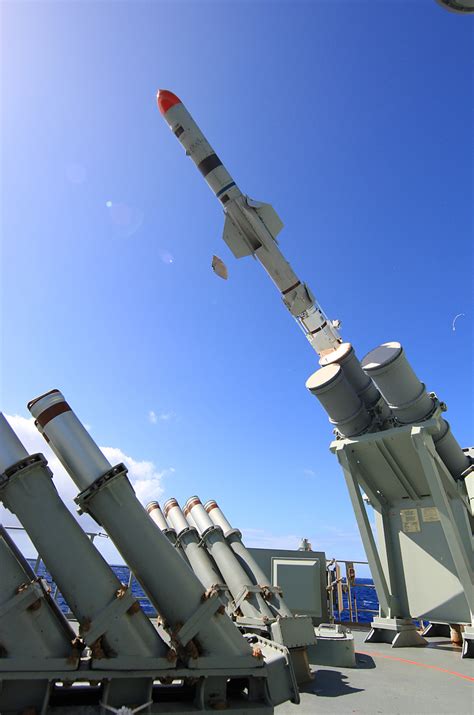
The systems will be delivered in phases through 2028, with each shipment expected to augment Taiwan’s multi-layered coastal defense matrix. While the current delivery comprises just 5% of the total package, it marks the operational beginning of a broader deterrent strategy engineered to make a full-scale maritime invasion too costly and risky for the Chinese military.
China’s Maritime Coercion and the Growing Need for Resilience
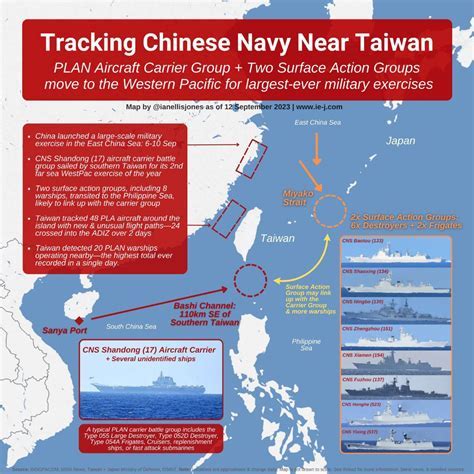
Taiwan’s accelerated acquisition of advanced missile systems is taking place against the backdrop of frequent PLAN naval drills, gray zone tactics, and unrelenting Chinese declarations of sovereignty over the island. These developments have led defense planners in Taipei to prioritize resilient, mobile, and networked weapon systems over fixed installations that could be easily neutralized in the opening moments of a conflict.
China’s PLAN, now the world’s largest naval force by ship count, conducts routine patrols and joint exercises in the East and South China Seas. In response, the Harpoon systems allow Taiwan to establish a forward-deployed deterrent line—one that is difficult to detect, difficult to disable, and instantly responsive.
According to military experts, the Harpoon’s land-based deployment dramatically complicates Chinese targeting operations. Any PLAN task force attempting to close in on Taiwan’s shores will now have to operate under constant threat of missile engagement, which, in turn, may deter aggressive maneuvers, delay decision-making, or force the diversion of air and naval assets toward finding and neutralizing launcher positions.
The Technical Edge: How Harpoon Block II Changes the Game
The RGM-84L-4 is the latest and most capable surface-launched variant of the venerable Harpoon missile. While the air- and sea-launched variants have been in service globally for decades, the Block II version introduces upgrades tailored for modern littoral warfare. Its capabilities include:
- High resistance to countermeasures via active radar seekers
- Improved accuracy using GPS-aided guidance
- Low radar cross-section and sea-skimming flight path
- Optimized performance in dense cluttered environments such as coastal bays, harbors, and island chains
These enhancements allow Taiwan to saturate maritime zones with credible threats, effectively denying sea control to any adversary without the need for costly blue-water naval expansion.
The Block II’s offensive capabilities are also well suited to interdict high-value PLAN assets—such as landing ships, logistics vessels, and amphibious transport docks—that would be indispensable during a hypothetical invasion of Taiwan.
Harpoon Systems and Taiwan’s Asymmetric Defense Doctrine
The Harpoon delivery reflects Taipei’s broader shift toward an asymmetric defense doctrine, an approach that prioritizes cost-effective, mobile, and dispersed platforms to erode enemy advantages. Rather than building massive fleets or attempting to outpace China ship-for-ship, Taiwan is embracing tactics and technologies that offer maximum impact with minimum exposure.
Alongside the Harpoon systems, Taiwan is also fielding:
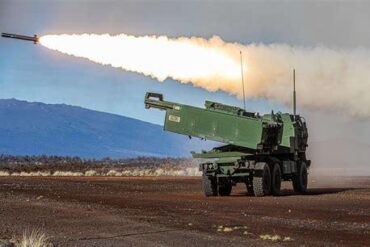
- HIMARS rocket artillery systems
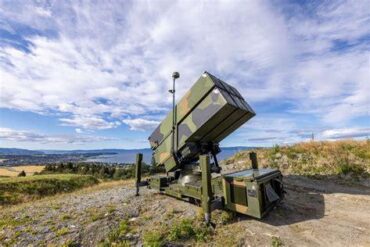
- Mobile air defense platforms such as Sky Bow III and Patriot PAC-3
- Indigenous drone fleets and loitering munitions
- Fast attack craft and undersea sensor arrays
These form a layered kill chain designed to disrupt, degrade, and deny any maritime assault at every stage—from staging and transit to landing and sustainment.
Implications for Regional Security and the Indo-Pacific Balance
The arrival of these U.S.-built systems is not just a matter of Taiwan’s domestic security—it holds significant ramifications for broader regional stability. For Japan, the Philippines, and Southeast Asian nations, the move signals a tangible commitment by the U.S. to uphold maritime freedom and counterbalance Chinese assertiveness.
From Washington’s perspective, reinforcing Taiwan’s defenses without direct stationing of U.S. troops provides a low-risk, high-reward mechanism to prevent Chinese coercion while maintaining strategic ambiguity. In turn, Beijing is expected to respond with heightened political and military pressure, possibly escalating PLA air incursions, naval patrols, and cyber operations.
Despite the risks, Taiwan’s determination to build a resilient defense grid—and America’s willingness to supply cutting-edge systems—has created a credible and visible deterrent that reshapes calculus in the Taiwan Strait.
Looking Ahead: Building a Harder Target
As future Harpoon deliveries continue through 2028, Taiwan’s coastline will increasingly resemble a fortified mesh of precision strike zones. With each mobile unit deployed, Taiwan becomes less predictable, more survivable, and more capable of executing denial operations at sea.
Analysts predict that once all 100 Harpoon launchers and 400 missiles are operational, Taiwan will be able to simultaneously engage multiple enemy vessels along different coastal sectors, increasing strategic uncertainty for any adversary planning a seaborne assault.
In the years ahead, Taiwan’s defense calculus will likely involve integrating Harpoon batteries with ISR drones, command-and-control systems, and AI-assisted targeting platforms, creating a highly networked and responsive coastal defense net. The first five systems delivered in June are just the beginning.
Conclusion: A Calculated Counterweight to China’s Ambitions
The delivery of the first Harpoon Coastal Defense Systems marks a historic milestone for Taiwan’s national security. It reflects a decisive shift in both capability and mindset—one that recognizes the need to proactively shape the battlefield, deny enemy dominance, and hold key assets at risk.
As tensions rise in the Taiwan Strait, and as Beijing continues its campaign of coercion, these mobile missile systems are far more than military hardware. They are a strategic statement: that Taiwan is prepared, resolute, and capable of defending its sovereignty against any seaborne threat.
The U.S.-Taiwan defense partnership, emboldened by this delivery, has reinforced a central truth in Indo-Pacific security: deterrence begins not with promises—but with platforms, preparation, and precision strike capability on the ground.