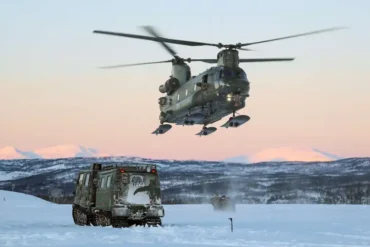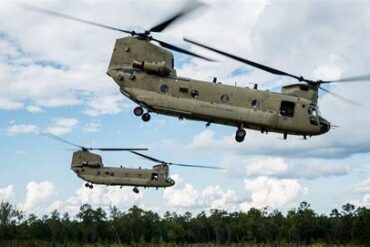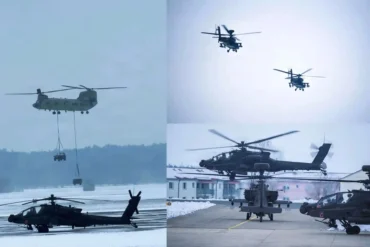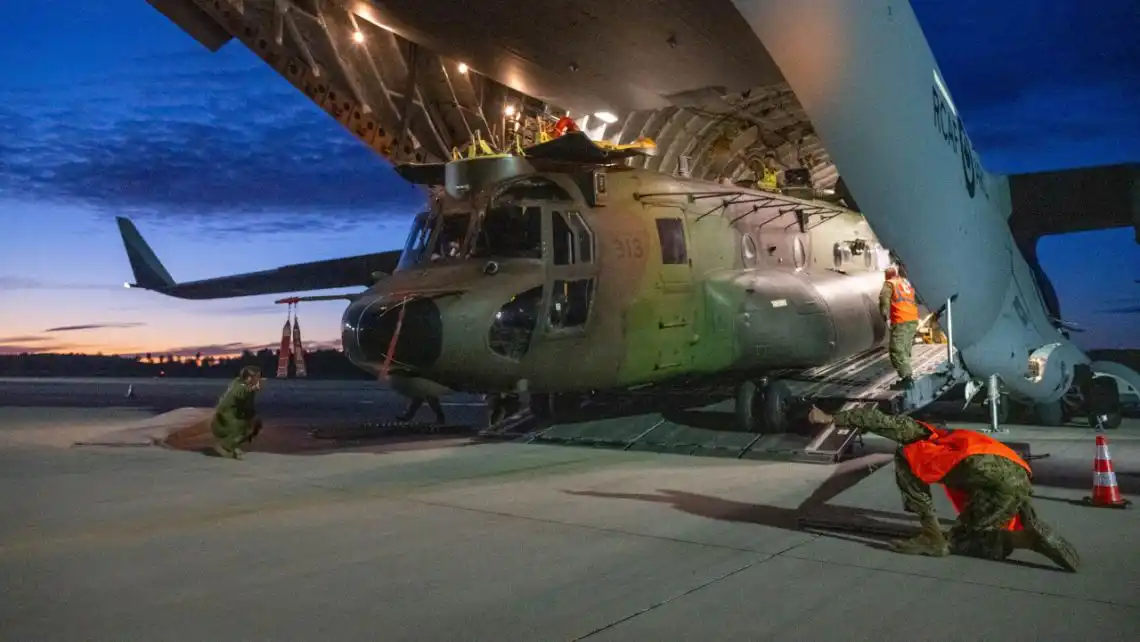
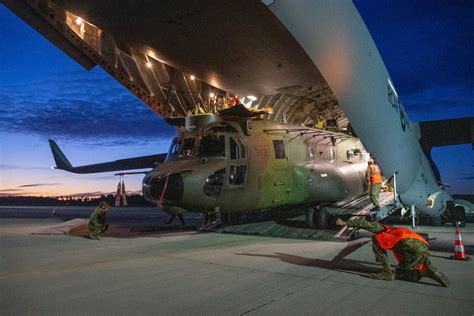
Canada has deployed two CH-147 Chinook military helicopters to Latvia, marking a significant reinforcement of NATO’s deterrence posture in the Baltic region. The aircraft, known for their heavy-lift capabilities, arrived at Lielvārde Air Base, where they are undergoing final preparations before becoming fully operational. Their arrival is seen as a strategic augmentation of Canada’s role in NATO’s forward presence along the eastern flank, especially amid heightened regional tensions.
Strategic Deployment of CH-147 Chinooks in the Baltics
The deployment of the CH-147 Chinook helicopters, Canada’s variant of the renowned Boeing CH-47, comes as part of Operation REASSURANCE, the country’s largest overseas military commitment. Designed to transport troops, equipment, and conduct logistics support missions, these twin-rotor helicopters offer exceptional operational flexibility. With a maximum payload capacity of over 12,000 kilograms, the Chinooks are particularly valued for their ability to conduct single-sling load operations — a critical asset for rapid response scenarios and complex tactical insertions.
According to Task Force Latvia, the Canadian military formation overseeing operations in the country, the arrival of these helicopters introduces “a whole new set of capabilities” to the multinational brigade. Their integration will complement existing aerial assets and enable quicker mobility of forces across the Latvian theatre, enhancing mission readiness.
Aerial Reinforcement of NATO’s Multinational Brigade
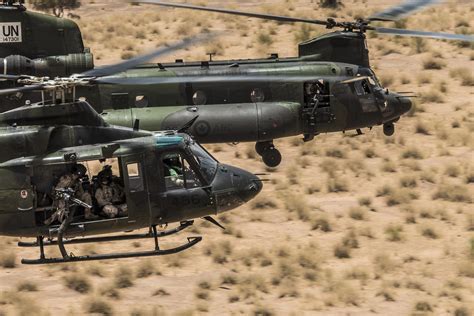
These Chinooks will integrate with four CH-146 Griffon helicopters that Canada deployed to Latvia in July 2024. The CH-146, a multi-role utility helicopter, is used primarily for reconnaissance, transport, and search-and-rescue missions. Combined, the CH-147 and CH-146 platforms represent a robust tactical aviation component capable of supporting joint operations with NATO partners.
The Chinooks will operate as part of a newly established aviation battalion, reinforcing not only Canadian forces but also contributing to multinational interoperability. This aviation battalion supports NATO’s Multinational Brigade Latvia, a force composed of troops and equipment from Albania, Czech Republic, Italy, Montenegro, North Macedonia, Poland, Slovakia, Slovenia, Spain, and most recently, Sweden.
Enhancing Readiness Through Mobility and Versatility
The Chinook’s role in modern battlefield operations cannot be overstated. Its unique tandem-rotor design allows it to operate in high winds and confined landing zones, while its long operational range ensures effective logistical support deep into contested or remote terrain. In the Latvian context, this translates into faster reinforcement of front-line units, better resupply capabilities, and increased flexibility in combined-arms maneuvering.
From a tactical standpoint, the Chinooks enhance vertical lift capacity, allowing forces to bypass road-based supply routes that could be vulnerable to disruption or surveillance. In NATO’s Baltic scenario — where speed, mobility, and rapid reinforcement are critical — these helicopters can act as a strategic lifeline in both defensive and deterrent roles.
A Symbol of Canada’s Long-Term Commitment
Canada’s decision to send CH-147s is a clear signal of enduring commitment to the Baltic allies. Since 2017, Canadian forces have led the NATO Enhanced Forward Presence (eFP) battle group in Latvia. The eFP mission, a response to Russia’s annexation of Crimea and increased aggression in Eastern Europe, aims to deter further regional destabilization through persistent forward deployment of multinational forces.
By expanding its footprint to include a full aviation component, Canada demonstrates that its contributions go beyond ground forces. With Chinooks and Griffons now stationed in Latvia, Canadian military assets are among the most diverse and capable in the NATO Eastern European theatre.
The Baltic Theatre: Rising Tensions and Renewed Focus
This deployment comes at a time of rising geopolitical tension in the Baltic region. The proximity of Latvia to the Russian exclave of Kaliningrad and the presence of Russian forces across the border in Belarus underscore the strategic sensitivity of the area. In this volatile environment, NATO’s forward presence acts as a tripwire force — a mechanism designed to deter adversarial actions through the promise of immediate multinational response.
For Latvia, the arrival of Canadian Chinooks is more than symbolic. It provides reassurance to its citizens and military partners, demonstrating that NATO has both the will and the means to act decisively. Canadian helicopters will enhance the country’s ability to conduct joint exercises, humanitarian missions, and live fire training, all of which serve to boost alliance cohesion and operational trust.
Integration and Interoperability with NATO Allies
One of the key benefits of deploying such advanced airframes is the opportunity to strengthen interoperability with other NATO members. During multinational exercises like Saber Strike, Iron Spear, and Silver Arrow, Chinooks will likely work closely with NATO’s mechanized infantry, artillery, and special operations units. These exercises often simulate combat insertion, casualty evacuation (CASEVAC), and aerial resupply under fire, tasks for which the CH-147 is ideally suited.
Furthermore, the integration of Canadian helicopters into NATO structures builds on lessons learned from previous joint missions in Afghanistan and Iraq, where Chinooks proved vital in mountainous terrain and contested airspace. These experiences are now being re-applied in a European context where terrain, weather, and threat dynamics vary but still demand agile air mobility solutions.
Technical Capabilities of the CH-147 Chinook
The CH-147 Chinook is not just a large helicopter; it’s a battle-proven powerhouse tailored to meet the demands of modern coalition warfare. Based on the American CH-47F, the Canadian variant includes several enhancements:
- Extended range fuel tanks, increasing operational distance
- Advanced avionics and digital cockpit systems, improving situational awareness
- Ballistic protection and infrared countermeasures, for high-threat environments
- Triple-hook cargo system, supporting simultaneous or sequential sling load operations
- Crew capacity of 3 (pilot, co-pilot, flight engineer) and up to 33 troops or 24 stretchers
These features make the CH-147 a versatile platform for assault missions, humanitarian aid delivery, disaster relief, and tactical extraction. In Latvia, it offers a critical aerial bridge between logistics hubs and front-line units.
A Broader NATO Trend Toward Force Modernization
Canada’s move mirrors a broader NATO trend of modernizing forward-deployed forces. In recent months, Estonia took delivery of the HIMARS rocket system, adding deep strike capabilities to the alliance’s eastern edge. Meanwhile, the United States, United Kingdom, and Germany have all increased their rotational troop levels and prepositioned equipment across the Baltic States.
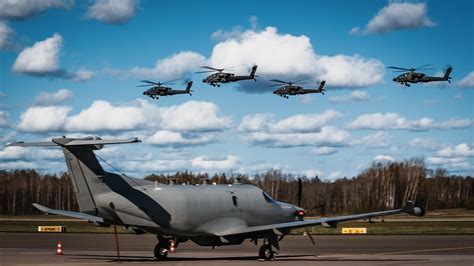
Latvia’s role as a frontline state makes it a strategic anchor for these deployments. Lielvārde Air Base, where the Chinooks are based, is rapidly transforming into a hub for multinational aviation operations. Infrastructure upgrades, improved refueling stations, and hardened hangars indicate that NATO intends to maintain — and possibly expand — its aerial presence in the country.
Conclusion: More Than Just Helicopters
The arrival of two CH-147 Chinook helicopters in Latvia is a force-multiplier for NATO, amplifying mobility, readiness, and deterrence in one of Europe’s most sensitive regions. But beyond technical capabilities, this move represents Canada’s deepening strategic alignment with its allies, a reaffirmation that the transatlantic bond is alive and mission-focused.
As the geopolitical temperature in Eastern Europe continues to fluctuate, the ability to move troops and material quickly, safely, and efficiently may become the defining edge in any future crisis. With the Chinooks now operational, NATO’s Baltic contingent is one step closer to achieving that edge.