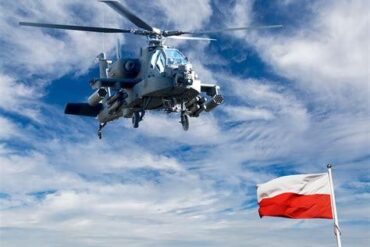
The U.S. Army has intensified its aviation training posture in Europe, deploying AH-64E Apache attack helicopters and CH-47F Chinook heavy-lift helicopters to Germany for a demanding multinational exercise focused on protecting and sustaining NATO air mobility. Conducted by the 12th Combat Aviation Brigade, the training underscores how attack and heavy-lift aviation integrate to enable rapid reinforcement, sustainment, and maneuver across Europe’s most strategically vital transit corridor.
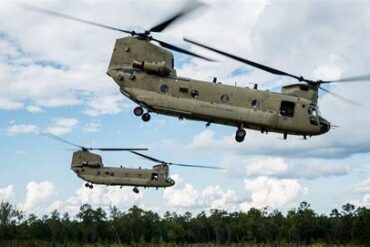
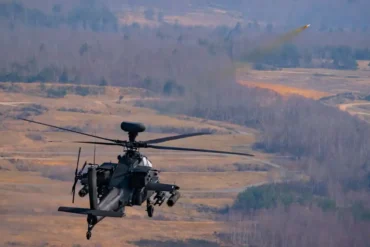
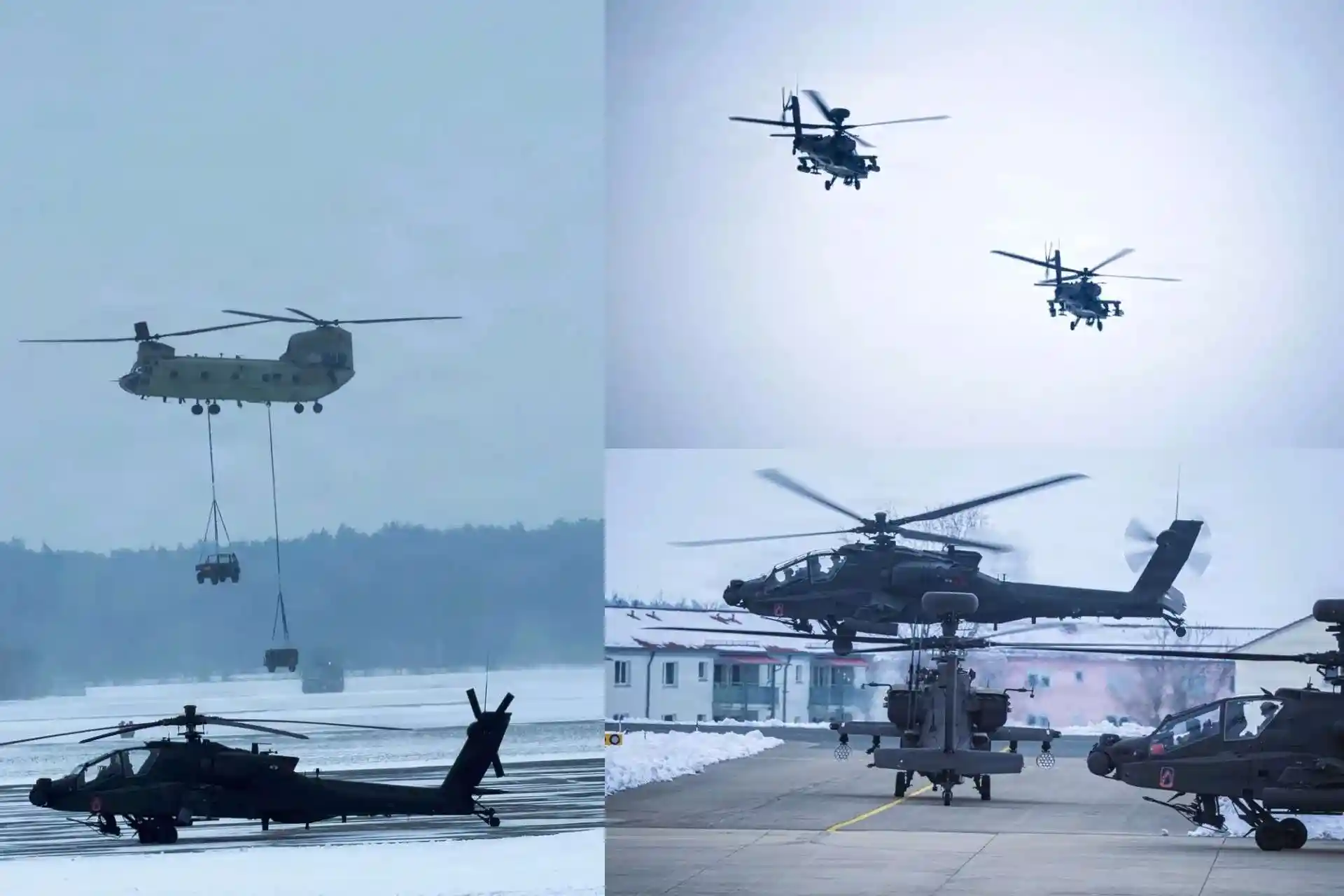
This training, known as Aviation Maneuver Training Exercise Center (AMTEC) 26-01, brought together U.S. Army units and allied forces in a rehearsal that mirrors the tempo and complexity of real-world operations. Imagery released via DVIDS in early February 2026 shows Apaches from the 2-159th Attack Battalion departing Katterbach Army Airfield in formation, followed days later by Chinook sling-load operations near Celle, where allied coordination was on full display.
Germany’s role in this exercise is not incidental. As NATO’s logistical heartland, the country serves as the primary conduit for allied forces moving toward the eastern flank in any high-intensity contingency. Training aviation units to move swiftly between German airfields, coordinate with allies, and execute sustainment missions under realistic constraints sends a clear message about readiness and credibility.
Why Germany Remains NATO’s Air Mobility Linchpin
The visible relocation of U.S. Army Apaches across Germany during AMTEC 26-01 highlights a critical operational reality: intra-theater mobility is as decisive as forward deployment. The ability to reposition attack aviation rapidly allows NATO commanders to respond to shifting threats, protect key routes, and maintain pressure without relying on fixed basing.
Germany’s dense network of airfields, training areas, and logistical hubs makes it uniquely suited for such rehearsals. By practicing movements from Katterbach to Celle, U.S. Army aviation units demonstrated how attack helicopters can flow across the battlespace while remaining integrated with allied command structures. This is not a symbolic gesture; it is a repeatable drill designed to function under crisis conditions.
The exercise also reinforced airspace coordination with civilian authorities and allied militaries, an often overlooked but vital aspect of European operations. In a congested and closely monitored air environment, precision planning and execution become force multipliers.
AH-64E Apache: Networked Escort and Armed Reconnaissance
The AH-64E Apache occupies a central role in modern NATO aviation doctrine. Far beyond its reputation as a tank killer, the current-generation Apache is a digitally networked combat system. Equipped for manned-unmanned teaming, the aircraft can ingest data from UAVs, ground sensors, and allied platforms, transforming raw information into actionable awareness.
In European scenarios, this capability allows Apaches to function as armed reconnaissance and escort assets. During AMTEC 26-01, Apache crews rehearsed overwatch roles that would be essential for protecting air assault forces and logistical movements. By maintaining a protective umbrella over vulnerable lift aircraft, Apaches reduce the risk posed by ambushes, anti-armor teams, and emerging aerial threats.
The training emphasized coordination rather than standalone strikes. Apache crews practiced positioning, timing, and communication that align closely with heavy-lift operations, ensuring that firepower is applied precisely where it preserves mobility rather than merely destroying targets.
CH-47F Chinook and the Reality of Heavy Lift Sustainment
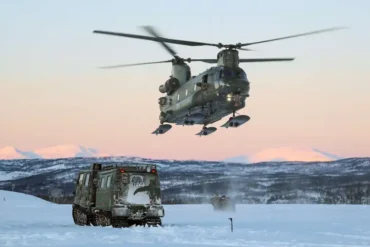
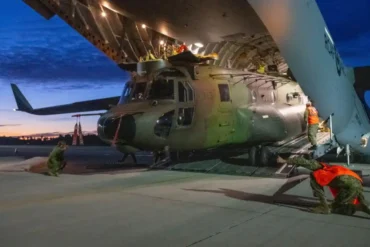
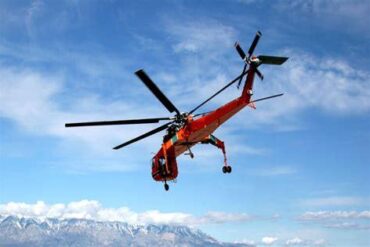
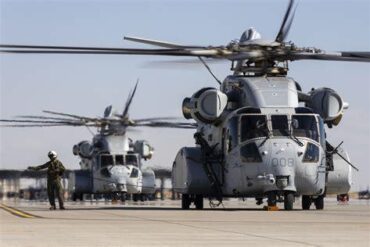
If the Apache provides protection, the CH-47F Chinook delivers endurance. The sling-load validations conducted near Celle were among the most operationally significant elements of the exercise. With a center hook capacity of up to 26,000 pounds, the Chinook is indispensable for moving the heavy equipment that keeps dispersed units operational.
Artillery systems, ammunition pallets, fuel bladders, engineer assets, and air defense components are all candidates for external lift when roads are damaged, congested, or under threat. Validating sling configurations and load procedures ensures that these missions can be executed safely and rapidly when conditions deteriorate.
The proximity of Apache escorts during these drills was deliberate. Heavy-lift helicopters are most vulnerable during takeoff, approach, and low-speed flight. Training under escort conditions builds muscle memory for crews on both platforms, aligning their tactics and expectations before a real-world contingency demands perfection.
Allied Integration with Dutch Aviation Forces
The participation of Dutch forces elevated the exercise from national training to genuine coalition rehearsal. The Royal Netherlands Army operates both Apache and Chinook helicopters, creating a rare opportunity to align procedures across identical aircraft categories. This is interoperability in its most practical form.
U.S. and Dutch crews trained on shared sling-load standards, escort formations, and airspace coordination measures. Such familiarity reduces friction during joint operations, allowing mixed formations to function as cohesive units rather than parallel elements. In a NATO contingency, this level of integration shortens response times and increases operational confidence.
The exercise also reinforced trust at the tactical level. Pilots, loadmasters, and commanders gained firsthand experience working together under realistic conditions, a factor that cannot be replicated through planning documents alone.
AMTEC and the Evolution of NATO Rotary-Wing Doctrine
The emphasis on AMTEC validation signals a broader shift in NATO’s approach to rotary-wing training. Dedicated facilities like AMTEC provide a controlled environment to rehearse complex aviation maneuvers tied directly to sustainment and mobility. By anchoring this capability in Germany, NATO ensures that allied aviation units can certify and refine tactics where they are most likely to be employed.
Recent conflicts have highlighted the vulnerability of predictable ground logistics to drones, long-range fires, and electronic surveillance. In response, NATO aviation doctrine increasingly favors air-based sustainment as a means of preserving operational tempo. Exercises like AMTEC 26-01 demonstrate how this adaptation is being internalized at the brigade level.
The pairing of heavy-lift logistics with armed escort is no longer optional; it is a prerequisite for survival in contested environments. The imagery from Germany captures this reality with striking clarity.
A Quiet but Powerful Deterrence Signal
What appears to casual observers as routine training carries strategic weight. By rehearsing the protection and sustainment of air mobility assets in Germany, the U.S. Army and its allies are signaling that NATO’s reinforcement pathways are not theoretical. They are practiced, validated, and ready to function under pressure.
The combination of Apache escort and Chinook heavy lift represents a compact expression of modern NATO power projection. It is not about massed formations or permanent forward basing, but about mobility, protection, and endurance. In that sense, AMTEC 26-01 is less about spectacle and more about assurance.
As Europe’s security environment remains tense, these drills quietly reinforce the alliance’s ability to move, fight, and sustain itself across the continent. The sling load beneath a Chinook and the watchful presence of an Apache overhead are more than training artifacts; they are the mechanics of credible deterrence in motion.