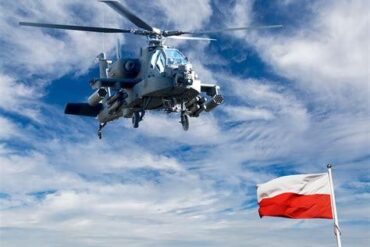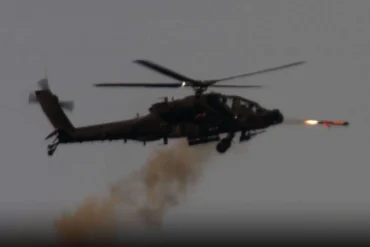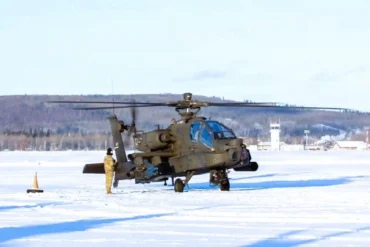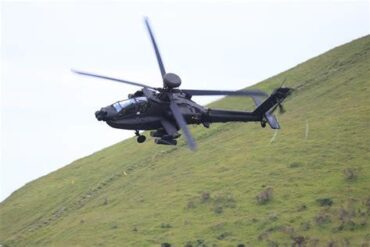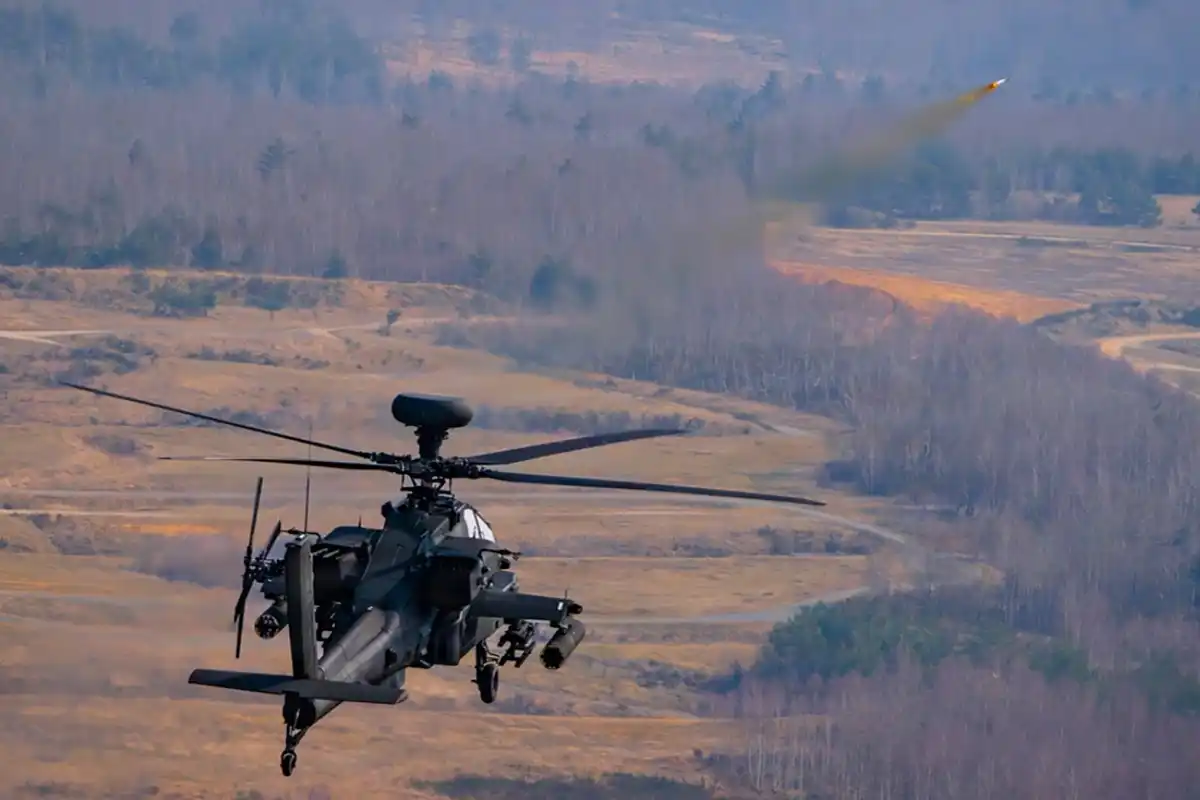
The evolving character of modern warfare is increasingly defined by the rapid proliferation of unmanned aerial systems, and NATO is responding with a decisive shift in how it employs its most proven platforms. During Operation Skyfall at the Grafenwoehr Training Area in Germany on March 18, 2026, a U.S. Army AH-64E Apache successfully engaged and destroyed a drone target in a live-fire scenario—an event that signals a meaningful transformation in battlefield tactics across the alliance’s eastern flank.
This demonstration was not an isolated training vignette but part of a broader operational experiment under the Eastern Flank Deterrence Initiative, designed to test how legacy combat systems can be adapted to counter emerging threats. The Apache, long associated with anti-armor warfare and close air support, is now stepping into a role that reflects the realities of a drone-saturated battlespace.
The implications are significant. NATO forces are no longer treating drones as peripheral nuisances but as central elements of modern conflict that demand immediate and flexible responses. By integrating counter-drone capabilities into frontline aviation units, the alliance is effectively expanding its defensive toolkit without waiting for entirely new platforms to be fielded.
Operation Skyfall: A Tactical Shift in Real Time
Operation Skyfall was conducted by elements of the 12th Combat Aviation Brigade, specifically involving AH-64E Apaches from the 2nd Battalion, 159th Aviation Regiment. The exercise focused on air-to-air engagement of unmanned systems, a mission set that would have seemed unconventional for attack helicopters just a decade ago.
What makes this event particularly notable is its framing. Official releases emphasized not only the technical success of the engagement but its strategic intent: demonstrating NATO’s ability to adapt rapidly to low-cost, high-volume aerial threats. In a security environment where adversaries increasingly rely on drones for reconnaissance, targeting, and strike missions, such adaptability is becoming indispensable.
Rather than relying solely on ground-based air defenses, which can be limited by terrain and line-of-sight constraints, Operation Skyfall explored how a mobile aerial platform could close coverage gaps. The Apache’s ability to patrol dynamically, identify targets, and engage them in real time introduces a new layer of responsiveness that static systems cannot easily replicate.
Why the AH-64E Apache Is Suited for Counter-Drone Missions
At first glance, the Apache might seem like an unlikely candidate for counter-drone warfare. However, its performance characteristics and combat systems reveal why it is surprisingly well-suited for this evolving role.
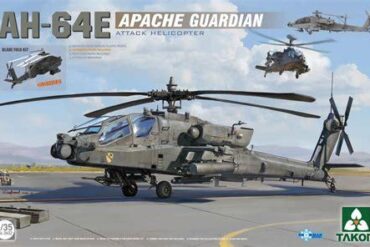
The AH-64E Guardian variant brings enhanced avionics, networking capabilities, and improved flight performance. With speeds exceeding 150 knots and an operational ceiling approaching 20,000 feet, it can rapidly reposition to intercept low-altitude aerial threats. Its onboard sensor suite, including advanced targeting systems, allows crews to detect and track small, fast-moving objects with increasing precision.
Armament flexibility further strengthens its case. The Apache can carry:
- AGM-114 Hellfire missiles for precision engagements
- 2.75-inch rockets adaptable for proximity or direct impact roles
- A 30 mm M230 chain gun capable of sustained fire against aerial targets
While these weapons were not originally designed for counter-UAS missions, their adaptability enables the Apache to engage drones under specific conditions. In particular, the chain gun offers a cost-effective solution for neutralizing smaller systems without expending high-value missiles.
From Anti-Armor Icon to Multi-Domain Hunter
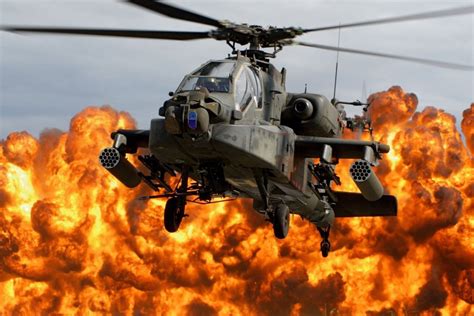
The Apache’s transition into counter-drone operations is part of a broader narrative of continuous adaptation. Since its introduction, the platform has accumulated over 5.3 million flight hours, including approximately 1.3 million combat hours, across a wide spectrum of missions.
Historically optimized for destroying tanks and providing close air support, the Apache has steadily evolved into a multi-role battlefield asset. Its integration with unmanned systems, data-sharing networks, and now counter-UAS tactics illustrates how legacy platforms can remain relevant in the face of technological disruption.
Operation Skyfall fits squarely within this trajectory. Instead of designing entirely new aircraft for every emerging threat, military planners are leveraging existing systems with proven reliability and global deployment. This approach accelerates capability development while maintaining operational continuity—a practical necessity in today’s fast-moving threat environment.
Layered Defense: The Apache’s Role in NATO’s Strategy
The introduction of helicopter-based counter-drone capabilities does not replace traditional air defense systems. Instead, it enhances NATO’s move toward a layered defense architecture, where multiple systems operate in concert to address threats at different altitudes and ranges.
Ground-based systems such as SHORAD and specialized counter-UAS platforms remain essential for fixed-site protection and high-density engagements. However, they are inherently limited in mobility and coverage flexibility. This is where the Apache adds value.
Acting as a mobile interception layer, the AH-64E can patrol contested areas, respond to emerging threats, and engage drones before they reach critical assets. This capability is particularly valuable in dispersed operations, where units operate across wide ტერიტორი with limited infrastructure support.
The concept is simple but powerful: instead of waiting for drones to enter defended zones, intercept them proactively using assets that can move as quickly as the threat itself.
Eastern Flank Tensions and the Rise of Drone Warfare
The urgency behind Operation Skyfall becomes clearer when viewed against the backdrop of rising tensions along NATO’s eastern flank. Since late 2025, the region has seen repeated incidents involving drones and missile activity, underscoring the vulnerability of border areas to low-warning attacks.
In response, allied nations have begun experimenting with rotary-wing patrols as part of their airspace security strategies. Reports from Poland, for example, indicate the deployment of Czech UH-1Y Venom helicopters for counter-drone missions, highlighting a broader shift toward aerial surveillance and interception.
This trend reflects a recognition that drones are not just tactical tools but strategic disruptors. Their low cost, ease of deployment, and ability to operate in swarms make them ideal for probing defenses, gathering intelligence, and even conducting precision strikes.
By integrating helicopters into the counter-drone mission set, NATO is effectively increasing its operational unpredictability, making it harder for adversaries to exploit gaps in coverage.
Deterrence Through Presence and Adaptability
Beyond its immediate tactical value, the Apache’s new role contributes to a broader objective: deterrence. The visible presence of armed helicopters capable of intercepting drones sends a clear message that NATO is prepared to respond quickly and decisively to aerial incursions.
Deterrence in this context is not শুধু about firepower but about responsiveness and integration. A networked force that combines ground defenses, aerial patrols, and real-time intelligence creates a more resilient and unpredictable defensive posture.
Operation Skyfall demonstrates that even well-established platforms can be reimagined to meet contemporary challenges. This adaptability is itself a form of strategic signaling, ցույցing that NATO is not static but continuously evolving in response to emerging threats.
A Glimpse Into the Future of Air Combat
The success of the AH-64E in a counter-drone role raises important questions about the future of air combat. As drones become more advanced and widespread, the distinction between traditional air defense and aviation roles may continue to blur.
Helicopters, with their unique combination of mobility, endurance, and firepower, are well-positioned to operate in this hybrid space. When integrated with advanced sensors, data networks, and potentially even directed-energy weapons in the future, they could become central players in low-altitude airspace control.
Operation Skyfall is an early but telling example of this تحول. It shows that the battlefield is no longer defined by clear categories of platforms and missions but by how effectively forces can adapt and integrate capabilities across domains.
In the end, the Apache’s engagement over Grafenwoehr is more than a successful training exercise. It is a proof of concept for a new way of thinking about air defense—one where flexibility, speed, and innovation matter as much as raw firepower.