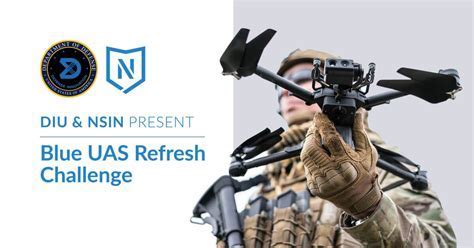
The Defense Innovation Unit (DIU) has once again reshaped the battlefield of unmanned aerial systems by expanding its Blue UAS List and Blue UAS Framework. Following a rigorous selection process that involved three days of high-stakes flight demonstrations at the Marine Corps Air Ground Combat Center in 29 Palms, California, DIU unveiled a powerful cohort of 23 drone platforms and 14 UAS components and software technologies. These selections mark a significant leap forward in defense innovation and government-sanctioned unmanned aerial capabilities.
Understanding the Blue UAS Ecosystem: List and Framework Explained
The Blue UAS List is not merely a directory of drones. It is an evolving, security-vetted catalog of platforms approved by the Department of Defense (DoD) for procurement and deployment across military, federal, and allied operations. Each drone listed complies with stringent standards set by the 2024 American Security Drone Act, Section 817 of the FY 2023 NDAA, and Section 848 of FY 2020 NDAA. These legal benchmarks ensure that the platforms are both cyber-secure and free from foreign threat vectors, particularly from adversarial technology sources.
In parallel, the Blue UAS Framework operates as a technical backbone—featuring interoperable modules, components, and software that adhere to NDAA compliance. It serves as a trusted marketplace and accelerator for government agencies and commercial UAS developers, facilitating quicker deployment, easier integration, and a reduction in acquisition and cyber risk.
Together, the List and Framework form a dual-lane highway for safe, scalable, and secure UAS procurement.
Selection Metrics and Global Engagement
The call for innovation drew an astounding 369 proposals from across the globe, reflecting a surge of international interest in shaping the U.S. drone ecosystem. Bids were received from the United States, as well as 18 other nations, including Ukraine, Norway, Denmark, and Canada. This wave of submissions speaks volumes about the geopolitical importance of being embedded within the Blue UAS ecosystem.
DIU’s Refresh Challenge was particularly focused on addressing modern battlefield needs. It prioritized capabilities in First Person View (FPV) drones, tethered UAS platforms, and Group 3 drones—the latter often categorized by longer flight durations and higher payload capacities, which are pivotal for strategic surveillance and battlefield logistics.
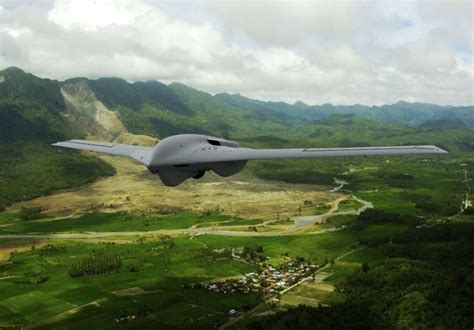
23 Drones Selected for the Blue UAS List
The final drone platforms chosen represent a fusion of AI-enhanced intelligence, field-tested durability, and battle-ready autonomy. Each one now progresses to a cybersecurity audit and NDAA verification phase—a necessary gauntlet before securing the ultimate status: Authority to Operate (ATO). Below are the drones selected:
- AeroVironment Dragon
- Anduril Ghost / GhostX
- Easy Aerial Sparrow
- Edge Autonomy VXE-30 Stalker
- Flightwave Edge 130
- Freefly Systems Astro
- Hoverfly Spectre (ATO secured)
- Kraus Hamdani Aerospace K1000
- ModalAI Stalker
- Mountain Horse Solutions Rotron DT-300
- Neros Archer (ATO secured)
- Parrot Anafi UKR
- PDW C100
- Quantum Systems Vector
- Shield AI V-BAT
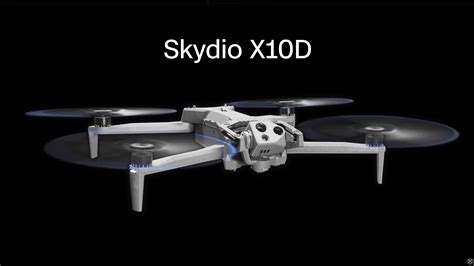
- Skydio X10D
- Skyfall Vampire
- Skyfront Perimeter 8
- Teal Black Widow
- Teledyne FLIR Black Hornet
- Vantage Robotics Trace
- Zepher Flight Z1
- Zone 5 Paladin
These drones are poised to provide the military with enhanced capabilities in ISR (Intelligence, Surveillance, Reconnaissance), precision strike coordination, communications relaying, and tactical edge autonomy.
Breakthroughs in UAS Components and Software Under the Blue UAS Framework
While drone platforms attract the spotlight, it is the components and embedded software that determine their performance, interoperability, and survivability in contested environments. The following 14 technologies were selected for further cybersecurity and compliance assessment:
- ARK Electronics Flight Controller
- Athena AI – Athena Computer Vision
- Auterion Government Solutions – Skynode S
- Doodle Labs – Tactical Wi-Fi Transceivers
- Greensight – UltraBlue and MicroBlue Imaging
- Locus Lock – GNSS Receiver
- Mobilicom – Skyhopper PRO / Pro Lite
- Pierce Aerospace – B1 Remote ID Beacon
- Primordial Labs – Anura Autonomy Engine
- RPX Technologies – EmbIR Thermal Camera
- SensorOps – SynDOJO Cybersecurity Layer
- TILT Autonomy – Lightweight Starlink PoE Adapter
- UVX Technologies – Modular Swappable Radio
- Vertiq – Electronic Speed Control (ESC)
DIU spotlighted four technologies as mission-critical advancements, adding them directly to the Blue UAS Framework: Locus Lock’s GNSS receiver, Mobilicom’s Skyhopper series, Vertiq’s ESC system, and ARK Electronics’ flight control architecture. These components represent next-gen improvements in navigation precision, signal security, and airframe responsiveness.
The First to Cross the Finish Line: ATO Secured by Neros Archer and Hoverfly Spectre
Securing an Authority to Operate (ATO) within the U.S. defense ecosystem is the gold standard for any UAS developer. It verifies that a system not only meets functional performance benchmarks but also adheres to the most rigorous cybersecurity controls in line with DoD mandates.
Two platforms—Neros Archer and Hoverfly Spectre—have emerged as early leaders by clearing all necessary evaluations and moving into ATO status. This milestone gives them immediate deployability across federal, intelligence, and military verticals, setting a high bar for the remaining candidates.
Strategic Implications: Speed to Field and Global Deterrence
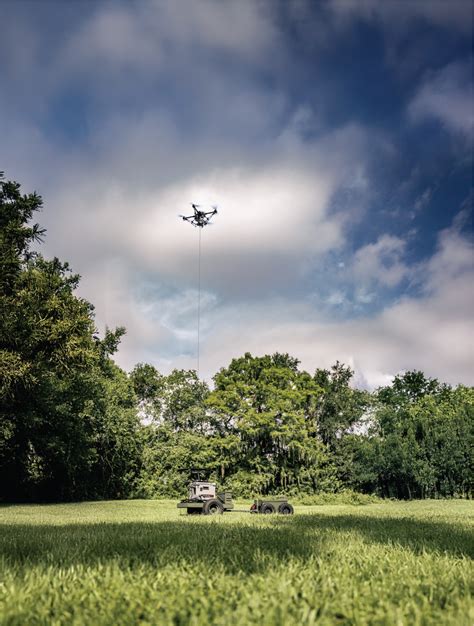
The inclusion of tethered, FPV, and Group 3 platforms is not incidental. It’s a calculated response to modern warfare’s asymmetric demands, where agility, speed, and real-time intelligence are more valuable than traditional size and firepower. Tethered drones provide persistent aerial overwatch, FPVs deliver rapid close-quarter visibility, and Group 3 drones offer long-range operational presence—often beyond visual line of sight (BVLOS).
This diverse UAS arsenal enables U.S. forces and allied partners to reduce reliance on foreign drone technology, particularly from potentially adversarial nations. It also reinforces technological deterrence, ensuring that adversaries must contend with a U.S. drone ecosystem that is not only domestic but also dynamically expanding.
The Road Ahead: What Blue UAS Means for Developers and End Users
The Refresh Challenge isn’t merely a procurement event—it’s a technological proving ground. For U.S.-based and allied developers, inclusion on the Blue UAS List or Framework opens doors to federal acquisition pathways, DoD grants, and strategic partnerships with defense primes. For warfighters and government clients, it ensures access to a pre-vetted catalog of reliable, secure, and mission-ready solutions.
Moreover, the rigorous vetting process—encompassing field testing, cybersecurity audits, and interoperability evaluations—ensures that every selection can operate safely within multi-domain operations, including land, sea, air, and space integration environments.
Conclusion: The Future of UAS is Blue, Secure, and Allied
With the 2025 update, DIU has solidified its role as a gatekeeper of trusted drone innovation. The expanded Blue UAS List and Framework are more than just compliance tools—they are national security assets, fine-tuned for modern defense landscapes. The inclusion of emerging tech leaders and global contributors underscores that the future of drone warfare and surveillance will be coalition-driven, AI-powered, and cyber-resilient.
As geopolitical tensions escalate and theaters of engagement become more complex, DIU’s proactive curation of the UAS landscape ensures that U.S. and allied forces maintain a tactical edge—both in the skies and across the digital battlespace.