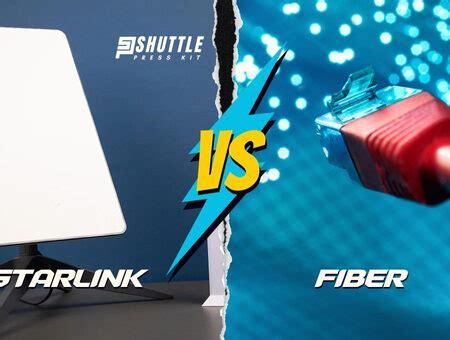
Internet connectivity has evolved from a luxury into an indispensable utility, shaping everything from remote work and online education to entertainment and global commerce. As demand for faster, more reliable access grows, two providers—Google Fiber and Starlink—have emerged as high-profile contenders. Though their monthly fees often occupy a similar range, the underlying technologies, performance characteristics, installation processes, availability footprints and pricing tiers diverge drastically, yielding unique advantages and trade‑offs for different user profiles.
The debate between Google Fiber and Starlink ultimately hinges on whether you prioritize raw speed and ultra‑low latency via terrestrial fiber optics, or the global reach and portability of satellite‑based service. Both solutions target overlapping consumer segments—urban households, digital nomads and underserved rural areas—but they deliver connectivity in fundamentally different ways. Understanding how each system works, the real‑world performance you can expect, and the practical considerations around installation, mobility, coverage and cost will ensure you choose the right fit for your home, business or on‑the‑go lifestyle.
Delivery Technology Explained
Google Fiber’s approach mirrors traditional broadband on steroids: it uses strands of glass fiber running directly from a local network hub to your premises. These fiber‑optic cables transmit data as pulses of light, enabling symmetric upload and download speeds at gigabit and multi‑gigabit levels. Technicians install a Network Interface Unit (NIU) and Fiber Jack inside your home, linking the fiber cable to your in‑home router. Because the signal remains in glass until it reaches your property, electromagnetic interference and signal degradation over distance are minimal, supporting crystal‑clear connections.
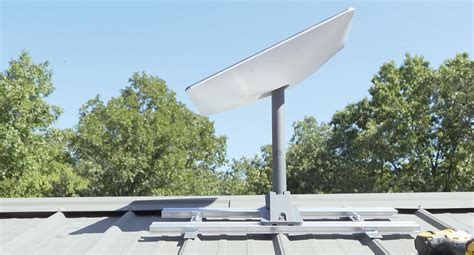
Starlink, by contrast, relies on a constellation of thousands of low‑Earth‑orbit (LEO) satellites orbiting roughly 340 miles above the planet. Instead of physical wiring, a compact user terminal (“dish”) automatically tracks overhead satellites, bouncing signals between your rooftop and SpaceX ground stations. The concept—once the realm of science fiction—leverages phased‑array antennas to steer beams electronically, maintaining a continuous link as satellites zip across the sky. While latency inevitably climbs compared to fiber, modern LEO designs keep round‑trip times competitive for many applications.
These technological distinctions are more than academic. Fiber’s inherent immunity to weather or line‑of‑sight issues ensures consistent throughput, whereas satellite links can fluctuate with obstructions, stormy weather or network congestion. Conversely, fiber deployment demands expensive trenching, permitting and labor, confining Google Fiber’s footprint to select urban and suburban zones. Starlink’s edge lies in its ability to serve any location with a sky view, from remote farms to cruise ships, without digging a single trench.
Speed and Performance: Real‑World Metrics
Google Fiber’s headline speeds start at 1 Gbps for the Core 1 Gig plan, escalate to 3 Gbps on Home 3 Gig, and reach a blistering 8 Gbps with Edge 8 Gig. Crucially, these figures apply symmetrically to both downloads and uploads, empowering content creators, cloud‑driven businesses and hardcore gamers who routinely transfer large files. In-house tests consistently report ping times around 13 ms, effectively eliminating lag in online gaming and videoconferencing. Bandwidth caps are nonexistent, and network management policies rarely throttle peak usage.
Starlink’s performance varies by geography, user density and whether you’re on a Residential or Roam plan. Typical download speeds span from 45 Mbps in rural locales up to over 300 Mbps in well‑served regions. Upload rates generally range between 10 and 30 Mbps. Latency typically falls between 23–28 ms in states like California, but can spike to 40 ms or higher in less densely networked areas such as Arkansas. While these metrics pale beside multi‑gigabit fiber, they represent a quantum leap over legacy DSL or fixed wireless, especially in places long starved for broadband.
In practical terms, Google Fiber’s consistent gigabit performance suits households streaming multiple 4K videos, hosting virtual classrooms, deploying smart‑home systems and supporting several heavy users simultaneously. Starlink, though slower, surpasses many terrestrial alternatives in remote communities, keeps digital nomads online during travel, and underpins critical telemedicine or emergency‑response operations where no cable exists. For cloud‑based software developers facing frequent large uploads, fiber’s symmetric throughput remains unbeatable, but for weekend campers or rural teleworkers, Starlink’s portability and near‑ubiquitous coverage can outweigh lower peak speeds.
Installation and Portability: From Trenching to Self‑Setup
Securing Google Fiber requires a scheduled visit from certified technicians who physically route fiber cables from the nearest street junction into your dwelling. The team mounts an outdoor fiber line, installs the indoor NIU and Fiber Jack, and can optionally configure your router and Wi‑Fi network. The result is a fixed installation bound to that address. Moving service requires repeating the process at a new location, which may involve additional fees or availability checks.
Starlink takes a vastly different tack: subscribers receive a self‑install kit containing the dish, power supply, Wi‑Fi router and mounting hardware. Guided by an intuitive mobile app, users assemble the dish on a roof, pole or tripod; plug in cables; and follow on‑screen prompts to align the antenna and activate service. Total setup time hovers around an hour. Even more compelling, users on the Roam plan can relocate their dish anywhere with open sky in minutes, enabling internet access on camping trips or seasonal properties without calling a technician.
This dynamic has downstream effects. Though Google Fiber delivers unwavering speed, its immobile infrastructure locks you into one address. Starlink’s portability appeals to digital nomads, RV owners and construction sites, but raises questions about shipping logistics, regulatory compliance when crossing borders, and potentially varying performance if you stray outside pre‑approved coverage zones. For those who value truly “plug‑and‑play” mobility, Starlink Roam remains the only realistic option.
Coverage and Availability: Urban Focus vs. Global Reach
Despite years of aggressive expansion, Google Fiber remains confined to fewer than 40 metropolitan markets across 19 U.S. states, including heavyweights such as Atlanta, Austin, Charlotte, Kansas City, Los Angeles, Nashville, Phoenix, Provo, San Antonio and parts of Portland. Actual service availability often hinges on municipal partnerships, local permits and fiber‑build grant programs. Prospective customers must consult an address lookup to confirm eligibility.
Starlink’s ambition is global. With over 4,000 satellites already in orbit and plans for a constellation nearing 12,000, service areas span all 50 U.S. states plus more than 30 countries—Japan, Brazil, the U.K., Canada, Australia and many others. Coverage maps continuously update as new beams go live. Starlink’s mission statement emphasizes universal connectivity, with particular focus on remote and underserved regions where legacy ISPs cannot justify infrastructure investment.
For urban dwellers in a covered Google Fiber market, fiber’s performance and price‑per‑gigabyte often make it the default. For suburban or rural residents outside GFiber footprints, Starlink is frequently the sole provider capable of delivering broadband‑class speeds. Even within fiber zones, some users opt to maintain Starlink as a backup link, leveraging satellite resilience against cable cuts, natural disasters or last‑mile outages.
Pricing Structures Compared
Google Fiber’s pricing is straightforward: Core 1 Gig at $70/month; Home 3 Gig at $100/month; Edge 8 Gig at $150/month. There are no equipment rental fees—Google includes the Network Box router at no extra cost—and no data caps. Promotional discounts occasionally appear but standard rates remain highly competitive for symmetrical gigabit service.
Starlink’s fee schedules vary by plan type. The Residential plan offers a fixed‑location service at $80/month (with standard hardware purchase) or $120/month for a premium kit and prioritized access. The Roam plan provides on‑the‑go connectivity: $50/month capped at 50 GB, ideal for light users, or $165/month unlimited, suited for power users seeking unrestricted mobility. One‑time hardware costs apply (around $599 for the dish and router), plus potential shipping and regional tax surcharges.
Comparing apples to apples, Google Fiber’s 1 Gig plan undercuts Starlink’s baseline Residential fee while delivering ten times the download speed and eight times the upload speed. However, if fiber isn’t available or if you need internet on the move, Starlink’s portable plans fill critical gaps despite higher overall costs. For hybrid users—say, a home office supplemented by remote cabins—the combination of fixed fiber and portable satellite can optimize both performance and flexibility.
Making the Right Choice: Use Cases and Recommendations
For urban families, multi‑device households and small businesses with heavy bandwidth demands, Google Fiber’s gigabit to multi‑gigabit speeds, symmetric performance and rock‑solid reliability make it the clear winner. Content creators, software developers, online gamers and streamers will appreciate negligible latency and unlimited data.
For rural residents, weekend getaway owners and digital nomads, Starlink’s near‑universal coverage and straightforward self‑install kit deliver a level of connectivity previously unattainable outside metropolitan centers. While peak speeds lag behind fiber, Starlink remains the fastest option in many remote regions and offers true portability when paired with the Roam plan.
Enterprises requiring backup resilience should consider a dual‑link strategy—primary Google Fiber where available, supplemented by Starlink’s satellite link to guard against cable cuts or ISP outages. Emergency response agencies, telemedicine providers and critical infrastructure operators can similarly benefit from satellite redundancy.
Looking ahead, both technologies are poised for evolution. Google Fiber continues incremental expansions through public‑private partnerships, while Starlink is rolling out next‑generation V2 satellites with inter‑satellite laser links promising lower latency and higher throughput. Choosing between them today requires weighing current performance and availability; tomorrow’s landscape may blur the lines further as fiber densification and satellite launches accelerate in parallel.
By understanding the underlying delivery mechanisms, dissecting speed and latency metrics, assessing installation logistics and comparing coverage footprints and pricing tiers, you can align your specific connectivity needs with the provider best suited to deliver them. Whether you opt for the subterranean light pathways of Google Fiber or the overhead highway of Starlink’s LEO constellation, your digital life stands to benefit from unprecedented choices—each engineered to keep us more connected than ever before.