
The word Cathay, with its evocative and somewhat archaic resonance, often surfaces in discussions of China, particularly in historical or literary contexts. It conjures images of a distant, grand, and perhaps even mythical land. But why does this particular term mean China, and what is the intricate journey of this name through history? The story of Cathay is not merely a linguistic curiosity; it is a fascinating chronicle of cultural encounters, shifting empires, vast trade networks, and the enduring power of names to shape perception across continents and centuries.
At its core, the etymology of Cathay traces back to the Khitan people, a nomadic group of Mongolic origin who rose to prominence in Northeast Asia. In the 10th century CE, the Khitan conquered parts of northern China and established the powerful Liao Dynasty (907–1125 CE). Their name, rendered in various forms such as Khitai or Khitañ in Turkic languages, became synonymous with the lands they ruled. As their influence spread, so did their name, carried westward by traders and travelers along the burgeoning Silk Road. The Latinized forms, Cathaya or Cataya, eventually found their way into European languages, solidifying Cathay as an early Western designation for China, or at least the northern part of it known through overland routes.
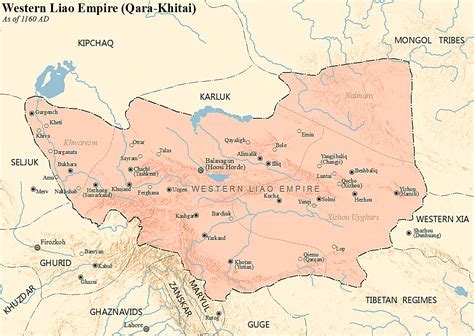
After the collapse of the Liao Dynasty at the hands of the Jurchens (who founded the Jin Dynasty), a segment of the Khitan elite, led by Yelü Dashi, migrated westward. They established the Qara Khitai Khanate (Western Liao Dynasty) in Central Asia during the 12th century. This new empire, though geographically removed from the traditional Chinese heartland, maintained the Khitan identity and name. Its existence further cemented the association of “Khitai” with a powerful eastern realm in the minds of Central Asians, Persians, and Arabs, who were crucial intermediaries in the East-West trade. It was through these Central Asian connections, particularly during the era of the Pax Mongolica in the 13th and 14th centuries, that Europeans conducting overland missions and trade expeditions first learned of this vast empire in the East, referring to it by variations of the name given by these intermediaries – Cathay.
The Khitan Ascendancy: Why Their Name Prevailed
It might seem perplexing that the name of one specific ruling group, the Khitan, came to represent the entirety of China, especially given that other significant dynasties, such as the Han Chinese-led Song Dynasty (960–1279 CE), coexisted and controlled vast, populous regions further south. During the Liao Dynasty’s zenith, China was indeed a politically fragmented landscape, with multiple powerful states vying for dominance. The Song Dynasty, for instance, was a beacon of cultural and technological advancement. However, the Khitan Liao Dynasty was a formidable military power in its own right, controlling crucial northern territories and key sections of the overland trade routes that stretched towards Central Asia and beyond. Their cavalry was renowned, and their empire engaged in complex diplomatic and military relations with its neighbors, including the Song.
The prominence of the Khitan name in westward transmission can be attributed to several factors. Firstly, their geographical position in northern China and later in Central Asia (as the Qara Khitai) meant they were often the first major Sinitic-influenced power encountered by those traveling or trading overland from the West. Persian and Arab geographers and merchants, like the 9th-century Persian geographer ibn Khordadbeh mentioned in his “Book of Roads and Kingdoms,” documented the lands to their east. For these traders, including Radhanite Jews and Persians from the Byzantine sphere, the Khitan territories were significant points of contact and commerce. One source suggests that the Khitan, being non-Han, may have had fewer compunctions about engaging in certain types of trade, such as the trade in prisoners of war who were enslaved, especially if those prisoners were from rival Han Chinese states. If the Khitan were indeed major suppliers or facilitators in such lucrative, albeit grim, trades, their name would naturally become closely associated with the source region in the minds of their trading partners. Thus, the people you directly traded with, or the dominant power in the accessible part of that land, often lent their name to the entire region in distant perception.
Marco Polo’s Cathay: A Land of Marvels in Northern China
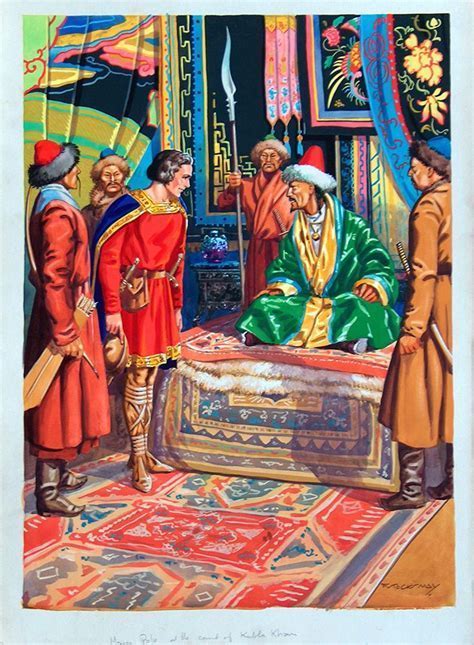
The most famous European traveler to popularize the term Cathay was undoubtedly Marco Polo. In his renowned late 13th-century account, The Travels of Marco Polo, he meticulously described his journeys across Asia and his experiences in the court of Kublai Khan, the Mongol emperor who had by then conquered all of China and established the Yuan Dynasty. Marco Polo consistently used the name Cathay to refer to northern China, the region historically dominated by the Khitan and later forming a core part of the Mongol Empire’s Chinese territories. He distinguished this northern realm from “Mangi,” his term for southern China, which had been the heartland of the Southern Song Dynasty before its conquest by the Mongols. Polo’s descriptions of Cathay, particularly its capital Khanbaliq (modern-day Beijing), painted a picture of immense wealth, sophisticated infrastructure, and a highly organized society under the Great Khan. His vivid narratives, filled with details of grand palaces, bustling trade, paper money, and efficient postal systems, captivated the European imagination for centuries. For Europeans, Cathay became a legendary land of riches and wonders, a distant empire at the eastern edge of the known world, largely thanks to Polo’s influential writings. The term, therefore, was not just a geographical label but also carried connotations of the exotic and the magnificent, largely shaped by these early European encounters and descriptions.
The Journey West: How “Cathay” Entered European Lexicon
The transmission of the name Cathay into Europe was a gradual process, facilitated primarily by the overland trade routes that crisscrossed Asia. Before Marco Polo, knowledge of China in Europe was fragmented and often mixed with legend. The Pax Mongolica, or “Mongol Peace,” established in the 13th and 14th centuries following the vast conquests of Genghis Khan and his successors, played a pivotal role. This period of relative stability across a massive swathe of Eurasia significantly eased long-distance travel and trade. Merchants, missionaries (like Giovanni da Pian del Carpine and William of Rubruck), and diplomats from Europe could, for the first time, journey overland with greater security, reaching the Mongol courts and the lands of the Far East. These travelers encountered the term Khitai (or its variants) used by Persian, Turkic, and Arabic speakers in Central Asia to refer to China. As they relayed their accounts back to Europe, they adopted this nomenclature. Latin, being the lingua franca of scholarship and diplomacy in medieval Europe, saw the term transcribed as Cathaya or Cataya. Through Latin texts and subsequent translations into vernacular languages, Cathay became the standard European name for China, particularly associated with the northern regions and the overland access to them. It evoked a sense of immense distance and the arduous journey required to reach it, distinct from later nomenclature that would arise from maritime exploration.
The Romantic Haze: Cathay as a Symbol of Mythical China
Over time, especially as direct contact with China evolved and different names emerged, Cathay began to acquire a more romantic and nostalgic connotation. As Christopher Chong notes, for many, particularly those of the Chinese diaspora or those looking at China through a historical or literary lens, Cathay came to represent a “mythical and romantic China.” It became less a precise geographical designator and more a symbol of an older, perhaps idealized, version of Chinese civilization – a land of ancient wisdom, poetic beauty, and timeless traditions. This perception was untethered from the contemporary political realities of China and instead drew from a wellspring of accumulated stories, artistic representations, and the sheer mystique of a culture that had seemed so remote and different to Western observers for so long. The name itself, with its soft consonants and evocative sound, lent itself to this romanticization. It became a shorthand for a China of the imagination, a place of delicate artistry, profound philosophy, and epic history, often viewed through a wistful, sepia-toned filter. This romantic aura was distinct from the more prosaic or political connotations that other names for China might carry. Cathay suggested a journey not just in space, but in time, to a China of emperors, poets, and serene landscapes, a vision that appealed deeply to the Western yearning for the exotic and the ancient.

Ezra Pound and the Literary Rebirth of Cathay
The romantic and melancholic image of Cathay received a significant boost in the early 20th century through the influential work of American modernist poet Ezra Pound. In 1915, Pound published a collection of poems titled Cathay. This slim volume was remarkable for several reasons. Firstly, Pound himself knew no Chinese. He worked from the notebooks of the deceased American Orientalist Ernest Fenollosa, who had studied Chinese poetry, primarily through Japanese scholarly interpretations and with the help of Japanese tutors. Fenollosa’s notes contained rough translations and transliterations of classical Chinese poems, particularly from the Tang Dynasty. Secondly, despite this indirect and somewhat filtered access to the original texts, Pound’s “translations” (or more accurately, creative adaptations) were astonishingly successful in capturing a poignant and evocative mood. He managed to convey a sense of delicate beauty, profound loss, and quiet resilience that resonated deeply with readers. His poems, such as the famous “The River-Merchant’s Wife: A Letter,” spoke of separation, longing, and the passage of time with a stark, imagistic clarity that was revolutionary in English poetry.
The River-Merchant’s Wife: A Letter beautifully illustrates this, tracing the evolving emotions of a young wife whose husband is away on a long journey:
While my hair was still cut straight across my forehead
I played about the front gate, pulling flowers.
You came by on bamboo stilts, playing horse,
You walked about my seat, playing with blue plums.
And we went on living in the village of Chōkan:
Two small people, without dislike or suspicion.
At fourteen I married My Lord you.
I never laughed, being bashful.
Lowering my head, I looked at the wall.
Called to, a thousand times, I never looked back.
At fifteen I stopped scowling,
I desired my dust to be mingled with yours
Forever and forever, and forever.
Why should I climb the look out?
At sixteen you departed
You went into far Ku-tō-en, by the river of swirling eddies,
And you have been gone five months.
The monkeys make sorrowful noise overhead.
You dragged your feet when you went out.
By the gate now, the moss is grown, the different mosses,
Too deep to clear them away!
The leaves fall early this autumn, in wind.
The paired butterflies are already yellow with August
Over the grass in the West garden;
They hurt me.
I grow older.
If you are coming down through the narrows of the river Kiang,
Please let me know beforehand,
And I will come out to meet you
As far as Chō-fū-Sa.
Thirdly, the timing of Cathay‘s publication was significant. Released in 1915, during the grim realities of World War I trench warfare, the poems’ themes of separation, loss, and the yearning for a simpler, more harmonious past struck a chord with a Western world grappling with unprecedented conflict and disillusionment. The “fading China” that Pound evoked – a China struggling with the collapse of the Qing Dynasty, European colonization, and rising Japanese aggression – mirrored the sense of a fading, perhaps more innocent, era in Europe. Pound’s Cathay thus cemented in the literary consciousness an image of China that was both ancient and fragile, beautiful yet tinged with sorrow, further enriching the complex tapestry of meanings associated with the word.
The Khitan Themselves: A Formidable Nomadic Power
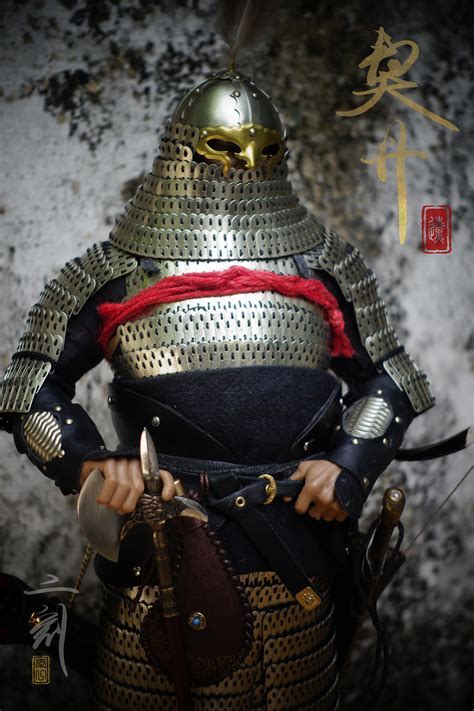
To fully understand the origin of Cathay, it is essential to delve deeper into the Khitan people themselves. They were a para-Mongolic, nomadic people who originated in the eastern Mongolian Plateau and Manchuria. For centuries, they existed as a tribal confederation, but under the leadership of Abaoji in the early 10th century, they were unified and began a period of rapid expansion. The Liao Dynasty they founded was a powerful and sophisticated empire that ruled over a diverse population, including Khitans, Han Chinese, Bohai people, and Jurchens. They developed a unique dual administrative system to govern their nomadic Khitan subjects and their sedentary agricultural Chinese subjects separately. The Liao court was a center of culture, and the Khitans even developed their own complex writing systems – the Khitan large script and Khitan small script – to record their language, although much of their literature has unfortunately been lost. Militarily, their cavalry was legendary, posing a significant challenge to the Song Dynasty to their south, with whom they fought numerous wars but also maintained periods of tributary peace. The Song, in fact, paid substantial annual tribute to the Liao in silk and silver to maintain peace. The Liao Dynasty eventually fell to the Jurchens, former vassals who rose in rebellion and established the Jin Dynasty in 1125. It was after this collapse that Yelü Dashi led a contingent of Khitans westward to Central Asia, founding the Qara Khitai (Black Khitans or Western Liao), which controlled key parts of the Silk Road and influenced the region until its conquest by Genghis Khan’s Mongol Empire in the early 13th century. The Daur people, an ethnic group residing in modern-day Inner Mongolia and Heilongjiang, are considered by many scholars to be descendants of the Khitan, carrying a linguistic and cultural legacy from this once-mighty people.
From Cathay to China: A Tale of Shifting Names and Routes
While Cathay held sway as the European term for China for several centuries, particularly for the northern territories accessed via land, the name “China” eventually supplanted it in common usage. The word “China” is believed to have derived from the Qin Dynasty (221-206 BCE), the first imperial dynasty to unify the country. This name likely reached Europe via southern sea routes, through interactions with Malay (“Cina”) and Persian (“Chin”) traders who encountered the southern parts of the empire. As maritime trade routes, pioneered by the Portuguese and other European naval powers from the 16th century onwards, became more dominant than the arduous overland Silk Road, the name associated with these southern ports of entry – “China” – gradually gained precedence. Cathay remained in use, often to distinguish the north from the south, or in more poetic and historical contexts, but “China” became the more encompassing and widely recognized term for the entire nation. The shift reflects not just linguistic evolution but also the changing patterns of global trade and exploration, as sea lanes opened up new avenues of contact and superseded the ancient caravan trails. However, Cathay never entirely vanished, retaining its allure and specific historical connotations.
Cathay in the Modern Era: Echoes of a Bygone Name
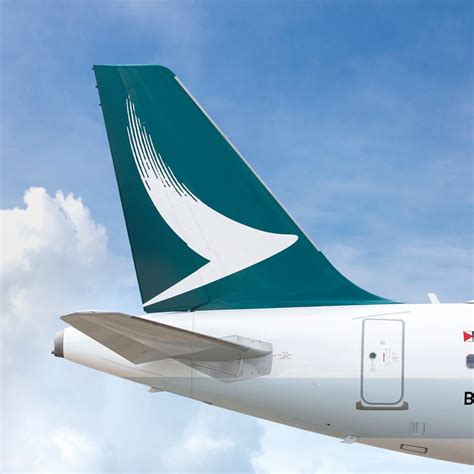
Even today, the name Cathay continues to appear, often in contexts that seek to evoke a sense of heritage, grandeur, or a connection to a historic and expansive vision of China. The most prominent example is Cathay Pacific Airways, Hong Kong’s flag carrier. The choice of this name in 1946 by its American and Australian founders was deliberate, intending to signify their ambition to connect China with the wider world, imbued with the romantic and adventurous spirit associated with Cathay. Similarly, financial institutions like Cathay Bank use the name to suggest stability, reach, and a bridge between East and West. These modern usages tap into the rich historical and cultural layers of the word, leveraging its long association with a vast and fascinating land, and its slightly exotic, distinguished flavor compared to the more commonplace “China.” It serves as a subtle reminder of the long and complex history of interaction and perception between China and the rest of the world, a name that carries whispers of ancient empires and legendary journeys.
The Enduring Legacy of a Name: More Than Just a Word
The journey of the word Cathay from the name of a nomadic tribe to a poetic and historical designation for China is a rich narrative in itself. It underscores how names are not static labels but are imbued with the experiences, perceptions, and historical currents of the people who use them. Originating from the Khitan people who founded the Liao and Qara Khitai empires, Cathay was carried westward along the Silk Road, entering European consciousness through the tales of merchants and travelers like Marco Polo. It came to signify a vast, wealthy, and somewhat mysterious land in the Far East. Later, it acquired romantic and melancholic overtones, famously amplified by Ezra Pound’s poetry, representing an idealized or ancient China. While “China” became the standard exonym, Cathay endures as a term laden with historical depth and evocative power, a testament to centuries of cultural exchange and the West’s evolving understanding of a civilization that has profoundly shaped human history. It reminds us that behind every name lies a story, and the story of Cathay is a captivating glimpse into the interconnectedness of our world.