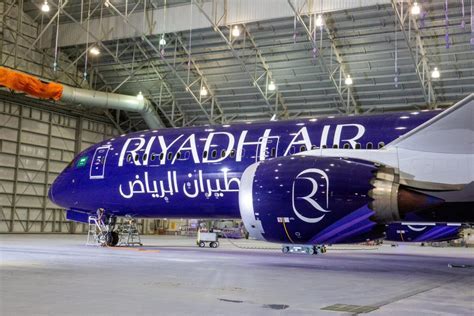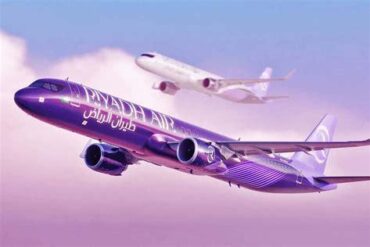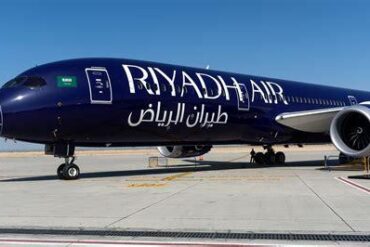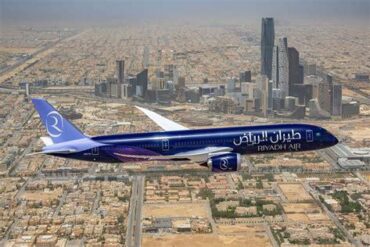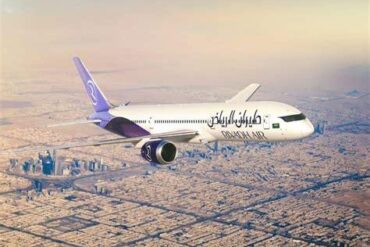
Saudi Arabia’s rising aviation star, Riyadh Air, is set to take a major strategic leap with an anticipated order of around 50 Airbus A350s, with a significant focus on the A350-1000 variant. The move comes as part of the Kingdom’s broader vision to transform Riyadh into a global aviation hub, underpinned by significant investments in tourism, infrastructure, and connectivity. With the expected official announcement during the Paris Air Show 2025, scheduled between June 16 and June 22, Riyadh Air’s bold move will signal a defining moment in the global widebody aircraft market.
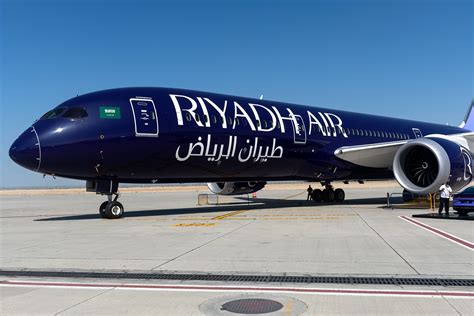
Riyadh Air, which is aiming to begin operations by late 2025, has already made headlines with its fleet acquisitions, including up to 72 Boeing 787-9 Dreamliners and 60 Airbus A321neos. But the selection of the A350-1000 is being interpreted as a deliberate choice to position the airline in the premium long-haul travel segment, where fuel efficiency, passenger comfort, and range capabilities determine competitive edge.
Why Riyadh Air Is Choosing Airbus Over Boeing for Its Flagship
The competition between the Airbus A350-1000 and Boeing’s 777X was intense, but Riyadh Air’s apparent decision to favor Airbus reflects a combination of strategic timing, operational efficiency, and market-readiness. The Boeing 777X, while a technologically advanced aircraft, has faced chronic certification delays and is currently running six years behind schedule. As of mid-2025, it still hasn’t been certified, which casts a shadow of uncertainty over delivery timelines and fleet integration.
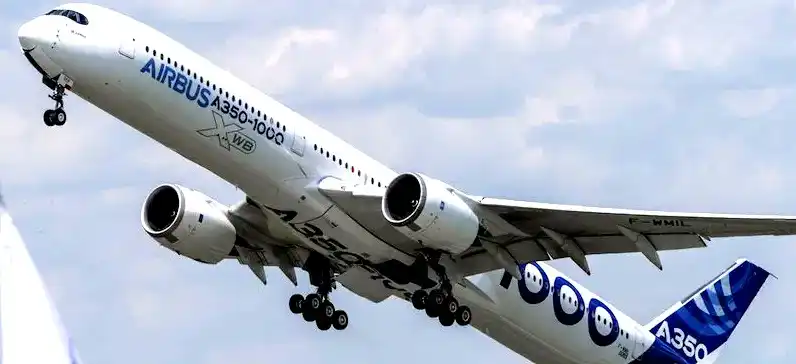
In contrast, the Airbus A350 family is a proven platform, widely adopted by leading global carriers such as Qatar Airways, British Airways, and Cathay Pacific. The A350-1000 in particular offers exceptional range capabilities (up to 8,700 nautical miles) and can carry over 350 passengers in a typical three-class configuration. It’s powered by the Rolls-Royce Trent XWB-97 engines, known for their efficiency and reliability, giving Riyadh Air a cost-effective and sustainable option for its long-haul ambitions.
The timing of the order announcement is also significant. Airbus’ A350-1000 production slots are in high demand, with many carriers seeking replacements for aging 777s and A340s. By securing its place now, Riyadh Air positions itself ahead of a potential supply crunch, ensuring timely deliveries as it aims to meet its aggressive network rollout goals.
The A350-1000: Future Flagship of Riyadh Air
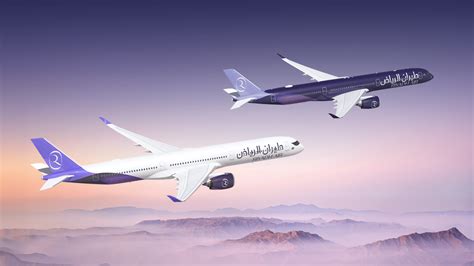
Though Riyadh Air will begin operations with the Boeing 787-9, the Airbus A350-1000 is poised to become the crown jewel of its fleet. Industry insiders suggest that the airline views this aircraft not merely as a tool for expansion, but as the core of its luxury international service. Designed with ultra-long-range missions in mind, the A350-1000 will likely be deployed on premium routes connecting Riyadh with major cities in North America, Europe, and Asia.
While specifics about the cabin design are yet to be unveiled, Riyadh Air has confirmed that first class—absent on its Boeing 787-9s—will make a comeback on its flagship A350 aircraft. Given the airline’s repeated emphasis on delivering a “world-class passenger experience”, expectations are high that the A350-1000 will feature bespoke interiors, private suites, advanced IFE systems, and wellness-oriented cabin environments.

Strategic Context: Saudi Arabia’s Aviation Vision 2030
This fleet expansion and aircraft selection must be seen in the context of Saudi Arabia’s Vision 2030, which aims to diversify the Kingdom’s economy and reduce its dependency on oil revenues. One major pillar of this transformation is to establish Saudi Arabia as a global transit hub, and Riyadh Air is the centerpiece of that ambition.
The new carrier is fully backed by the Public Investment Fund (PIF), the Kingdom’s sovereign wealth fund, which has made no secret of its ambition to turn Riyadh into a Middle Eastern aviation superpower, on par with Dubai and Doha. The introduction of the A350-1000, with its capabilities to open direct long-haul routes, is pivotal to achieving that status.
The airline is expected to base a significant portion of its operations at King Khalid International Airport (RUH) in Riyadh, which is undergoing a massive redevelopment project. The new King Salman International Airport, currently under planning, will eventually serve as the primary hub for Riyadh Air, with infrastructure designed to accommodate 120 million passengers annually by 2030.
Market Dynamics and Fleet Strategy
From a market perspective, Riyadh Air’s strategy appears focused on offering point-to-point connectivity with high-quality service rather than simply funneling passengers through a traditional hub model. The fleet mix—a combination of A321neos for regional coverage, 787-9s for medium to long-haul, and A350-1000s for flagship intercontinental services—gives the airline enviable flexibility.
By not waiting for the delayed 777X, Riyadh Air avoids potential bottlenecks, and gains a first-mover advantage in key markets, especially in Europe and Asia where airport slots and bilateral agreements can be fiercely competitive. The A350-1000 also aligns with global sustainability trends, offering 25% lower fuel burn and CO2 emissions compared to previous generation aircraft, an increasingly critical factor as global regulators crack down on aviation emissions.
Passenger Experience and Premium Aspirations
The carrier has promised a passenger journey that blends Arabian hospitality with cutting-edge technology, and the A350-1000 will likely be the embodiment of that philosophy. While the Boeing 787s will form the operational backbone, they are not equipped with first class, which suggests that the A350-1000s will be differentiated not just by size, but by service class and experience.
Given the fierce competition from Emirates, Qatar Airways, and Etihad, Riyadh Air will need to offer something exceptional to make its mark. With its financial backing, it can afford to be bold: expect social zones, in-flight wellness amenities, AI-enhanced cabin services, and culturally immersive dining options. Every detail will matter, as the airline tries to build a brand from scratch that competes with some of the most established names in the business.
Looking Ahead: Implications for the Industry
The implications of Riyadh Air’s A350-1000 order go beyond the airline itself. Airbus stands to benefit significantly, not only in terms of unit sales but also in brand prestige, as this is one of the most high-profile airline startups in recent memory. The deal could also trigger further competitive shifts, especially if other carriers follow suit and accelerate their own A350 orders to avoid long delivery queues.
Boeing, on the other hand, faces a major setback. The loss of Riyadh Air as a 777X customer underscores the mounting pressure the company is under to resolve certification and production issues. Although the 777X may still find favor with other carriers, the momentum appears to be leaning toward Airbus for now—especially in the ultra-long-haul segment.
With this expected order, Riyadh Air is not just buying planes—it’s buying credibility, ambition, and a global identity. The coming months will reveal more about cabin layouts, route networks, and strategic partnerships, but one thing is clear: Riyadh Air intends to fly far, and it wants the Airbus A350-1000 to take it there.