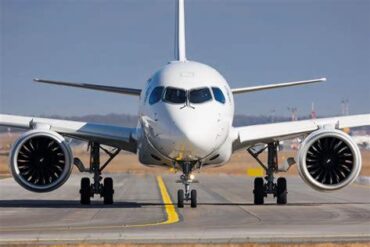
The small narrowbody aircraft market has become one of the most fascinating battlegrounds in commercial aviation. For decades, Embraer dominated the lower end of the market with its successful E-Jet family, creating a category between traditional regional aircraft and full-size narrowbody jets. However, the arrival of the Airbus A220 changed the competitive landscape. Originally developed as the Bombardier C Series, the aircraft entered service with a clean-sheet design, advanced aerodynamics, and ambitions to capture airlines looking for more capability than a regional jet could offer.
For a period, it appeared that Airbus had successfully taken control of the segment. The A220 accumulated strong global sales, while Embraer’s newer E2 family struggled to match the momentum of its predecessor. Yet beneath the surface, the competition was never as one-sided as the order numbers suggested. Embraer continued refining its strategy, focusing on markets where efficiency, fleet commonality, lower acquisition costs, and operational flexibility mattered more than maximum range or capacity.
In its own backyard, that strategy has started to deliver results. Over the past 12 months, the Embraer E195-E2 has made a remarkable comeback in South America, securing major orders from some of the continent’s largest airline groups. These deals have allowed Embraer to reclaim territory in a region where the A220 has struggled to establish a significant presence.

Embraer E2 Finds New Momentum In South America
The turning point came as two major South American airline groups committed heavily to the Embraer E195-E2, reinforcing the aircraft’s position as the preferred choice for airlines seeking right-sized capacity.
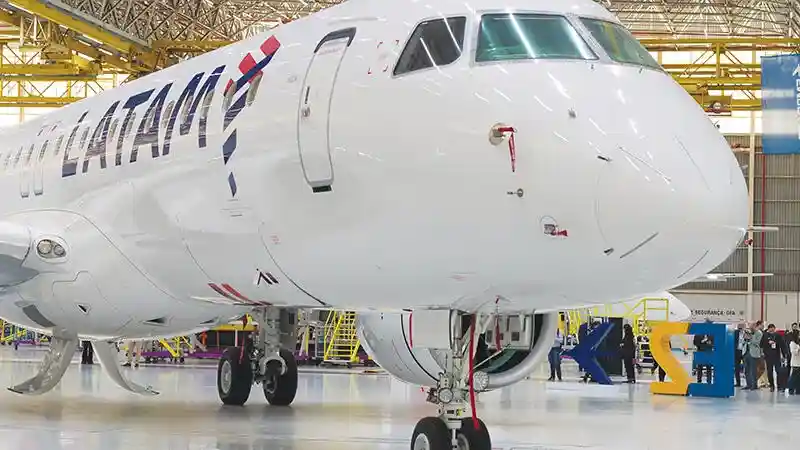
In September 2025, LATAM Airlines Group announced an order for 24 E195-E2 aircraft, along with 50 purchase options. The decision represented one of the most important victories for Embraer because LATAM is one of the largest aviation groups in Latin America. The order demonstrated confidence in the E2 platform’s ability to operate efficiently across a diverse network of short and medium-haul routes.
A few months later, another major boost arrived when Abra Group, the parent company behind airlines such as Avianca and GOL, ordered 20 E195-E2 aircraft. The agreement also included 10 purchase options and 15 purchase rights, potentially expanding Embraer’s presence even further across the region.
Together with Azul’s earlier commitment to the E195-E2, these orders have pushed Embraer’s South American E2 sales beyond 100 aircraft, with the total approaching 200 units when options and purchase rights are considered.
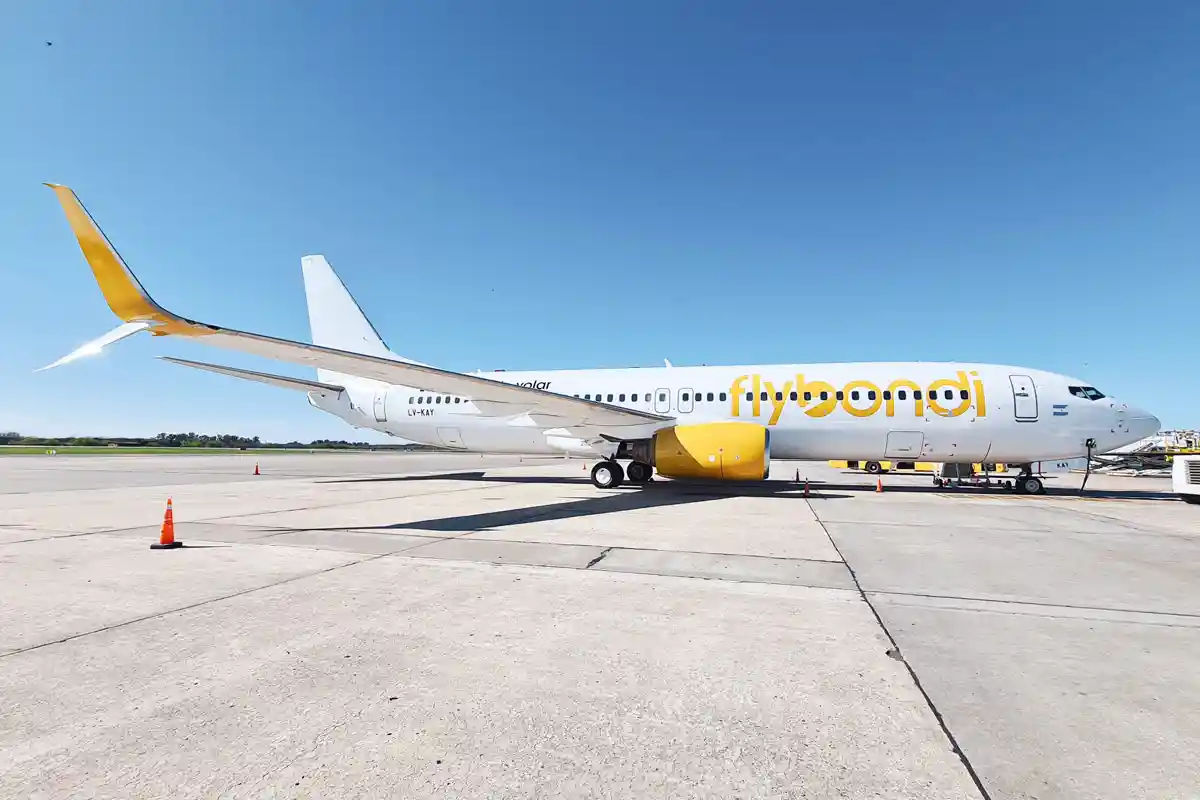
The significance of these deals becomes clearer when compared with the Airbus A220’s performance in the region. Despite its global success, the A220 has secured only one South American customer, Flybondi, which ordered 15 aircraft with additional options. The contrast highlights a major shift: while Airbus has created a globally successful aircraft, Embraer has maintained a strong regional advantage where airlines understand its operating philosophy.
Why The Airbus A220 Has Not Dominated South America
The Airbus A220 remains an impressive aircraft. Its clean-sheet design, advanced materials, spacious cabin, and excellent range capabilities have made it attractive to airlines worldwide. However, success in aviation is not determined only by technical specifications.
Airlines choose aircraft based on their networks, costs, labor structures, maintenance requirements, and long-term fleet strategies. In South America, many carriers operate networks where a highly efficient regional aircraft can deliver better economics than a larger mainline narrowbody.
The A220-300, the most popular member of the A220 family, is closer in size to aircraft such as the Airbus A319 or Boeing 737-700. It is designed for longer missions and higher-capacity operations. While this gives it impressive flexibility, it also means airlines may be paying for capability they do not always need.
The Embraer E195-E2 occupies a different position. It focuses on high-frequency operations, connecting secondary cities, strengthening regional networks, and providing efficient service on routes where larger aircraft may struggle to achieve strong profitability.
For airlines operating hundreds of shorter flights each year, the ability to reduce fuel consumption, lower maintenance expenses, and maximize daily utilization can matter more than having additional range.
The Embraer E195-E2’s Competitive Advantages
The Embraer E195-E2 is not simply an updated version of the original E-Jet. It represents a major technological upgrade designed around modern airline economics.
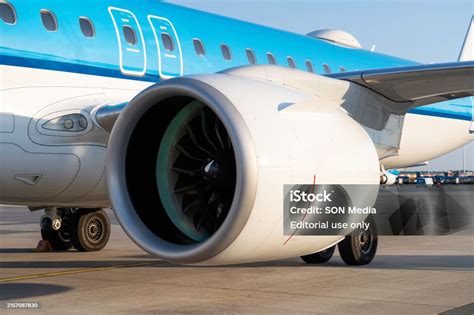
The aircraft features a redesigned wing with raked wingtips, improved aerodynamics, a new fly-by-wire system, upgraded landing gear, and the Pratt & Whitney PW1900G geared turbofan engine. These improvements significantly reduce fuel consumption compared with the first-generation E-Jet family.
However, Embraer made an important strategic decision during development. Instead of using expensive composite wing structures, the company determined that the weight savings would not justify the additional cost for an aircraft of this size. This allowed Embraer to control production expenses while still delivering competitive efficiency.
The result is an aircraft positioned between traditional regional jets and larger narrowbodies. It provides many benefits of a modern aircraft without carrying the financial burden associated with larger designs.
Another important advantage is fleet commonality. Thousands of E-Jets are already operating worldwide, creating a large ecosystem of trained pilots, maintenance technicians, spare parts, and operational knowledge.
Airlines already flying E170, E175, E190, or E195 aircraft can transition to the E2 family more easily than moving to the Airbus A220. The A220 is technologically advanced, but it does not share significant systems or operational similarities with existing Airbus narrowbody fleets or previous Bombardier aircraft.
For carriers seeking a simple upgrade path, the E2 offers a powerful economic argument.
E2 Versus A220: Different Aircraft For Different Missions
Although the Embraer E195-E2 and Airbus A220-100 are similar in size, they are designed with different philosophies.
The E195-E2 is optimized for frequent flights across shorter and medium distances. It works especially well when an airline needs to operate multiple flights per day, connect smaller cities, or maintain high aircraft utilization.
The A220, meanwhile, is built around broader capability. It can comfortably operate longer routes, including missions that approach the traditional narrowbody market. Airlines can use it for transcontinental flights, international services, and routes previously dominated by larger aircraft.
This difference explains why the two aircraft often do not compete directly. An airline replacing aging regional aircraft may prefer the E2, while a carrier looking for a smaller alternative to the Boeing 737 or Airbus A320 family may choose the A220.
The aircraft also differ in operational classification. In some markets, the E2 can continue to benefit from regional airline structures, while the A220 is usually treated as a mainline aircraft. Labor agreements, pilot contracts, and crew costs can influence these decisions significantly.
Ultimately, the better aircraft depends on the mission. The E2 does not need to defeat the A220 everywhere. It only needs to dominate the markets where its design philosophy provides the greatest value.
The Pratt & Whitney Engine Challenge And Embraer’s Unexpected Advantage
Both the Airbus A220 and Embraer E2 depend on the Pratt & Whitney PW1000G engine family, but their experiences with the technology have been very different.
The geared turbofan engine was designed to deliver significant fuel efficiency improvements. However, the PW1000G family has faced major reliability problems, including premature component issues, maintenance delays, and aircraft groundings.
The Airbus A220 has been heavily affected because it relies exclusively on the PW1500G engine. Unlike the Airbus A320neo family, which can also use CFM International LEAP engines, the A220 does not currently have an alternative powerplant option.
The E2 family uses the smaller PW1900G variant. While it has not been completely immune from engine-related challenges, the impact has generally been less severe. Part of this is because fewer E2 aircraft are currently operating worldwide, but the aircraft has also demonstrated relatively strong reliability compared with some expectations.
For airlines, reliability is just as important as fuel efficiency. A theoretically efficient aircraft that spends too much time waiting for maintenance can quickly lose its economic advantage.
This situation has helped improve perceptions of the E2, particularly among operators searching for predictable operations during a period of widespread aircraft supply chain difficulties.
Embraer’s Global E2 Recovery Beyond South America
Although South America represents Embraer’s strongest recent success story, the E2 program has also gained momentum internationally.
The aircraft has attracted orders from airlines including Finnair, which placed a significant E195-E2 commitment, as well as customers such as SAS, All Nippon Airways, and Avelo Airlines.
The program’s sales performance has improved significantly, with 2025 becoming the strongest sales year for the E2 family since launch. The aircraft recorded 154 orders during the year, showing that airlines increasingly recognize its role in the evolving narrowbody market.
However, globally, the Airbus A220 remains ahead in total orders. The A220 benefits from its larger market position and its ability to compete against traditional mainline aircraft categories.
The E2’s success does not depend on becoming the universal winner. Instead, Embraer has focused on becoming the best solution for specific airline requirements.
That strategy is particularly effective in regions where network flexibility and cost efficiency matter more than maximum aircraft capability.
How Embraer Reclaimed Its Home Continent
The recent South American victories represent more than simple aircraft orders. They demonstrate that Embraer understands the needs of its home market better than any competitor.
The company’s advantage comes from decades of experience building aircraft specifically suited for regional connectivity. South America’s geography, with large distances between cities but many markets that cannot support larger aircraft, creates ideal conditions for the E2 family.
The Airbus A220 remains a formidable competitor and a highly successful aircraft. However, Embraer has proven that a smaller, more focused aircraft can compete effectively when matched with the right airline strategy.
In just 12 months, the E195-E2 transformed from a program facing questions about its market position into a serious competitor with renewed global momentum. South America has become the clearest example of this shift.
The battle between the Embraer E2 and Airbus A220 is not simply about which aircraft is better. It is about which aircraft better fits the mission. And in the markets where efficiency, availability, and operational simplicity matter most, Embraer has quietly regained the advantage.