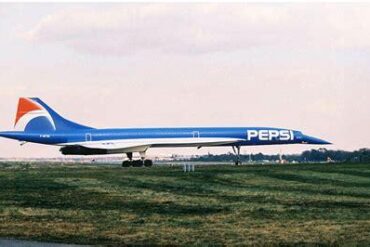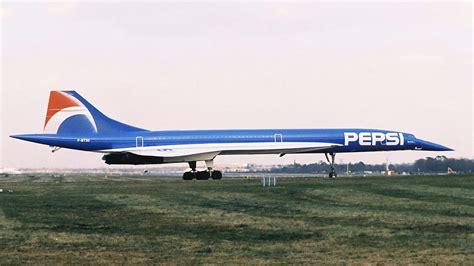
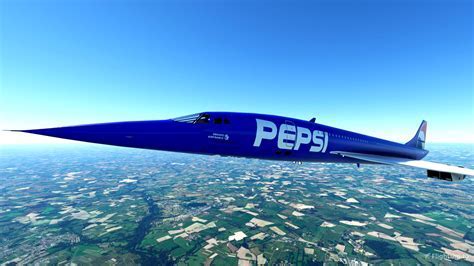
The story of why blue paint caused operational issues for Concorde remains one of aviation’s most intriguing reminders that aesthetics and physics do not always get along. In 1996, Air France allowed Pepsi to transform one of its sleek, white Concorde aircraft into a deep-blue promotional icon. The jet dazzled crowds on the ground, yet the striking livery forced engineers to impose strict performance limitations. What looked like a simple color change actually touched the very edge of Concorde’s thermal engineering envelope.
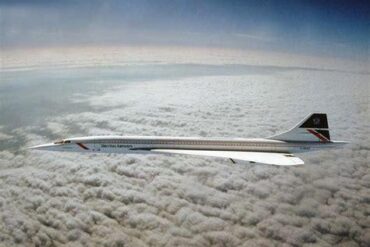
Concorde was a machine that depended on its ability to manage heat, not just thrust. Cruising at Mach 2, the aircraft’s aluminum alloy skin routinely reached temperatures above 260°F (127°C), heated both by friction from the thin stratospheric air and the intense sunlight at 50,000 ft. The jet’s designers had built a narrow thermal margin to keep the airframe durable and crack-free over thousands of cycles.
White paint acted as a tool—an invisible, passive cooling shield. By reflecting a significant portion of solar radiation, it kept Concorde’s surface temperatures predictable and within design limits. When Pepsi proposed painting the aircraft in deep blue, engineers immediately recognized the challenge: darker colors absorb more heat, which Concorde had very little spare capacity to dissipate.
How Color Became an Engineering Variable
The physics behind the issue is simple yet unforgiving. A darker pigment absorbs a broader spectrum of solar energy, especially under strong UV exposure. At high altitude, where sunlight is far less filtered by the atmosphere, this effect intensifies dramatically. Tests revealed that Concorde’s blue-painted surfaces could reach 350°F (177°C)—a temperature uncomfortably close to the structural limits of its aluminum skin.
This additional thermal load was not something that could be shrugged off. Aluminum expands as temperatures rise, and Concorde already grew nearly 10 inches (25 cm) during Mach 2 cruise. Extra heat risked overstretching joints, weakening material bonds, and pushing the aircraft outside its certified operational envelope. Even internal components, such as fuel warmed by the heated wing structure, presented risks engineers were not willing to gamble with.
To compensate, Air France restricted the Pepsi-painted aircraft to Mach 1.7, allowing only short periods near Mach 2. This constraint made long-haul routes unfeasible; the promotional jet spent its brief career flying regional sectors where sustained supersonic performance was unnecessary.
A Marketing Vision Meets Supersonic Physics
Pepsi’s global marketing push was dramatic, and the company sought a symbol that embodied speed, future-forward energy, and global prestige. Concorde F-BTSD “Sierra Delta” became that symbol for two weeks in the spring of 1996. Painted in a high-gloss cobalt blue with the iconic Pepsi logo on its tail, it toured European and Middle Eastern cities, drawing crowds and cameras.
Behind the scenes, engineers had meticulously planned the aircraft’s modified operations: limiting speed, choosing cooler routing conditions, and retaining white paint on the hottest structural zones—the wing leading edges and forward fuselage. This careful balance allowed the aircraft to remain safe without sacrificing the marketing spectacle.
The tour succeeded visually, yet the technical compromise exemplified how an aircraft like Concorde lived at the intersection of physics and precision. A marketing dream had to bend to aerothermal reality.
The Extreme Thermal Profile of Mach 2 Flight
To understand why Concorde was more sensitive to paint color than other aircraft, it helps to understand its environment. At Mach 2, compression of air molecules at the nose, wing edges, and fuselage generated immense heat independent of sunlight. This aerodynamic heating dominated Concorde’s thermal profile, creating high-temperature hotspots and forcing design teams to map out thermal gradients across the aircraft.
Under normal white livery, thermal patterns were consistent, predictable, and manageable. Blue paint shifted these patterns, creating uneven hotspots and sharper gradients along the mid-fuselage where Pepsi’s branding was densest. Engineers saw this as a long-term fatigue concern, particularly in an aircraft that experienced repeated heat cycles during its high-speed missions.
Concorde was not built like military fighters, which only touched high Mach numbers briefly and shed heat quickly. The airliner cruised at Mach 2 for three hours at a time, meaning heat was not a spike—but a bath.
Why Military Supersonic Jets Don’t Have the Same Problem
This question inevitably arises: if Concorde needed to stay white, why can military jets—some capable of Mach 2—wear grey, brown, or even black liveries? The answer lies in how long those aircraft remain at extreme speeds.
A fighter like an F-15C or MiG-31 might hit Mach 2, but only for minutes or seconds. Its structure never experiences the prolonged thermal soaking that characterized Concorde’s transatlantic missions. Even the legendary SR-71 Blackbird, although painted entirely black, is not a contradiction. Its black paint helped radiate heat away, but more importantly, the Blackbird’s titanium skin was designed for heat levels far beyond anything an aluminum-bodied Concorde could survive.
Concorde’s thermal vulnerability was tied directly to its aluminum construction, its long-duration supersonic profile, and its operational consistency at the threshold of material limits.
Engineers Walk the Tightrope Between Heat and Branding
For the Pepsi tour, the guiding priority was simple: prevent the aircraft from exceeding temperatures that might challenge structural tolerances. This meant a strategic decision to limit blue paint to areas that naturally ran cooler—mainly the tail and rear fuselage. Even with this restricted palette, engineers still predicted higher surface temperatures.
As a result, operational adjustments were non-negotiable. The aircraft flew shorter routes between major cities such as Paris, London, Stockholm, Dubai, and Beirut, avoiding the long Mach-2 stretches typical of transatlantic service. These strategically shortened legs ensured the jet never spent enough time at high speed to exceed thermal limits.
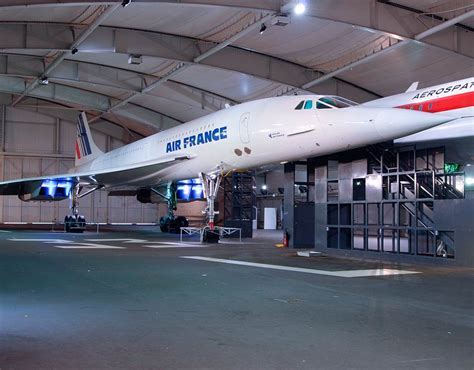
After the publicity flights concluded, the aircraft returned to its classic white Air France livery. Today, it rests in the Musée de l’Air et de l’Espace, still carrying memories of its most glamorous—and most thermally precarious—moment.
A Case Study in Supersonic Precision
The story of the Pepsi Concorde, though often retold as a quirky anecdote, is a profound illustration of the razor-thin thermal design margins that governed the world’s only successful supersonic passenger jet. Even a cosmetic change, as simple as switching from white to blue, could reduce Concorde’s top speed, compromise structural margins, and alter mission profiles.
Supersonic flight is not forgiving. Its constraints are carved from physics, not branding strategy. Concorde’s need to stay white was not superstition—it was a quiet acknowledgment of the immense thermal forces shaping the world’s fastest airliner.
Why the Blue Concorde Remains an Aviation Icon
Despite its brief operational window, the Pepsi Concorde remains a beloved artifact of aerospace history. Aviation enthusiasts see it as proof that even small deviations can illuminate the complexity and brilliance of engineering solutions behind supersonic travel. For engineers, it became a teachable moment—a reminder that in high-speed aerodynamics, something as simple as pigment can reshape performance.
The blue livery did not alter Concorde’s aerodynamic footprint. It did not introduce new drag. Its challenge was purely thermal—a reminder that when flying twice the speed of sound, the sun becomes as formidable an adversary as air itself.
In the end, the Pepsi Concorde stands as a vivid symbol of how design, marketing, and physics intersect in aviation. The aircraft may have worn its iconic blue for only two weeks, but the lessons it revealed endure far longer, speaking to the delicate balance required to keep a supersonic legend aloft.