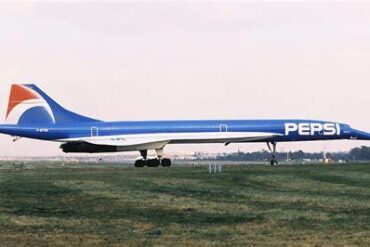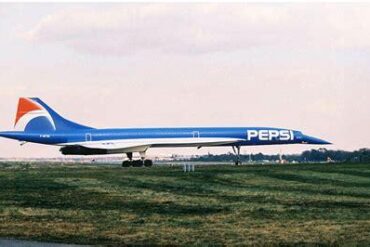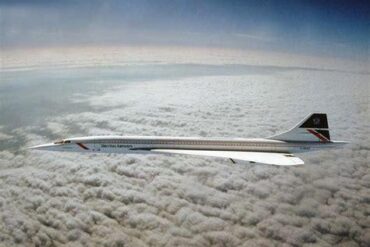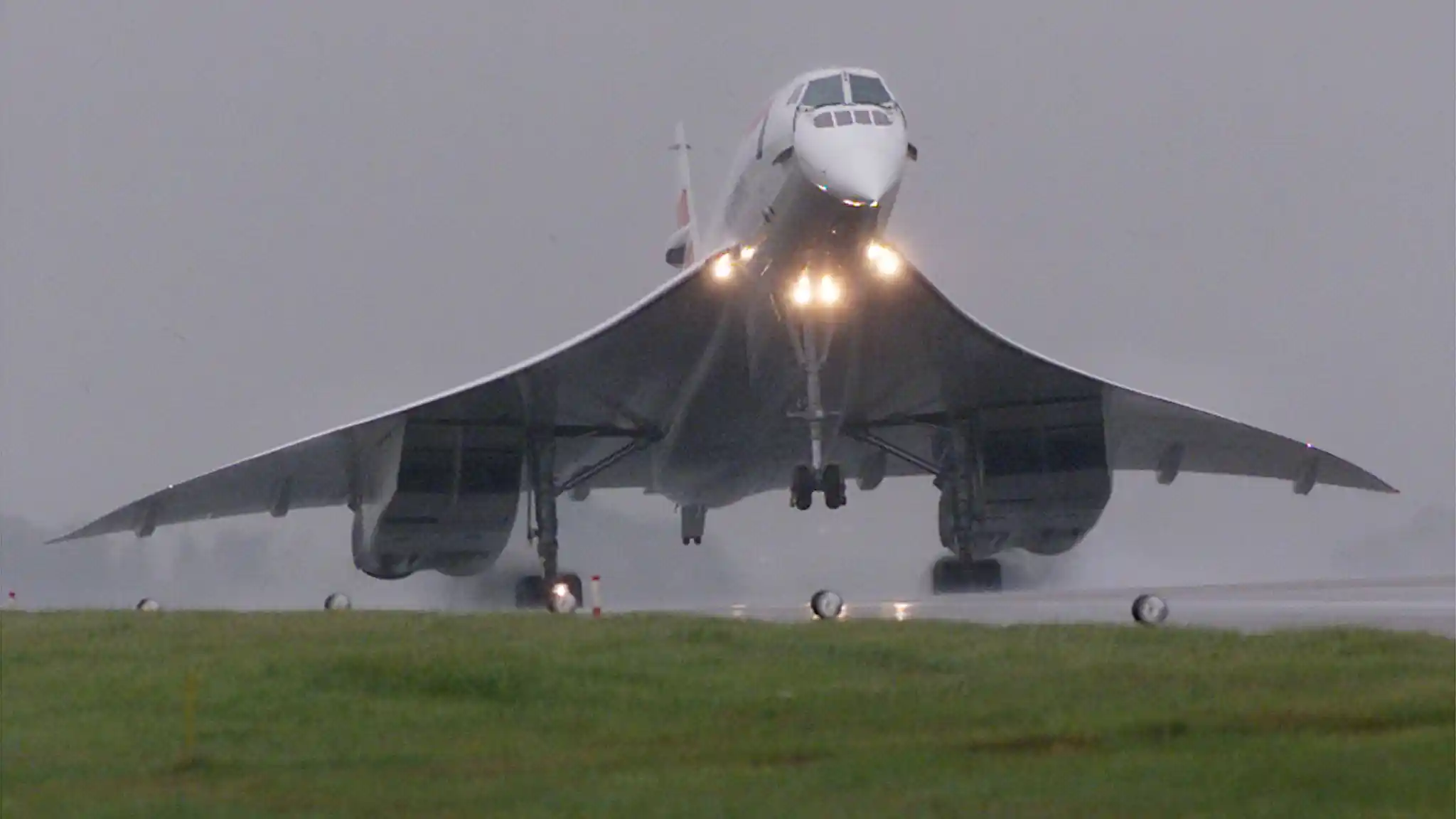
Concorde remains one of the most recognizable aircraft ever built, and few design features are more iconic than its distinctive drooping nose. During takeoff and landing, the sleek supersonic airliner lowered its elongated nose to give pilots a clear view of the runway. When cruising at more than twice the speed of sound, the nose returned to its streamlined position, creating one of aviation’s most memorable silhouettes.
Yet despite renewed interest in commercial supersonic travel, no modern aircraft developer intends to revive this ingenious mechanical solution. Companies building the next generation of high-speed passenger aircraft have largely abandoned the concept in favor of advanced digital technologies, lightweight composites, and sophisticated vision systems. The reason is simple: while Concorde’s drooping nose solved a critical aerodynamic problem, it also introduced enormous structural, maintenance, certification, and economic penalties that modern aviation can no longer justify.
The Aerodynamic Problem That Created Concorde’s Drooping Nose
Supersonic aircraft operate under aerodynamic constraints that differ dramatically from those affecting conventional airliners. To efficiently travel through the atmosphere at speeds exceeding Mach 2, an aircraft requires a long, slender, sharply pointed nose that minimizes drag and reduces the intensity of shockwaves forming around the airframe.
This shape was essential to Concorde’s remarkable performance. Every contour of the aircraft was optimized to reduce aerodynamic resistance at high speed. The narrow fuselage, highly swept delta wing, and elongated nose worked together to make sustained supersonic flight economically possible.
However, this highly efficient shape created a serious visibility problem.
Unlike conventional passenger jets, Concorde relied on a slender delta wing configuration. Delta wings generate lift differently from traditional swept-wing aircraft. Rather than depending heavily on flaps and slats to increase lift during slow flight, Concorde utilized a phenomenon known as vortex lift. Powerful vortices formed above the wing surfaces when the aircraft flew at high angles of attack, allowing sufficient lift during takeoff and landing.
The drawback was that the aircraft needed to maintain a pronounced nose-up attitude at low speeds. During approach, the cockpit sat at such a steep angle that a fixed nose cone would have blocked the pilots’ forward view almost entirely.
Engineers therefore faced a difficult challenge. They needed a long, sharp nose for supersonic efficiency while simultaneously providing pilots with adequate runway visibility during the most critical phases of flight.
The solution became one of the most innovative engineering features ever installed on a commercial airliner.
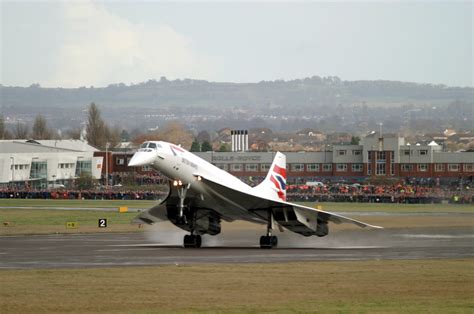
How Concorde’s Variable Geometry Nose Worked
Engineers developed a sophisticated articulating nose system that allowed the entire forward section of the aircraft to change position depending on the phase of flight.
The design incorporated both a movable nose cone and a transparent visor. During high-speed cruise, the visor remained raised and the nose stayed fully extended, preserving the aircraft’s aerodynamic efficiency. During taxi operations, takeoff, and initial climb, the visor lowered while the nose dropped slightly to improve visibility. During final approach, the nose descended even further, reaching its maximum deflection angle to provide pilots with an unobstructed view of the runway.
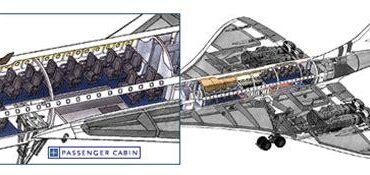
This seemingly elegant solution required an extraordinarily complex mechanical architecture hidden beneath the aircraft’s skin.
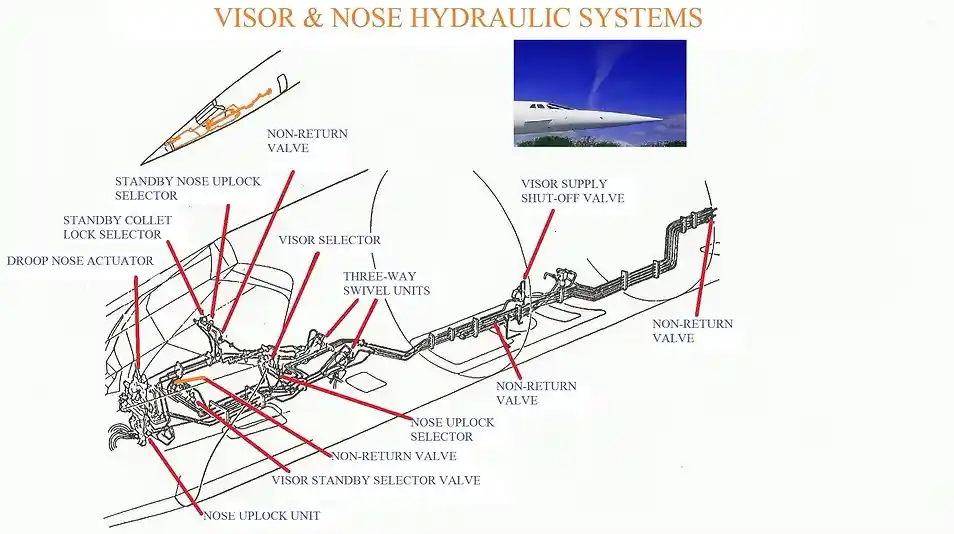
Massive hinge assemblies connected the nose structure to the forward fuselage. Hydraulic actuators generated the force required to move the assembly. Redundant hydraulic circuits ensured safe operation even if one system failed. Locking mechanisms secured the nose in each position while monitoring systems verified proper engagement before flight.
Every component had to function flawlessly despite operating under extreme aerodynamic loads, significant temperature variations, and constant vibration.
The result was a technological marvel, but it came at a considerable cost.
The Structural Compromise Hidden Inside Concorde’s Nose
One of the least appreciated aspects of Concorde’s drooping nose was the structural challenge it created.
Aircraft designers generally prefer uninterrupted load paths throughout an airframe. Continuous structures distribute aerodynamic and pressurization forces efficiently while minimizing fatigue concentrations. Introducing a large moving section into the front of a fuselage fundamentally disrupts this philosophy.
To accommodate the articulating nose, engineers created a significant structural discontinuity near the forward pressure bulkhead. Extensive reinforcement became necessary around the hinge points to ensure the aircraft could withstand repeated supersonic flight cycles.
These reinforcements added substantial weight.
They also introduced localized stress concentrations that required continuous monitoring throughout the aircraft’s operational life. Every takeoff, landing, pressure cycle, and supersonic cruise segment contributed to fatigue accumulation around critical structural interfaces.
While acceptable during Concorde’s era, modern aerospace engineering places much greater emphasis on minimizing structural complexity wherever possible.
Today’s designers understand that every additional structural joint increases long-term maintenance requirements and creates potential failure points that must be inspected throughout an aircraft’s service life.
Why Weight Is the Enemy of Supersonic Flight
The economics of modern aviation revolve around efficiency. Every kilogram added to an aircraft affects fuel consumption, operating costs, payload capability, and range.
Concorde’s movable nose carried a significant weight penalty.
The system required:
- Hydraulic actuators
- Redundant hydraulic plumbing
- Selector valves
- Mechanical locks
- Reinforced support structures
- Monitoring equipment
- Emergency deployment systems
- Heat-resistant visor assemblies
Collectively, these components added substantial mass to the aircraft’s forward fuselage.
While Concorde operated during an era when technological achievement often outweighed economic efficiency, modern supersonic developers face a very different reality. Future aircraft must demonstrate profitability in an intensely competitive market dominated by fuel costs, maintenance expenses, and operational reliability.
Every unnecessary pound reduces the economic viability of a supersonic business model.
By eliminating a movable nose entirely, designers can allocate weight savings toward passenger capacity, fuel reserves, structural optimization, or advanced avionics. The cumulative benefits become impossible to ignore.
Extreme Heat Made the System Even More Complicated
Flying at Mach 2 generates enormous aerodynamic heating.
At Concorde’s cruise speed of Mach 2.02, friction between the aircraft and the atmosphere elevated skin temperatures significantly. The nose section experienced temperatures exceeding 260°F (127°C), creating challenges rarely encountered on conventional airliners.
The drooping nose assembly therefore had to function reliably while exposed to repeated thermal expansion and contraction.
Engineers incorporated specialized materials, thermal protection measures, electrical heating systems, and carefully designed tolerances to prevent binding or structural distortion.
Every flight subjected the nose mechanism to thermal cycles that accelerated wear on seals, bearings, hydraulic lines, and locking components.
This constant exposure to heat contributed directly to maintenance demands. Components that performed flawlessly during initial testing inevitably experienced fatigue and degradation after thousands of operational cycles.
Modern designers prefer eliminating such complications altogether rather than attempting to manage them through increasingly sophisticated mechanical solutions.
Maintenance Realities Eventually Exposed the Weaknesses
The romantic image of Concorde often overshadows the operational realities faced by airlines.
Maintaining the aircraft’s drooping nose required significant effort from ground crews and maintenance personnel. Hydraulic systems demanded regular inspections. Seals required replacement. Actuators needed monitoring. Structural attachment points underwent frequent examination for signs of fatigue.
Even minor discrepancies could result in additional maintenance actions or operational delays.
Each flight cycle subjected moving parts to vibration, pressure fluctuations, temperature extremes, and aerodynamic loading. Over time, wear accumulated across hundreds of interconnected components.
For airlines focused on maximizing aircraft utilization, such complexity represents a major disadvantage.
Modern carriers depend on rapid turnarounds and predictable maintenance schedules. Every unexpected inspection or component replacement can disrupt operations and increase costs.
A fixed nose design removes an entire category of potential maintenance events.
That advantage alone makes the return of a mechanical drooping nose highly unlikely.
Modern Certification Standards Create New Obstacles
If Concorde were designed today, certifying its movable nose system would be substantially more difficult.
Aviation regulators now impose stricter standards regarding structural integrity, damage tolerance, redundancy, fatigue resistance, bird-strike survivability, and system reliability.
Any large articulating structure located at the front of a passenger aircraft would face intense scrutiny during certification.
Manufacturers would need to demonstrate:
- Long-term structural durability
- Resistance to impact damage
- Safe operation after system failures
- Continued functionality under extreme conditions
- Compliance with modern redundancy requirements
Testing programs would become extraordinarily expensive.
Certification costs alone could outweigh any potential benefits offered by the design. Consequently, aircraft developers naturally gravitate toward simpler solutions that achieve the same operational objectives without introducing unnecessary regulatory hurdles.
Cameras Have Replaced Hydraulics
The technological breakthrough that ultimately rendered Concorde’s nose obsolete did not emerge from aerodynamics. It emerged from digital imaging.
High-definition cameras, advanced sensors, synthetic vision software, augmented reality displays, and real-time data processing now provide capabilities unimaginable during Concorde’s development.
Instead of physically lowering the nose to improve visibility, modern aircraft can simply show pilots exactly what lies ahead using electronic systems.
The aircraft maintains a perfectly optimized aerodynamic shape while external cameras stream high-resolution imagery directly into cockpit displays.
Modern flight vision systems offer several advantages over mechanical alternatives.
They eliminate hydraulic complexity. They reduce structural weight. They improve reliability. They simplify maintenance. They enhance situational awareness. They can even provide information beyond what the human eye could observe through a traditional windshield.
This represents a fundamental shift in aerospace philosophy.
Rather than changing the aircraft to accommodate pilot visibility, engineers now enhance pilot visibility through technology.
Boom Supersonic’s Approach to the Problem
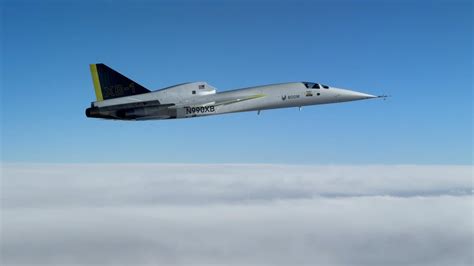
Among contemporary supersonic developers, Boom Supersonic has become one of the most prominent examples of this new design philosophy.
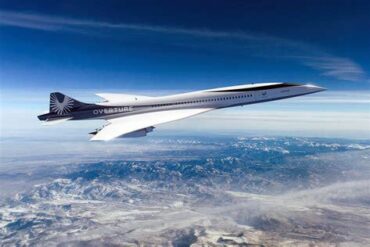
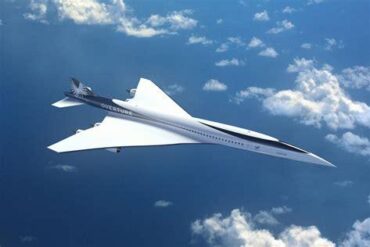
Its XB-1 demonstrator and future Overture airliner completely abandon the concept of a movable nose assembly.
Instead, the company relies on advanced vision systems that use external cameras and digital displays to provide forward visibility during all phases of flight.
The aircraft retains a fixed aerodynamic profile optimized for high-speed efficiency while eliminating the structural compromises associated with moving nose sections.
By replacing hydraulic actuators with lightweight electronic systems, Boom achieves meaningful reductions in weight and complexity.
The approach aligns perfectly with the priorities of modern aviation: efficiency, reliability, maintainability, and economic viability.
NASA’s X-59 May Permanently Close the Door
Perhaps the strongest evidence against the return of drooping noses comes from NASA’s X-59 Quiet Supersonic Technology aircraft.
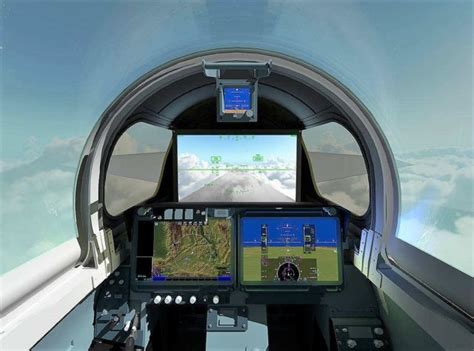
Unlike Concorde, the X-59 eliminates the forward windshield entirely.
The aircraft features an exceptionally long nose designed to minimize sonic boom generation. Traditional cockpit visibility would be impossible.
Rather than modifying the structure, NASA developed the eXternal Visibility System, a sophisticated combination of forward-facing cameras, high-resolution displays, and synthetic vision technologies.
Pilots effectively look through a digital window instead of a physical one.
The significance extends beyond engineering.
If regulators ultimately approve such systems for operational use, future commercial supersonic aircraft will have a clear certification pathway for camera-based visibility solutions. Once that precedent is established, there will be little justification for reintroducing heavy mechanical alternatives.
Concorde’s Legacy Lives On Without Its Most Famous Feature
Concorde’s drooping nose remains one of the greatest examples of creative aerospace engineering ever implemented on a commercial aircraft. It solved a genuine aerodynamic challenge using the tools and technologies available at the time.
Yet the feature also serves as a reminder of how rapidly engineering priorities evolve.
What was once considered a brilliant innovation is now viewed as an avoidable source of weight, complexity, maintenance burden, and certification risk. Modern aircraft developers have discovered a more elegant solution by replacing moving structures with digital intelligence.
The future of supersonic travel will almost certainly preserve Concorde’s ambition, speed, and technological spirit. However, the famous drooping nose that once symbolized the pinnacle of aviation ingenuity belongs to a different era.
As next-generation supersonic airliners move closer to commercial reality, cameras, sensors, augmented reality displays, and synthetic vision systems are poised to accomplish the same mission far more efficiently. The visibility challenge that inspired Concorde’s most recognizable feature has not disappeared, but the solution has fundamentally changed.
For that reason, Concorde’s drooping nose will remain exactly where it belongs: an extraordinary engineering achievement preserved in aviation history rather than replicated in aviation’s future.