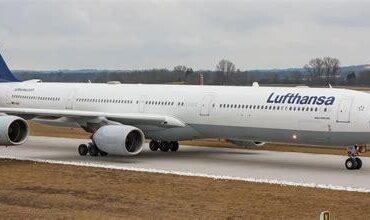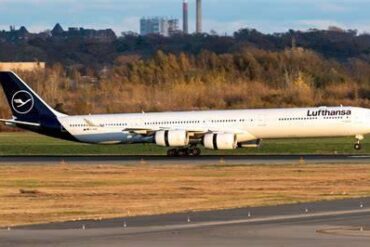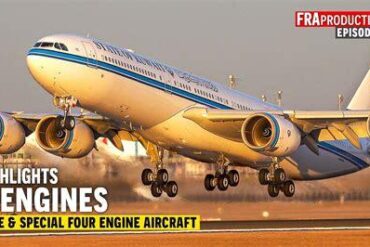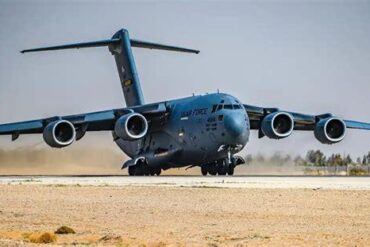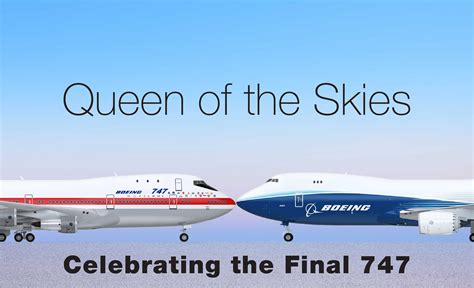
For decades, four-engine passenger aircraft—commonly known as quadjets—represented the ultimate expression of long-haul aviation power and prestige. Aircraft like the Boeing 747, Airbus A340, and Airbus A380 defined international travel for generations. Their immense size, impressive range, and engine redundancy made them ideal for connecting continents in an era when aviation technology still faced significant reliability limitations.
Yet aviation evolves relentlessly. As engine technology improved and airline economics shifted, the industry moved away from four-engine designs. Twin-engine widebodies such as the Boeing 777, Boeing 787 Dreamliner, Airbus A350, and Airbus A330 gradually replaced quadjets across global fleets. Today, the once-dominant giants of the sky appear to be relics of a previous technological era.
However, aviation history rarely moves in perfectly straight lines. New technological demands, geopolitical pressures, and environmental developments are beginning to reopen conversations about whether four-engine aircraft could reappear in the future. The possibility is not about nostalgia. Instead, it lies in emerging realities that could reshape aircraft design priorities.
Understanding the potential return of quadjets requires exploring the historical rise of four-engine aircraft, the technological revolution that replaced them, and the niche circumstances where four engines might again make sense.
The Golden Age of Quadjets in Global Aviation
During the expansion of jet travel in the 1960s and 1970s, four engines were not a luxury—they were a necessity. Early jet engines lacked the reliability required for long flights over oceans or remote regions. Safety regulations demanded multiple engines to ensure aircraft could continue flying even if one or more failed.
Aircraft like the Boeing 707, Boeing 747, and later the Airbus A340 and Airbus A380 were designed around this requirement. With four engines, these aircraft delivered the thrust needed to lift massive payloads while maintaining redundancy for long overwater routes.
The Boeing 747, introduced in 1970, became the most recognizable aircraft of this era. Known as the “Queen of the Skies,” it revolutionized global aviation by dramatically increasing passenger capacity. Airlines could suddenly transport hundreds of travelers between major cities, reducing ticket prices and making international travel accessible to a broader population.
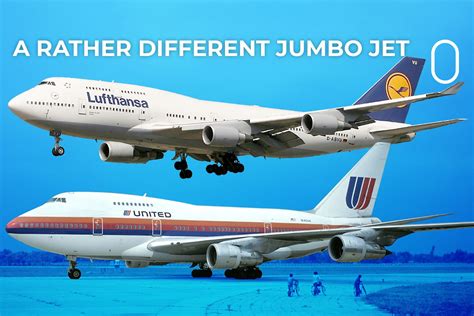
Quadjets also embodied a powerful symbol of national and corporate prestige. Flag carriers around the world proudly operated large four-engine aircraft as their flagship models. Flying a jumbo jet was not just about transporting passengers—it represented technological prowess and economic strength.
The Airbus A380, introduced decades later, attempted to push this concept even further. Designed as the largest passenger aircraft ever built, the double-deck giant could carry more than 800 passengers in high-density configurations. Airbus envisioned a future dominated by massive hub airports where extremely large aircraft would shuttle travelers between global megacities.
But aviation economics were quietly shifting beneath the surface.
Why Twin-Engine Aircraft Took Over the Skies
The decline of quadjets did not occur overnight. Instead, it unfolded as advances in turbofan engine technology dramatically improved performance, efficiency, and reliability.
Modern high-bypass turbofan engines produce enormous thrust while consuming far less fuel than earlier designs. This development allowed twin-engine aircraft to match—or even exceed—the performance of older four-engine airliners.
Equally important was the introduction of ETOPS, short for Extended-range Twin-engine Operational Performance Standards. ETOPS regulations allow twin-engine aircraft to operate long routes across oceans and remote regions provided they meet strict reliability requirements.
Initially, ETOPS allowed aircraft to remain 60 minutes from the nearest diversion airport. Over time, this expanded to 120, 180, and even 330 minutes, enabling twinjets to safely operate almost any long-haul route in the world.
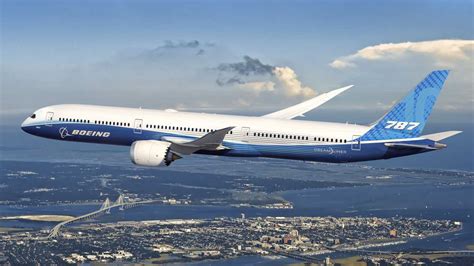
This regulatory shift changed the economics of aviation dramatically. Airlines discovered that two engines could perform the same missions with significantly lower costs.
The advantages quickly became obvious:
- Lower fuel consumption
- Reduced maintenance complexity
- Less aircraft weight
- Greater operational flexibility
Instead of relying on giant hub airports, airlines could operate point-to-point routes using smaller twin-engine widebodies. Aircraft like the Boeing 787 Dreamliner and Airbus A350 enabled direct flights between cities that previously lacked enough demand to justify a large quadjet.
As airline margins tightened and environmental concerns increased, the economic argument for four engines weakened. Orders for aircraft like the Airbus A340 declined sharply, and eventually the program ended.
By 2021, Airbus stopped producing the A380, and in 2023 Boeing delivered the final 747, closing one of the most iconic production lines in aviation history.
For many observers, this seemed to mark the definitive end of the quadjet era.
Yet a few surprising developments suggest the story might not be finished.
Russia’s Ilyushin Il-96: A Quadjet Returning Out of Necessity
One of the clearest examples of a modern quadjet revival comes not from market demand but from geopolitical necessity.
The Ilyushin Il-96, a widebody aircraft first developed during the late Soviet period, never achieved significant international success. Compared with Western aircraft, it suffered from lower engine efficiency, heavier structures, and higher operating costs.
However, international sanctions and restrictions on Western aircraft imports have forced Russia to reconsider its domestic aerospace capabilities. In this environment, the Il-96 has regained strategic importance.
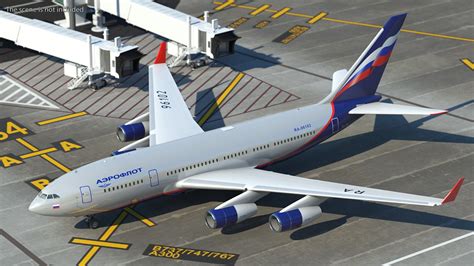
Russia is now promoting the aircraft as a locally produced alternative to Boeing and Airbus widebodies, ensuring that its airlines can maintain long-haul connectivity without relying on foreign suppliers.
From a purely economic perspective, the Il-96 remains less efficient than modern twinjets. Its four Aviadvigatel engines consume more fuel and require greater maintenance than the latest high-bypass turbofans.
Yet the aircraft demonstrates an important reality of aviation: economic efficiency is not always the only deciding factor in aircraft production. Political independence, industrial capability, and national security can sometimes outweigh pure operating costs.
In Russia’s case, the revival of a quadjet is driven by strategic autonomy rather than market competitiveness.
Supersonic Aviation Could Bring Four Engines Back
A more technologically intriguing reason for the return of quadjets comes from the world of supersonic passenger travel.
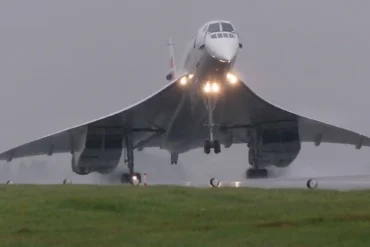
Boom Supersonic’s upcoming Overture aircraft aims to bring commercial supersonic flight back to global aviation. Designed to carry 65 to 80 passengers at speeds approaching Mach 1.7, the aircraft faces design challenges very different from those encountered by subsonic airliners.
Supersonic aircraft must manage extreme aerodynamic forces, high temperatures, and strict noise regulations. Designing engines capable of operating efficiently under these conditions is exceptionally complex.
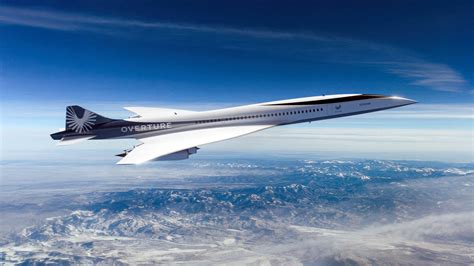
Boom originally explored configurations using two or three engines. However, engineers ultimately chose a four-engine design for several practical reasons.
By dividing thrust among four smaller engines, the aircraft avoids the need to develop extremely large supersonic powerplants. Smaller engines are easier to certify, easier to manufacture, and easier to maintain.
This configuration also provides additional benefits:
- Improved weight distribution
- Reduced acoustic impact
- Simplified development of supersonic propulsion systems
In this case, four engines are not a step backward but rather a clever engineering compromise that allows supersonic technology to progress without requiring entirely new engine architectures.
The Overture project illustrates how new technological frontiers can revive design concepts once thought obsolete.
Could Sustainable Aviation Fuel Change the Economics?
Environmental pressure represents one of the greatest challenges facing the aviation industry today. Airlines, manufacturers, and governments are all working to reduce carbon emissions while maintaining global connectivity.
One promising solution is Sustainable Aviation Fuel (SAF). Unlike conventional jet fuel derived from crude oil, SAF is produced from renewable sources such as used cooking oil, agricultural waste, or synthetic processes powered by renewable energy.
SAF has the potential to reduce lifecycle carbon emissions by up to 80 percent compared with traditional fuels.
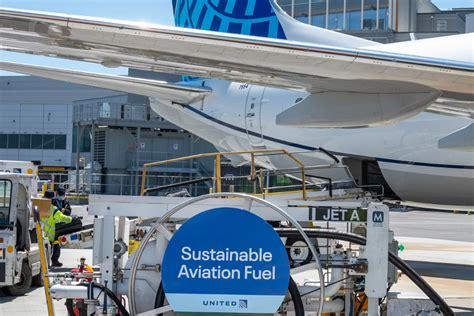
At present, however, SAF remains expensive. Current estimates suggest it costs three to five times more than conventional Jet-A fuel. This price difference makes fuel-hungry aircraft designs even harder for airlines to justify.
If SAF production expands dramatically and costs decline, the economic equation could change. Cheaper sustainable fuel would reduce the penalty associated with operating larger aircraft.
Under those circumstances, high-capacity quadjets might become attractive again on extremely dense international routes where maximizing passenger numbers is more important than minimizing fuel burn per aircraft.
This does not guarantee a widespread comeback. Yet it opens a theoretical window where fuel economics no longer penalize large four-engine aircraft as severely as today.
Cargo Aviation Still Relies on Four-Engine Giants
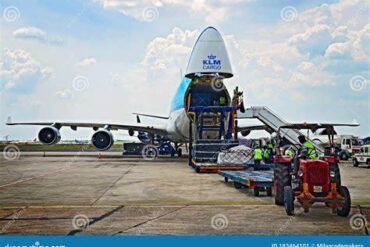
While passenger airlines have largely moved away from quadjets, the air cargo sector continues to rely heavily on four-engine aircraft, particularly the Boeing 747 freighter.
Cargo aircraft face different priorities than passenger airliners. Instead of maximizing seating efficiency, freighters focus on payload capacity and internal volume.
The Boeing 747’s unique design—including its nose-loading cargo door and massive fuselage volume—makes it ideal for transporting oversized freight that cannot fit inside other aircraft.
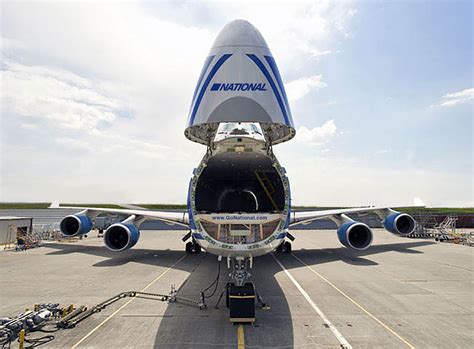
Modern logistics networks depend on these capabilities to transport heavy machinery, industrial equipment, and large shipments across continents.
Because cargo flights operate under different economic models, the additional fuel consumption of four engines is often acceptable when balanced against unmatched carrying capacity.
This is why even as passenger versions disappeared, 747 freighters continue flying across global cargo networks.
The Most Realistic Future for Quadjets
The global airline industry today is firmly centered on efficient twin-engine aircraft. Their reliability, flexibility, and cost advantages make them ideal for the majority of commercial routes.
For this reason, a full-scale return of four-engine passenger aircraft is unlikely. The economic advantages that once justified quadjets have largely been replaced by technological progress.
Yet aviation history shows that aircraft design evolves in response to specific challenges rather than simple trends. Under certain conditions, four engines still provide advantages that two engines cannot easily replicate.
These situations include:
- Supersonic passenger travel
- Geopolitical constraints on aircraft supply
- Heavy cargo transport
- Ultra-high-capacity hub routes
- Specialized military or government missions
In these niche roles, quadjets could remain relevant—or even experience limited revival.
The real lesson is not that four engines are obsolete. Instead, aircraft design is always a balance between technology, economics, and mission requirements.
Quadjets once dominated aviation because they solved the problems of their time. Twinjets replaced them because they solved those problems more efficiently.
But the future of aviation will introduce new challenges—supersonic travel, sustainable fuels, geopolitical disruptions, and evolving transportation networks. In those circumstances, the once-retired four-engine configuration may quietly find new life in unexpected corners of the aerospace world.
FAQs About Quadjets and Their Potential Return
Why did airlines stop using four-engine passenger aircraft?
Airlines shifted away from quadjets primarily because modern twin-engine aircraft offer lower fuel consumption, reduced maintenance costs, and greater operational flexibility. Advances in engine reliability and ETOPS regulations made long-haul flights possible with just two engines.
Are any four-engine passenger aircraft still flying today?
Yes. Some airlines still operate aircraft like the Airbus A380, and Boeing 747 freighters remain widely used in cargo aviation. However, production of most passenger quadjets has ended.
Could new quadjets be developed in the future?
While unlikely for mainstream airline fleets, quadjets could return in specialized roles, particularly in supersonic travel, heavy cargo operations, or geopolitical situations where domestic aircraft production becomes strategically important.