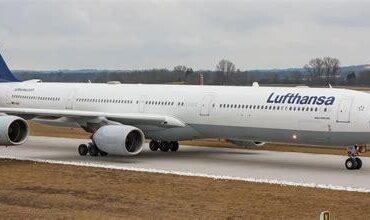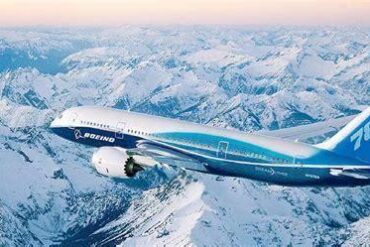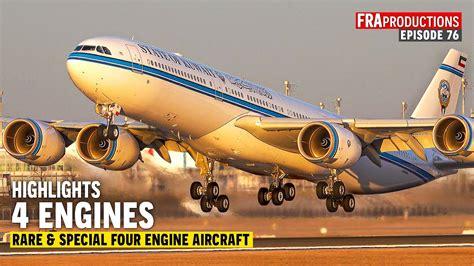
Commercial aviation loves efficiency the way physics loves inevitability. For two decades, that marriage favored high-bypass twin-engine widebodies, quietly pushing four-engine giants toward retirement. The Boeing 747 bowed out. The Airbus A380 followed. The Airbus A340 faded earlier still. The verdict seemed final: four engines were an evolutionary dead end.
That conclusion, however, was never absolute. It was conditional—dependent on fuel prices, airport infrastructure, route structures, and technology assumptions that are no longer static. Aviation history has a habit of looping back on itself when constraints change. Today, several of those constraints are shifting at once, reopening a serious, if narrow, discussion about whether four-engine commercial aircraft could re-enter production, not as mass-market workhorses, but as precision tools for specific missions.
This is not nostalgia. It is about geometry, energy, redundancy, and the quiet limits of twin-engine dominance.
The modern airline network is straining under its own success. Passenger volumes are climbing faster than airports can expand, cargo demand is exploding in size and complexity, and ultra-long-haul routes are pushing aircraft deeper into remote airspace where redundancy regains its old value. Against that backdrop, the quadjet begins to look less like a relic and more like a specialist waiting for the right call.
Slot-Constrained Mega Hubs Are Quietly Favoring Larger Aircraft
The busiest airports on Earth are running out of room—not metaphorically, but mathematically. London Heathrow, New York JFK, Tokyo Narita, Singapore Changi, and Dubai International are approaching hard ceilings on takeoff and landing slots. New runways take decades, not years, and community opposition has turned airport expansion into a political marathon.
When frequency cannot increase, capacity must. Airlines can either abandon demand or move more people per movement. That is where very large aircraft regain relevance.
A four-engine widebody allows airlines to consolidate passenger flows on dense trunk routes where 450 to 600 seats can be filled consistently. These are not speculative markets; they already exist on city pairs linking global financial, tourism, and transfer hubs. The A380 proved the demand was real. Its failure was not rooted in empty seats but in timing, fuel economics, and fleet inflexibility.
What has changed is that slot scarcity is now structural, not cyclical. Airports are more constrained today than when the A380 was launched. In that environment, a next-generation quadjet optimized for seat-mile efficiency rather than raw frequency begins to look economically rational again—particularly for hub-and-spoke superconnectors.
Cargo Is Where Four Engines Never Lost Their Crown
Passenger aviation moved on. Cargo never really did.
The global air freight market has entered a structural growth phase driven by e-commerce, just-in-time manufacturing, humanitarian logistics, and outsized industrial cargo. Wind turbine blades, satellite components, aircraft sections, military vehicles, and disaster relief equipment are not shrinking to fit twin-engine cargo doors.
Four engines matter when physics gets stubborn.
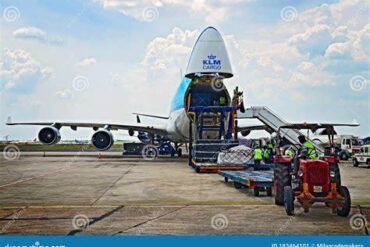
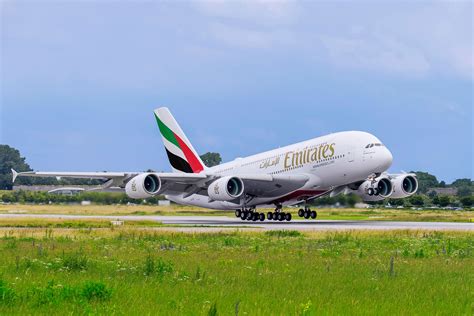
Heavy-lift freighters benefit from distributed thrust, which improves takeoff performance on short or hot-and-high runways and allows safer operations at extreme weights. The continued demand for the Boeing 747-8F and even the aging Antonov An-124 proves that no twinjet fully replaces what a quad can do when cargo is both heavy and awkwardly shaped.
Atlas Air’s all-747 fleet is not an accident or an anachronism. It is a business decision grounded in payload flexibility, nose-door loading, and operational resilience. As cargo shifts from standardized pallets to project-based logistics, the case for new-build, purpose-designed four-engine freighters quietly strengthens.
The industry has not replaced the quad in this space because it cannot—not because it forgot how.
ETOPS Solved Many Problems, Not All of Them
Extended-range twin-engine operations, better known as ETOPS, revolutionized route planning. Modern twins like the Boeing 777, 787, and Airbus A350 can legally fly hours away from diversion airports with remarkable reliability. That achievement removed one of the strongest historical arguments for four engines.
Yet ETOPS is a regulatory framework, not a law of nature.
Ultra-long-haul routes across polar regions, the South Pacific, and parts of the Southern Hemisphere still face operational penalties under ETOPS. Diversion planning can force longer routings, higher fuel loads, and complex alternates that erode efficiency. A four-engine aircraft simply does not carry those constraints. It can fly more direct paths across empty maps.
Beyond regulation, redundancy has a psychological and operational dimension. A quadjet losing one engine retains 75% of its thrust, electrical power, and bleed-air capacity. That margin matters on flights where alternates are time zones away, weather is unpredictable, and diversion options are theoretical dots on charts rather than practical airports.
As airlines explore nonstop city pairs spanning 9,000 nautical miles or more, the old calculus of redundancy quietly reenters the room.
The Fall of the Quadjet Was About Economics, Not Capability
The decline of four-engine passenger aircraft was swift, but it was not because they stopped working. It was because twins got very good very fast.
The Boeing 747, once the symbol of global air travel, became vulnerable when engines grew larger, quieter, and more fuel-efficient. High-bypass turbofans allowed twins to carry similar payloads with lower maintenance and fuel burn. The Airbus A340 suffered even more as fuel prices surged in the early 2000s, magnifying the inefficiency of four medium engines versus two large ones.
The A380’s fate was sealed not by lack of demand, but by network strategy. Airlines shifted away from hub-to-hub flows toward point-to-point flexibility. The 777-300ER and later the A350-1000 offered near-A380 range with far lower risk.
Yet none of those trends negate what four engines offer. They merely priced them out under the assumptions of the time.
Those assumptions—about fuel, materials, demand concentration, and environmental compliance—are now evolving.
Engineering Advantages That Never Went Away
Four engines distribute stress and power in ways twins cannot fully replicate.
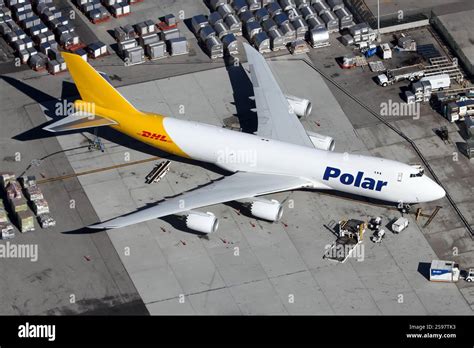
By spreading thrust across four smaller powerplants, designers can scale airframes without pushing individual engines to extreme diameters or temperatures. This reduces wing bending moments, improves structural efficiency, and enhances performance from challenging airports.
Quadjets also excel in hot-and-high environments, where air density robs engines of thrust. More engines mean more margin. That margin translates into higher payloads, safer takeoffs, and fewer performance compromises.
There are operational benefits too. The 747’s ability to fly with one engine removed, or to carry a spare engine under its wing, remains unmatched. For airlines operating in remote regions, that flexibility saves time, money, and schedule integrity.
Technology did not erase these advantages. It simply made them less necessary for most routes—until conditions change again.
Sustainable Fuels and New Materials Could Narrow the Efficiency Gap
The most compelling wildcard in the quadjet debate is technology, not traffic.
Sustainable aviation fuels, advanced aerodynamics, and next-generation composites have the potential to alter the efficiency equation. A four-engine aircraft optimized from the ground up for SAF compatibility, laminar flow wings, and lightweight composite structures would not suffer the same penalties as its predecessors.
Engines themselves are evolving. Ultra-high bypass ratios, geared turbofans, and open-fan concepts could enable smaller, cleaner engines that work better in distributed configurations. When combined with electric or hybrid systems handling secondary loads, the traditional four-engine fuel penalty could shrink dramatically.
This does not mean quads will outcompete twins universally. It means the gap may narrow enough that capacity, redundancy, and payload regain economic relevance in specific niches.
The 747 Remains the Benchmark for Special Missions
No aircraft better illustrates the enduring logic of four engines than the Boeing 747.
Its nose-door cargo access, immense payload capacity, and surplus electrical power make it indispensable for government transport, airborne command posts, space launch support, and industrial logistics. These missions are not shrinking. If anything, geopolitical uncertainty and infrastructure fragility are expanding them.
Governments value redundancy differently than airlines. A flying command center, surveillance platform, or strategic transport values reliability, power generation, and resilience over fuel burn per seat. Four engines deliver that in a way twins cannot fully match.
As long as such missions exist—and they will—the conceptual case for a modernized quadjet remains alive.
The A380neo Question Refuses to Die
The Airbus A380 was never short on admirers, but it was short on customers. Except one.
Emirates built its global strategy around the A380’s capacity advantage, consistently filling over 80% of its seats with premium-heavy traffic. The airline has openly stated it would purchase 60 to 80 A380neo aircraft if Airbus relaunched the program with new engines, aerodynamic refinements, and weight reductions.
An A380neo would not be about nostalgia. It would be about preserving slot efficiency at the world’s most congested hubs while meeting stricter emissions targets through lower specific fuel burn. For Emirates, no twinjet replaces the gauge advantage.
Airbus remains skeptical, citing insufficient demand beyond a single operator. That skepticism is rational. Yet history shows that aviation programs often begin with anchor customers before expanding outward when conditions align.
Supersonic Quadjets Are Writing a Different Chapter
The most likely new four-engine commercial aircraft may not be large or subsonic at all.
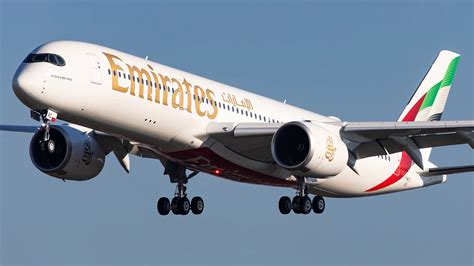
Boom Supersonic’s Overture revives the quad-engine layout for a very different reason: supersonic efficiency without afterburners. Medium-bypass turbofans spread across four nacelles allow manageable inlet design, lower noise, and sufficient thrust for Mach 1.7 cruise.
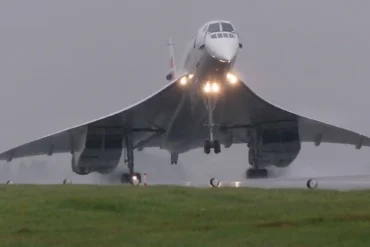
Modern composites, digital flight controls, and refined aerodynamics make this possible in ways Concorde’s designers could only imagine. Here, four engines are not a compromise. They are an enabler.
If Overture succeeds, it will mark the first clean-sheet four-engine commercial aircraft of the 21st century—and it will reset perceptions about what quads are for.
A Return, But on Narrow Terms
Four-engine aircraft are unlikely to dominate global fleets again. The economics of most routes still favor twins. Flexibility, maintenance simplicity, and fleet commonality remain powerful forces.
Yet aviation has never been about one solution. It is about matching tools to problems.
Slot-constrained hubs, outsized cargo, ultra-remote routes, special missions, and supersonic travel all present problems that four engines solve elegantly. When technology reduces their historical penalties, those solutions become viable again.
The future of quadjets is not a resurrection of the past. It is a selective reappearance—quiet, purposeful, and driven by necessity rather than nostalgia. In an industry shaped by constraints, the return of four engines would not be a step backward, but a reminder that progress sometimes circles back to ideas that were never truly obsolete.