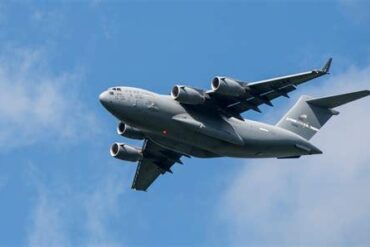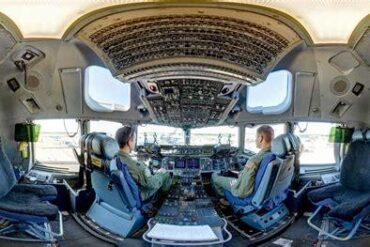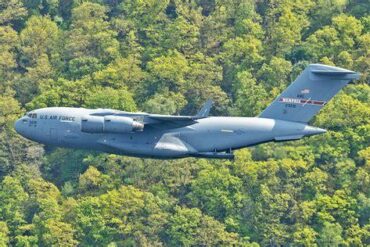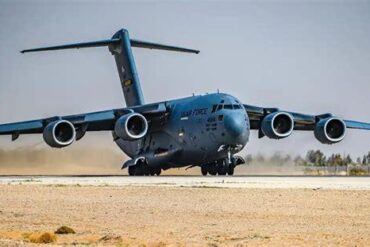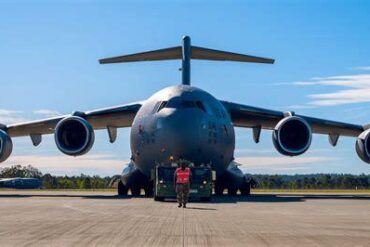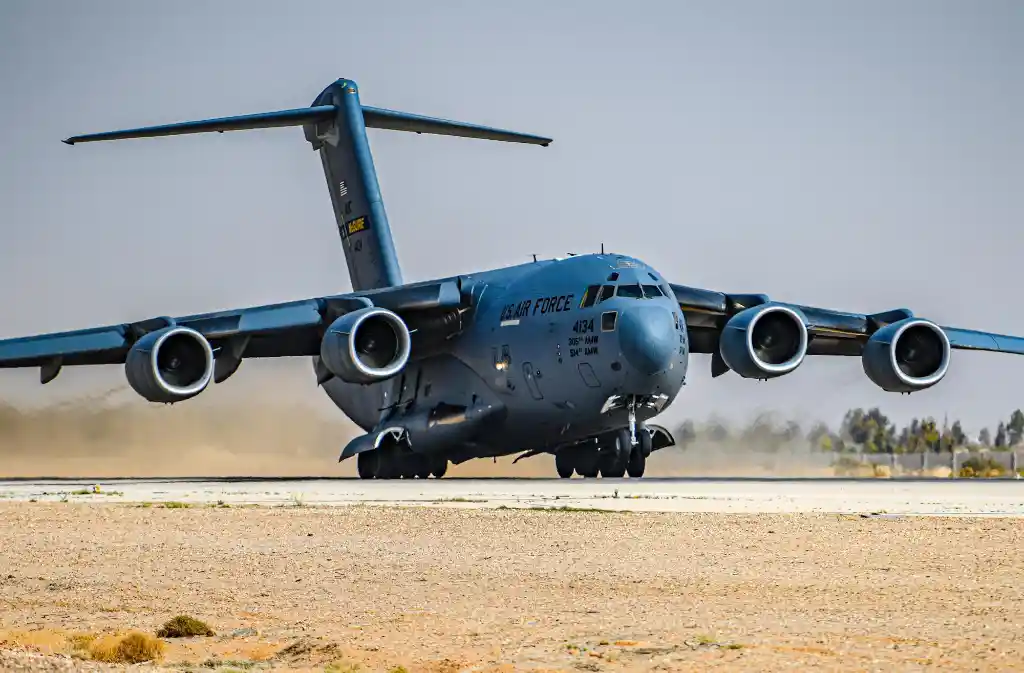
The story of the Boeing C-17 Globemaster III is not one of obsolescence. It is a story of timing. Production ended not because the aircraft failed, but because budgets tightened and orders dried up at a moment when strategic urgency seemed to ebb. Now, a decade later, the geopolitical landscape looks very different. Defense spending is rising. Strategic airlift is once again at the center of military planning. And the question that once seemed settled has returned with force: could the C-17 Globemaster III go back into production?
The answer lies at the intersection of capability gaps, global instability, industrial feasibility, and cold economic math. This aircraft was never just another cargo jet. It was engineered as a strategic bridge between continents, capable of delivering massive payloads into austere airfields that most large transports would never dare approach. Few platforms have matched that combination of brute strength and tactical agility.
Developed in the 1980s by McDonnell Douglas for the United States Air Force (USAF), the C-17 first flew in 1991 and entered service in 1995. When Boeing acquired McDonnell Douglas in 1997, it inherited a platform that would become one of the most indispensable tools in Western military logistics. For over two decades, the aircraft defined heavy strategic airlift. Production ultimately ended in 2015 at the Long Beach, California facility, closing a chapter many assumed would remain closed.
The Strategic Role of the C-17 Globemaster III in Modern Warfare
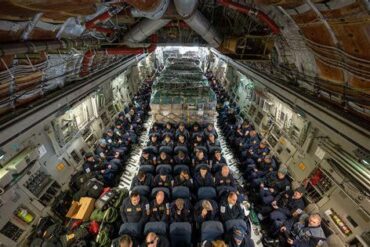
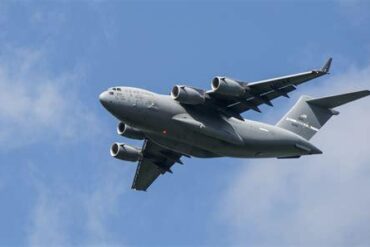
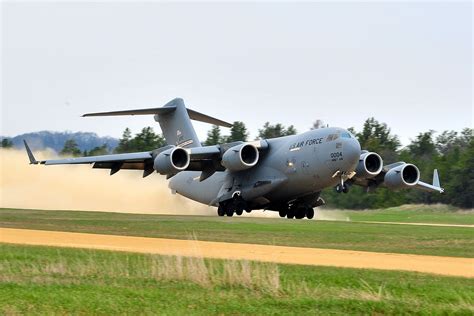
The C-17 is not merely large; it is uniquely capable. It can carry up to 164,900 pounds of cargo across more than 4,500 nautical miles while retaining the ability to operate from runways as short as 3,500 feet. That combination is rare. In practical terms, this means the aircraft can transport an M1 Abrams main battle tank, armored vehicles, helicopters, disaster relief supplies, or fully equipped troops directly into remote or damaged airfields.
Strategic airlift refers to the movement of large volumes of personnel and equipment across intercontinental distances. Tactical airlift focuses on shorter-range operations into smaller, sometimes unprepared landing zones. The C-17 sits at the intersection of both missions. It can land on rough strips yet cross oceans without refueling. Few aircraft embody such operational flexibility.
Recent operations have underscored this value. From evacuations in Afghanistan to sustained logistical support for Ukraine, and ongoing deployments in the Indo-Pacific, the C-17 fleet has absorbed extraordinary operational tempo. Aircraft designed for longevity are now flying hard and often. Wear accumulates. Airframes age. And as usage intensifies, planners inevitably ask whether fleet size remains sufficient.
Why Production Ended in 2015
The closure of the C-17 production line was not a technological verdict. It was a fiscal one. After fulfilling USAF requirements and completing a limited number of international orders, demand fell below the threshold necessary to justify continued manufacturing. The 2011 Budget Control Act imposed significant defense spending cuts in the United States. In its 2010 budget request, the Department of Defense explicitly stated it did not require additional C-17 aircraft.
Without large domestic orders to anchor the line, the economics deteriorated. By 2013, Boeing had fulfilled nearly all remaining commitments. The final aircraft was delivered in 2015. The Long Beach facility, once humming with heavy transport assembly, went quiet.
At the time, this appeared rational. The wars in Iraq and Afghanistan were winding down. Large-scale deployments seemed less likely. Strategic lift demand was forecast to plateau. The assumption, in retrospect, underestimated how quickly the global security environment could shift.
Renewed Global Interest in Heavy Strategic Airlift
The past several years have reshaped defense priorities. Europe has dramatically increased military spending in response to Russia’s war in Ukraine. Indo-Pacific nations are recalibrating force posture amid growing regional tensions. Middle Eastern states continue investing in rapid deployment capabilities.
Strategic mobility is once again central to deterrence. The ability to move heavy forces quickly across theaters is no longer theoretical. It is foundational. Countries that once hesitated now recognize that lift capacity cannot be improvised during crisis.
Reports from recent international defense exhibitions indicate early discussions between Boeing and at least one potential buyer. Nations that previously missed the opportunity to acquire the aircraft have reportedly expressed renewed interest. Japan has long explored heavy-lift expansion, and Saudi Arabia reportedly came close to placing orders before the line closed. While no formal commitments have been announced, the conversation itself signals revived relevance.
The Lack of a True Western Alternative
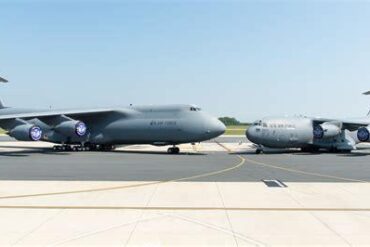
A major driver behind renewed attention is simple: there is no direct replacement. The Airbus A400M Atlas and Embraer C-390 Millennium fill important roles, but neither matches the C-17’s heavy-lift capability.
The A400M was designed as an intermediate platform between the C-130 Hercules and the C-17. It excels in tactical missions and unprepared airfield operations, but its payload capacity—around 30,000 pounds over 2,400 nautical miles—falls far short of the Globemaster’s maximum. The C-390, a jet-powered tactical transport, is similarly optimized for lighter missions.
No Western-built aircraft currently combines the C-17’s payload, range, and short-field performance. That gap becomes more visible as strategic scenarios intensify. While conceptual programs such as the Next Generation Airlift (NGAL) are under study, they remain developmental and emphasize survivability in contested airspace. They are not near-term production solutions.
The Economics of Restarting the C-17 Production Line
Restarting an aircraft production line is not akin to flipping a switch. It requires supply chain reconstitution, workforce rebuilding, tooling recreation, certification updates, and potentially a new manufacturing site. The original Long Beach plant has been closed and sold.
A 2013 RAND Corporation study estimated that restarting production could cost close to $8 billion, assuming the creation of improved derivatives and relocation of manufacturing. That estimate presumed production volumes of up to 150 aircraft. Current interest appears measured in dozens, not hundreds.
Economies of scale matter deeply in aerospace manufacturing. A restart driven by limited orders would face high per-unit costs unless anchored by significant U.S. Air Force participation. Without a substantial domestic commitment, financial viability becomes challenging.
Yet industrial challenges are not insurmountable. Modernized production techniques, digital engineering, and updated avionics could yield an evolved configuration. A “C-17 Block II” variant featuring improved fuel efficiency and updated systems could potentially strengthen the business case.
Extending the Life of the Existing Fleet
While restart discussions continue, Boeing and the USAF are actively extending the lifespan of the current fleet through modernization and sustainment programs. The C-17 Integrated Sustainment Program supports structural upgrades, avionics enhancements, and reliability improvements.
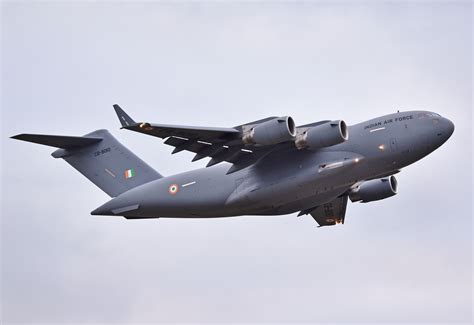
As of recent data, 279 C-17 aircraft were produced, with only one lost in an accident. Approximately 275 remain in active service worldwide. The United States operates 222 aircraft across 12 bases. International operators include:
- Australia (8)
- Canada (5)
- Hungary/NATO Strategic Airlift Capability (3)
- India (11)
- Kuwait (2)
- Qatar (8)
- United Arab Emirates (8)
- United Kingdom (8)
This global operator base provides economies of sustainment and long-term logistical continuity. The aircraft is projected to remain in service until approximately 2070, underscoring its structural resilience.
Still, sustained high operational tempo increases fatigue. Airframes are durable, but physics is patient. Every takeoff cycle and every heavy landing incrementally accumulates stress. Strategic planners must decide whether modernization alone is sufficient or whether additional airframes are required to distribute workload.
Industrial Strategy and National Security Considerations
A restart would carry implications beyond aircraft numbers. It would represent a strategic industrial decision. Maintaining heavy airlift production capability supports aerospace workforce skills, supplier networks, and defense manufacturing resilience.
In an era where supply chain fragility has become visible across industries, retaining or reestablishing domestic production capacity for large military aircraft has geopolitical weight. Industrial capability is itself a form of deterrence.
Yet policymakers must balance this against emerging concepts emphasizing survivability. Future conflicts may involve contested airspace saturated with advanced surface-to-air missile systems. The C-17 was not designed as a stealth platform. Its strength lies in logistics, not penetration. A restart must align with long-term doctrine rather than nostalgia.
Could the C-17 Production Restart Become Reality?
For a production restart to materialize, three conditions likely need alignment: confirmed international orders in sufficient quantity, U.S. Air Force participation to anchor production, and a credible modernization roadmap that justifies long-term investment.
If these elements converge, the aircraft’s established operational record offers powerful validation. The C-17 has demonstrated reliability across humanitarian missions, combat deployments, and disaster response. Its ability to deliver outsized cargo into constrained environments remains unmatched among Western aircraft.
If they do not converge, the existing fleet will continue to shoulder global airlift demands. The aircraft’s longevity ensures relevance for decades. In that scenario, the Globemaster III remains a legend sustained rather than reborn.
The debate over restarting production ultimately reflects a larger truth about modern defense planning. Strategic lift is not glamorous. It rarely headlines technological showcases. Yet without it, no military power can project force, sustain allies, or respond rapidly to crises. The C-17’s enduring appeal is rooted in that simple reality.
Whether or not the assembly line reopens, the Boeing C-17 Globemaster III continues to define heavy air mobility in the 21st century. The world has rediscovered the value of moving weight across oceans with speed and precision. When demand returns for such capability, history has a way of reopening doors once thought permanently closed.