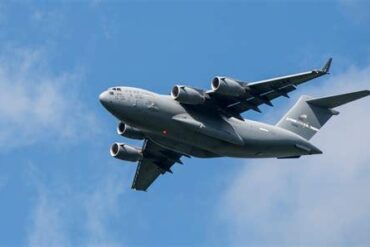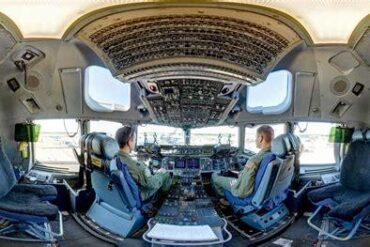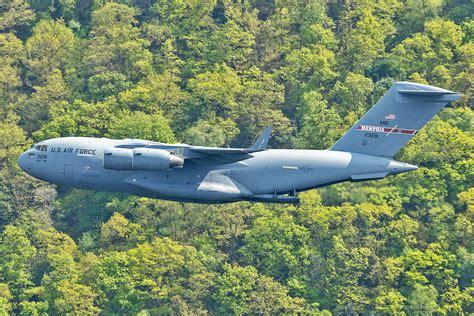
The Boeing C-17 Globemaster III is more than a military transport aircraft; it is a strategic instrument that has quietly shaped American power projection for over three decades. From landing on short, damaged runways in Afghanistan to delivering humanitarian aid within hours of catastrophic earthquakes, the C-17 has become inseparable from the modern image of U.S. global mobility. Yet even the most capable aircraft is bound by physics, airframe fatigue, and the strategic realities of a changing world. As peer competitors field advanced missiles, sensors, and denial systems, the United States Air Force is already planning for what comes after the Globemaster.
Unlike past transitions, the replacement of the C-17 will not be a single dramatic handover. Instead, it will unfold over decades, driven by a fundamental rethink of how airlift must function in contested, data-driven, and geographically vast theaters. At the heart of this evolution is an ambitious concept that aims to replace not just one iconic aircraft, but two.
The story of the C-17’s successor is therefore not simply about a new airplane. It is about how the U.S. Air Force intends to move armies, sustain allies, and respond to crises in an era where access can no longer be assumed and logistics itself has become a battlefield.
The roots of this transition stretch back further than many realize, anchored in lessons learned from earlier generations of airlifters and the hard realities of modern warfare.
The C-17 Globemaster III and the Evolution of Modern Airlift
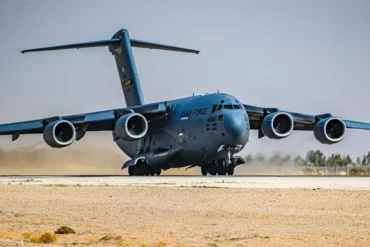
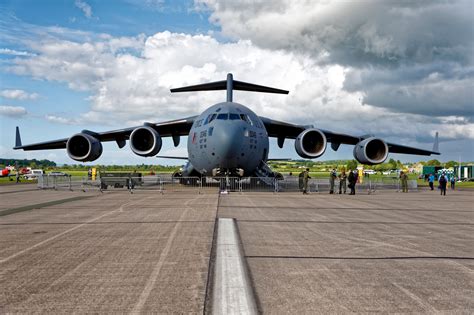
When the C-17 Globemaster III entered service in the early 1990s, it represented a decisive break from previous airlift philosophies. Designed by McDonnell Douglas, the aircraft was built to erase the traditional division between strategic and tactical transport. It could fly intercontinental distances with heavy armor aboard, then descend into short, semi-prepared airstrips that had previously been the domain of much smaller aircraft.
This flexibility was not accidental. The C-17 was shaped by the limitations of its predecessor, the Lockheed C-141 Starlifter, which had revolutionized airlift during the Cold War but lacked the ability to operate close to the front lines. The Starlifter brought speed and jet-age reach, but it required long, well-prepared runways and could not accommodate many of the outsized vehicles that modern armies increasingly relied upon.
The C-17 solved those problems with a cavernous cargo bay, advanced high-lift wings, and powerful engines paired with thrust reversers that allowed it to stop in remarkably short distances. Over time, it proved indispensable across conflicts in Iraq and Afghanistan, NATO reassurance missions in Europe, and disaster relief operations worldwide. Its reputation as the workhorse of U.S. global mobility was earned through relentless operational tempo rather than technological novelty alone.
Today, roughly 220 C-17s form the backbone of the Air Force’s heavy airlift force. However, production ended in 2015, and the average aircraft is now more than twenty years old. While upgrades and sustainment programs have kept availability high, the long-term trajectory is clear: the fleet will eventually need replacement, and the environment it will face is far more dangerous than the one it was designed for.
Aging Fleets and the Strategic Airlift Dilemma
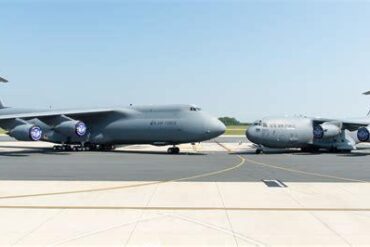
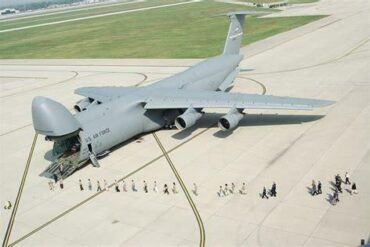
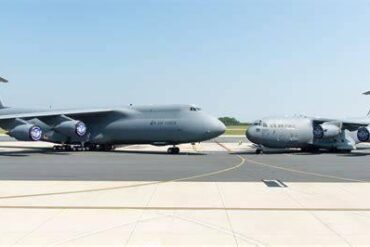
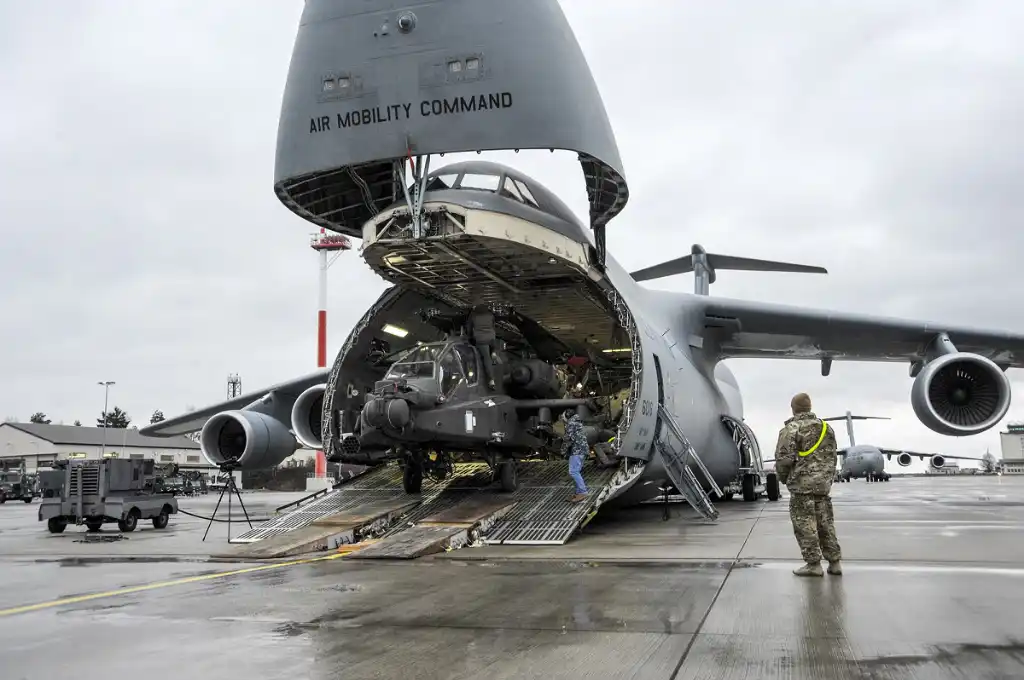
Any discussion of replacing the C-17 inevitably leads to its larger sibling, the C-5M Super Galaxy. With its immense payload capacity, the C-5M remains the only aircraft capable of carrying the heaviest and largest equipment in the U.S. inventory. Following the Reliability Enhancement and Re-engining Program (RERP), the C-5M emerged as a vastly more reliable platform, with service life now projected into the mid-2040s.
Yet the coexistence of the C-17 and C-5M highlights a structural inefficiency in the current airlift force. Maintaining two separate fleets, each optimized for different aspects of the same mission set, imposes logistical, training, and financial burdens. More importantly, neither aircraft was designed with today’s threat environment in mind. Advanced surface-to-air missiles, long-range sensors, and precision strikes now place slow, non-stealthy aircraft at increasing risk.
Air Mobility Command leadership has been explicit about this challenge. The future airlifter must be faster, more survivable, and more adaptable, capable of operating in contested environments rather than orbiting safely beyond them. Incremental upgrades alone cannot deliver that transformation.
The solution being explored is not a simple C-17 replacement, but a fundamental consolidation of roles that would redefine strategic airlift for the rest of the century.
One Aircraft to Replace Two: The Next-Generation Airlifter Vision
The most consequential shift in U.S. airlift planning is the decision to pursue a single aircraft capable of replacing both the C-17 Globemaster III and the C-5M Super Galaxy. Known conceptually as the Next-Generation Airlifter (NGAL), this platform is envisioned as a true hybrid, combining outsized payload capacity with tactical flexibility.
Rather than maintaining separate fleets for strategic and tactical airlift, the Air Force aims to streamline its force structure around a unified design. This approach promises lower lifecycle costs, simplified logistics, and greater operational flexibility. More importantly, it aligns with the realities of modern warfare, where rapid movement across vast distances must be paired with the ability to access dispersed and austere locations.
Current planning timelines suggest the first NGAL aircraft could enter service around 2038, with initial operational capability in the early 2040s. The C-5M would retire first, followed by a gradual, one-for-one replacement of the C-17 fleet stretching into the 2070s. This extended transition reflects both budgetary realities and the sheer scale of the airlift mission.
Crucially, NGAL remains a conceptual framework, not a finalized program. The Air Force is deliberately focusing on defining required capabilities before committing to a specific design. That capability-first approach leaves room for revolutionary solutions rather than incremental evolution.
Revolutionary Designs and the Promise of Blended Wing Bodies
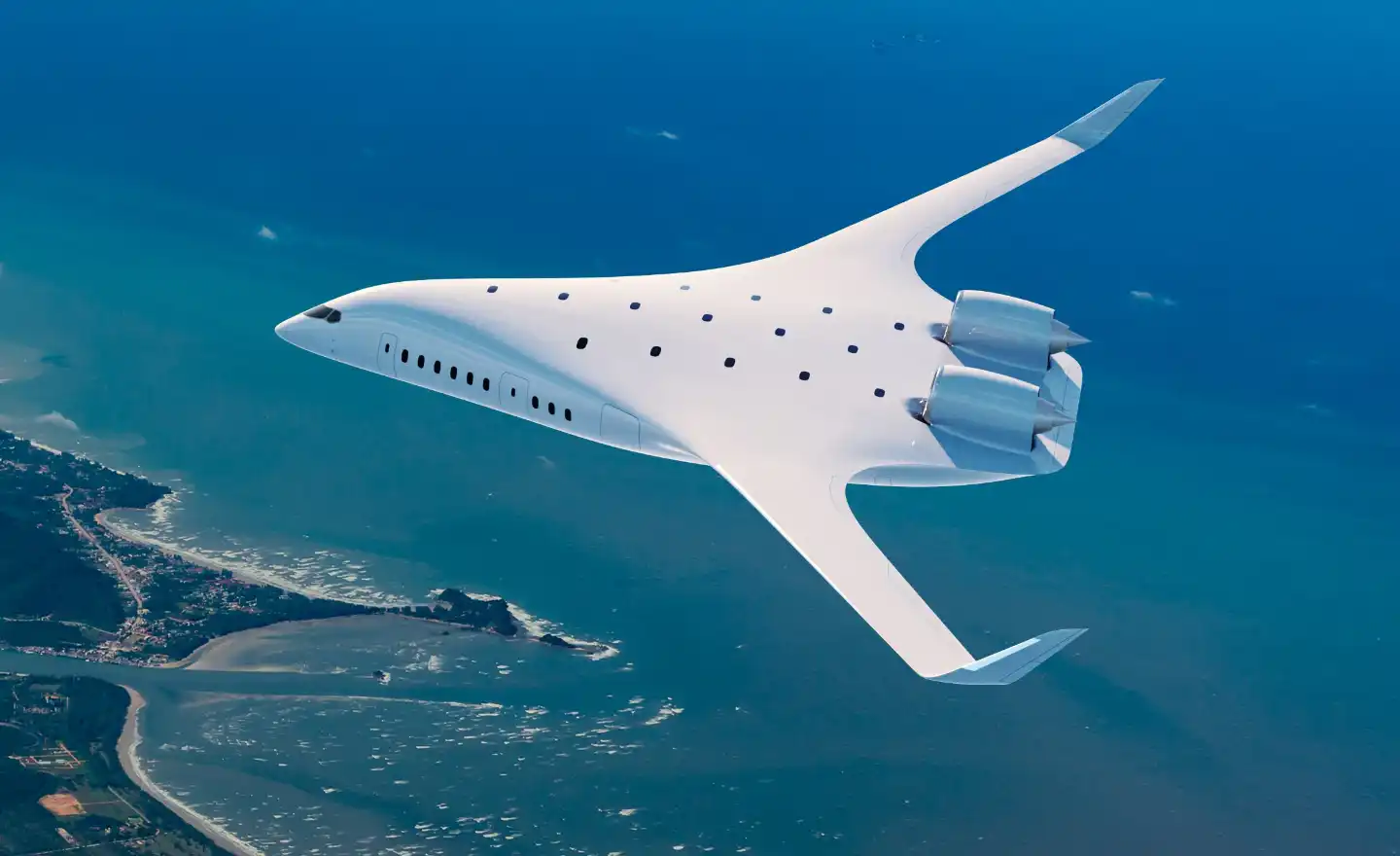
Among the most discussed design concepts shaping NGAL is the blended wing body (BWB) configuration. Unlike traditional tube-and-wing aircraft, a BWB integrates the fuselage and wings into a single, continuous lifting surface. The result is an aircraft that generates lift across most of its structure rather than relying on discrete components.
The potential advantages are profound. A blended wing body could deliver dramatic fuel efficiency gains, with studies suggesting reductions in fuel burn of 30 percent or more compared to conventional designs. For an aircraft that spends its life carrying heavy loads over intercontinental distances, those savings translate directly into extended range, reduced tanker dependence, and lower operating costs.
Equally important is internal volume. A BWB design can provide vast, uninterrupted cargo spaces ideally suited for outsized loads, while also offering new opportunities for distributed systems, defensive equipment, and fuel storage. The smooth, continuous surfaces of such aircraft may also reduce radar signatures, enhancing survivability even without full stealth characteristics.
To explore these possibilities, the Air Force has partnered with industry on subscale demonstrators. The JetZero blended wing body prototype, developed with support from Northrop Grumman, is designed to validate aerodynamics, flight controls, and handling qualities. Its ongoing testing program represents a tangible step toward reshaping how large military aircraft are built.
Survivability, Autonomy, and the Contested Battlespace
The replacement of the C-17 is not only about aerodynamics and payload. It is also about redefining what a military airlifter can be in a networked, contested battlespace. Future conflicts are expected to feature long-range sensors, integrated air defenses, and cyber-enabled disruption, making traditional logistics routes increasingly vulnerable.
As a result, NGAL is being conceptualized as an integrated node within Joint All-Domain Command and Control architectures. Rather than operating as a standalone transport, the aircraft would share real-time data with other platforms, dynamically reroute around threats, and integrate seamlessly into joint and allied operations.
Advanced onboard sensors and decision-support systems could enable semi-autonomous operations, reducing crew workload and enhancing responsiveness. Defensive systems, ranging from electronic warfare suites to next-generation countermeasures, are also under consideration to improve survivability without imposing prohibitive weight penalties.
This shift reflects a broader realization: logistics aircraft can no longer be treated as rear-area assets. In future wars, they may be among the most targeted platforms precisely because of their strategic importance.
Balancing Innovation with Hard-Won Lessons
While the promise of NGAL is compelling, the path forward is not without risk. History offers cautionary tales about aircraft that excelled in one domain while failing in others. The C-141 Starlifter, for all its speed and range, ultimately struggled with runway limitations that constrained its usefulness in later conflicts.
The C-17 succeeded precisely because it balanced competing requirements: payload, range, and access. Any successor must do the same. Highly optimized designs, such as blended wing bodies, may face challenges in short takeoff and landing performance or cargo modularity if not carefully engineered.
Similarly, the demands of the Indo-Pacific theater, with its vast distances and dispersed basing, place unique stresses on airlift planning. NGAL will be expected to support Agile Combat Employment, moving forces rapidly between remote locations while minimizing vulnerability. Achieving that balance will require disciplined requirements, realistic testing, and sustained investment.
What the End of the C-17 Era Really Means
The eventual replacement of the C-17 Globemaster III does not diminish its legacy. If anything, the aircraft’s longevity underscores how well it was conceived for its time. It bridged generations, adapted to missions its designers never fully anticipated, and became indispensable to both warfighting and humanitarian response.
The aircraft set to replace it will not simply inherit a mission; it will inherit a philosophy of flexibility, reliability, and global reach. From the jet-age leap of the C-141 to the hybrid brilliance of the C-17, and now toward the networked ambition of NGAL, U.S. airlift has evolved alongside strategy itself.
As planning moves forward, the replacement of the C-17 will stand as one of the most consequential aerospace decisions of the 21st century. It will define how the United States moves power across the globe, how quickly it can respond to crises, and how effectively it can sustain operations in the face of determined opposition.
The Globemaster’s successor will arrive quietly, years from now, long after headlines have faded. But when it does, it will carry forward a legacy built not just on aluminum and engines, but on the unglamorous, indispensable art of moving the world when it matters most.