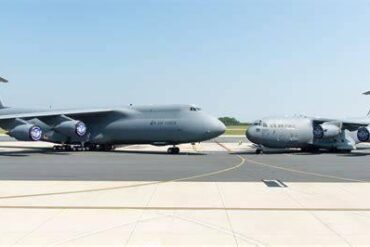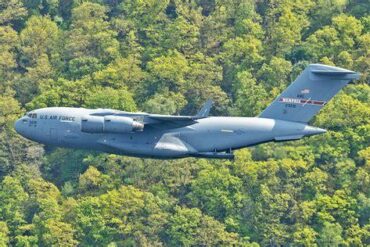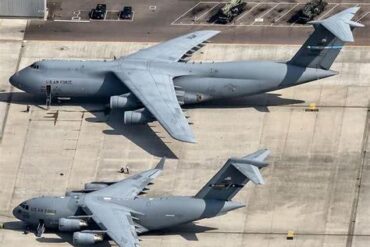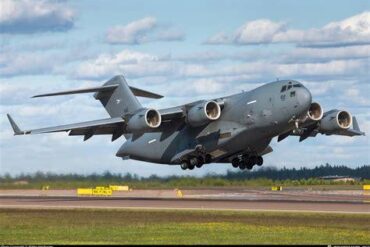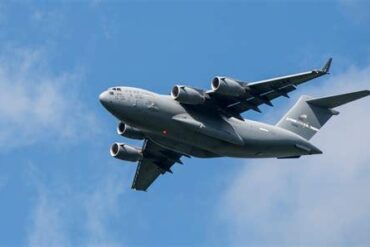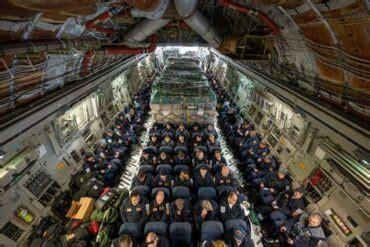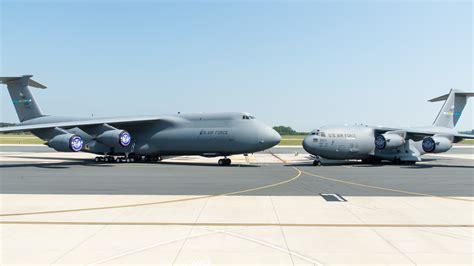
For more than three decades, the Boeing C-17 Globemaster III has served as the backbone of American strategic and tactical airlift. It has transported armored vehicles into combat zones, delivered emergency humanitarian supplies after devastating natural disasters, supported military operations on nearly every continent, and demonstrated a unique ability to bridge the gap between long-range transportation and front-line logistics. Few military aircraft have shaped modern mobility doctrine as profoundly as the C-17.
Yet even one of the most successful transport aircraft ever built cannot remain in service indefinitely. The United States Air Force is already examining how its future airlift fleet should look in the decades ahead. Rather than seeking a simple replacement aircraft that mirrors the C-17’s capabilities, planners are pursuing a far more ambitious vision—one that could redefine strategic mobility for the remainder of the 21st century.
The centerpiece of that vision is the Next-Generation Airlifter (NGAL), a conceptual platform designed to eventually replace not only the C-17 but also the larger Lockheed Martin C-5M Super Galaxy. If realized, NGAL would represent one of the most significant transformations in military airlift since the introduction of jet-powered transport aircraft during the Cold War.
The effort reflects changing geopolitical realities, advances in aerospace engineering, and the growing challenge of operating in contested environments where traditional logistics aircraft may face unprecedented threats.
The C-17 Globemaster III’s Enduring Legacy
When the C-17 entered operational service during the early 1990s, it addressed a longstanding challenge facing military planners. Previous generations of transport aircraft generally excelled either at strategic movement across long distances or tactical operations close to combat zones. The Globemaster III successfully combined both capabilities into a single platform.
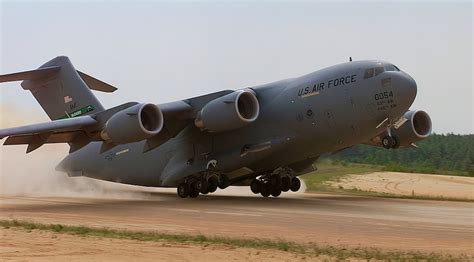
Developed by McDonnell Douglas, which later became part of Boeing, the aircraft introduced a unique blend of characteristics. It could carry heavy armored vehicles and large cargo loads over intercontinental distances while simultaneously operating from relatively short and semi-prepared runways. This versatility dramatically expanded the Air Force’s ability to move forces rapidly around the globe.
Unlike traditional strategic transports that depended on major air bases with extensive infrastructure, the C-17 could land much closer to operational areas. Its advanced flight controls, powerful engines, and ability to use thrust reversers during landing enabled access to locations that would have been impractical for larger strategic transports.
Over the years, the aircraft became indispensable during military campaigns in Iraq and Afghanistan, humanitarian relief missions following earthquakes and hurricanes, emergency evacuations, and rapid reinforcement operations across Europe and the Indo-Pacific. Whether carrying troops, helicopters, armored vehicles, medical supplies, or disaster relief equipment, the Globemaster repeatedly demonstrated remarkable flexibility.
Today, approximately 222 C-17 aircraft remain in service with the United States Air Force, forming the core of the nation’s heavy airlift capability.
Lessons Learned From The C-141 Starlifter Era
Understanding the future replacement strategy requires looking back at the aircraft that preceded the Globemaster. The Lockheed C-141 Starlifter revolutionized military logistics when it entered service during the 1960s.
As the Air Force’s first jet-powered strategic transport, the Starlifter dramatically increased speed and global reach compared with older propeller-driven transports. During the Vietnam War and throughout the Cold War, the aircraft transformed military mobility by enabling rapid deployment across vast distances.
However, despite its strengths, the C-141 had limitations that became increasingly apparent over time. The aircraft was optimized for strategic transportation between established airfields but lacked the tactical flexibility later demanded by modern conflicts. Its runway requirements and cargo-handling limitations restricted operations in more austere environments.
The C-17 emerged as a direct response to these operational realities. Military planners wanted an aircraft capable of preserving strategic reach while also providing tactical access closer to front-line forces. The success of the Globemaster validated that concept and established a new standard for military transport aircraft.
The transition from the C-141 to the C-17 illustrates an important principle in military aviation: transport aircraft evolve not simply because older airframes age, but because operational requirements fundamentally change.
Why The Air Force Is Already Planning Beyond The C-17
Although the C-17 remains highly capable, several factors are driving long-term replacement planning.
The first challenge is age. Most aircraft in the fleet have already accumulated decades of operational service. While extensive maintenance programs and modernization efforts can extend their usefulness, every airframe eventually encounters increasing sustainment costs and structural fatigue concerns.
A second factor involves production. Manufacturing of the C-17 ended in 2015, eliminating the possibility of purchasing newly built aircraft without restarting an expensive production line.
A third and perhaps more significant issue relates to future warfare. Modern military planners increasingly anticipate operations in environments protected by advanced integrated air-defense systems, long-range missiles, electronic warfare capabilities, and sophisticated surveillance networks. Aircraft designed during the late Cold War may not possess the survivability characteristics necessary for these future scenarios.
Air Mobility Command leadership has repeatedly emphasized that tomorrow’s transport aircraft must combine payload capacity with greater survivability, operational flexibility, and integration into networked battlespace architectures.
The C-5M Super Galaxy Challenge
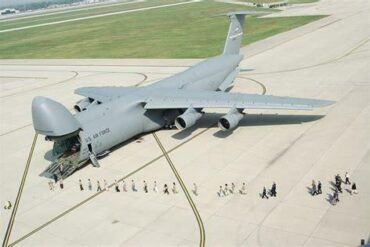
Any discussion regarding a C-17 successor must also include the C-5M Super Galaxy, the largest transport aircraft currently operated by the Air Force.
The C-5M offers extraordinary payload capacity. It can transport outsized cargo that exceeds the capabilities of nearly every other military airlifter in the world. Massive helicopters, multiple armored vehicles, and specialized military equipment can all fit within its enormous cargo compartment.
Following extensive modernization efforts under the Reliability Enhancement and Re-engining Program, the C-5M became substantially more reliable and efficient. Current projections suggest the fleet may remain operational well into the 2040s.
However, the aircraft depends on long, prepared runways and lacks the tactical flexibility that defines the C-17. While the Super Galaxy excels at moving enormous cargo between major airfields, it cannot easily replicate the Globemaster’s ability to operate from austere locations.
This distinction has historically justified maintaining two separate fleets. Yet budget pressures and evolving operational concepts are encouraging the Air Force to explore a different solution.
NGAL: One Aircraft Intended To Replace Two Fleets
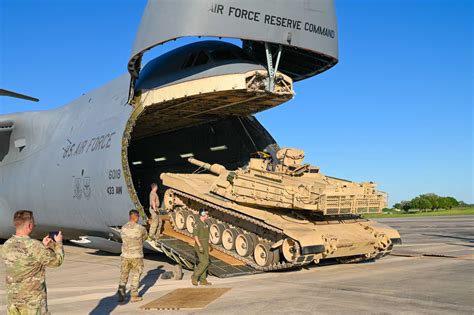
Perhaps the most transformative aspect of current planning is the goal of replacing both the C-17 and C-5M with a single family of aircraft.
Known as the Next-Generation Airlifter, NGAL aims to combine the strategic payload capacity of the Super Galaxy with the tactical versatility of the Globemaster. Such an achievement would simplify logistics, reduce long-term operating costs, and create a more standardized mobility fleet.
Current Air Mobility Command planning envisions the possibility of introducing initial NGAL aircraft around the late 2030s, with operational service beginning during the early 2040s.
Projected milestones currently discussed include:
- Analysis of Alternatives beginning around Fiscal Year 2027
- Potential first production aircraft by approximately 2038
- Initial Operational Capability around 2041
- Retirement of the C-5M fleet around 2045
- Gradual replacement of the C-17 fleet through the mid-2070s
- Long-term fleet objective of roughly 274 NGAL aircraft
Importantly, NGAL remains a conceptual effort rather than a formal acquisition program. The Air Force is still determining what capabilities the future platform must possess before committing to a specific design.
Blended Wing Body Designs Could Transform Military Airlift
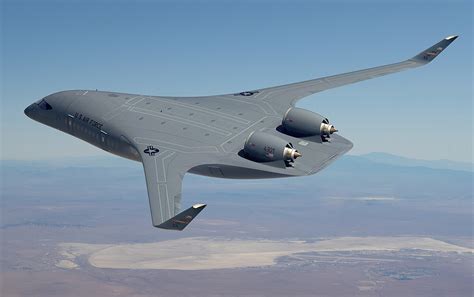
One of the most intriguing technologies under consideration for future airlift platforms is the Blended Wing Body (BWB) configuration.
Unlike conventional aircraft, which feature a distinct fuselage attached to wings, a BWB integrates these components into a single aerodynamic structure. The resulting shape generates lift more efficiently and creates substantially more usable internal volume.
For military airlift applications, these advantages could be transformative. Increased fuel efficiency would extend operational range while reducing logistical burdens. Additional internal volume could allow greater payload flexibility without dramatically increasing aircraft size.
A blended wing body may also offer reduced radar signatures compared with traditional transport aircraft, potentially improving survivability in contested environments.
Recognizing these possibilities, the Air Force has supported experimental programs designed to validate BWB concepts.
JetZero And The Pathfinder Demonstrator
Among the most closely watched initiatives is the partnership involving JetZero and Northrop Grumman.
In 2023, JetZero received Air Force support to develop a blended wing body demonstrator known as Pathfinder. The project aims to explore flight characteristics, aerodynamic efficiency, control systems, and operational feasibility.
The Pathfinder demonstrator represents an important step toward understanding whether BWB technology can mature into practical military and commercial aircraft. While the prototype itself is far smaller than any future strategic airlifter, its development provides valuable data regarding handling qualities and structural design.
Successful testing could influence future Air Force procurement decisions and potentially shape the architecture of NGAL.
Survivability Will Become As Important As Payload
Historically, strategic airlifters operated under the assumption that air superiority would protect logistics aircraft. Future conflicts may challenge that assumption.
Military planners increasingly envision scenarios in which transport aircraft must operate within range of sophisticated missile systems, electronic warfare networks, and advanced surveillance platforms. As a result, survivability has become a central requirement for next-generation mobility aircraft.
Future NGAL concepts may incorporate integrated electronic warfare systems capable of detecting and countering threats automatically. Advanced sensor suites could provide crews with real-time situational awareness across vast operational theaters.
Some concepts even explore defensive technologies that would have seemed futuristic only a decade ago, including directed-energy systems and highly automated countermeasure packages.
The goal is not to transform airlifters into combat aircraft but to ensure they can continue delivering critical cargo despite increasingly dangerous operating environments.
Networked Logistics And Autonomous Operations
Another major shift involves the role of data and connectivity.
Future military transport aircraft are expected to function as active participants in the broader Joint All-Domain Command and Control (JADC2) ecosystem. Rather than simply carrying cargo from one location to another, they may serve as information-sharing nodes connected to forces across air, land, sea, space, and cyber domains.
Advanced onboard computing systems could analyze operational conditions continuously, identify emerging threats, and recommend route adjustments in real time.
Autonomous planning tools may optimize fuel consumption, cargo distribution, maintenance scheduling, and mission execution. While fully autonomous strategic airlifters remain unlikely in the near term, increasing levels of automation could reduce crew workload and improve operational efficiency.
Such capabilities would represent a profound departure from traditional military transport operations.
Supporting Indo-Pacific Strategy And Agile Combat Employment
The strategic environment driving NGAL development is heavily influenced by the Indo-Pacific region.
Potential operations across the Pacific involve enormous distances, limited infrastructure, and the need to sustain dispersed forces across multiple locations. Traditional logistics models centered on large, fixed bases are increasingly viewed as vulnerable.
The Air Force’s Agile Combat Employment (ACE) doctrine emphasizes flexibility, mobility, and distributed operations. Future airlifters must support this concept by rapidly moving personnel, equipment, and supplies between numerous locations while minimizing exposure to threats.
This requirement strengthens the case for aircraft capable of combining long-range efficiency with short-field performance. Any successful NGAL design will likely need to preserve the operational accessibility that made the C-17 so valuable while simultaneously expanding range, survivability, and cargo capacity.
The Long Transition Beyond The Globemaster
The eventual replacement of the C-17 will not occur through a sudden retirement program. Instead, it will unfold over decades through overlapping fleets, continuous modernization efforts, and evolving operational concepts.
The Air Force expects the Globemaster III to remain relevant for many years. Current projections suggest portions of the fleet could continue serving into the 2070s, making the aircraft one of the longest-serving military transports in American history.
Nevertheless, the planning underway today reveals how dramatically strategic mobility is changing. The future airlifter will likely be more than a cargo aircraft. It may combine advanced networking, autonomous capabilities, enhanced survivability, unprecedented efficiency, and flexible operational access into a single platform.
The journey from the C-141 Starlifter to the C-17 Globemaster III transformed military logistics by uniting strategic reach with tactical accessibility. The Next-Generation Airlifter seeks to take the next step—creating an aircraft capable of thriving in an era defined by contested environments, global competition, and increasingly complex operational demands.
If the vision succeeds, NGAL will not merely replace the C-17. It will redefine what military airlift means for the United States Air Force throughout the second half of the century.