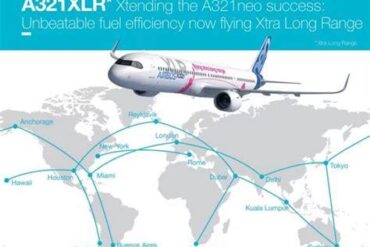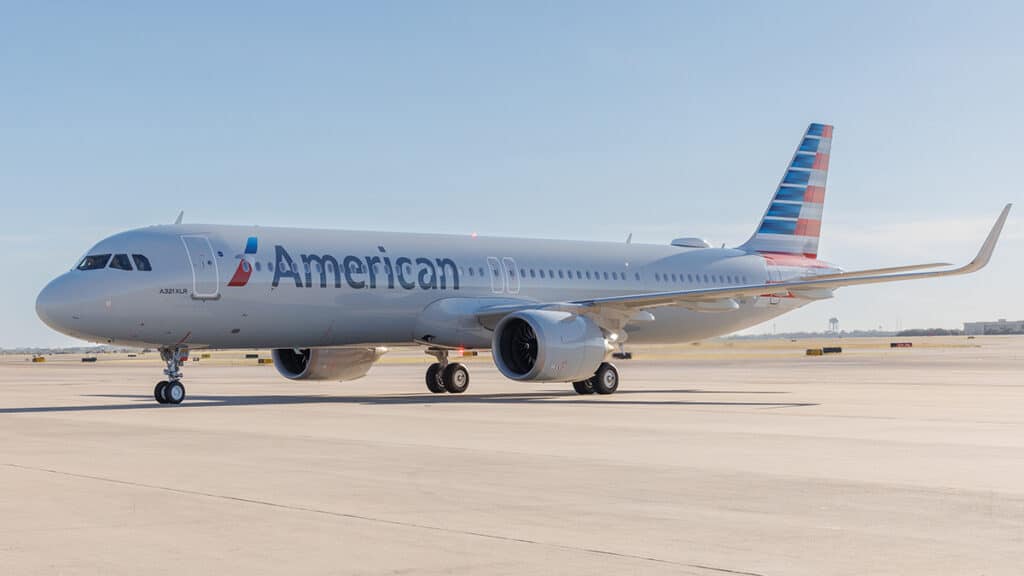
The arrival of the Airbus A321XLR is changing the economics of long-haul flying in a way that would have seemed unusual only a few years ago. Airlines no longer need a large twin-aisle aircraft simply because a route crosses an ocean. With a published range of about 4,700 nautical miles, the A321XLR can connect major hubs with smaller international markets while carrying substantially fewer seats than a conventional widebody.
That matters in 2026 because airlines are under constant pressure to match capacity with demand. A Boeing 787 or Airbus A330 can deliver excellent economics when it is full, but filling 250 or more seats every day is not always realistic. A smaller aircraft can reduce the financial risk of maintaining a route, increase frequency, and make weaker seasons more manageable. The result is not the disappearance of widebodies, but a more flexible division of labor between aircraft types.
The five routes discussed here illustrate that shift particularly well. IndiGo, Qantas, Air Canada, and Iberia are using or preparing to use Airbus narrowbodies on routes that traditionally relied on larger aircraft. In several cases, the change is about far more than fuel burn. It is about protecting yields, maintaining schedules, serving seasonal demand, and creating a network that can respond to changes without leaving hundreds of seats unsold.
Why Airlines Are Replacing Widebodies With Narrowbodies
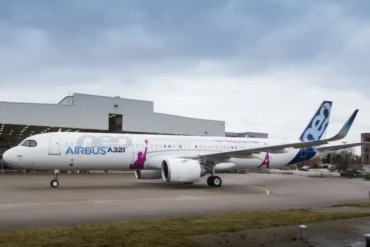
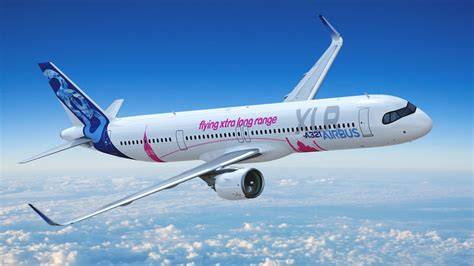
The basic argument for the A321XLR is straightforward: range is no longer exclusive to widebody aircraft. The aircraft combines the familiar A321neo airframe with additional fuel capacity and aerodynamic and operational improvements, giving airlines access to long-distance markets that once required a Boeing 757, A330, 787, or similar aircraft.
The aircraft also benefits from the maturity of the A321neo family. Airlines already understand its operating characteristics, pilot ecosystem, maintenance requirements, and airport compatibility. That lowers the organizational barrier to adding long-haul capability, particularly for carriers that already operate large A320-family fleets and can share infrastructure across their networks.
That familiarity makes the transition easier for many airlines. The smaller cabin changes the economics. An airline can operate a flight with roughly 180 to 200 seats instead of 250 to 300 or more. That can make a route viable even when demand is highly seasonal. It can also allow carriers to replace one large daily flight with multiple smaller frequencies, which is especially valuable in markets where business travelers care about departure times as much as total capacity.
IndiGo Mumbai–Amsterdam
IndiGo’s Mumbai–Amsterdam service represents one of the most striking examples because the airline is moving from leased Boeing 787-9 operations toward the Airbus A321XLR. IndiGo has traditionally built its network around narrowbody aircraft, so its recent long-haul experiment has been unusual. The carrier leased Boeing 777-300ER aircraft from Turkish Airlines and later operated Boeing 787-9s through a damp-lease arrangement with Norse Atlantic.
Those widebody operations have effectively given IndiGo a way to test international long-haul demand before its own widebody fleet arrives. The airline plans to discontinue its 787 operations in October 2026 and suspend most of those long-haul services, but Amsterdam is an important exception. The Mumbai–Amsterdam route is scheduled to move to the A321XLR.
On paper, the route is comfortably inside the aircraft’s capabilities. The distance is approximately 3,707 nautical miles, although current airspace restrictions can force substantial detours. IndiGo has therefore blocked the outbound flight at around 11 hours, making it one of the longest scheduled A321XLR sectors in the network.
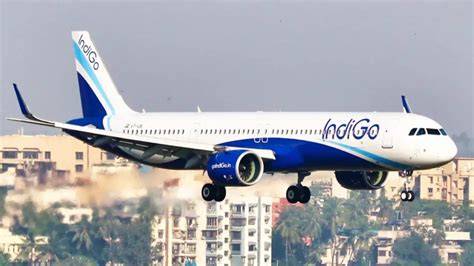
This is a fascinating transitional strategy. IndiGo has 69 A321XLRs on order, while 60 Airbus A350-900s are expected to begin arriving from 2027. The A321XLR is therefore unlikely to replace the widebody permanently across IndiGo’s entire long-haul network. Instead, it can bridge the gap between today’s leased aircraft and tomorrow’s A350 fleet.
Qantas Brisbane–Manila
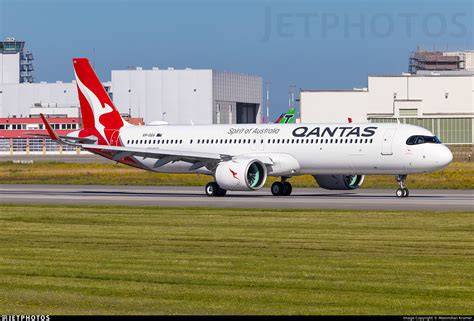
Qantas provides a different interpretation of the narrowbody long-haul trend. The airline did not primarily order the A321XLR to open a large number of ultra-thin international routes. Instead, it has emphasized the aircraft’s payload capability and planned to use it heavily on domestic operations.
Nevertheless, Brisbane–Manila demonstrates how the aircraft can replace a widebody when international demand does not justify the size of an Airbus A330-200. Qantas restarted the route with the A330 in 2024, but Brisbane and Manila are only about 3,125 nautical miles apart. That distance is well within A321XLR territory.
The planned international debut of the Qantas A321XLR on this route has been pushed from October 2026 to 2027, so this is best understood as an upcoming change rather than a completed 2026 substitution. The strategic logic, however, remains clear. Depending on configuration, Qantas’s A321XLR will seat around 197 to 200 passengers, compared with roughly 255 to 271 passengers on its A330-200.
The product compromise is real. The A330 offers lie-flat business-class seats and a more spacious widebody cabin, while the A321XLR’s planned Qantas configuration uses recliner-style business seating and does not provide seat-back screens. Yet airlines do not optimize aircraft selection around passenger comfort alone. They must balance revenue, costs, schedule, and demand.
Qantas also planned to increase Brisbane–Manila to daily service. A smaller aircraft makes that frequency easier to sustain because the airline does not need to fill a widebody every day. In this sense, the A321XLR is not merely replacing an aircraft. It is changing the scale at which the route can be operated.
Air Canada Montreal–Toulouse
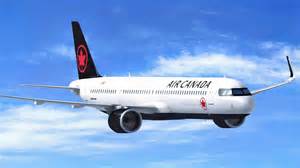
Air Canada demonstrates perhaps the clearest case of a carrier using the A321XLR to protect the economics of a thinner transatlantic market. The airline’s Montreal–Toulouse route previously used a Boeing 787-8, an aircraft widely regarded as one of the most efficient widebodies available.
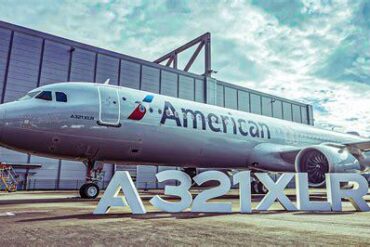
Even the 787-8, however, is a large aircraft for a route that may not consistently support more than 250 seats. Air Canada’s A321XLR configuration has 182 seats, including 14 business-class seats and 168 economy seats. The 787-8 configuration referenced for the route had 255 seats, meaning the narrowbody removes 73 seats from the schedule.
The A321XLR is also being introduced on other Air Canada transatlantic routes, including Montreal–Berlin, with Lyon and Porto scheduled for similar changes. Nantes provides another interesting example because the A321XLR can offer greater range and payload capability than the 737 MAX 8 that previously served it, while also introducing a more premium long-haul product.
For Air Canada, the aircraft is therefore more than a smaller replacement for the Dreamliner. It is a tool for right-sizing transatlantic capacity. The airline can preserve destinations that might be difficult to support with a 787 while maintaining a product capable of attracting higher-value travelers.
Iberia Madrid–Washington DC
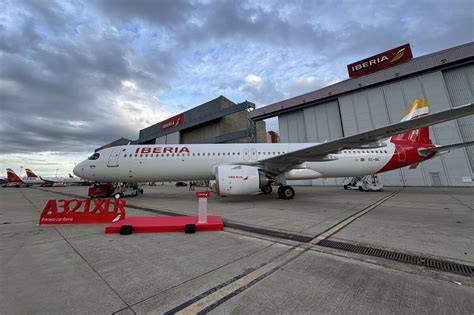
Iberia’s Madrid–Washington DC route shows how a narrowbody can do something that a widebody sometimes cannot: make year-round service economically practical.
Historically, Iberia’s smallest long-haul aircraft was the Airbus A330, which is a considerable amount of capacity for a route with strong seasonal swings. Washington DC can attract substantial summer demand, but transatlantic traffic weakens during winter. When a widebody is the only realistic aircraft option, that seasonality can force an airline to reduce frequencies or suspend service.
The A321XLR changes the equation. Iberia can operate the route with a much smaller aircraft while maintaining a more consistent schedule. The airline has used the A321neo alongside the A330, and the A321XLR allows the carrier to push that flexibility further. Rather than treating winter as a period when the route must shrink dramatically, Iberia can maintain service at a scale closer to actual demand.
The value extends beyond seat economics. Business travelers want schedule reliability and frequency, and corporate customers often prefer airlines that can provide year-round connectivity. A seasonal route can weaken an airline’s position with those customers because travelers cannot depend on it throughout the year.
The A321XLR can therefore protect Iberia’s commercial relevance even when demand is softer. A widebody might generate more revenue when full, but the narrowbody can create a better balance between revenue and cost during weaker periods. That is a subtle but important reason airlines are embracing the aircraft.
Iberia Madrid–Boston
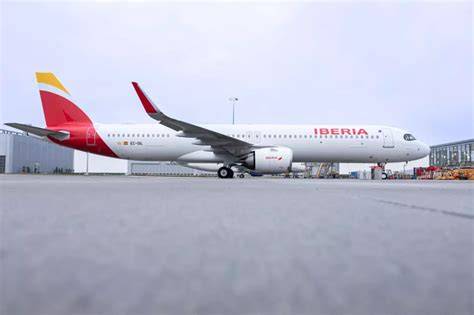
Madrid–Boston offers another layer to Iberia’s strategy. Boston was the airline’s first long-distance A321XLR route and illustrates how the aircraft can complement rather than simply replace widebodies.
Iberia uses the A321XLR to fine-tune capacity according to demand, while the A330 remains useful when passenger volumes are higher. During the winter, Iberia can operate Boston daily with the smaller aircraft, maintaining a level of connectivity that would be more difficult to justify with a large widebody.
During the summer, when demand rises, the airline can increase capacity and use a mixture of A321XLR and A330 aircraft. This gives Iberia a capacity ladder rather than a one-size-fits-all fleet strategy. The airline can adjust aircraft to the day of the week, the season, and the expected booking profile.
That flexibility is particularly valuable because Boston is a major business and technology market. Travelers may value multiple departure choices, and airlines can potentially capture higher fares when customers have more schedule options. A single large widebody flight may carry more people, but several appropriately sized frequencies can produce a stronger network proposition.
The A321XLR Is Not Killing the Widebody
It would be easy to interpret these route changes as the beginning of the end for widebody aircraft. That would be an overstatement. The more significant trend is specialization.
Widebodies remain essential for dense long-haul markets, premium-heavy routes, cargo capacity, and city pairs where demand can reliably support large aircraft. The A321XLR is strongest where the market is long but relatively thin, seasonal, volatile, or poorly suited to a large daily aircraft.
That distinction explains why airlines are often using the A321XLR alongside their widebodies rather than eliminating them. Iberia can use an A321XLR in winter and an A330 during peak periods. Air Canada can move the A321XLR onto thinner transatlantic routes while keeping 787s for stronger markets. IndiGo can use the aircraft today while preparing for a much larger A350 operation tomorrow.
What These 2026 Route Changes Really Mean
The five routes reveal a broader transformation in airline network planning. The traditional assumption was simple: short routes belong to narrowbodies and long routes belong to widebodies. The A321XLR breaks that relationship between distance and aircraft size.
Airlines can now consider route length and passenger volume as separate variables. A city pair may be geographically long-haul but commercially too small for a widebody. In the past, that could mean seasonal service, low frequencies, or no service at all. With the A321XLR, carriers have another option.
That is why these switches matter beyond the individual routes. They show airlines becoming more precise about capacity, more willing to experiment with frequency, and more focused on maintaining profitability through changing demand cycles. The narrowbody is no longer automatically the aircraft for short flights.
In 2026, the most interesting development may not be that the A321XLR can fly across oceans. It is that airlines are discovering how many long-haul markets become commercially possible when the aircraft is the right size. As more A321XLRs enter service, the boundary between narrowbody and widebody operations will become increasingly blurred, and passengers may see more long-distance routes served by aircraft that, at first glance, look far too small for the journey.