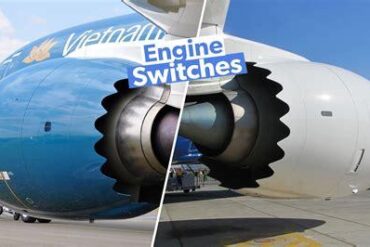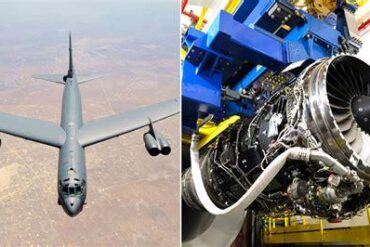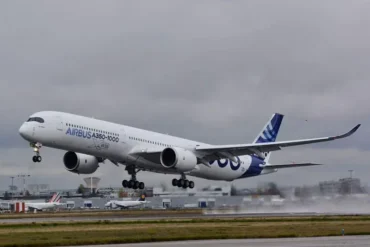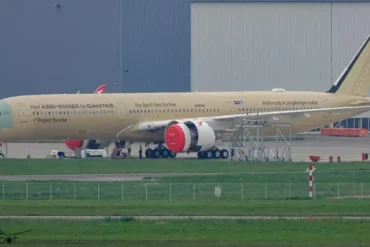
The battle between Rolls-Royce and General Electric has defined the modern widebody era. For decades, airlines carefully split loyalty between the two giants, hedging risk while cultivating long-term partnerships. Yet in recent years, a measurable shift has occurred. A growing number of carriers that once embraced the Rolls-Royce Trent 1000 for their Boeing 787 Dreamliners are now opting for General Electric’s GEnx-1B on new orders. This is not a symbolic change. It is a financial, operational, and strategic recalibration driven by reliability data, operating economics, and risk management.
The Dreamliner was designed to revolutionize long-haul aviation through lighter composite structures, advanced aerodynamics, and highly efficient engines. Airlines were offered two powerplant options: the Rolls-Royce Trent 1000 and the GE GEnx-1B. In theory, competition would sharpen innovation and give airlines flexibility. In practice, engine performance in the field has become the deciding factor.
Operational reliability is not a marketing slogan. It is the thin line between profit and disruption. When engines fail to meet durability expectations, aircraft sit grounded, schedules collapse, leasing costs spike, and customer confidence erodes. This dynamic has reshaped the competitive balance in favor of General Electric.
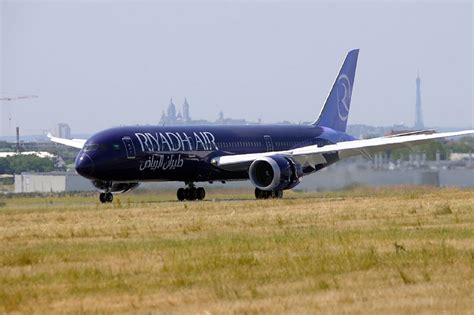
Airlines Quietly Realign Toward GE Power
The most telling evidence lies not in press releases but in order books. Airlines that already operate Trent 1000-powered 787s are increasingly choosing GEnx engines for new deliveries. This is not a casual preference. It signals institutional learning.
British Airways, once closely aligned with Rolls-Royce, operates more than forty Trent 1000-powered Dreamliners. Yet it has ordered additional 787s equipped with GE engines. The symbolic weight of this move is considerable. Historically, British Airways and Rolls-Royce maintained a relationship that extended beyond contracts into national industrial pride. When a flagship carrier diversifies away from a long-standing partner, it reflects operational pragmatism overriding tradition.
All Nippon Airways, the launch customer of the 787 and an early operator of the Trent 1000, has also expanded its fleet with GEnx-powered aircraft. Meanwhile, Air New Zealand and smaller carriers such as Air Tanzania have made similar decisions. The cumulative effect is visible in market share data: while roughly one-third of flying Dreamliners still use Rolls-Royce engines, a much smaller percentage of new engine selections favor them.
Airlines rarely telegraph dissatisfaction loudly. Instead, they adjust future procurement quietly. Fleet planners respond to maintenance records, unscheduled removals, and cost forecasts. Orders tell the real story.
The Performance Case For The GEnx-1B
The GEnx-1B was engineered to align precisely with the Dreamliner’s mission profile: long-range efficiency with minimized operating cost. Its technical characteristics reflect that objective. With a 111-inch fan diameter, advanced composite fan blades, and a bypass ratio above 9:1, it achieves strong fuel efficiency and competitive thrust ratings around 74,000 pounds-force for the -1B74/75 variant commonly used on the 787-9.
Fuel burn differences between competing engines may appear marginal on paper, but across thousands of annual flight hours, those percentages translate into millions of dollars. Carbon emissions follow the same arithmetic. In an era where sustainability reporting influences financing and public perception, lower fuel burn strengthens an airline’s competitive posture.
Reliability further amplifies the advantage. Fewer unscheduled engine removals mean fewer disruptions. Each removal can trigger cascading operational costs: substitute aircraft, compensation payments, maintenance labor, and schedule irregularities. Even small reliability differentials compound into measurable economic consequences.
There is also a fleet synergy factor. The GEnx family powers both the Boeing 787 and the Boeing 747-8. Airlines operating both aircraft types benefit from streamlined maintenance training, parts inventory overlap, and shared technical expertise. That commonality reduces complexity, and complexity is expensive.
The Trent 1000’s Reliability Crisis
The pivot away from Rolls-Royce cannot be understood without examining the Trent 1000’s reliability challenges. Blade cracking, high-pressure turbine wear, and compressor durability issues forced airlines to ground aircraft beginning in 2017. These were not isolated events. The problems affected multiple carriers across different climates and operating patterns.
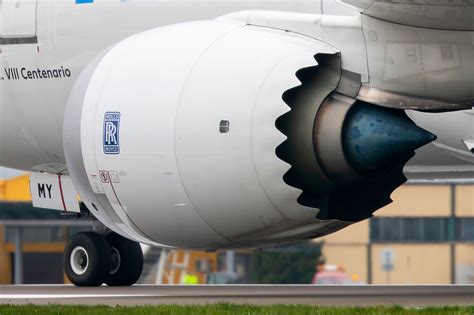
When high-pressure turbine blades degrade prematurely, inspection intervals shrink. Engines must be removed earlier than expected. Spare engine pools become insufficient. Maintenance slots become scarce. Airlines are then compelled to cancel routes or lease replacement aircraft at premium rates. The ripple effects extend beyond engineering departments into revenue planning.
Rolls-Royce introduced the Trent 1000 TEN variant with redesigned components and improved durability. Modifications aimed to increase heat resistance and strengthen high-pressure turbine performance. However, perception in aviation is shaped by operational history. Once airlines absorb prolonged disruption, restoring confidence takes years.
Engine reliability operates like trust in a complex system. It accumulates slowly and erodes quickly. Even with technical fixes underway, procurement teams must make decisions based on demonstrated performance rather than projected improvements.
Market Momentum And The 777X Factor
General Electric’s dominance is not confined to the 787 program. The upcoming Boeing 777X will be powered exclusively by the GE9X, the largest and most powerful commercial jet engine ever built. Rolls-Royce is absent from this platform.
The GE9X generates around 105,000 pounds of thrust, enabling the 777X to carry massive payloads across intercontinental distances using only two engines. Its development included tens of thousands of testing hours and extensive dust-ingestion cycles designed to simulate harsh operating environments. Such rigorous testing campaigns reinforce GE’s reputation for durability engineering.
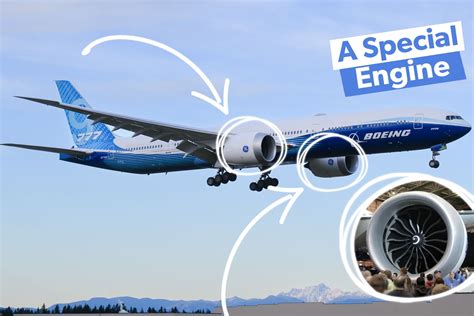
Although the 777X program has faced delivery delays, the exclusivity of GE power on Boeing’s flagship widebody signals structural market strength. Airlines investing in long-term fleet strategies see continuity between the GEnx and GE9X ecosystems. That continuity influences procurement logic across multiple aircraft families.
When one manufacturer secures exclusivity on a next-generation platform, it reshapes bargaining leverage throughout the market.
The Cost Of Switching Engine Suppliers
Transitioning from Rolls-Royce to GE is not frictionless. Airlines must adjust maintenance infrastructure, tooling, spare parts inventory, and technician training programs. Engine selection is deeply integrated into an airline’s operational architecture. Switching suppliers can require renegotiating long-term service agreements and restructuring maintenance partnerships.
These costs are substantial. However, airlines conduct detailed lifecycle cost modeling. If projected reliability improvements and fuel savings outweigh infrastructure investment, the strategic case becomes compelling.
There are also environmental and geographic considerations. Some operators have reported that the GEnx experiences performance challenges in extreme heat or dusty environments. High ambient temperatures reduce air density, impacting thrust margins. Sand ingestion can accelerate component wear. GE has responded with enhanced testing regimes, including hundreds of hours simulating desert conditions, to mitigate such concerns.
No engine is flawless. The decision becomes an exercise in comparative risk rather than absolute perfection.
Rolls-Royce’s UltraFan Ambition
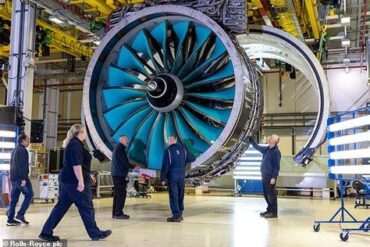
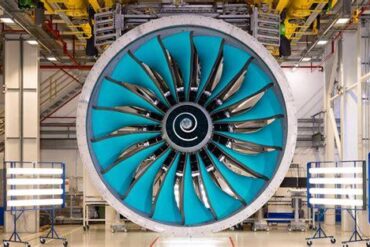
Rolls-Royce is not retreating. The company is investing heavily in the UltraFan program, a next-generation engine demonstrator targeting up to 85,000 pounds of thrust with significantly improved efficiency. Designed to operate with 100% sustainable aviation fuel, UltraFan incorporates advanced materials, geared architecture concepts, and enhanced thermal management.
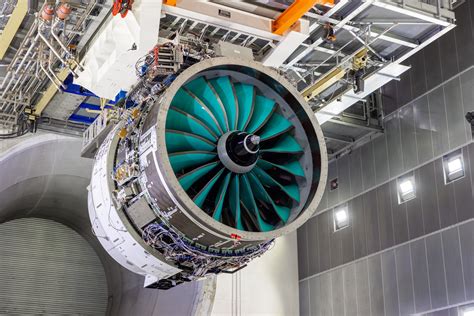
If successfully commercialized, UltraFan could reset the competitive landscape. Fuel efficiency improvements of even 10% would represent a transformative leap in long-haul economics. Compatibility with sustainable fuels positions Rolls-Royce within the aviation industry’s net-zero ambitions.
However, development success does not immediately translate into fleet adoption. Airlines demand proven in-service reliability before committing billions in orders. Demonstrator achievements must transition into consistent operational performance across diverse climates and route structures.
Will Airlines Regret The Shift?
A concentration of engine choice around a single supplier carries strategic implications. Reduced competition can limit pricing leverage. Supply chain bottlenecks at one manufacturer may affect a larger share of the global fleet. Diversification historically protected airlines from systemic technical issues.
There is also technological uncertainty. The GE9X, despite exhaustive testing, has not yet accumulated years of commercial operational data. Real-world service often reveals stresses that test benches cannot fully replicate. Airlines placing long-term bets must weigh present reliability against future unknowns.
Still, current evidence suggests that for many carriers, the GEnx-1B offers a more predictable operational profile. Predictability is prized in aviation. Schedules are tightly choreographed ecosystems where minor mechanical variability can cascade into network-wide disruption.
The Strategic Reality Of Engine Competition
The shift from Rolls-Royce Trent 1000 to General Electric GEnx is less about brand rivalry and more about empirical performance. Airlines operate on thin margins and long planning horizons. Engine selection affects fuel burn, maintenance cycles, fleet flexibility, and environmental metrics over decades.
General Electric has capitalized on reliability consistency and cross-platform integration. Rolls-Royce, challenged by the Trent 1000’s early durability setbacks, is investing in next-generation technology to restore competitive equilibrium.
Aviation history shows that market leadership rotates with technological inflection points. The current momentum favors GE in the widebody segment, reinforced by its role on both the 787 and 777X. Yet the story is not finished. Breakthroughs in materials science, sustainable fuels, and geared architectures could redefine the landscape again.
For now, airlines are making decisions grounded in operational evidence. Reliability, efficiency, and risk mitigation outweigh legacy loyalty. The result is a measurable migration toward General Electric engines—a shift that reflects the unforgiving mathematics of modern aviation economics rather than sentiment.
In commercial aviation, thrust is physics. Profitability is engineering discipline. And engine choice sits precisely where those forces intersect.