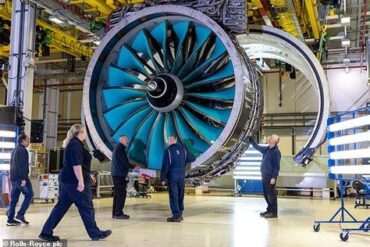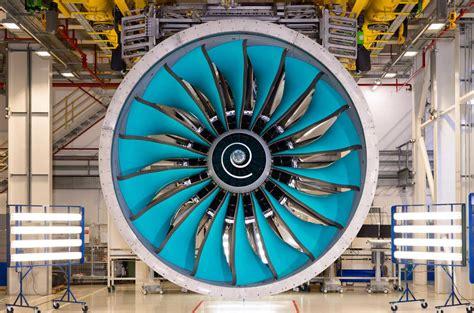
British engine giant Rolls-Royce is breaking new ground in aerospace engineering with a powerful campaign to protect its jet engines from the long-term degradation caused by desert dust and sand ingestion. Tested at its state-of-the-art Testbed 80 facility in Sinfin, Derby, this initiative promises to enhance the durability, efficiency, and time-on-wing performance of engines, especially for aircraft operating in harsh Middle Eastern environments.
The Desert Dust Dilemma: A Billion-Dollar Challenge
Jet engines, especially during takeoff and climb, are susceptible to swallowing immense volumes of fine, talc-like desert particles, which pose no immediate flight risk but severely undermine engine performance. These microscopic dust particles enter the hottest sections of the turbine, where they melt and adhere to surfaces, clog cooling passages, chemically corrode protective coatings, and disrupt optimal airflow. The consequence is a rise in internal temperatures, erosion of key materials, and a drastic reduction in engine lifespan and fuel efficiency.
Synthetic Sand and a Scientific Breakthrough
To simulate these brutal operating conditions without relying on unreliable field data, Rolls-Royce has partnered with the University of Manchester to develop a custom synthetic dust that replicates Middle Eastern sands. This allows engineers to measure precisely how engines degrade and to test redesigned components in a controlled environment.
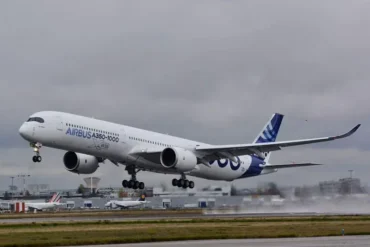
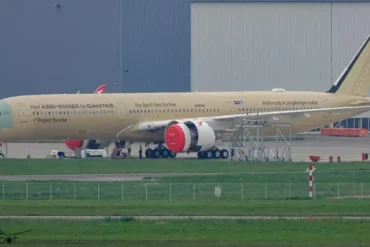
Their multi-phase program focuses on the Trent engine family, particularly the Trent XWB-97, a powerful unit used on the Airbus A350. Testing in Phases 1 and 2 has already shown engines returning to service with a 60% increase in time between major overhauls, and the goal is to double these intervals by 2028. This is part of a broader $1 billion investment into engine durability.
Engineering a Dust-Resistant Core
The technical response involves a blend of new high-temperature alloys and a radical overhaul of cooling airflow geometries inside the engine. By designing components that resist clogging and better distribute airflow, engineers are able to maintain lower internal temperatures even under heavy dust ingestion. The result is a more resilient engine core capable of withstanding prolonged exposure to desert operations.
Strategic Implications: Rolls-Royce and Gulf Carrier Demands
The economic and operational implications of this program are profound, especially for Gulf carriers like Emirates, where engine durability translates directly into reduced downtime, lower maintenance costs, and improved fleet utilization. Every extended hour between overhauls means millions saved in parts, labor, and lost flight revenue.
This focus on longevity is not just about cost—it’s about sustainability. By reducing the need for frequent hardware replacements, Rolls-Royce also trims its carbon footprint, aligning with wider environmental targets across the aviation sector.
Emirates President Sir Tim Clark has previously raised concerns about the durability of the Trent XWB-97, and this latest initiative serves as a clear signal that Rolls-Royce is listening. Proving that their engines can endure the region’s harshest conditions is both a technical triumph and a strategic necessity.
Turning Harsh Conditions Into Innovation Labs
By replicating the Middle East’s abrasive conditions in a lab setting, Rolls-Royce isn’t just solving a problem—it’s creating a competitive advantage. The Derby facility now operates as a proving ground for global engine durability, feeding live performance data directly into design iterations. The feedback loop is tighter, the improvements faster, and the commercial benefits substantial.
As the global aviation industry demands more durable, fuel-efficient, and sustainable engines, Rolls-Royce’s desert dust durability program stands as a bold step into the future—engineering resilience into every turbine blade, every cooling channel, and every mission-critical alloy. This is not just maintenance mitigation; it’s a redefinition of engine lifecycle performance for the next generation of long-haul air travel.