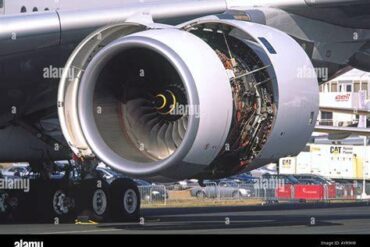
Rolls-Royce has spent decades refining widebody propulsion, building engines that push the limits of thrust, efficiency, and long-range performance. More than 13,000 of its powerplants fly today, and the company’s signature three-shaft architecture remains one of the defining engineering philosophies in modern aviation. From the early success of the Trent 700 to the colossal power of the Trent XWB family, each generation has elevated fuel economy, endurance, and reliability for the world’s leading airlines.
The story of Rolls-Royce’s most powerful commercial turbofans is, in many ways, the story of long-haul aviation itself. These engines have enabled ultra-long-range missions, supported the rise of twin-engine widebodies, and powered icons like the Airbus A380 and Boeing 777. Together, they represent an era of engineering maturity that continues to define global air travel.
Trent XWB-97: The Pinnacle of Rolls-Royce Commercial Power
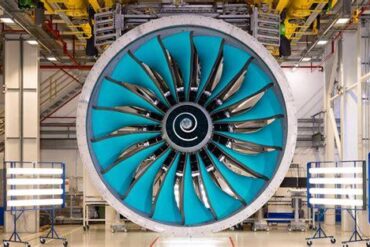
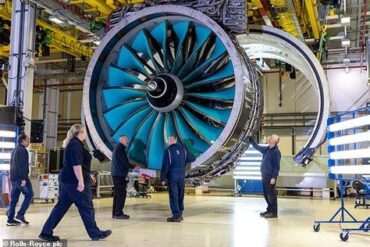
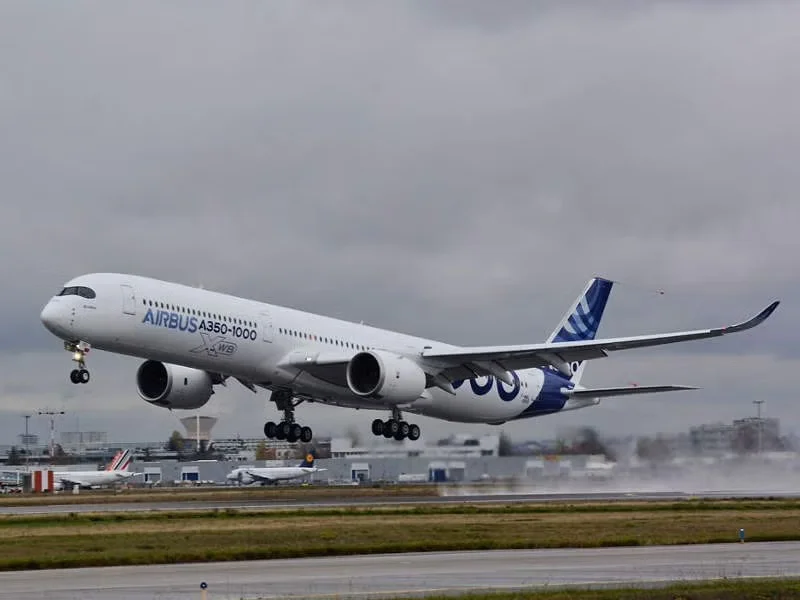
The Trent XWB-97, delivering up to 97,000 lbf of thrust, stands at the top of Rolls-Royce’s commercial portfolio. Developed to propel the Airbus A350-1000, it builds upon the architecture of the XWB-84 while incorporating a reinforced core, enlarged fan, and upgraded turbine system capable of sustaining higher thermal loads.
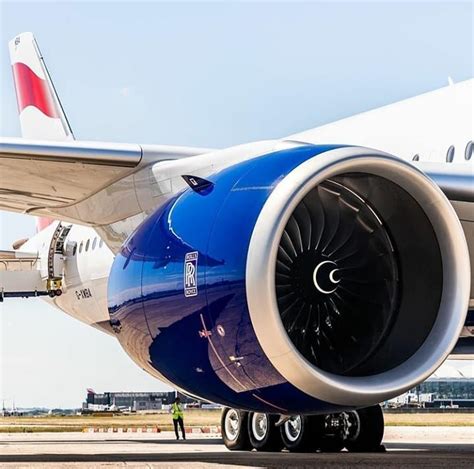
Designed throughout the early 2010s, the engine was created in response to Airbus’s need for a more capable powerplant for its stretched A350 variant. Its innovations include strengthened materials, refined cooling pathways, and a sophisticated combustor system that supports sustained high-thrust performance without compromising fuel burn.
Major operators such as Qatar Airways, British Airways, Cathay Pacific, and Virgin Atlantic rely on the A350-1000 for long-range, high-density routes. The XWB-97 will also be indispensable to Qantas Project Sunrise, which will connect Australia non-stop to Europe and North America—missions requiring the engine’s extreme efficiency and endurance.
Trent 800: A Cornerstone of the Twin-Engine Widebody Era
Delivering up to 95,000 lbf, the Trent 800 played a definitive role in shaping long-haul twin-engine operations. Introduced for the Boeing 777-200 and 777-200ER, it emerged as one of the three major launch-engine options and quickly became a favorite among carriers for its smooth operation and fuel-efficient performance.
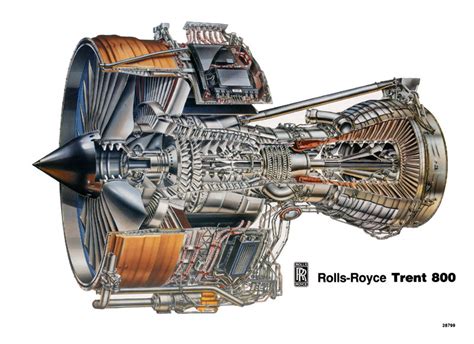
Built on the success of the original Trent 700, the Trent 800 featured wide-chord fan technology, advanced turbine materials, and modular construction designed to simplify maintenance. Airlines such as Cathay Pacific, Singapore Airlines, and British Airways deployed it across long-range networks during a crucial period in the evolution of ETOPS-driven global aviation.
Although later 777 models shifted to the GE90 as their sole engine option, the Trent 800 maintained an impressive global footprint for years thanks to its reliability and strong performance metrics.
Trent XWB-84: The Engine Behind the A350-900’s Global Reach
The Trent XWB-84, rated at 84,000 lbf, is one of the most fuel-efficient widebody engines ever introduced. Designed exclusively for the Airbus A350-900, it balances thrust, lightweight construction, and optimized thermal efficiency to deliver outstanding performance on long-haul routes.
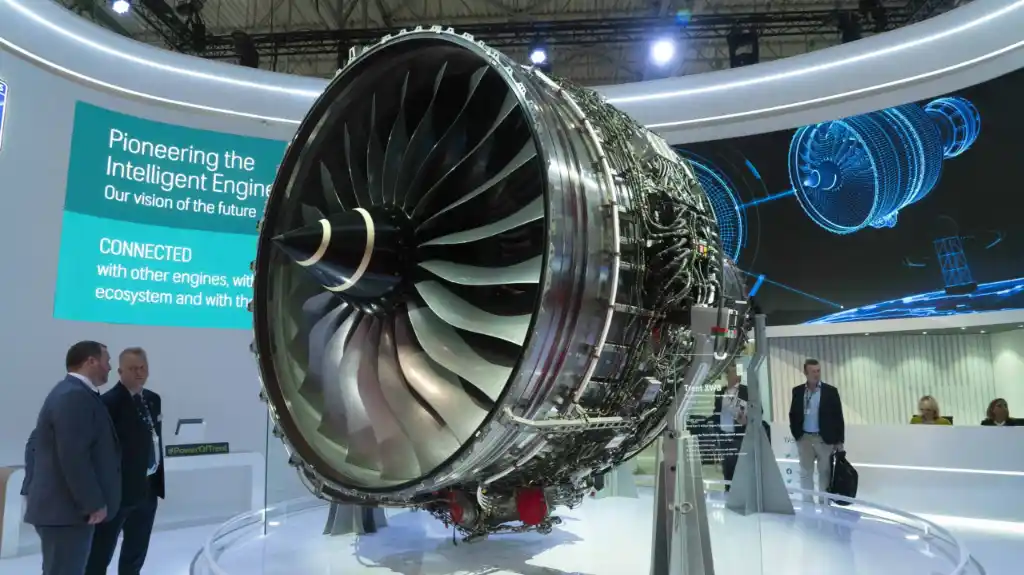
Its 118-inch fan, low-emission combustor, and ultra-efficient core enable the A350-900 to serve some of the world’s longest flights, including Singapore Airlines’ ultra-long-range service between Singapore and New York JFK. Advanced cooling techniques and high-performance turbine materials ensure the engine maintains stable performance with minimal wear, reinforcing its reputation for exceptional fuel economy.
Trent 900: Powering the Airbus A380’s Quiet, High-Capacity Operation
The Trent 900, producing up to 84,000 lbf of thrust, was engineered specifically for the massive Airbus A380. Its wide-chord fan blades, high bypass ratio, and sophisticated acoustic tuning help support the A380’s remarkably quiet profile, which is vital for operations at noise-sensitive airports like London Heathrow.
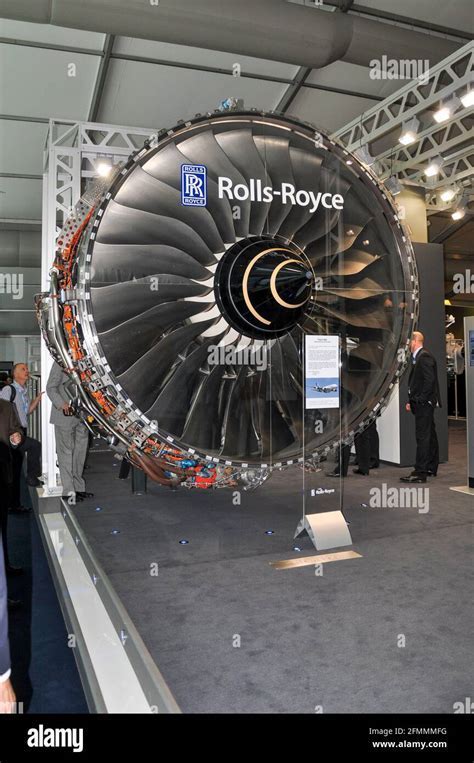
Developed in the late 1990s, the Trent 900 advanced Rolls-Royce combustion and turbine-cooling technology while meeting the A380’s demanding structural and performance requirements. Though the pandemic temporarily slowed A380 operations, airlines such as Emirates, Qatar Airways, Qantas, and Singapore Airlines continue to operate the type extensively. Emirates remains the world’s largest A380 operator, with more than 100 aircraft in service.
Trent 500: The Sole Powerplant of the A340-500 and A340-600
The Trent 500, rated at 61,000 lbf, was developed for the Airbus A340-500 and A340-600, the largest and longest-range members of the A340 family. Though not as powerful as later Trent variants, it delivered the efficiency and smoothness required for four-engine intercontinental operations.
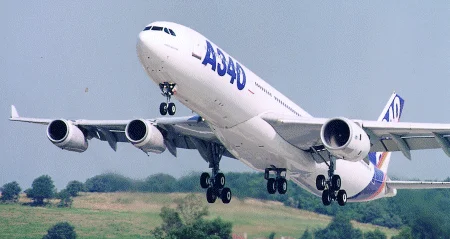
The engine borrowed heavily from the proven Trent 700 architecture while incorporating scaled components and updated materials. Airlines such as Virgin Atlantic and Singapore Airlines relied on the Trent 500 for long-range missions during a period when quads were still essential for ultra-long-haul performance.
Final Ranking of Rolls-Royce’s Most Powerful Commercial Engines
Across decades of innovation, these engines have shaped both the performance and economics of long-haul aviation. Their maximum thrust ratings secure their position as the most powerful commercial turbofans Rolls-Royce has ever produced:
- Trent XWB-97 – 97,000 lbf
- Trent 800 – 95,000 lbf
- Trent XWB-84 – 84,000 lbf
- Trent 900 – 84,000 lbf
- Trent 500 – 61,000 lbf
Each engine represents a key milestone in Rolls-Royce’s continuous evolution—one defined by technological sophistication, long-range capability, and a commitment to high-efficiency propulsion that continues to influence the future of global aviation.