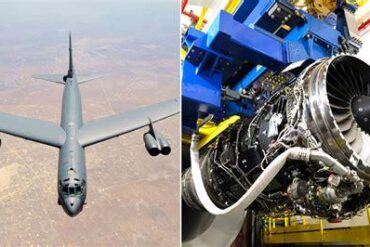
The United States Air Force has formally awarded Boeing Defense Systems a monumental $2.04 billion task order under the B-52 Commercial Engine Replacement Program (CERP), setting into motion a transformative era for the legendary B-52 Stratofortress. This announcement marks a pivotal shift in the aircraft’s modernization strategy—moving from theoretical design to physical integration and flight testing—significantly reinforcing America’s strategic airpower through at least the mid-21st century.

The Strategic Leap: From Blueprint to Battlefield Readiness
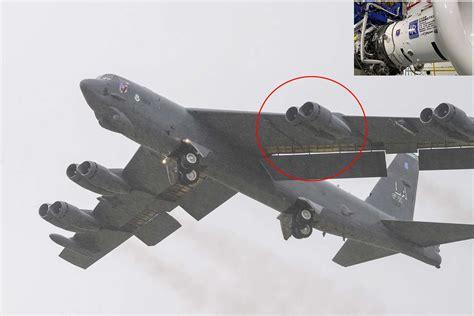
Announced on December 23, 2025, the new contract allows Boeing to begin hands-on integration work on two B-52 aircraft. These platforms will serve as prototype testbeds for the upcoming upgrades, effectively moving CERP into its post–Critical Design Review (CDR) phase. According to the Department of Defense, this new phase—scheduled to run through May 31, 2033—marks the start of actual structural modifications, including engine strut replacement, internal systems updates, and cockpit digitization.
The work will span key Boeing and Air Force facilities in Oklahoma City, San Antonio, Seattle, and Indianapolis, leveraging an ecosystem of aerospace innovation and military engineering expertise. Oversight of the program falls under the jurisdiction of Tinker Air Force Base in Oklahoma, which will manage the incremental funding stream starting with $35.8 million from the FY2026 RDT&E budget.
Ending the Era of TF33: A Necessary Evolution
The B-52 has long relied on the Pratt & Whitney TF33-PW-103 engines—powerplants that date back to the 1960s. Over decades of use, these engines have become increasingly burdensome to maintain, with parts becoming scarce and operating costs escalating. More critically, they lack the efficiency and power generation capacity needed for today’s digitized and network-centric warfare environment.
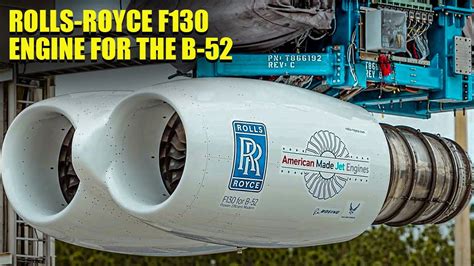
After a competitive evaluation process concluded in 2021, the Rolls-Royce F130 engine was selected to replace the TF33s. The F130 offers dramatic improvements:
- Approximately 30% greater fuel efficiency
- Extended time-on-wing lifecycle, reducing maintenance intervals
- Enhanced electrical power generation, supporting new mission systems
These performance gains will enable the B-52 to operate more effectively in future threat environments while reducing the logistics footprint required to sustain operations.
B-52J: A New Generation Behind a Familiar Face
The upgrades go well beyond propulsion. The CERP contract also encompasses key structural and digital transformations, repositioning the B-52H into a new baseline: the B-52J configuration. These changes include:
- Replacement of legacy engine nacelles and struts with modern mountings
- Introduction of digital cockpit displays for improved crew interface
- Upgraded power systems to support expanded mission profiles
Although the B-52’s iconic silhouette remains largely unchanged—a deliberate decision to retain its radar signature and platform familiarity—the aircraft will emerge as a thoroughly modern combat machine underneath.
This evolution is not cosmetic. The B-52J is being designed to seamlessly integrate with next-generation munitions, hypersonic weapons, and advanced sensor packages, all while remaining compatible with digital command-and-control networks.
Bridging Eras: Legacy Bombers in a Next-Gen Fleet
Strategically, the Air Force’s decision to retain and modernize the B-52 reflects a calculated doctrine: maintain proven airframes while embedding cutting-edge technologies. The B-52J is expected to serve in tandem with the stealth-oriented B-21 Raider, creating a mixed-fleet strategy that leverages both traditional payload advantages and stealth penetration capabilities.
The B-52’s endurance, intercontinental range, and massive payload capacity make it an irreplaceable component of the U.S. military’s nuclear triad and conventional strike arsenal. By enhancing its systems and propulsion, the Air Force ensures that the aircraft remains not just operational, but strategically relevant into the 2050s and beyond.
Engineering Milestones and Integration Challenges Ahead
Air Force Global Strike Command has identified this post-CDR integration stage as a critical milestone. Boeing’s work on the prototype aircraft will provide vital feedback on:
- Structural stress and weight redistribution with new engines
- Software integration for flight control and diagnostics
- Electrical power balancing across mission systems
The results from this phase will influence production pacing, training program development, and fleet-wide retrofit timelines. Successful testing will lead to full-scale engine replacements and avionics upgrades across the B-52 fleet.
Integration is no small feat. New powerplants necessitate a complete reassessment of engine mounts, wiring, data buses, and software interfaces. Additionally, modifications must meet stringent airworthiness certification standards before the aircraft can return to active duty.
Rolls-Royce’s Expanding Role in U.S. Defense Ecosystem
Rolls-Royce North America is manufacturing the F130 engines at its Indianapolis facility, which recently underwent a substantial expansion to support high-volume production. The F130’s selection in 2021 marked a historic moment for Rolls-Royce, further deepening its role in the U.S. defense aerospace supply chain.
The company’s engineers are collaborating closely with Boeing and Air Force officials to synchronize engine delivery schedules with airframe modification timelines. This level of integration underscores the program’s complexity and the high stakes involved in fielding a fully modernized fleet on time.

Futureproofing a Warhorse: Mission Systems and Digital Backbone
While engines are at the forefront of the modernization story, the aircraft’s mission systems are undergoing a simultaneous digital overhaul. Future B-52Js will benefit from:
- Enhanced communications suites supporting encrypted, long-range data links
- Expanded electronic warfare capabilities for survivability in contested airspace
- Smart interfaces for precision-guided munitions, enabling networked targeting
All of these advancements rest upon the foundation provided by increased electrical output from the F130 engines, which supports a modular, upgrade-friendly avionics architecture.
The Air Force aims to ensure that once the B-52J becomes operational, it will be able to host software-defined mission packages, enabling continuous adaptation to new threats and technologies without requiring airframe redesigns.
Toward the Battlespace of 2050
This latest contract cements Boeing’s central role in transforming an aging legend into a formidable 21st-century platform. As geopolitical tensions evolve and adversaries field more sophisticated air defenses, having a long-range, high-capacity, digitally enabled bomber becomes not a luxury, but a necessity.
By committing to a robust modernization strategy, the U.S. Air Force ensures that the B-52 will not merely survive but thrive in tomorrow’s battlespace—serving as a carrier for hypersonics, a node in tactical data networks, and a credible deterrent against peer adversaries.
With the first engine integration and airframe modifications set to begin, the journey of the B-52 from Cold War stalwart to futuristic strike asset is no longer theoretical. It is now tangible, budgeted, and underway.
The $2.04 billion award is more than a contract—it’s a vote of confidence in the B-52’s continued dominance and Boeing’s ability to deliver transformation at scale. What lies ahead is a decade of rigorous testing, careful engineering, and strategic innovation that will define the Air Force’s strike posture for generations to come.