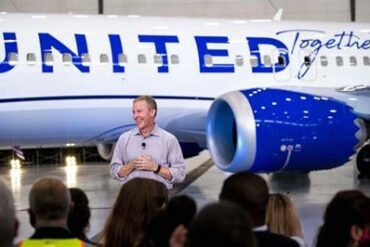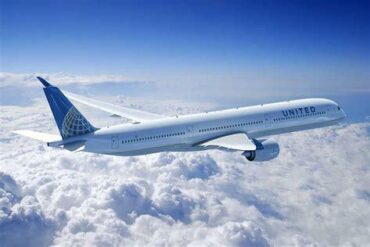
United Airlines’ long-running Airbus A350 commitment has become one of the most contentious fleet acquisition stories in modern commercial aviation. What began as a strategic investment in next-generation long-haul aircraft has evolved into a high-profile dispute involving aircraft manufacturer Airbus, engine maker Rolls-Royce, and one of the world’s largest airlines. The conflict intensified after United Airlines CEO Scott Kirby publicly criticized Rolls-Royce, arguing that the company benefits from its exclusive position as the sole engine supplier for the Airbus A350.
The remarks, delivered during the International Air Transport Association (IATA) annual meeting in Rio de Janeiro, highlight growing frustration within the airline industry regarding engine support, maintenance delays, and the operational risks created by limited supplier competition. Kirby’s comments also provide insight into why United’s once-significant Airbus A350 order now appears effectively dormant.
United originally placed its Airbus A350 order in 2009 as part of a broader effort to modernize its long-haul fleet. Over time, the carrier expanded the commitment from 25 aircraft to 45 Airbus A350-900s, signaling confidence in the aircraft’s efficiency and long-range capabilities. However, years of changing market conditions, shifting fleet strategies, and disagreements with Rolls-Royce have dramatically altered the trajectory of the program.
United Airlines’ Airbus A350 Order Faces Years Of Uncertainty
The Airbus A350 was initially expected to play a major role in United Airlines’ future international network. Designed as a highly efficient widebody aircraft, the A350 offers lower fuel consumption, extended range, and advanced passenger comfort features. For many airlines, it has become a cornerstone of long-haul operations.
Despite these advantages, United repeatedly deferred deliveries as the airline reassessed its fleet priorities. Rather than introducing a large fleet of A350s, the carrier increasingly focused its attention on Boeing’s 787 Dreamliner family. The Dreamliner already occupied a significant position within United’s fleet, providing operational commonality and reducing the complexity associated with introducing another major aircraft type.
The repeated postponements eventually raised doubts about whether the A350s would ever enter United service. Those doubts intensified when the airline officially removed the 45 aircraft from future delivery schedules disclosed in financial filings, effectively signaling that the order was no longer an active component of its growth strategy.
While fleet planning considerations played an important role, a separate commercial conflict with Rolls-Royce emerged as a critical factor behind the stalemate.
The $175 Million Dispute Between United Airlines And Rolls-Royce
According to regulatory filings submitted by United Airlines, the carrier made an advance payment of approximately $175 million to Rolls-Royce under a 2017 agreement. The arrangement was intended to secure production positions and establish long-term maintenance terms for the Trent XWB engines that exclusively power the Airbus A350.
United later alleged that Rolls-Royce failed to fulfill key contractual obligations associated with the agreement. As a result, the airline has sought repayment of the advance funds along with additional damages.
Rolls-Royce has rejected those allegations and disputes United’s claims.
The disagreement has developed into a significant legal and commercial confrontation because the engine manufacturer occupies a uniquely powerful position within the A350 program. Unlike several competing aircraft platforms that offer customers multiple engine options, the Airbus A350 relies exclusively on Rolls-Royce Trent XWB engines.
That exclusivity has transformed what might otherwise be a routine commercial dispute into a major strategic challenge.
Why The Airbus A350 Engine Monopoly Matters
In commercial aviation, competition between engine manufacturers often provides airlines with greater negotiating leverage. Aircraft such as the Boeing 787 can be ordered with engines from different suppliers, creating pressure on manufacturers to remain competitive on pricing, support, and maintenance services.
The Airbus A350 follows a different model.
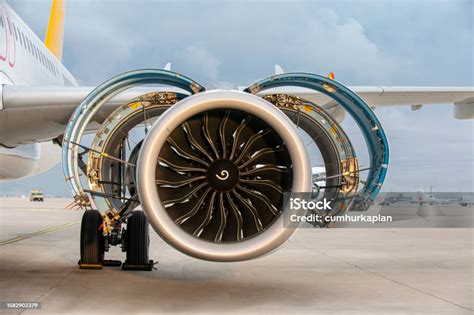
Every A350 delivered worldwide operates with Rolls-Royce Trent XWB engines. Airbus and Rolls-Royce designed the aircraft and engine package as a tightly integrated solution intended to maximize performance and efficiency. The result has been a technically successful product that enjoys a strong reputation among operators.
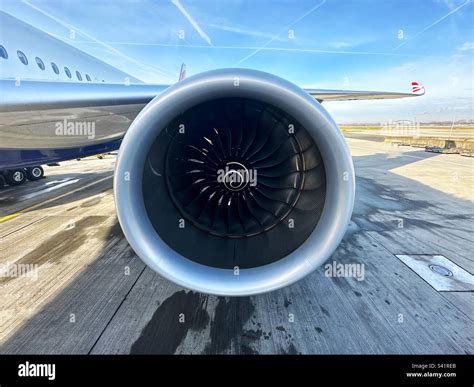
However, exclusivity also removes alternatives. Once an airline selects the A350, it effectively commits to a long-term relationship with Rolls-Royce for propulsion systems, maintenance programs, spare parts support, and engine-related services.
For United Airlines, that structure significantly magnified the consequences of its disagreement with Rolls-Royce. Without a General Electric or Pratt & Whitney alternative available for the A350 platform, the airline’s options became considerably more limited.
The dispute therefore evolved beyond a simple contractual disagreement and into a broader debate about competition and accountability within the aerospace industry.
Scott Kirby’s Sharp Criticism Of Rolls-Royce
At the IATA gathering, Scott Kirby delivered some of his strongest public criticism of an aerospace supplier to date.
While discussing industry-wide engine challenges, Kirby praised General Electric and acknowledged Pratt & Whitney’s efforts to improve reliability and customer support. He contrasted those experiences with his assessment of Rolls-Royce’s approach.
According to reports from the event, Kirby stated:
“GE is the best, I think Pratt & Whitney is working hard, so I appreciate their attitude and what they’re doing, and my sentiment is that Rolls doesn’t care.”
The statement reflects growing concerns among airlines regarding engine support responsiveness at a time when maintenance resources remain constrained across the industry.
Kirby’s comments were not limited to United’s individual dispute. Instead, he linked the issue to broader operational challenges affecting carriers around the world.
Global Engine Shortages Continue To Pressure Airlines
The aviation industry continues to face severe engine-related bottlenecks years after the pandemic recovery accelerated demand for air travel.
Kirby estimated that between 800 and 900 commercial aircraft are currently grounded worldwide due to engine shortages, maintenance delays, and supply chain disruptions. Such figures illustrate the scale of the problem confronting airlines, manufacturers, and maintenance providers.
As passenger demand remains strong, carriers are increasingly dependent on reliable engine support to maximize fleet utilization. Delays in maintenance cycles, shortages of replacement components, and limited repair capacity can significantly impact schedules, route expansion plans, and profitability.
Industry executives widely acknowledge that these constraints are unlikely to disappear quickly. Many analysts expect supply chain challenges and maintenance backlogs to persist for several years, placing continued pressure on airlines seeking growth opportunities.
How The A350 Dispute Reshaped United’s Long-Haul Strategy
The controversy surrounding Rolls-Royce and the Airbus A350 has coincided with a broader transformation of United Airlines’ fleet strategy.
Rather than adding another widebody fleet type, United has increasingly centered its international growth around the Boeing 787 Dreamliner family. The airline already operates multiple Dreamliner variants across a diverse network of long-haul routes, allowing it to benefit from shared pilot training, maintenance procedures, spare parts inventories, and operational efficiencies.
As a result, the business case for introducing a separate fleet of 45 Airbus A350s became less compelling over time.
Combined with years of delivery deferrals, unresolved legal disputes, and concerns regarding supplier relationships, the A350 program gradually lost strategic importance within United’s long-term planning.
Today, what was once envisioned as a major fleet modernization initiative appears effectively frozen. The dispute has also become a prominent example of how engine exclusivity can amplify commercial tensions, influence aircraft purchasing decisions, and reshape airline fleet strategies in an increasingly competitive aviation market.