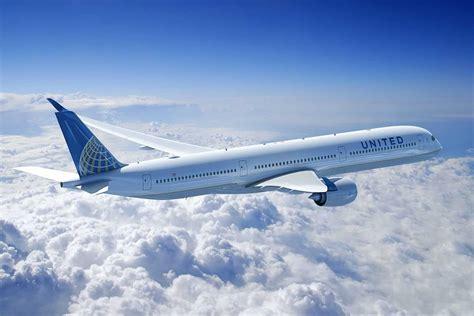
United Airlines’ long-standing Airbus A350 ambitions appeared destined to reshape the carrier’s long-haul fleet. Instead, a conflict over engines and contractual obligations has quietly pushed one of the airline industry’s largest dormant aircraft commitments into uncertainty. What began as a strategic order worth billions of dollars has evolved into a legal and commercial disagreement involving Rolls-Royce, a $175 million prepayment, and 45 aircraft that now occupy an unusual position between Airbus’ order book and United’s fleet plans.
For years, the Airbus A350 order remained largely forgotten in the background as United focused heavily on Boeing aircraft. Yet recent developments have revealed that the aircraft themselves were never the core issue. The dispute revolves around the sole supplier of the A350-900’s engines, exposing the vulnerabilities created when an airliner depends entirely on one powerplant manufacturer.
The controversy has become a striking example of how relationships between airlines and engine makers can determine the fate of multibillion-dollar fleet decisions, even when the aircraft involved remain among the most advanced and efficient widebodies in the world.
The Origins Of United Airlines’ Airbus A350 Order
United Airlines first committed to the Airbus A350 program in December 2009. At the time, the carrier was still operating independently before its merger with Continental Airlines. The initial agreement covered 25 Airbus A350-900 aircraft and carried a list price approaching $6 billion. The deal represented one of the most significant fleet modernization plans undertaken by the airline during that era.
Over the years, the order evolved. Some aircraft were temporarily converted to the larger A350-1000 variant before eventually returning to the A350-900 configuration. By 2017, the order had expanded to 45 aircraft, making it one of the largest future widebody commitments in United’s portfolio.
Alongside the aircraft order, United entered into agreements with Rolls-Royce for the exclusive Trent XWB-84 engines. Because Airbus designed the A350-900 around a single engine option, every aircraft depended entirely on Rolls-Royce powerplants. In 2009, the engine agreement itself carried a reported value of approximately $2 billion.
When the fleet expansion occurred in 2017, United reportedly made a prepayment totaling $175 million under arrangements tied to the original engine contract dating back to 2010. At the time, few could have predicted that this payment would become the center of a dispute years later.
Why A $175 Million Payment Became The Center Of The Conflict
The disagreement surfaced publicly after United disclosed in regulatory filings that it believed the engine manufacturer had breached contractual obligations. According to the airline, Rolls-Royce failed to fulfill terms associated with the agreement governing the A350 engines.
As a result, United asserted that it deserved reimbursement of the $175 million prepayment made years earlier, together with additional compensation. The airline also indicated that it had initiated actions intended to recover what it considered outstanding financial damages.
Rolls-Royce strongly rejected those accusations. Instead, the British engine manufacturer argued that United itself had breached the contract and maintained that the airline should be making payments rather than receiving compensation.
Although the specific allegations remain confidential, the disagreement has escalated into a significant commercial conflict involving two major aviation companies. Neither side has publicly disclosed the exact contractual provisions at issue, leaving much of the legal background hidden from view.
The uncertainty surrounding the case eventually spilled over into fleet planning. Earlier this year, United removed the Airbus A350-900 from its own order book, effectively signaling that the aircraft were no longer part of its foreseeable expansion strategy.
Interestingly, Airbus still lists the 45 jets among its outstanding orders, creating an unusual situation in which the manufacturer and customer maintain different positions regarding the same aircraft commitment.
The Exclusive Rolls-Royce Engine That Changed Everything
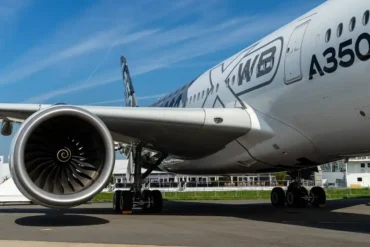
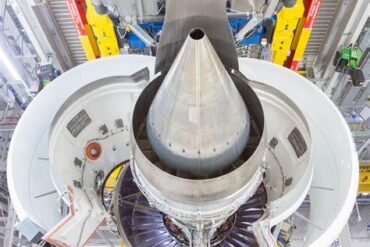
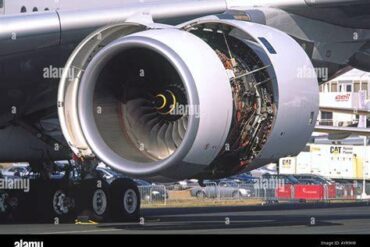
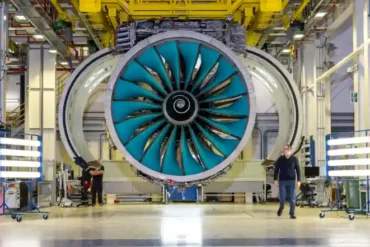
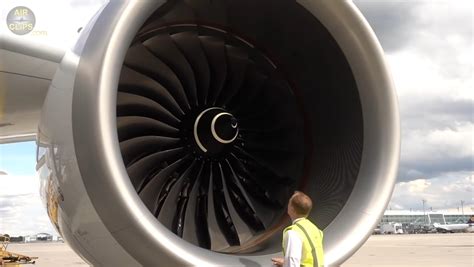
Unlike many commercial aircraft that offer multiple engine choices, the Airbus A350-900 is powered exclusively by the Rolls-Royce Trent XWB-84.
That exclusivity is both one of the engine’s greatest strengths and one of its strategic weaknesses.
The Trent XWB-84 is widely regarded as one of the most successful large turbofan engines ever developed. Drawing upon decades of Rolls-Royce engineering experience, it delivers exceptional fuel efficiency, high reliability, and impressive dispatch performance.
The engine produces up to 84,000 pounds of thrust, utilizes a bypass ratio of 9.6:1, and features a massive 118-inch fan diameter. These characteristics enable the A350-900 to perform ultra-long-haul missions while maintaining favorable operating economics.
Most airlines operating large A350 fleets have expressed satisfaction with the aircraft and the support programs provided by Rolls-Royce. Reliability levels have generally been strong, helping the aircraft earn a reputation as one of the most dependable widebodies currently in service.
However, engine exclusivity also creates risk. Airlines have no alternative supplier if commercial disagreements, technical issues, geopolitical disruptions, or maintenance problems emerge. Unlike aircraft such as the Boeing 787, where carriers can choose between General Electric and Rolls-Royce engines, A350 operators remain entirely dependent on one manufacturer.
That dependence is precisely why a dispute involving engines has effectively placed an entire aircraft order in jeopardy.
Airbus’ A350 Family Remains One Of Aviation’s Most Advanced Widebodies
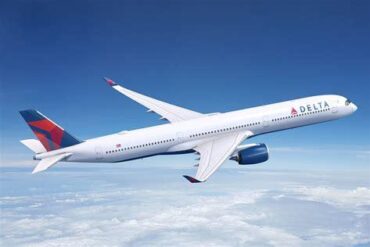
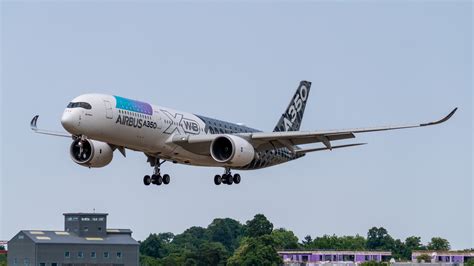
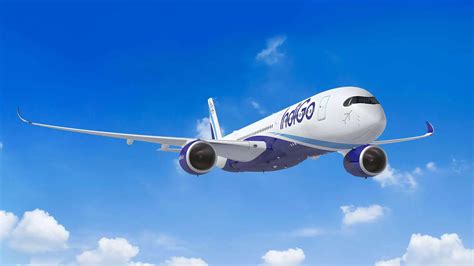
Introduced into commercial service in 2015, the Airbus A350 represented Europe’s answer to the Boeing 787 Dreamliner and changing long-haul travel demands.
Designed as a clean-sheet aircraft, the A350 uses extensive composite materials, advanced aerodynamics, and highly efficient engines to deliver lower fuel consumption and reduced operating costs.
Qatar Airways became the launch customer for the A350-900 in 2015 and later introduced the larger A350-1000 in 2018. Since then, airlines around the world have used the aircraft to open new long-distance routes that were previously impractical.
The A350-900 offers a range of approximately 8,500 nautical miles, while ultra-long-range variants stretch that capability to nearly 9,700 nautical miles. These remarkable capabilities allow carriers to operate nonstop flights such as Singapore to New York and support future ultra-long-haul services planned by Qantas.
The larger A350-1000 extends standard range to around 9,000 nautical miles while providing increased passenger capacity. Both variants rely entirely on Rolls-Royce engines, with the more powerful Trent XWB-97 supplying thrust for the A350-1000.
United Airlines Has Shifted Its Future Toward Boeing Dreamliners
While the Airbus A350 order remained inactive, United Airlines aggressively expanded its Boeing 787 fleet.
Today, the carrier operates all three Dreamliner variants, making it one of the few airlines worldwide to maintain such a comprehensive 787 operation. The airline already has dozens of Dreamliners flying and possesses one of the industry’s largest remaining order books for the type.
These aircraft are expected to replace aging Boeing 767s over the coming years and eventually succeed portions of the Boeing 777 fleet as well.
By focusing heavily on the Dreamliner family, United has established enormous economies of scale. Training, maintenance, spare parts inventories, and crew scheduling become simpler when large fleets share common systems and operational procedures.
The disappearance of the A350 from United’s own order book therefore reflects not only the engine dispute but also the airline’s increasing commitment to Boeing.
Nevertheless, industry observers continue to speculate that the A350 order may not be permanently dead. Airbus still maintains the aircraft in its backlog, and Rolls-Royce has publicly described United as a valued customer while expressing hopes for a resolution.
Should both parties eventually settle their differences, the aircraft could theoretically re-emerge as part of United’s long-term fleet strategy.
Could United Convert The Order Into Airbus Narrowbody Aircraft?
Another possibility frequently discussed involves converting the dormant widebody order into other Airbus products.
United operates a substantial fleet of Airbus A320 family aircraft and continues accepting deliveries of A321neo models. Because the carrier already maintains infrastructure and pilot resources for Airbus narrowbody operations, shifting the value of the order toward those aircraft could represent a practical compromise.
No official statements indicate that such a conversion is currently being pursued. However, preserving commercial relationships while avoiding costly cancellations often makes conversions attractive solutions within the airline industry.
Such a move would allow Airbus to retain business while enabling United to focus its widebody growth around Boeing’s Dreamliner family.
Would The Airbus A350 Have Fit Naturally Into United’s Fleet?
Although introducing a separate widebody family can increase complexity, a fleet of 45 aircraft would have been large enough to generate meaningful economies of scale.
Several leading international airlines successfully operate diverse fleets including Boeing 777s, Boeing 787s, and Airbus A350s simultaneously. Singapore Airlines, British Airways, Qatar Airways, and Etihad Airways demonstrate that mixed fleets can work efficiently when managed strategically.
The A350’s remarkable range would have provided United with additional flexibility for premium long-haul expansion. Its spacious cabin and larger fuselage could have supported the airline’s increasing emphasis on premium-heavy seating configurations.
Furthermore, United already operates hundreds of Airbus narrowbody aircraft, allowing some advantages from Airbus cockpit commonality and pilot transition programs.
From an operational standpoint, the aircraft itself appeared capable of complementing United’s network. Ironically, the issue threatening the entire order has never involved the airplane.
A Dispute That Highlights The Risks Of Engine Monopolies
The United-Rolls-Royce disagreement demonstrates how modern aviation depends on complex partnerships extending far beyond aircraft manufacturers.
Airlines invest billions not merely in airframes, but in engines, maintenance agreements, support packages, spare parts, and long-term relationships. When those relationships break down, even highly successful aircraft programs can become collateral damage.
For Airbus, the uncertainty leaves 45 widebody aircraft sitting in an unusual limbo. For Rolls-Royce, the conflict underscores both the power and the risks associated with exclusive engine arrangements. For United Airlines, the episode reinforces the advantages of concentrating future growth around the Boeing 787 family.
Yet the story may not be over.
As long as Airbus continues listing the aircraft and Rolls-Royce expresses interest in preserving the relationship, the possibility remains that one of the industry’s most intriguing dormant orders could eventually return to life. Until then, a $175 million dispute over engines has quietly sidelined what was once envisioned as a cornerstone of United Airlines’ future long-haul fleet.