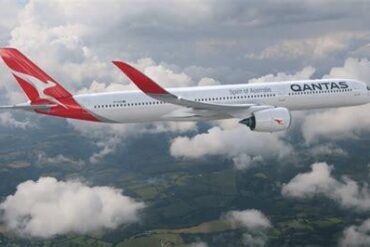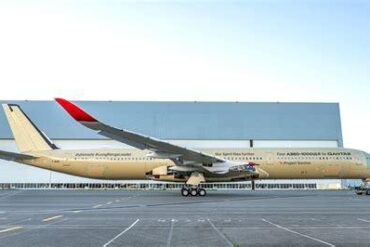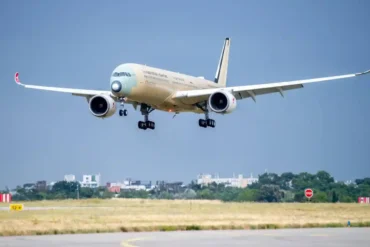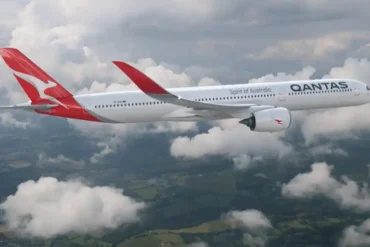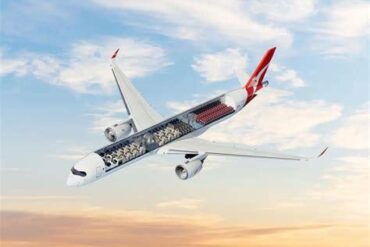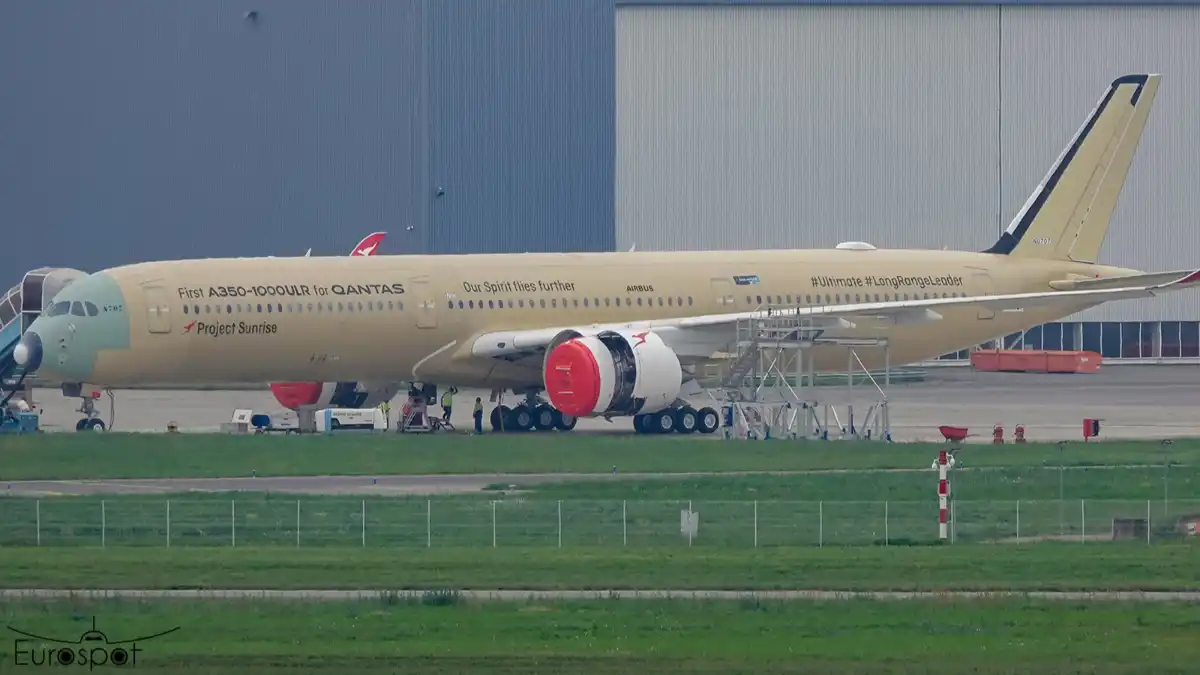
Qantas has taken a decisive step toward redefining ultra-long-haul travel as its first Airbus A350-1000ULR rolls out at Toulouse-Blagnac Airport, fitted with the latest Rolls-Royce Trent XWB-97 engines. This aircraft is far more than a fleet addition—it represents the operational backbone of the airline’s ambitious Project Sunrise, a program designed to connect Australia directly with the world’s most distant cities without stopovers.
Bearing test registration F-WZNK and manufacturer serial number MSN 707, the aircraft’s emergence signals that years of planning, engineering, and collaboration are transitioning into tangible progress. Built in late 2025, this airframe will soon undergo rigorous testing before its anticipated delivery by the end of the year. Its presence on the Toulouse apron confirms that Qantas is edging closer to launching some of the longest commercial flights ever attempted.
The significance of this rollout extends beyond aviation enthusiasts. It marks a turning point in how travelers will experience intercontinental journeys, eliminating traditional transit hubs and dramatically reshaping global route networks. For passengers, it promises a future where Sydney to London or Sydney to New York becomes a seamless, uninterrupted experience.
Project Sunrise: Redefining the Limits of Nonstop Travel
First announced in 2017, Project Sunrise has evolved into one of the most closely watched initiatives in modern aviation. By 2022, Qantas committed to acquiring up to 12 Airbus A350-1000ULR aircraft, specifically configured to achieve unprecedented range capabilities. These jets are engineered to conquer what the airline has described as the “final frontier” of commercial aviation—direct flights from Australia’s east coast to Europe and North America.
Currently, routes such as Sydney to New York require stopovers, often in Auckland, adding hours to total travel time. The A350-1000ULR will eliminate this inefficiency, enabling journeys lasting up to 22 hours nonstop. While that duration may sound daunting, Qantas is betting heavily on comfort innovation and passenger wellbeing to make these marathon flights not just tolerable, but desirable.
Rolls-Royce Trent XWB-97: Powering the Ultra-Long-Haul Era
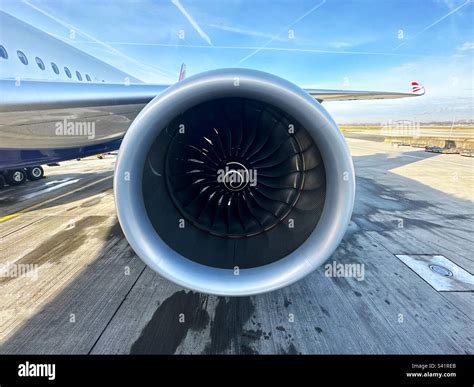
At the heart of this aircraft lies the Rolls-Royce Trent XWB-97, one of the most advanced and efficient jet engines currently in service. Designed specifically for the A350-1000 platform, these engines deliver the thrust, fuel efficiency, and reliability required for ultra-long-haul operations.
The Trent XWB family has already established a reputation for exceptional fuel burn performance and reduced emissions, key factors as airlines balance operational costs with environmental pressures. For Qantas, these engines are not just a technical necessity—they are a strategic enabler, making routes like Sydney–London nonstop economically viable.
Cabin Innovation: Engineering Comfort for 20+ Hour Flights
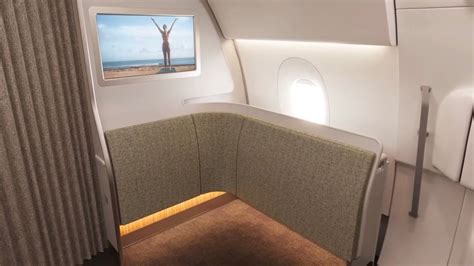
Qantas has approached cabin design with a singular focus: human endurance and wellbeing. Recognizing that passengers will spend nearly an entire day onboard, the airline has partnered with Caon Design, renowned chef Neil Perry, and researchers from the University of Sydney’s Charles Perkins Centre to craft an environment optimized for long-duration travel.
One of the standout features is the Wellbeing Zone, a dedicated onboard space where passengers can stretch, move, and engage in light physical activity. This area is complemented by curated snacks and hydration options, encouraging healthier in-flight habits.
Lighting plays a crucial role in passenger comfort. The aircraft incorporates 12 dynamic lighting scenarios, including “Sunrise,” “Sunset,” and “Awake,” scientifically designed to help regulate circadian rhythms and reduce jet lag. Combined with Bluetooth-enabled entertainment systems and full-cabin WiFi, the onboard experience is tailored to meet modern expectations of connectivity and personalization.
Premium-Heavy Configuration: Targeting High-Value Travelers
Unlike traditional long-haul aircraft, the A350-1000ULR features a premium-focused layout, with more than 40% of seats dedicated to First, Business, and Premium Economy cabins. This reflects Qantas’ strategic emphasis on attracting high-yield passengers willing to pay for comfort on ultra-long journeys.
The aircraft will accommodate a total of 238 passengers, broken down into:
- 6 First Class suites
- 52 Business Class seats
- 40 Premium Economy seats
- 140 Economy seats
This configuration underscores a deliberate shift toward quality over quantity, prioritizing passenger experience and revenue optimization over maximum capacity.
Technical Capabilities: Built for Distance and Efficiency
The Airbus A350-1000ULR is engineered for endurance. Measuring 242 feet (73.7 meters) in length with a wingspan of 212 feet, it combines aerodynamic efficiency with structural innovation. Cruising at approximately Mach 0.85, the aircraft can sustain ultra-long-haul operations without compromising performance.
Projected flight durations include:
- Sydney to London: approximately 20–22 hours
- Sydney to New York: approximately 22 hours
These routes will rank among the longest nonstop flights in the world, redefining passenger expectations for global travel.
Strategic Impact on Qantas’ Global Network
The introduction of the A350-1000ULR aligns with Qantas’ broader fleet modernization strategy, which includes investments in aircraft such as the Airbus A321XLR and additional Boeing 787 variants. While narrowbody aircraft expand regional and medium-haul connectivity, the A350-1000ULR positions Qantas at the forefront of ultra-long-haul innovation.
As more aircraft join the fleet, industry observers expect Qantas to explore additional direct routes linking Australia with key global cities. The implications extend beyond convenience—these flights could reshape airline competition, hub relevance, and passenger preferences on a global scale.
A New Chapter in Aviation History
The rollout of Qantas’ first Airbus A350-1000ULR is not merely a milestone; it is a preview of aviation’s next frontier. By combining cutting-edge engineering, passenger-centric design, and bold route strategy, Qantas is setting a new benchmark for what long-haul travel can achieve.
As testing progresses and delivery nears, the industry watches closely. The success of Project Sunrise could redefine not just how far aircraft can fly—but how comfortably passengers can endure the journey.