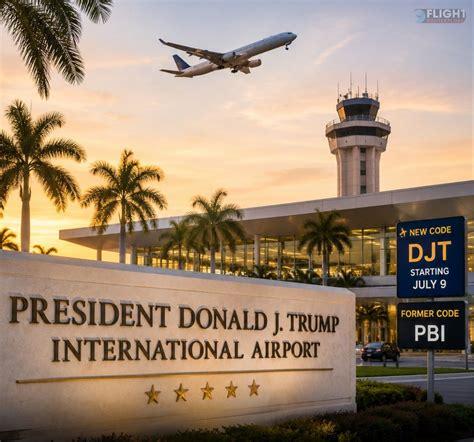
Palm Beach International Airport is entering a new era as one of the most recognizable airport identifiers in Florida aviation history changes forever. On August 18, 2026, the airport’s long-standing PBI IATA code will officially become DJT, following the renaming of the facility to President Donald J. Trump International Airport. While the decision has attracted significant public and political attention, the practical impact for most travelers will be far simpler: a familiar three-letter airport code will be replaced by a new one across airline systems worldwide.
For passengers flying through West Palm Beach, the biggest change will be seeing DJT instead of PBI on flight searches, boarding passes, baggage tags, and airport information displays. The airport itself will continue operating normally, with the same terminals, runways, airlines, security procedures, and flight schedules. Travelers should not expect delays, cancellations, or major changes to the airport experience simply because the identifier has changed.
The transition represents a rare moment in commercial aviation because airport codes are deeply integrated into the global travel system. Unlike changing a sign on a terminal building, replacing an IATA code requires coordination between airlines, reservation platforms, airports, travel agencies, baggage systems, and international aviation databases.

From PBI to DJT: Understanding the Palm Beach Airport Code Change
The official renaming of Palm Beach International Airport took place on July 9, 2026, after legislation approved by Florida lawmakers and signed by Governor Ron DeSantis. However, the airport continued using the PBI code temporarily because the global aviation industry requires extensive preparation before an airport identifier can be replaced.
The International Air Transport Association (IATA) airport code system is used throughout commercial aviation to simplify ticketing, scheduling, baggage handling, and passenger communications. A three-letter code such as PBI is not just a label; it connects thousands of digital systems that support every stage of an airline journey.
When travelers search for flights online, the airport code links their request to airline reservation databases, departure control systems, frequent flyer programs, baggage tracking platforms, cargo networks, and airport operational software. A sudden code replacement without preparation could create confusion throughout the aviation network.
That is why airlines continued displaying PBI after the airport received its new name. The additional weeks allowed carriers and technology providers to update their systems before the official DJT transition date.
For passengers, the change will mainly involve adjusting to a new abbreviation. A traveler who previously searched for “flights to PBI” will now need to search for DJT when booking future trips to West Palm Beach.
Will the DJT Airport Code Change Affect Flights?
The short answer is no. The airport’s operations will remain unchanged after the transition. Airlines serving Palm Beach will continue operating the same routes, using the same aircraft, and following the same schedules.
The first commercial departures using the new DJT airport identifier are scheduled for the morning of August 18, 2026. The first two flights will depart at 6:00 AM, marking the beginning of the airport’s new digital identity.
One of those flights will be an American Airlines service to Charlotte Douglas International Airport, while the other will be a Delta Air Lines flight to Hartsfield-Jackson Atlanta International Airport. These departures will become the first commercial flights worldwide officially associated with the DJT code.

The airport is expected to operate dozens of departures under the DJT identifier on its first day. Although the code is changing, Palm Beach’s role as an important regional airport remains the same, with major airlines continuing to connect South Florida travelers with destinations across the United States and beyond.
Atlanta will remain one of the airport’s busiest markets, supported by extensive Delta Air Lines service. Newark, Charlotte, New York-LaGuardia, Dallas/Fort Worth, Philadelphia, Washington National, Chicago O’Hare, Boston, Houston, Detroit, Denver, Los Angeles, Minneapolis, Toronto, and destinations in the Bahamas will continue to be part of the airport’s broad route network.
The change affects the airport’s identity, not its connectivity.
Why Changing an Airport Code Is More Complicated Than Changing a Name
Many travelers may wonder why the airport could adopt a new name in July but wait until August to begin using DJT. The reason is the complexity of modern aviation technology.
Every airline reservation system, airport database, and travel website must recognize the new identifier. A single airport code appears in millions of records, from airline booking confirmations to baggage routing instructions.
A code transition requires coordination among global distribution systems, including the platforms used by travel agents and online booking companies. Airlines must also update departure boards, mobile applications, customer service tools, and internal operational software.
The aviation industry prioritizes reliability above speed. Even a small error in airport identification could potentially send baggage information to the wrong location or create confusion during passenger check-in.
By separating the official name change from the code transition, aviation companies gained time to test and update their systems. This approach helps ensure that passengers experience a smooth transition rather than technical problems.
What Travelers Will See After the DJT Transition
For most passengers, the first noticeable difference will appear when booking a flight. Searches that previously displayed Palm Beach International Airport (PBI) will begin showing President Donald J. Trump International Airport (DJT).
Passengers with older reservations may still see PBI on existing confirmations issued before the transition. This does not mean their tickets are outdated or invalid. Airlines are expected to manage the conversion automatically, allowing travelers to continue using their original booking information.
New boarding passes, baggage tags, and airport signs will gradually reflect DJT. Travelers arriving at the airport should focus on their airline, flight number, and departure time rather than worrying about the code change.
The physical airport environment will remain familiar. Security checkpoints, parking facilities, airline lounges, rental car services, and terminal layouts will continue operating as before.
A Rare Example of an Airport Name and Code Transformation
Airport renamings happen more frequently than airport code changes. Many airports around the world have adopted new names while keeping their original identifiers because changing a code creates significant logistical challenges.
Some famous airports continue using historic codes despite multiple name changes. For example, Orlando International Airport still uses the MCO code, reflecting its historical connection to McCoy Air Force Base rather than its current name.
Other airports have experienced complete identity transformations. John F. Kennedy International Airport in New York previously operated as Idlewild Airport with the code IDL before receiving its current name and JFK identifier.
The move from PBI to DJT places West Palm Beach among a smaller group of airports where both the official name and international code have changed.

What the DJT Airport Name Change Really Means
Ultimately, the transition from PBI to DJT is more symbolic than operational. The airport’s daily operations, airline partnerships, and passenger services will continue with minimal disruption.
For travelers, the most important adjustment is simply learning a new three-letter identifier. Instead of searching for PBI, passengers will begin looking for DJT when booking flights to and from West Palm Beach.
The airport’s new identity marks a significant chapter in its history, but the fundamentals of air travel remain unchanged. The same aircraft will arrive, the same airlines will operate, and passengers will experience the same journey through South Florida’s major aviation gateway.
The biggest difference will be visible not on the runway, but on screens around the world where DJT replaces PBI as the new symbol of Palm Beach air travel.