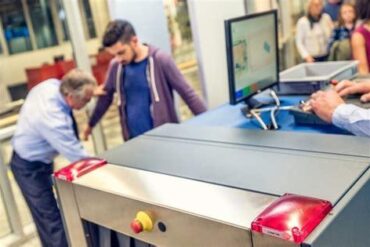
Air travel in the United States is almost synonymous with the presence of the Transportation Security Administration (TSA)—the uniformed officers, the conveyor belts, the familiar rhythm of removing shoes and laptops. Yet, beneath this standardized experience lies a lesser-known reality: a select group of American airports operate without TSA officers conducting security screenings. Instead, they rely on a tightly regulated alternative that quietly reshapes the airport experience.
The TSA remains a cornerstone of U.S. transportation safety, screening nearly 2.5 million passengers daily across hundreds of airports. Its reach extends far beyond aviation, but its airport presence is what travelers feel most acutely. However, not every airport follows this model. Through a specialized initiative, a small number of airports have opted for a different path—one that replaces federal screeners with private contractors operating under strict federal oversight.
This alternative is known as the Screening Partnership Program (SPP), and it introduces a subtle but important distinction in how airport security is delivered. While the procedures, equipment, and standards remain identical, the personnel carrying out the screenings are employed by private companies rather than the federal government. For most travelers, the difference is nearly invisible—but during times of disruption, it becomes strikingly clear.
Which US Airports Operate Without TSA Screeners?
Across the country, 20 airports participate in the Screening Partnership Program, many of them smaller regional hubs that benefit from operational flexibility. Yet, a few major airports stand out, proving that this model can scale effectively without compromising passenger volume or security expectations.
Among the most prominent are:
- San Francisco International Airport (SFO) – the largest and busiest airport in the program, handling over 54 million passengers annually
- Kansas City International Airport (MCI) – known for its streamlined terminal design and efficient passenger flow
- Orlando Sanford International Airport (SFB) – a key alternative gateway to central Florida’s tourism corridor
These airports function just like any other major hub in the United States, with one key difference: you won’t see TSA officers at the checkpoints. Instead, trained private security personnel carry out screenings under TSA supervision and regulation.
How the Screening Partnership Program Works
The SPP is not a loophole or a relaxation of security standards. In fact, it operates under strict federal control, with the TSA dictating every procedure, technology requirement, and compliance measure. Private contractors must meet rigorous qualifications, and airports must prove that participation will not increase costs or reduce security effectiveness.
This ensures that, from a safety perspective, there is no compromise whatsoever. Every bag scanned, every passenger screened, and every protocol followed mirrors TSA-operated checkpoints. The difference lies purely in who performs the task, not how it is done.
What makes the program appealing to certain airports is the potential for operational flexibility. Private companies can often adjust staffing levels more dynamically, respond faster to peak travel times, and maintain continuity during federal disruptions.
Why These Airports Gained Attention in 2026
In 2026, the SPP moved from obscurity into the spotlight due to a partial government shutdown that disrupted TSA operations nationwide. Staffing shortages led to hours-long security lines at several major airports, as some federal workers faced delayed pay and reduced morale.
In contrast, airports using private contractors continued operating with minimal disruption. Because these employees were not directly affected by federal funding gaps, security checkpoints remained fully staffed and functional. For travelers passing through SPP airports, the difference was immediate: shorter wait times, smoother processing, and a noticeably calmer experience.
The Advantages—and Tradeoffs—of Privatized Screening
The events of 2026 highlighted one of the clearest advantages of the SPP: resilience during government instability. When federal systems falter, privately operated checkpoints can maintain continuity, offering a level of reliability that traditional TSA staffing cannot always guarantee.
However, the broader benefits remain a topic of debate. While some argue that private screening could lead to cost savings and improved efficiency, evidence supporting these claims is limited. There are also concerns about worker compensation and job stability, as private contractors may offer lower pay and fewer benefits compared to federal positions.
Additionally, private companies are not immune to external pressures. Economic downturns, labor shortages, or contractual disputes could potentially impact operations, introducing a different set of vulnerabilities into the system.
What This Means for Future Air Travel
The existence of TSA-free airports does not signal a reduction in security—it represents an alternative model of delivering the same standards. As discussions about privatizing airport security continue, the Screening Partnership Program serves as a real-world testing ground for what that future might look like.
For travelers, the takeaway is surprisingly simple: the next time long lines dominate headlines, the airport you choose could shape your entire experience. And in a system where efficiency often feels elusive, that choice might make all the difference.