Drones have become synonymous with innovation in surveillance, filmmaking, and remote sensing. Yet, the most pressing limitation for drone technology remains flight duration. Conventional drones, whether for hobbyist or military use, are constrained by power sources that demand periodic refueling or recharging. Even high-end unmanned aerial vehicles like the RQ-4 Global Hawk are grounded after roughly 34 hours of continuous flight. However, a new experimental project by a father-son duo—Mike and Luke Bell—has presented a radical concept: a drone that could theoretically remain airborne indefinitely.
Reimagining Flight: A Drone Without Batteries
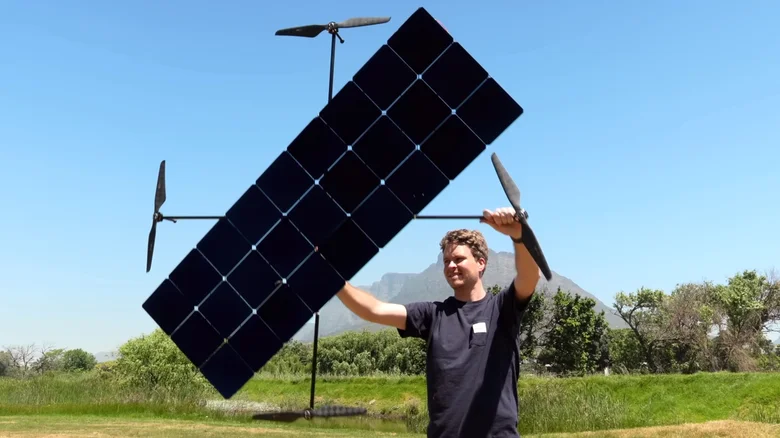
The Bells, widely recognized for their record-breaking quadcopters, tackled the core limitation of drone design—weight versus power supply. Instead of relying on the typical battery-solar hybrid model, they stripped the drone of any energy storage unit altogether. Their innovation lies in a drone powered exclusively by solar energy, with no batteries whatsoever. This decision wasn’t just unconventional—it was foundational.
Most solar-powered systems rely on photovoltaic cells to charge onboard batteries, which then power the aircraft when the sun sets or clouds roll in. However, batteries contribute significant bulk and complicate weight distribution. By eliminating them, the Bells opened the possibility of an ultra-lightweight, continuous-operation drone that draws power directly from sunlight in real time. Such an approach not only redefines engineering elegance but paves the way for drones that could operate perpetually—so long as sunlight remains available.
Inside the Build: Engineering a Featherweight Flying Machine
The drone’s construction is as meticulously deliberate as it is innovative. At its heart is an X-frame made of carbon fiber tubing, a material celebrated for its strength-to-weight ratio. The team opted for Antigravity motors—chosen for their efficiency—and paired them with T-Motor 18-inch carbon fiber propellers, ensuring maximum thrust with minimal energy draw. Precision 3D-printed mounts held the critical components together without tipping the scale.
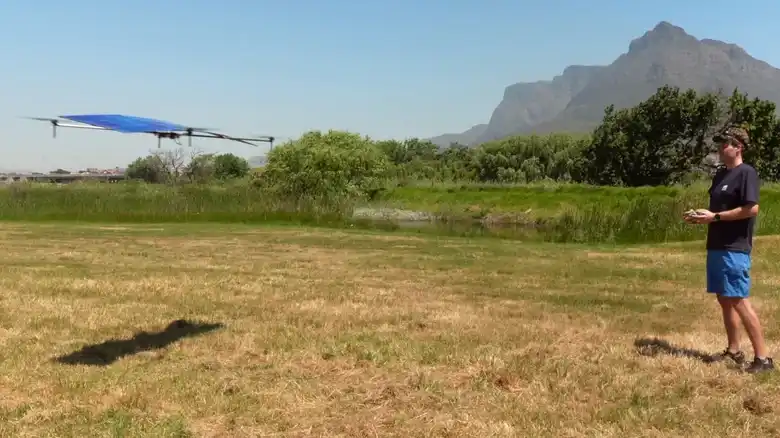
Mounted on this skeletal frame are 27 high-efficiency solar panels, arranged in three rows of nine. These panels deliver a peak output of approximately 150 watts, directly feeding power to the motors. A supplementary carbon fiber support system holds the fragile cells in place—an engineering decision born from both necessity and trial-and-error, including accidental damage from testing and even the family cat.
To monitor the drone’s performance, the Bells attached a lightweight camera module linked to a VR headset, allowing real-time POV visualization. When the drone was taken to a grassy field for a flight test, it successfully took off, sustained stable flight, and demonstrated the viability of direct solar propulsion—no batteries, no energy storage, just pure sunlight.
Despite its success, the project is best viewed as a proof-of-concept rather than a commercially viable model—at least for now. The absence of a battery means this drone cannot function in shaded or overcast environments, nor can it operate at night. These constraints make it impractical for industries that require round-the-clock surveillance or operation in diverse weather conditions.
Still, the demonstration is nothing short of remarkable. It challenges the existing paradigms in drone energy systems and presents a blueprint for future innovation. The drone’s minor crash landing didn’t damage its structure, further attesting to the build’s robustness and the feasibility of continued experimentation.
Parallels in High-Altitude Long-Endurance Drones
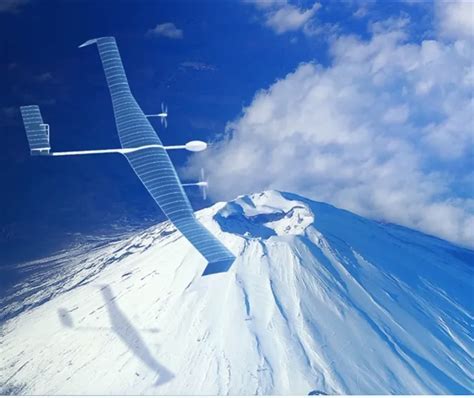
The Bells’ project echoes aspirations found at the highest levels of aerospace R&D. Airbus’ Zephyr, for instance, is a High Altitude Platform Station (HAPS) capable of flying at altitudes exceeding 60,000 feet for months at a time. Designed primarily for military and commercial ISR (Intelligence, Surveillance, Reconnaissance) applications, the Zephyr operates above weather patterns and commercial air traffic, creating opportunities for uninterrupted intelligence collection and even internet distribution.
While the Zephyr does rely on batteries to continue operations at night, its solar-electric propulsion model aligns philosophically with the Bells’ ambitions. However, the cost disparity is striking: Airbus has spent hundreds of millions in research and testing, whereas the Bells’ homemade drone achieved liftoff with off-the-shelf parts and ingenuity. That contrast underscores a critical truth—the future of drone innovation is not solely in the hands of billion-dollar defense contractors.
The Road Ahead: Towards a Sun-Powered Sky
As solar cell efficiency continues to improve and material sciences produce ever-lighter composites, the vision of perpetually flying drones inches closer to mainstream reality. The Bells’ experiment not only opens new doors for aerospace hobbyists but also signals potential for low-cost, high-endurance solutions in sectors like environmental monitoring, agriculture, and emergency communications.
Although their drone may never see direct commercial deployment, its greatest legacy might be the questions it raises: What can we do without batteries? How far can sunlight take us? And more importantly, can the democratization of drone technology accelerate innovation faster than the military-industrial complex ever could?
In showing the world that a homemade drone can fly forever, the Bells have done more than build a flying machine. They’ve issued a challenge to rethink the very nature of flight.