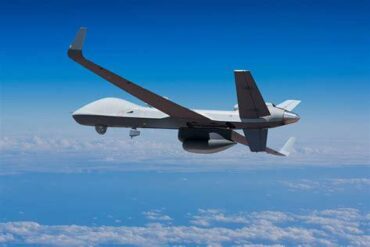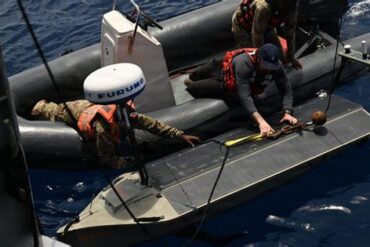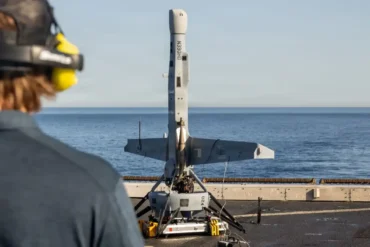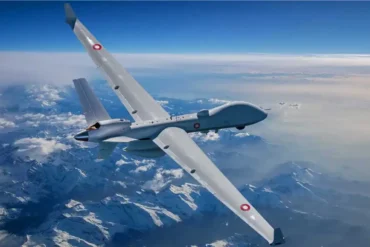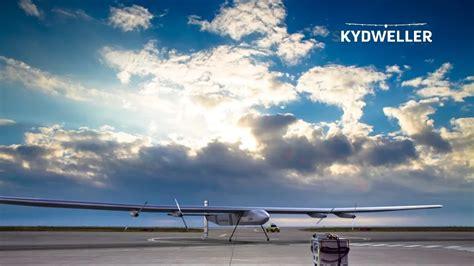
On July 29, 2025, the United States Navy marked a transformative moment in unmanned aviation by announcing the successful 73-hour non-stop flight of the Skydweller drone, a solar-powered unmanned aerial system (UAS) designed for persistent maritime surveillance without the need for refueling. Conducted at the Naval Air Facility in Stennis, Mississippi, the test was executed under the oversight of the Naval Air Warfare Center Aircraft Division (NAWCAD) and represents a groundbreaking step in energy-autonomous ISR (Intelligence, Surveillance, and Reconnaissance) capabilities.
A New Era of Unrefueled, Unmanned Endurance
The Skydweller drone, adapted from the Solar Impulse 2 demonstrator aircraft, is designed to revolutionize military surveillance by eliminating reliance on conventional fuel logistics. During its recent three-day flight, the aircraft operated continuously with no external charging or human control, maintaining a positive energy balance even under turbulent weather conditions. This feat underscores not only the drone’s technical resilience but also its capacity to serve in long-haul ISR missions across maritime theaters.
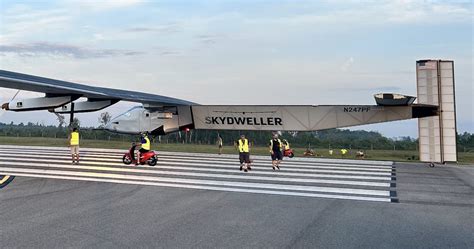
Its architecture is built around solar sustainability. With a 72-meter wingspan, the airframe houses over 17,000 photovoltaic cells, collectively capable of generating up to 100 kilowatts of power. This energy fuels a bank of 635 kg of lithium-ion batteries, ensuring nighttime operational continuity. The total takeoff mass reaches around 2,500 kg, including up to 360 kg of payload capacity—enough for EO/IR sensors, radar, AIS receivers, or comms relay equipment.
High-Altitude ISR for a Dispersed Battlespace
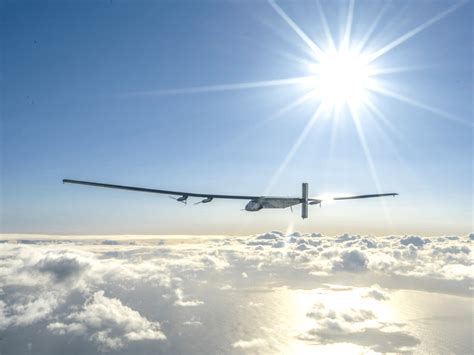
Skydweller operates within an altitude range of 7,500 to 13,500 meters, enabling wide-area situational awareness and persistent overwatch capabilities. With mission endurance projections exceeding 30 days, the drone is tailored for maritime border patrol, anti-smuggling efforts, and strategic intelligence gathering over vast oceanic regions.
Its carbon-fiber construction and quad-redundant flight control systems offer both low radar visibility and robust failover performance, while self-healing algorithms embedded in its navigation software mitigate mission failure in degraded or GPS-denied environments.
From Concept to Combat Capability: Navy’s Partnership with Skydweller Aero
The U.S. Navy’s engagement with the Skydweller platform began in 2020, under the initiative of NAWCAD and within the framework of the U.S. Southern Command (SOUTHCOM). The drone was initially evaluated to address counter-narcotics surveillance, illicit trafficking interdiction, and remote maritime domain awareness—missions characterized by low infrastructure support and limited base access.
Over the years, the Navy progressively refined the Skydweller’s integration into existing ISR workflows, emphasizing autonomous decision-making and seamless data relay to command centers. The drone’s ability to remain aloft indefinitely without forward basing or in-flight refueling drastically reduces logistical overhead while supporting operational continuity in contested or denied areas.
Rear Admiral Todd Evans, Commander of NAWCAD, highlighted the collaboration’s achievements, stating, “This effort illustrates how technology incubation, when strategically supported, can yield combat-relevant capabilities with minimal time to field.”
Resilient ISR Networks in Maritime Conflict Zones
The addition of Skydweller into the Navy’s unmanned ISR fleet marks a move toward a distributed surveillance network—an architecture that enables continuous coverage by deploying long-endurance drones alongside satellites, piloted patrol aircraft, and ship-based radar assets. This layered model enhances redundancy, resiliency, and operational tempo, particularly in vast ocean spaces where persistent eyes and ears are vital.
Furthermore, Skydweller’s modular payload bay allows for mission-specific reconfiguration, making it adaptable for electronic intelligence, environmental monitoring, or communications bridging. The Navy’s goal is not merely endurance, but also flexibility and survivability in future battlespaces shaped by multi-domain integration.

Strategic Implications in the Pacific and Beyond
With the Indo-Pacific emerging as the primary theater for strategic naval competition, endurance platforms like Skydweller offer the ability to maintain overwatch over vast, remote maritime corridors without relying on vulnerable logistics hubs. In scenarios involving gray zone operations, island-chain monitoring, or freedom-of-navigation enforcement, the drone’s ability to quietly loiter for weeks at a time can shift the balance of real-time awareness.
Moreover, as near-peer adversaries invest in anti-access/area denial (A2/AD) capabilities, the U.S. Navy’s push toward non-refuelable ISR platforms ensures continued intelligence flows without the risk of airborne tankers or forward-operating bases coming under fire. Skydweller’s independence from traditional supply chains aligns with broader Pentagon goals to reduce fuel dependency and logistical vulnerability in long-term engagements.
Future Roadmap and Operational Testing
Following the success of the July flight, NAWCAD has scheduled a series of operational trials within the SOUTHCOM region throughout late summer 2025. These missions will focus on refining data link integrity, autonomous task execution, and multi-sensor coordination across allied naval platforms.
The drone’s communications relay capabilities are also being explored as a potential redundant satellite alternative for naval task forces operating in comms-contested environments. Future integrations may see Skydweller serving as a node within joint all-domain command and control (JADC2) frameworks, potentially linking surface ships, submarines, UAVs, and even manned aircraft into a single information-sharing ecosystem.
Solar-Powered Flight: A Technological Leap Forward
The evolution from experimental solar aircraft to mission-ready ISR drone signifies more than engineering prowess; it reflects a doctrinal shift in how the U.S. Navy envisions future airpower. Unlike traditional drones such as the MQ-4C Triton or P-8 Poseidon aircraft, which require substantial fuel infrastructure and periodic maintenance, Skydweller is designed for continuous operation with minimal intervention.
Its self-sufficient energy cycle, combined with AI-powered autonomy, reduces the burden on personnel and allows commanders to reallocate assets toward more critical tasks. The environmental benefits, while secondary in military calculus, offer strategic communication value in an era of increasing attention to energy-efficient defense technologies.
Conclusion: Shaping the Next Generation of Naval ISR
The Skydweller drone is not merely a technical marvel—it is a strategic tool forged for the complexities of 21st-century warfare. By achieving solar-powered endurance without refueling, the U.S. Navy has introduced a platform that merges sustainability, resilience, and autonomy into a cohesive ISR asset. As tensions rise across global maritime domains, and as adversaries seek to disrupt traditional surveillance methods, innovations like Skydweller will define the next era of unmanned reconnaissance.
Upcoming tests and deployments will further determine its integration footprint, but one thing is clear: Skydweller is poised to become a cornerstone of persistent maritime situational awareness, rewriting the rules of aerial surveillance in contested environments.