The vastness of the world’s oceans has always presented a difficult problem for naval forces. Monitoring millions of square miles of open water requires enormous resources, countless ships, and constant vigilance. In recent years, however, a technological shift has begun reshaping maritime strategy. Autonomous surface vessels—robotic boats capable of operating independently for extended periods—are emerging as critical tools for modern navies. Among the newest and most intriguing of these innovations is the Lightfish, a compact solar-powered autonomous drone developed by San Diego–based company Seasats for the United States Navy.
Unlike traditional patrol ships that require large crews and expensive logistics, the Lightfish drone is designed for persistence. It can remain at sea for months, quietly collecting intelligence, scanning coastlines, and monitoring maritime activity. As the U.S. Navy pursues its ambitious goal of having half of its surface fleet unmanned by 2045, platforms like Lightfish are rapidly becoming essential components of future naval operations.
A Compact Autonomous Drone Built for the Modern Ocean
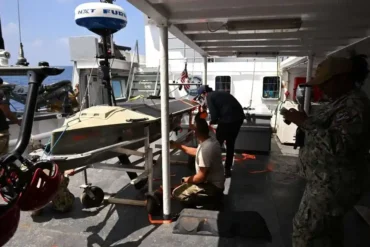
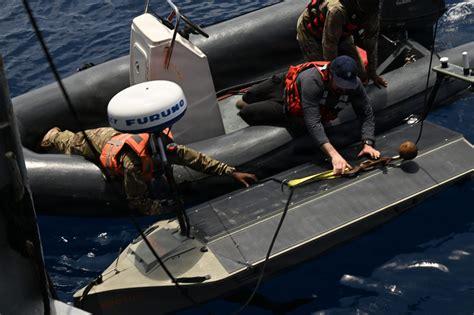
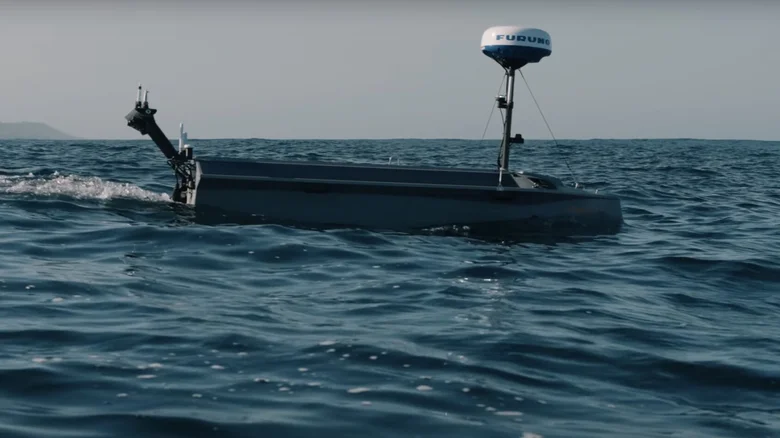
At first glance, the Lightfish looks deceptively simple. Measuring only 11.4 feet long and 3.4 feet wide, the vessel is small enough to be transported in the back of a truck or deployed from a wide range of ships and aircraft. Despite its modest size, the drone packs remarkable endurance and capability into its lightweight frame. The entire system weighs approximately 305 pounds, making it portable enough for two operators to deploy within minutes.
This portability provides a crucial advantage in modern maritime missions. Instead of requiring a dedicated launch vessel, the Lightfish can be quickly inserted into operational zones where persistent monitoring is required. Harbors, coastal regions, and high-traffic shipping lanes are ideal environments for its surveillance role.
The drone’s design prioritizes efficiency and durability. Its sleek hull and low-profile structure allow it to cut through waves while maintaining minimal drag, maximizing energy efficiency. Combined with its renewable power system, this configuration allows the vessel to remain at sea for up to six months and travel as far as 8,000 nautical miles without human intervention.
Such endurance fundamentally changes how naval surveillance can be conducted. Instead of deploying large ships for continuous patrols, fleets of autonomous drones can quietly maintain a constant presence across vast ocean areas.
Solar Power Meets Artificial Intelligence
The defining feature of the Lightfish is its solar-electric propulsion system, which allows the drone to operate almost indefinitely under favorable conditions. Solar panels mounted on the vessel harvest sunlight to recharge onboard batteries, providing a renewable energy source that keeps the drone running day after day.
To ensure reliability during periods of limited sunlight, the system also includes a supplemental methanol fuel cell capable of providing 11 or 28 kilowatt-hours of additional power. This hybrid energy approach allows the drone to maintain operations even during extended cloudy conditions or energy-intensive missions.
Propulsion is provided by an Electric Drive Torqeedo 1103 motor, roughly equivalent to a three-horsepower outboard engine. While this modest motor limits the drone to a top speed of five knots, the Lightfish is not designed for speed. Its true strength lies in long-duration observation missions, where steady and efficient travel matters far more than rapid maneuvering.
Artificial intelligence plays a major role in the drone’s autonomy. The onboard system integrates collision avoidance technology, AI-assisted navigation, and GPS-denied positioning capabilities, allowing the vessel to continue operating even when satellite signals are disrupted. Redundant communication systems—including LTE, Iridium SBD, Iridium Certus, and Starlink connectivity—ensure the drone can transmit data across multiple networks.
For surveillance tasks, the Lightfish carries five high-definition cameras, giving operators a detailed view of its surroundings. These cameras enable the drone to support maritime domain awareness missions, monitoring activities such as illegal fishing, drug trafficking, or suspicious vessel movements.
Designed for Intelligence, Not Combat
Unlike some autonomous naval platforms currently under development, the Lightfish is intentionally non-lethal. Its role is strictly focused on surveillance, reconnaissance, and maritime monitoring, rather than offensive operations.
This design philosophy distinguishes the drone from systems such as the Sea-Predator-7, a privately developed unmanned vessel equipped with weapons systems. Lightfish instead functions as an intelligence-gathering sentinel, quietly observing activity and transmitting information back to naval operators.
A key advantage of the system lies in its modular payload architecture. The drone can carry up to 66 pounds of equipment, allowing operators to swap sensors or specialized instruments depending on mission requirements. Payload changes can be completed within minutes, making the platform highly adaptable.
Operating the drone is also surprisingly simple. Seasats designed the control system with browser-based interfaces, allowing users to monitor and command the vessel from standard computers. According to the company, new operators can learn the system in less than five days, dramatically reducing training requirements compared to traditional naval systems.
Testing the Limits: Trans-Pacific Demonstrations
Before becoming operational with the U.S. Navy, the Lightfish had to prove that its long-endurance concept actually worked in the real world. Seasats conducted a series of ambitious ocean crossings designed to push the drone to its limits.
In June 2024, a Lightfish drone departed from San Diego, California, embarking on a bold journey across the Pacific Ocean. The mission aimed to reach Joint Base Pearl Harbor–Hickam in Hawaii, a distance of roughly 2,500 miles. Over 73 days, the drone steadily crossed the ocean, successfully completing the voyage.
Encouraged by the results, engineers attempted to extend the mission all the way to Japan. Unfortunately, a typhoon damaged the vessel during the attempt, revealing a design flaw involving an improperly sealed exhaust vent that allowed water to enter the hull.
Instead of shelving the program, the team refined the design and tried again.
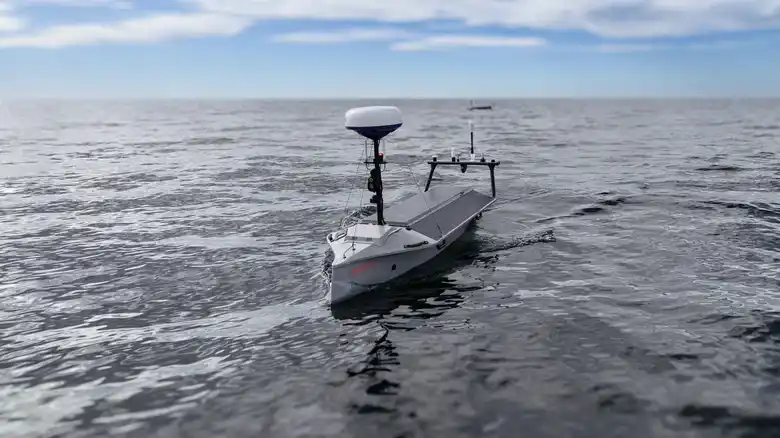
The second trans-Pacific mission proved far more successful. Beginning again in San Diego, the drone traveled to Hawaii, continued past Wake Island and Guam, and participated in demonstrations in Okinawa before finally reaching Japan on July 30, 2025. The remarkable voyage covered 7,500 miles over 150 days, proving the vessel could reliably operate across vast ocean distances.
Operational Testing With the US Navy
The Lightfish has already begun participating in real-world naval exercises. In February 2026, the drone was deployed during Exercise Cutlass Express 2026 in the Western Indian Ocean. The test was conducted by Commander Task Force 66 of the U.S. Sixth Fleet, which focuses on integrating unmanned systems into naval operations.
During the exercise, the drone was launched from the Seychelles Navy auxiliary vessel SCG Saya De Malha (A605), demonstrating its ability to operate alongside allied naval forces. The test validated Lightfish’s usefulness in cooperative maritime security missions.
Part of a Growing Autonomous Fleet
The Lightfish is not the only drone in Seasats’ portfolio. The company also produces two larger autonomous vessels: Quickfish and Heavyfish. Each platform targets a different operational niche.
- Quickfish is designed for high-speed tactical missions, capable of exceeding 35 knots, but it can remain at sea for only about one month.
- Heavyfish, weighing roughly 9,000 pounds, carries a 1,000-pound payload and can also stay deployed for six months, though it requires heavy equipment to launch.
Lightfish occupies the middle ground—small, portable, and exceptionally persistent.
As autonomous technology advances, systems like Lightfish may soon operate alongside other unmanned vehicles, including underwater drones such as Lockheed Martin’s Lamprey autonomous undersea vehicle. Together, these robotic platforms could create a networked surveillance ecosystem across the world’s oceans.
The oceans remain vast and unpredictable, but persistent robotic sentinels are beginning to fill the gaps in maritime awareness. The solar-powered Lightfish drone represents a quiet revolution in naval strategy, where endurance, autonomy, and intelligent sensing may prove more valuable than sheer firepower.