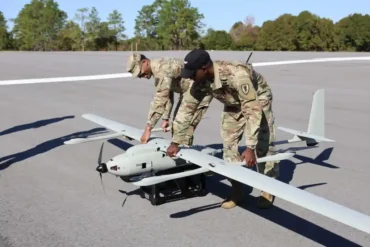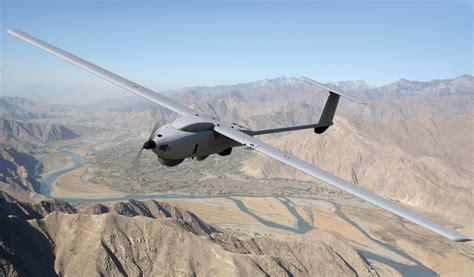
The Lockheed Martin Stalker emerges as a significant development in the realm of unmanned aerial vehicles (UAVs), a testament to innovative engineering and a relentless pursuit of extended operational capabilities. Originally designed and built by Edge Autonomy and marketed by the legendary Lockheed Martin Skunk Works, this hand-launched, electrically powered UAV was conceived in 2006, primarily for an unspecified customer, widely presumed to be the United States Special Operations Command (USSOCOM). Its core mission profile revolves around providing critical intelligence, surveillance, and target acquisition (ISTAR), offering a persistent eye in the sky for demanding military applications where information superiority can dictate outcomes.
The Genesis of Stalker: Skunk Works’ Tactical Vision
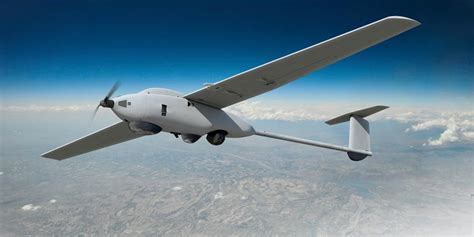
The Stalker’s lineage can be traced back to the same innovative Skunk Works team responsible for the earlier Desert Hawk UAV, inheriting a philosophy of ruggedness, portability, and operational simplicity. Designed for front-line deployment, the Stalker was engineered to be hand-launched and to execute a belly landing, minimizing the need for specialized launch and recovery equipment and thereby enhancing its suitability for austere environments. A key design feature from its inception was its quiet electric motor and propeller system, a critical attribute for covert surveillance missions where minimizing acoustic signature is paramount to operational success and platform survivability. The initial iterations of the Stalker were battery-powered, offering a respectable but ultimately limited flight endurance of approximately two hours. This endurance, while useful for short-duration missions, spurred further innovation aimed at dramatically extending its operational window.
The payload system of the Stalker was designed for modularity and mission flexibility. It primarily carried a detachable camera payload, with interchangeable modules catering to diverse operational conditions. These included high-resolution daylight cameras for clear weather reconnaissance, specialized low-light sensors for operations during dawn, dusk, or overcast conditions, and infrared imagers for nighttime surveillance and thermal signature detection. This multi-sensor capability ensured that the Stalker could provide actionable intelligence across a wide spectrum of environmental challenges. Beyond its primary sensor suite, the design also allowed for the camera system to be removed and replaced with droppable payloads, hinting at a broader range of potential applications, although details on these alternative payloads remain less publicized.
Powering the Unseen: The Revolutionary Solid Oxide Fuel Cell Integration
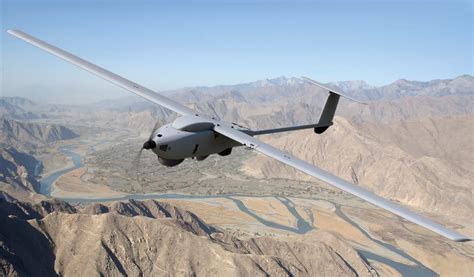
A pivotal evolution in the Stalker program was the integration of a Solid Oxide Fuel Cell (SOFC) system, a groundbreaking development spearheaded by the U.S. Army Research Laboratory (ARL). This advanced power source was designed to be self-sustaining and utilized propane as its fuel. The initial SOFC system developed for the Stalker was a 245W unit, meticulously engineered to withstand the harsh realities of military deployment. This included coping with extreme environmental and operational stresses, such as wide temperature fluctuations, diverse weather conditions, high altitudes, persistent vibrations during flight, and the sudden impacts associated with belly landings. The adoption of SOFC technology represented a paradigm shift, promising significantly longer flight times compared to traditional battery systems.
The research into SOFCs has a rich history, with foundational work beginning at institutions like General Electric and Westinghouse in the early 1960s. Over the decades, U.S. Government interest in fuel cell technology, particularly for defense applications, was channeled through agencies like the Department of Energy (DOE) and the Defense Advanced Research Projects Agency (DARPA). ARL’s specific focus on SOFCs was driven by a crucial advantage: their ability to operate on readily available hydrocarbon fuels like propane and butane. This contrasted sharply with other fuel cell types that often require pure hydrogen, which presents significant logistical challenges in forward-deployed military settings. The ability to use common fuels like propane was a major operational benefit.
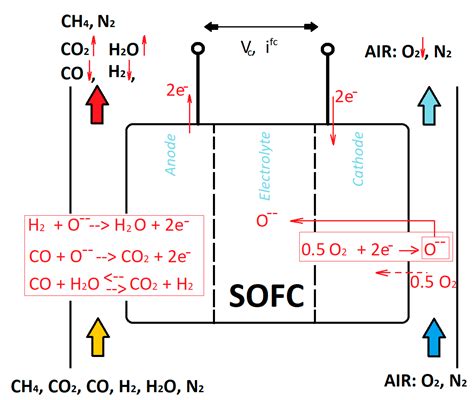
One of the primary engineering challenges in developing a robust SOFC for UAV applications was ensuring its ability to survive multiple thermal cycles – the repeated heating up to operational temperature and cooling down. To address this, a tubular design was preferred over a planar one for the fuel cells, as it offered greater structural integrity and resilience against the stresses induced by thermal expansion and contraction. The propane-fueled SOFC version of the Stalker dramatically transformed its capabilities, extending its endurance to an impressive eight hours, a fourfold increase over the two hours achievable with battery power. This enhanced persistence allowed for longer surveillance missions, reduced the frequency of launch and recovery cycles, and provided more continuous monitoring of targets or areas of interest. The fuel cell-powered Stalker proved its mettle in the demanding operational theatre of Afghanistan, where it was reportedly utilized in over 80 missions. While propane offered a significant improvement, the Army expressed a long-term interest in developing an SOFC that could run on JP8 fuel, a standard aviation fuel far more common in the military logistics inventory, which would further simplify supply chains.
Illuminating the Future: Laser-Powered Flight Demonstrations
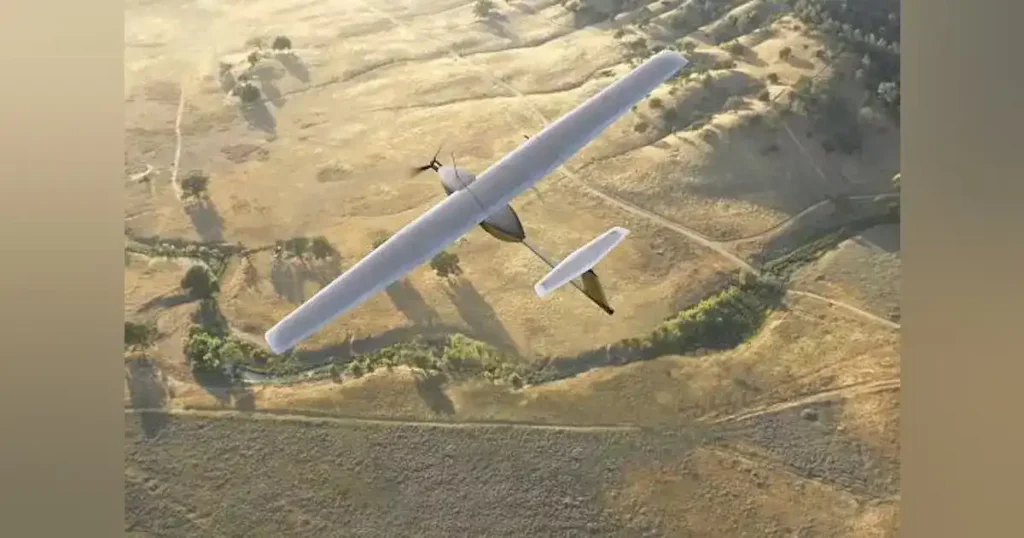
Beyond fuel cell technology, Lockheed Martin and its partners explored even more ambitious avenues for extending the Stalker’s flight duration, venturing into the realm of laser-powered flight. In a remarkable demonstration in July 2012, a Stalker UAV, operating within a wind tunnel, achieved an astonishing 48 hours of continuous flight while being powered by a ground-based laser system. This groundbreaking test showcased the potential for virtually unlimited endurance, provided the aircraft remained within range of the laser power source and line-of-sight could be maintained. The system worked by beaming laser energy to a specialized photovoltaic receiver on the aircraft, which then converted the light energy into electricity to power the motor and onboard systems.
Following the successful wind tunnel demonstration, Lockheed Martin and LaserMotive Inc., the developers of the laser beaming technology, conducted a series of outdoor flight tests with the laser-powered Stalker the following month, in August 2012. These outdoor trials were crucial for validating the system’s performance in real-world conditions and further underscored the viability of this innovative power transfer method. The tests yielded several significant accomplishments, proving the concept’s practical potential. Critically, they demonstrated net positive power delivery to the Stalker while in flight, at ranges extending up to 600 meters. The tests also confirmed that the high-intensity laser did not cause any damage to the Stalker’s airframe or sensitive electronics, and importantly, the addition of the laser receiver assembly did not adversely impact the UAV’s normal flight operations or aerodynamic characteristics. Furthermore, the system proved its robustness by operating successfully through multiple test flights conducted in a variety of challenging desert conditions, including day and night operations, high ambient temperatures, and strong winds. A key element of the system’s success was the beam director, which demonstrated its capability to accurately track the receiver on the maneuvering Stalker for extended periods, maintaining centimeter-level accuracy at a distance of 500 meters, even in the presence of atmospheric turbulence and aircraft maneuvers. Throughout these pioneering tests, all operational and safety requirements were meticulously met, including close coordination with the Laser Clearinghouse and flight operations authorities to ensure safe airspace management.
Stalker XE: Extending Operational Reach and Responsiveness
Building on the operational experience and the continuous drive for enhanced performance, Lockheed Martin unveiled an improved version, the Stalker XE (Extended Endurance), in August 2013. This iteration significantly boosted the UAV’s flight time, achieving an impressive 13 hours of endurance using its propane-fueled SOFC system. The primary modification enabling this extended loiter time was the incorporation of a larger liquid propane tank, increasing from the previous 2.2-liter capacity to a more substantial 3.2-liter tank. Both the standard Stalker and the Stalker XE utilized the same core fuel cell technology, with the increased fuel capacity being the main differentiator for the XE’s superior endurance.
The Stalker UAV, including its XE variant, found valuable application with Army and Marine Special Forces units operating in Afghanistan. A critical mission in this challenging theatre was the detection of Improvised Explosive Devices (IEDs), a pervasive threat that accounted for a significant number of casualties. The Stalker’s ability to provide persistent overhead surveillance allowed operators to monitor routes, identify suspicious activities, and potentially detect IED emplacement efforts, thereby enhancing force protection. Feedback from these front-line users was instrumental in shaping the Stalker’s development. Interestingly, operators did not request significant changes to the airframe itself, which was deemed well-suited for its tasks. Instead, the overwhelming demand was for increased endurance. The operational tempo was high, with aircraft often being put in the air two to three times a day, every single day, underscoring the critical need for longer flight times to maintain continuous surveillance coverage. Alongside its domestic use, Lockheed Martin also indicated that several potential foreign sales for the Stalker system were under negotiation, although specific customers and the number of systems involved were not disclosed.
Concurrently with the Stalker XE’s introduction, Lockheed Martin reaffirmed its commitment to advancing the laser-charged Stalker concept. The laser apparatus, built by LaserMotive, was initially quite large, described as being about the size of a horse trailer. Recognizing the need for a more deployable system, efforts were focused on significantly reducing its size to something more practical for tactical operations. The ideal target size was envisioned as being comparable to “two travel suitcases put together,” a form factor that would allow for easier transportation and setup in forward operating locations, potentially revolutionizing how small tactical UAVs could be powered for persistent missions.
Next-Generation Power: The 350W SOFC and Future Capabilities
The quest for even greater power and efficiency for small UAVs continued, leading to further advancements in SOFC technology. In 2018, the Rapid Reaction Technology Office (RRTO), operating under the Office of the Secretary of Defense, provided funding for the development of a more powerful 350W SOFC system at the U.S. Army Research Laboratory (ARL). This new system was intended to replace the existing 245W SOFC, with the primary goals of increasing power output, extending mission duration, and enhancing the overall reliability for future Unmanned Aerial Systems (UASs). These developments were anticipated to unlock new capabilities not only for small UASs like the Stalker but also for soldier-portable power applications and potentially even for unmanned ground vehicle (UGV) systems, showcasing the broad applicability of compact, efficient power generation.
A higher-powered fuel cell stack, such as the 350W system, was expected to yield significant operational benefits. These included improved performance in adverse conditions, such as high winds or operations at high altitudes, where more power is required to maintain stability and flight. It would also simplify take-offs, particularly for hand-launched systems, and accommodate larger or more power-hungry payloads, thereby increasing the mission versatility of the host platform. The 350W prototypes were manufactured by Adaptive Energy LLC, a company headquartered in Ann Arbor, Michigan, specializing in SOFC technology. A key design constraint was to package this increased power – approximately 40% more power than the 245W system – within the same physical system parameters (size, weight, and shape) as its predecessor. This was crucial for ensuring backward compatibility and ease of integration into existing platforms.
Researchers at ARL rigorously evaluated two of these 350W systems. One system was specifically tested for its thermal cycling capability, demonstrating an impressive 55 thermal cycles without experiencing any performance decay, a critical factor for real-world operational reliability. The second system underwent evaluation for long-term operation performance, successfully demonstrating continuous operation for 2,000 hours. Despite these successes, the development of these advanced SOFC systems was not without its challenges. Limitations identified included the potential for fractures in the electrolyte material, which is typically made of thin ceramic layers, and issues with carbon deposition (coking) within the fuel cell stack when using hydrocarbon fuels, which can degrade performance over time. Nevertheless, the continued development and refinement of this technology ultimately led to the creation of a commercial product, highlighting the successful transition of advanced research into practical, fieldable solutions.
Lockheed Martin Stalker: Detailed Specifications
The Stalker’s design reflects its intended role as a portable, tactical surveillance asset. Its specifications underscore its compact nature and its performance envelope geared towards persistent, low-altitude observation.
General characteristics:
- Crew: None (Unmanned)
- Wingspan: 10 ft (3.0 m)
- Empty weight: 14.5 lb (7 kg)
- Max takeoff weight: 17.5 lb (8 kg)
- Powerplant: 1 × Hush Drive Electric Motor
- Propellers: 2-bladed
Performance:
- Maximum speed (dash): 50 mph (80 km/h, 43 kn)
- Endurance (initial battery): 2 hours
- Endurance (propane SOFC): Up to 8 hours (standard), up to 13 hours (Stalker XE)
- Service ceiling: 15,000 ft (4,600 m)
Enduring Legacy: The Stalker’s Impact on Unmanned Aerial Systems
The Lockheed Martin Stalker, though perhaps not as widely known as some larger UAV platforms, has carved out a significant niche in the history of unmanned aerial systems. Its primary contribution lies in its role as a testbed and early adopter of advanced power technologies, particularly Solid Oxide Fuel Cells and experimental laser-based power systems. These innovations directly addressed one of the most persistent challenges for small, tactical UAVs: limited endurance. By successfully integrating and field-testing these cutting-edge power solutions, the Stalker program demonstrated viable pathways to dramatically extend mission times, thereby increasing the operational value of small UASs in demanding intelligence, surveillance, and reconnaissance roles.
The operational feedback from deployments, especially with U.S. Special Operations Forces, provided invaluable data that guided the evolution of the Stalker and informed broader trends in UAS development. The emphasis on extended endurance, quiet operation, and modular payloads reflects enduring requirements for tactical ISR platforms. The Stalker’s journey from a relatively short-duration battery-powered UAV to a long-endurance, fuel-cell-powered system, with explorations into revolutionary laser power, highlights a commitment to pushing technological boundaries in support of critical military needs. Its development has undoubtedly influenced the design and power considerations for subsequent generations of small unmanned aerial systems, emphasizing the importance of energy efficiency and innovative power sources in achieving persistent surveillance capabilities.
Conclusion: A Testament to Persistent Innovation
The Lockheed Martin Stalker stands as a compelling example of persistent innovation in the field of unmanned aerial vehicles. From its Skunk Works origins to its pioneering integration of Solid Oxide Fuel Cells and its ambitious exploration of laser power, the Stalker program consistently pushed the envelope of what was achievable for small, hand-launched UAVs. Its enhanced endurance capabilities provided a critical advantage to special operations forces, offering sustained surveillance in complex environments. The technological advancements demonstrated and proven with the Stalker have left an indelible mark on UAS development, paving the way for future systems with even greater persistence, versatility, and operational impact on the modern battlefield.