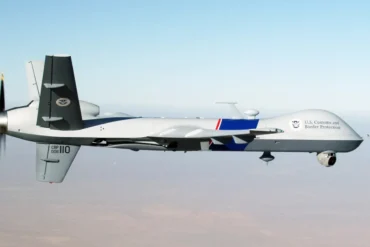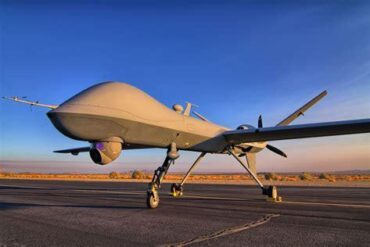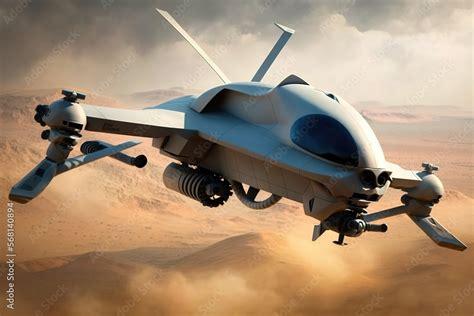
An Unmanned Combat Aerial Vehicle (UCAV), commonly known as a combat drone, is one of the most transformative weapons of modern warfare. Designed for roles such as intelligence gathering, surveillance, target acquisition, reconnaissance, and most importantly, armed engagement, UCAVs offer a potent mix of autonomy and lethality. What sets them apart from traditional drones is not just their armament—missiles, bombs, and anti-tank guided munitions—but their ability to return to base and operate without a pilot onboard, dramatically reducing both weight and cost.
The concept of a UCAV emerged from a fusion of necessity and innovation. Eliminating onboard life-support systems for pilots allowed engineers to design smaller, stealthier, and more agile platforms. UCAVs are typically equipped with hardpoints to carry weapons and sensors, and they vary in operational autonomy—from remote-controlled systems to semi-autonomous AI-guided strike platforms.
Historical Development of UCAVs: From Fiction to Battlefield Reality
The roots of UCAVs trace back to the 1940s, when Lee de Forest and U. A. Sanabria theorized early drone warfare concepts. However, it was not until the 1970s that functional prototypes began emerging. The Prairie and Calera drones, funded by DARPA and designed by physicist John Stuart Foster Jr., boasted an endurance of two hours and payload capacities of just 28 pounds—primitive by today’s standards, but groundbreaking at the time.
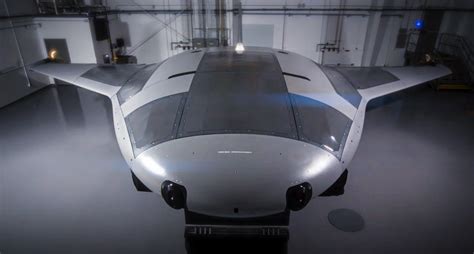
During the 1973 Yom Kippur War, Israel demonstrated the tactical viability of drones by deploying Ryan Firebee UAVs as decoys to exhaust Egypt’s surface-to-air missiles. By the 1980s, Israeli UAVs like the Scout and Pioneer offered real-time electronic warfare and reconnaissance capabilities. Notably, in Operation Mole Cricket 19 (1982), these drones played a pivotal role in the suppression of Syrian air defenses.
The Iran–Iraq War witnessed an early instance of an armed UAV, where Iran deployed a drone equipped with RPG-7 launchers. By the 1991 Gulf War, UAVs had become integral to modern warfare, providing target intelligence and battle-space awareness. The first confirmed UCAV kill occurred on October 7, 2001, near Kandahar, Afghanistan, marking a new era in military aviation.
Rise of Global UCAV Programs and Deployment
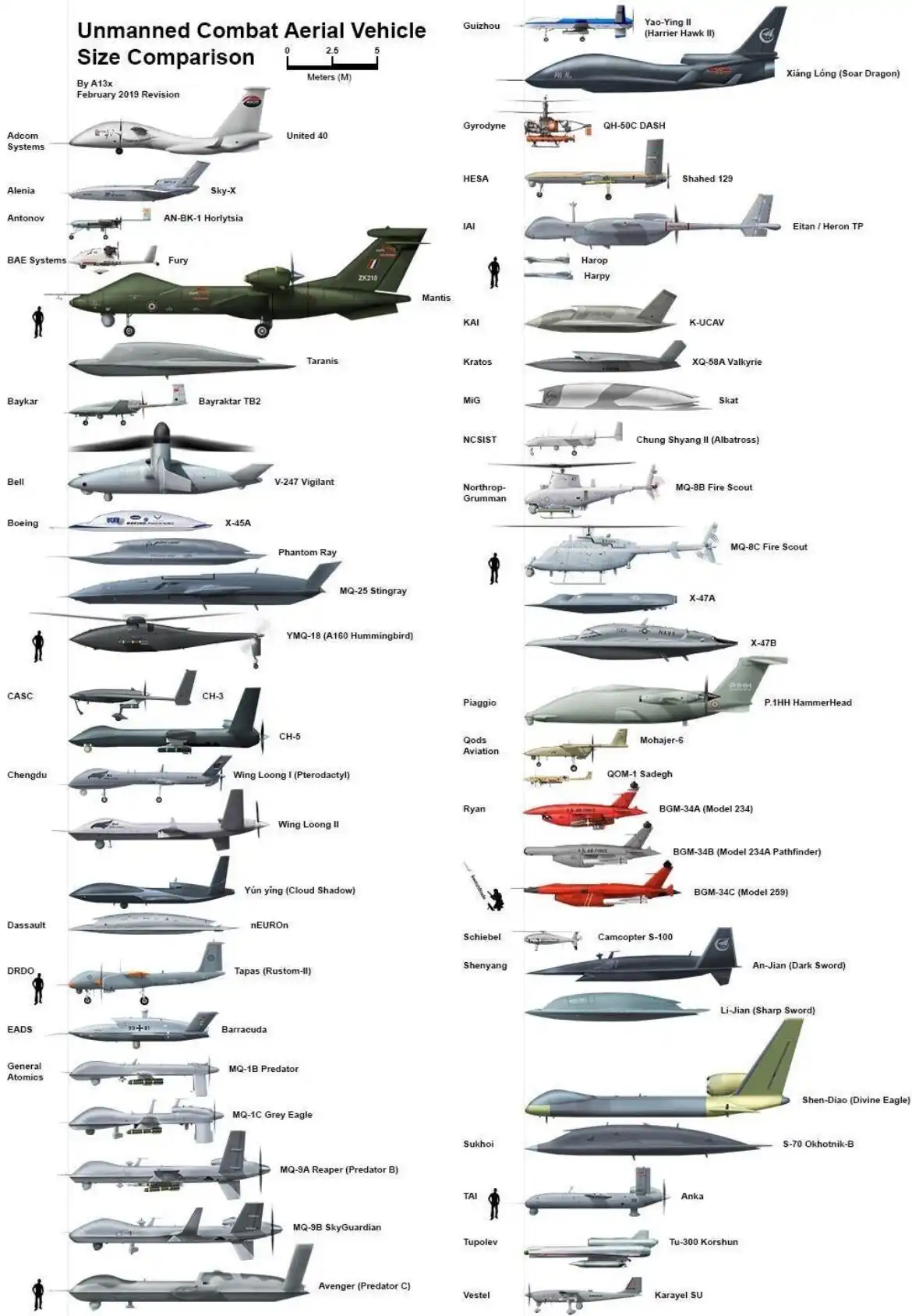
UCAVs are no longer the domain of a few technologically advanced nations. The United States, China, Turkey, and Israel lead global production, while numerous other countries pursue indigenous or imported systems.
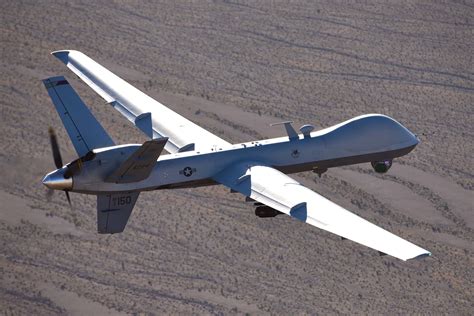
United States
- MQ-1 Predator (1995): The first widely used UCAV.
- MQ-9 Reaper (2007): Heavily armed, extended range.
- MQ-1C Gray Eagle (2009): Designed for the US Army with increased endurance.
China
- CAIG Wing Loong I–III: Export-friendly models operational since 2011.
- Hongdu GJ-11, Tengden TB-001, and BZK-005 showcase China’s pursuit of high-end stealth and ISR capabilities.
Turkey
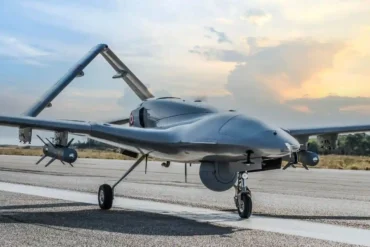
- Bayraktar TB2: Famous for its use in Libya, Syria, and the 2020 Nagorno-Karabakh War.
- Akıncı and Kızılelma (2024): Turkey’s answer to high-altitude, long-endurance stealth UCAVs.
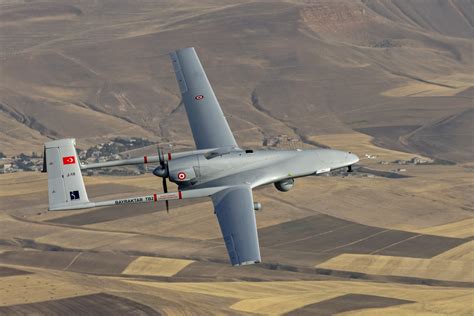
Other prominent platforms include Pakistan’s Shahpar-II, India’s Archer-NG, Russia’s S-70 Okhotnik-B, and Iran’s Mohajer-9. Commercial drones, such as modified DJI Mavic units, have been weaponized by non-state actors, evidencing how access to UCAV-like capabilities has broadened alarmingly.
Technological Features and Combat Performance
UCAVs vary in design philosophy but share core features:
- Endurance: Many systems exceed 24 hours in loiter time.
- Payload: Ranging from 30 kg to over 2,000 kg depending on the model.
- Stealth: Modern platforms incorporate radar-absorbing materials and low observable shapes.
- Autonomy: AI-driven target recognition and navigation systems are on the rise.
- Command and Control: Satellite or line-of-sight links provide secure communications and real-time decision-making.
Operational use has expanded rapidly:
- Turkey’s UCAVs in Idlib Province decimated Syrian armor.
- In Ukraine, small drones executed strategic strikes against Russian logistics.
- Nagorno-Karabakh conflict became a textbook case of drone-dominant asymmetric warfare.
Future of UCAVs: Autonomous Warfare and Strategic Shifts
Several next-generation platforms are in advanced testing phases, pointing toward a future of autonomous drone swarms and human-machine teaming.
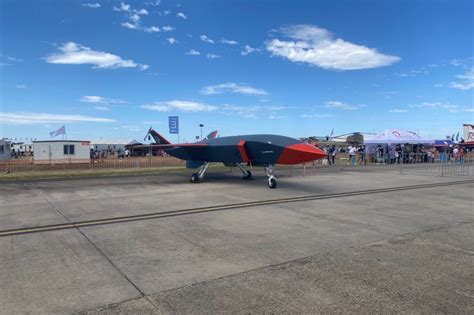
Notable projects include:
- Boeing MQ-28 Ghost Bat (Australia)
- Dassault nEUROn (EU)
- BAE Systems Taranis (UK)
- Kratos XQ-58 Valkyrie and Northrop Grumman X-47B (US)
- AVIC Dark Sword and MD-22 (China)
These initiatives aim for greater autonomy, stealth capability, and interoperability with manned aircraft, especially for roles like Suppression of Enemy Air Defenses (SEAD) and deep strike operations.
Non-State Actors and Asymmetric Threats
The democratization of drone warfare has enabled non-state actors to acquire or modify UCAVs. During the Battle of Mosul, ISIS used commercial quadcopters to drop grenades. In Syria (2018), coordinated drone swarms attacked Russian airbases. Mexican drug cartels have used bomb-equipped drones to threaten rivals and law enforcement.
Counter-Drone Measures: A Rapidly Growing Sector
The proliferation of UCAVs has triggered a parallel industry in counter-drone systems, which include:
- GPS jamming
- Directed-energy weapons (lasers)
- Anti-drone drone interceptors
- Electronic warfare suites
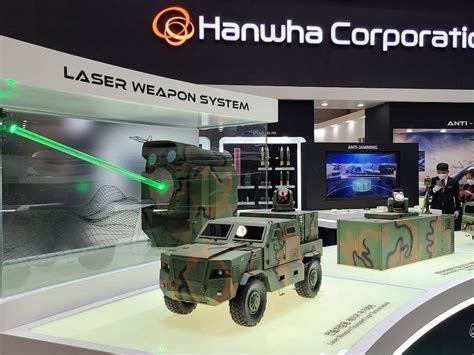
South Korea’s 560-billion-won anti-drone program, slated to be fully operational by 2027, includes advanced jamming units and kinetic interception systems.
Ethical, Legal, and Psychological Ramifications
The global expansion of UCAV use has sparked serious ethical debates, especially surrounding civilian casualties, autonomy in lethal decision-making, and psychological tolls on drone operators. Numerous high-profile incidents underscore the gravity:
- Gaza (2009): 48 civilians killed by Israeli drones.
- Uruzgan, Afghanistan (2010): US drone strike killed 10 civilians.
- Nigeria (2023): 85 civilians died in a mistaken army drone strike.
Studies estimate civilian-to-combatant kill ratios as high as 10:1 in some theaters. The US Senate introduced a bill in 2020 to curb the export of large drones to authoritarian regimes.
Furthermore, drone operators have reported PTSD-like symptoms due to the remote yet intimate nature of targeted killings. Public opinion reflects this tension: a 2013 US poll showed 75% domestic support for drone strikes, while a 2014 global survey revealed opposition in 39 of 44 countries.
Global Operators: Who Wields UCAVs Today?
From NATO states to regional powers and emerging nations, the user base for UCAVs is expanding:
- Albania: Bayraktar TB2
- Azerbaijan: TB2
- Brazil: Hermes 450/900
- China: Wing Loong I–III
- India: Heron TP, Archer-NG
- Iran: Mohajer, Ababil series
- Israel: Hermes, Harop
- Turkey: Full range from TB2 to Kızılelma
- US: MQ-1, MQ-9, X-47 variants
As technology continues to evolve, so too will the strategic calculus of UCAV employment. Whether through autonomous targeting, swarming capabilities, or enhanced AI integration, these aircraft are poised to remain at the forefront of military transformation for decades to come.