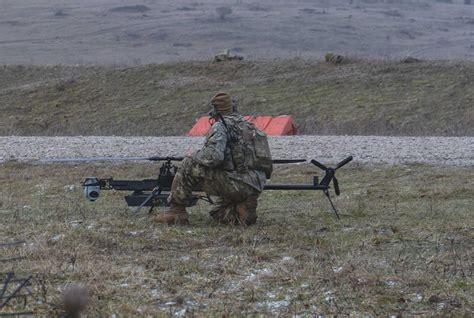
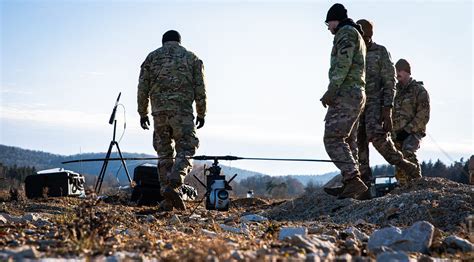
The deployment of the Anduril Ghost X drone by the U.S. Army marks a significant milestone in the evolution of modern warfare. As part of the Combined Resolve 25-01 training exercise held at the Joint Multinational Readiness Center (JMRC) in Hohenfels, Germany, this advanced Medium-Range Reconnaissance (MRR) drone is redefining battlefield intelligence and operational agility. Soldiers from the 3rd Brigade, 10th Mountain Division trained with the Ghost X on January 15, 2025, as the U.S. Army continues to emphasize unmanned aerial systems (UAS) as key enablers of its Transforming in Contact initiative.
Modern Reconnaissance Reimagined: The Tactical Power of the Ghost X
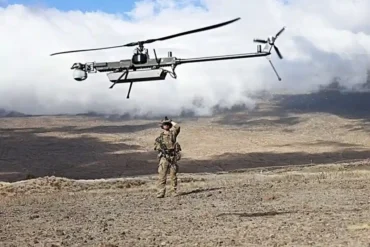
The Anduril Ghost X is not just a tool—it’s a tactical force multiplier. Engineered with a helicopter-style vertical takeoff and landing (VTOL) capability, the drone offers remarkable flexibility in constrained environments where traditional fixed-wing drones would be impractical. Operating at the company level, it fills a critical gap by providing real-time reconnaissance, intelligence, and target acquisition support in dynamic combat scenarios.
Its compact structure and advanced design empower infantry units to execute missions with greater situational awareness. The VTOL capability allows it to launch from confined or rugged terrain, making it ideal for urban operations, dense forest missions, or mountain warfare, where larger drones are limited by space and maneuverability.
Technological Features That Redefine Intelligence Gathering
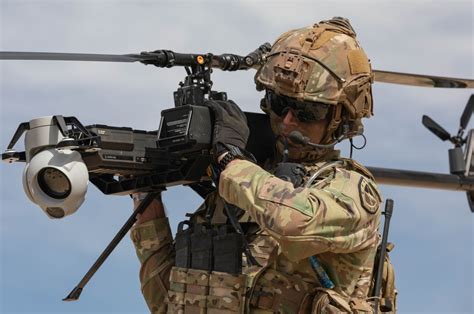
The Ghost X is equipped with an advanced suite of day and night vision cameras, enabling uninterrupted intelligence collection regardless of lighting conditions. With a flight endurance of up to 8 hours and an operational range of 100 kilometers, this SUAS provides persistent coverage of mission-critical areas.
Other standout features include:
- High-resolution electro-optical/infrared sensors
- Precision GPS and geospatial intelligence tools
- Real-time video and telemetry feeds
- Modular payload bays allowing mission-specific customization
These features are not just impressive on paper—they translate directly into enhanced battlefield effectiveness, allowing commanders to detect, track, and assess threats in near real-time.
Strategic Training in Germany: Building Combat Readiness with Allies
From January 17 to February 16, 2025, approximately 4,000 troops from NATO and European partner countries will engage in Combined Resolve 25-01. This massive exercise not only sharpens the tactical skills of participating units but also strengthens multinational interoperability, preparing allied forces to confront evolving global threats collaboratively.
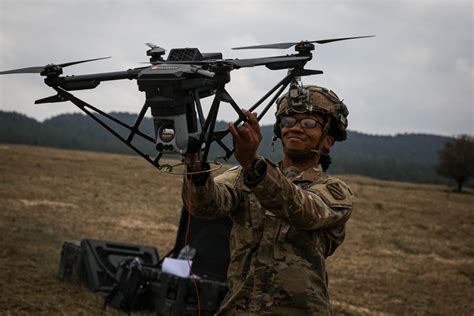
The integration of the Ghost X into this training underscores the U.S. Army’s commitment to future-proofing its forces. By simulating complex, multi-domain environments, soldiers gain valuable experience in deploying unmanned systems in realistic conflict scenarios.
Lessons from Ukraine: The Battlefield Validation of Drone Warfare
The war in Ukraine has served as a proving ground for unmanned aerial warfare, highlighting how small, affordable drones can deliver high-impact outcomes. Ukrainian forces have used drones for ISR missions, target designation, artillery coordination, and even tactical resupply under fire.
The Ghost X aligns with these battlefield insights by offering a cost-effective, low-risk, and high-yield solution to military intelligence challenges. Just like Ukraine’s tactical drones, the Ghost X can deliver continuous surveillance with minimal logistical overhead. These drones amplify the power of smaller units, enabling them to operate independently and more effectively.
Integration at the Company Level: A New Doctrine of Flexibility
Deploying the Ghost X directly at the company level signals a paradigm shift in how the Army structures its intelligence assets. Instead of relying solely on theater-level or corps-level reconnaissance platforms, frontline units now gain organic ISR capabilities. This allows them to make autonomous decisions, reducing reliance on higher command and improving response time.
The Ghost X’s ability to integrate seamlessly into infantry operations makes it a game-changer. Unit commanders can task the drone for route reconnaissance, enemy tracking, terrain mapping, or force protection, all within the span of a single operation. The modular payload design also means it can evolve with mission needs, whether it’s outfitted for electronic warfare, communications relay, or laser designation.
Real-Time Intelligence: Accelerating the Kill Chain
At the core of the Ghost X’s value is its ability to reduce the sensor-to-shooter timeline. By providing real-time intelligence directly to ground units, it shortens the time between threat detection and engagement. In high-intensity warfare, where seconds matter, this speed can be the difference between mission success and failure.
Commanders can rapidly adjust their tactics based on live drone feeds, respond to enemy movements, and execute precision strikes with far greater confidence. This data-driven combat agility reflects the broader transformation the Army is pursuing under the Transforming in Contact doctrine.
Enhancing Safety While Expanding Reach
By replacing traditional reconnaissance missions—which often expose scouts to direct enemy fire—the Ghost X increases troop survivability while extending their reach. Soldiers can gather detailed intelligence from afar, minimizing risk to life while maximizing strategic positioning.
This approach is particularly effective in asymmetric warfare scenarios, where enemy combatants use irregular tactics and concealment to offset conventional military advantages. With aerial reconnaissance from drones like the Ghost X, the fog of war is lifted, and surprise becomes a less viable tactic for adversaries.
NATO Collaboration: A Unified Technological Front
Combined Resolve 25-01 is more than just a U.S. Army endeavor—it represents a collective effort among NATO and European forces to synchronize technological integration across allied militaries. As the Ghost X flies alongside troops from various nations, it also lays the groundwork for standardized drone operations, interoperable tactics, and shared ISR frameworks.
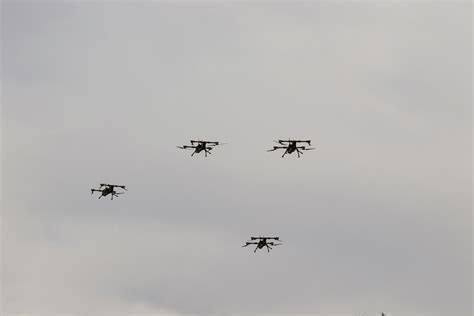
Such collaboration ensures that future multinational operations can benefit from common drone platforms, shared data pipelines, and coordinated surveillance strategies, all vital in confronting near-peer adversaries and hybrid threats.
The Future of Warfare: Agility, Intelligence, and Autonomy
The Ghost X is a harbinger of what lies ahead for military engagements. As autonomous systems, AI-driven analytics, and robotic warfare take center stage, drones will increasingly assume roles once reserved for manned units. Their ability to persist in contested spaces, self-navigate, and adapt to real-time threats makes them ideal for the fluid battlefields of tomorrow.
The U.S. Army’s deployment of the Ghost X is both a technological endorsement and a doctrinal commitment. It demonstrates that future wars will be fought not just with soldiers and tanks, but with smart machines that extend the eyes and ears of every combat unit.
Conclusion: Redefining Dominance with Unmanned Systems
As warfare evolves, so too must the tools and doctrines of military power. The Anduril Ghost X is more than just a reconnaissance drone—it is a symbol of the next generation of battlefield dominance, where information, speed, and precision outweigh brute force. Its deployment during Combined Resolve 25-01 illustrates the U.S. Army’s readiness to lead in this new era, transforming not only how battles are fought but how victory is defined.
The integration of unmanned systems like the Ghost X ensures that combat decisions are faster, troops are safer, and missions are more successful. As allied forces train together in Germany, they do so with a clear message: the future of warfare is here, and it flies with rotors, sensors, and the data that drives decisive action.