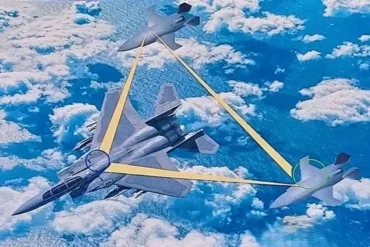
In today’s evolving battlefield, fifth-generation stealth fighters like the F-35 and Rafale are no longer defined solely by their speed, stealth, or payload capacity. Instead, their survival increasingly hinges on digital deception, electronic warfare (EW), and high-tech decoys. From India’s Operation Sindoor to Israel’s suspected air incursions over Iran, the rise of ghost jets and phantom kills marks a turning point in aerial warfare.
The Rise of Digital Deception in Aerial Combat
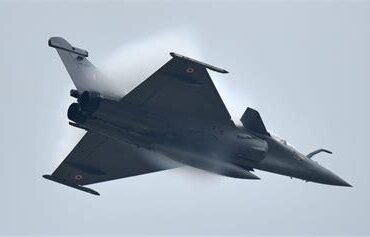
In May 2025, the Indian Air Force launched Operation Sindoor, a retaliatory strike targeting nine terror camps across Pakistan and Pakistan-occupied Kashmir. While Indian Rafale, Mirage 2000, and Su-30MKI fighters deployed precision-guided munitions like SCALP cruise missiles and Spice-2000 bombs, the operation’s game-changer was a 30-kg fibre-optic towed decoy known as the X-Guard.
India’s X-Guard: The New Vanguard of Aerial Defense
Developed by Israel’s Rafael Advanced Defense Systems, the X-Guard operates by trailing behind a fighter jet, tethered via a fibre-optic cable. It effectively mimics the radar signature of the host aircraft while emitting 360-degree jamming signals. Equipped with AI-driven Digital Radio Frequency Memory (DRFM) technology, the system dynamically alters its radar profile in real-time to deceive advanced radar-guided missiles, such as Pakistan’s Chinese-origin PL-15E.
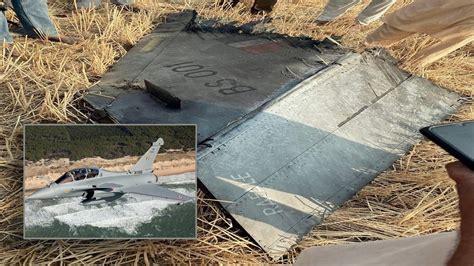
Pakistan’s claim of shooting down five Indian aircraft, including three Rafales, was later discredited. Analysts now believe Pakistan’s supposed victories were over decoys, not actual jets. Indian sources confirmed zero aircraft losses during the operation. According to former U.S. fighter pilot Ryan Bodenheimer, India’s performance displayed “the best spoofing and deception ever seen in combat.” The operational debut of X-Guard thus redefined survivability metrics in modern combat zones.
Iran’s Phantom Kill Claims: A Case of Electronic Mirage?
In June 2025, Iran claimed to have shot down four Israeli F-35I Adir stealth jets over Tehran. These claims, widely publicized through state-run outlets like Press TV and Tehran Times, lacked any physical proof—no wreckage, no captured pilots, no radar tracks. Israel categorically dismissed the allegations.

ALE-70: The F-35’s Digital Bodyguard
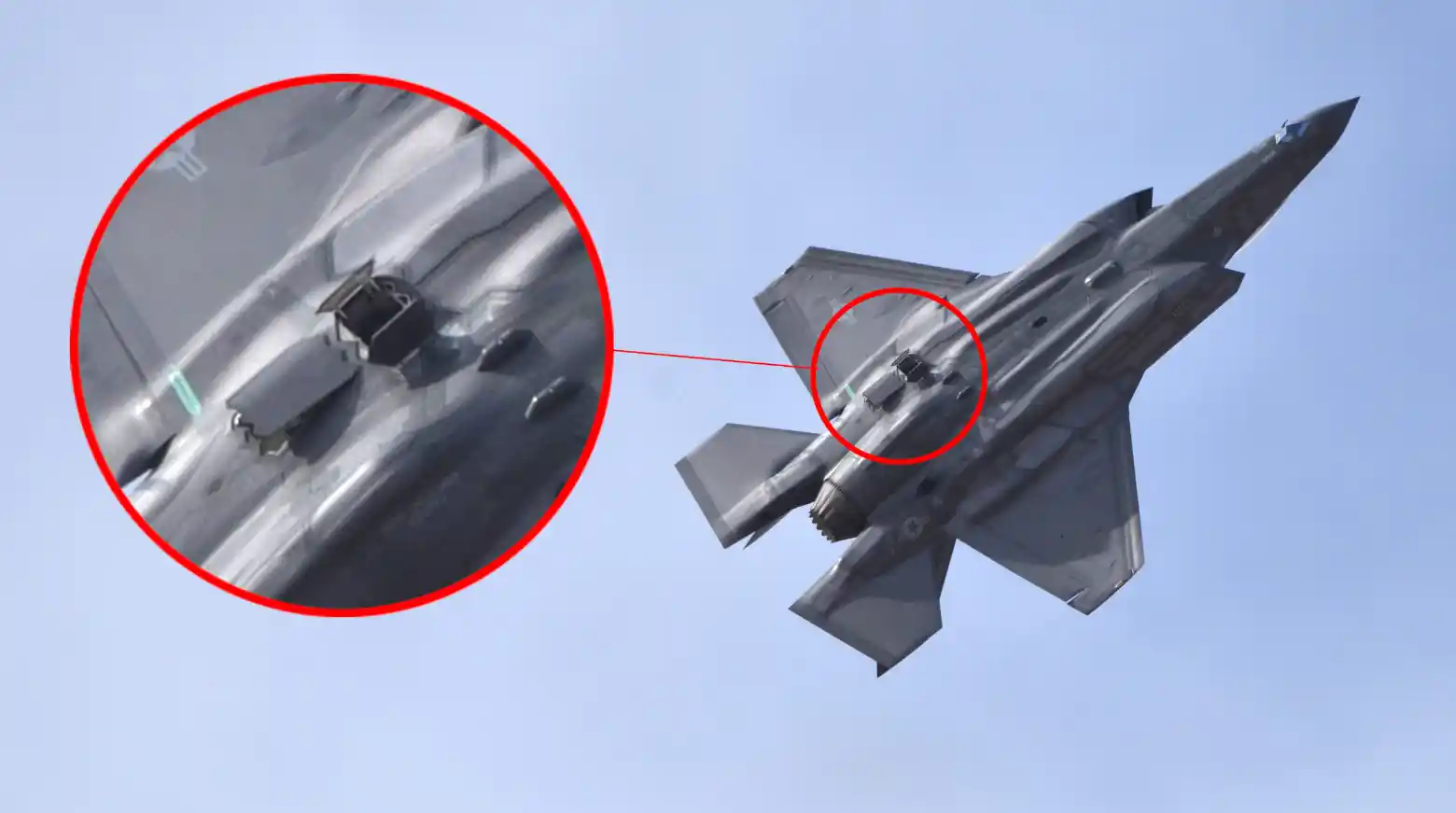
Speculation centers on the ALE-70 fibre-optic towed decoy, developed by BAE Systems, as the likely tool behind Israel’s invisible defense. Housed beneath the F-35’s fuselage, the ALE-70 deploys within seconds, trailing behind the aircraft to act as a sophisticated false target. It replicates the radar cross-section of the F-35, emits advanced jamming signals, and simulates evasive maneuvers. Notably, the system is reusable and capable of operating at supersonic speeds.
Each F-35 is believed to carry up to four ALE-70 decoys. Although the exact capabilities of Israel’s customized F-35I Adir remain classified, most analysts agree that some form of towed decoy or electronic countermeasure (ECM) played a role in neutralizing Iranian air defenses. Tehran’s phantom kills may, therefore, be explained by advanced decoy technology diverting missiles away from real targets.
Ghost Jets: Changing Kill Count Metrics in Modern Warfare
The incidents in India and Iran highlight a significant evolution in aerial warfare: kills are no longer a definitive metric of air superiority. Decoys like the X-Guard and ALE-70 are altering how air forces measure success. By creating radar illusions and spoofing missile locks, modern aircraft can survive and accomplish their missions without direct engagement.
This shift has strategic implications:
- Deception dominates: Air battles are increasingly decided by digital manipulation rather than sheer firepower.
- Survivability through misdirection: Aircraft can penetrate contested airspace and return safely, leaving adversaries to claim false victories.
- Narrative control: By exploiting electronic deception, militaries can control public perception, blurring the lines between operational success and propaganda.
In India’s Operation Sindoor, the use of X-Guard decoys allowed Indian fighters to remain safely within national airspace while striking targets deep in hostile territory. Similarly, Israel’s suspected use of ALE-70 or proprietary decoy systems likely rendered Iran’s air defenses ineffective, despite Tehran’s claims of downed stealth fighters.
The Future: From Tactical Decoys to Strategic Doctrine
India is now fast-tracking the acquisition of additional X-Guard systems to equip its expanding Rafale fleet. A newly signed $7 billion deal for 26 naval Rafales underscores this shift towards integrating electronic deception into its broader defense doctrine. Indigenous production lines in Hyderabad are being set up to locally manufacture Rafale components, reducing dependency on foreign suppliers.
For Israel, operational silence surrounding its air tactics over Iran suggests a deliberate strategy to obscure its electronic warfare capabilities. Whether relying on ALE-70 or classified ECM technologies, Israeli doctrine appears committed to integrating deception deeply into mission planning and execution.
In both nations, combat data from these recent operations are feeding back into tactical manuals, influencing future force composition and procurement priorities. Electronic deception is no longer a niche capability; it is becoming a foundational pillar of air strategy.
Conclusion: The Emergence of Ghost Air Forces
The advent of ghost jets and phantom kills is not merely a tactical innovation—it is a doctrinal revolution. In an age where shooting down an aircraft may only mean hitting a $50,000 decoy instead of a $100 million fighter, the economic and strategic calculus of air combat is being rewritten.
Control of the skies no longer requires physical dominance; it demands mastery over the electromagnetic spectrum. As the lines between real and fake targets blur, air forces worldwide must adapt to an era where survival depends on deception as much as on technology.
The future of air combat belongs to those who can remain unseen—or worse for the enemy, be seen where they are not. Welcome to the era of ghost jets and phantom kills, where the ultimate victory is not in the kill, but in the misdirection.