The skies above South Asia have again become a theater of high-stakes confrontation, as India and Pakistan exchange fire not just with artillery and missiles, but with foreign-built fighter aircraft whose manufacturers span continents. The fresh round of aerial clashes marks another perilous moment between these nuclear-armed rivals, where nationalism, defense procurement, and regional geopolitics collide in the most volatile of ways.
The latest escalation erupted after India launched airstrikes into Pakistani territory, targeting what it claimed were militant camps in Pakistan-administered Kashmir. Pakistan retaliated within hours, claiming to have shot down five Indian aircraft—an assertion that, while unconfirmed by independent sources, underscores the rapidly intensifying conflict.
Pakistan Strikes Back With Chinese Firepower
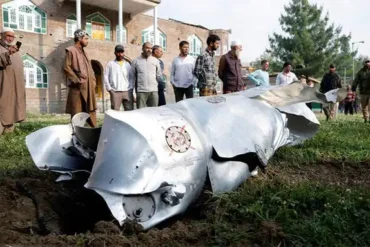
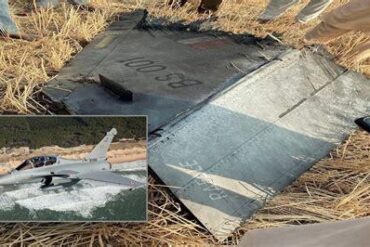
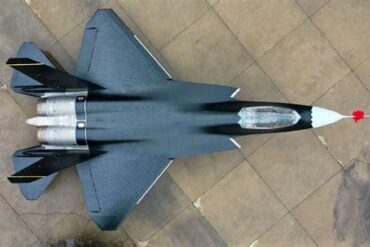
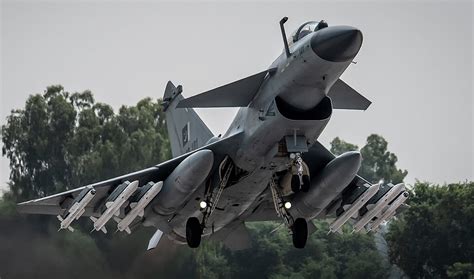
Pakistan’s Foreign Minister, Ishaq Dar, announced that the retaliatory strikes involved the Chinese-made J-10C multirole fighter jets, which engaged Indian aircraft “in self-defense.” According to Pakistan’s official statements, its air force downed three French-made Rafale fighters, one MiG-29, and one Su-30, totaling five Indian fighter aircraft.
The Chengdu J-10C, an advanced iteration of the J-10 platform, is a single-engine, fourth-generation multirole combat aircraft equipped with modern radar systems, electronic warfare suites, and precision-guided munitions. Pakistan procured these jets in 2022, as part of its broader military modernization strategy, intended to enhance parity with India’s air force.
India’s Multinational Fleet Under Fire
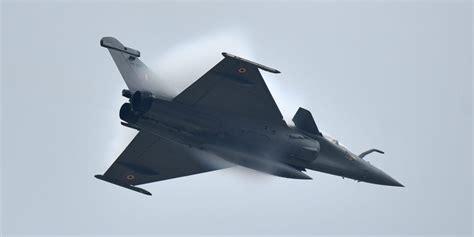
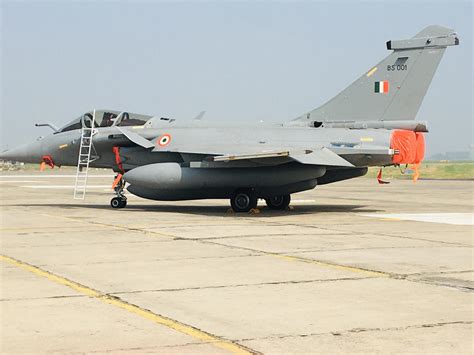
India’s aerial assets reflect a blend of strategic defense partnerships over decades. The Dassault Rafale, India’s crown jewel in its recent air power enhancement, is a twin-engine, multi-role jet designed by France’s Dassault Aviation. India purchased 36 of these aircraft, with the first batch arriving in 2020 under a $9 billion deal. These jets are equipped with long-range Meteor air-to-air missiles, SCALP cruise missiles, and AESA radar, making them among the most advanced fighters in Asia.
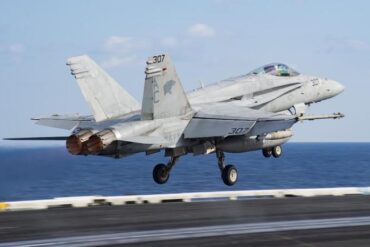
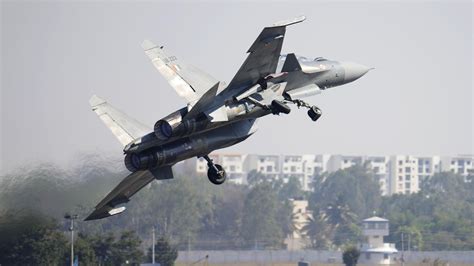
Accompanying the Rafales in the current conflict are Soviet-era MiG-29s and the much larger Su-30MKIs, both legacy platforms from India’s long-standing defense ties with Russia. The MiG-29, introduced in the 1980s, was originally built to counter American F-15s and F-16s, while the Su-30MKI, India’s air superiority workhorse, offers multi-role capabilities and deep strike range, capable of carrying BrahMos cruise missiles.
A Sky Full of Foreign Designs
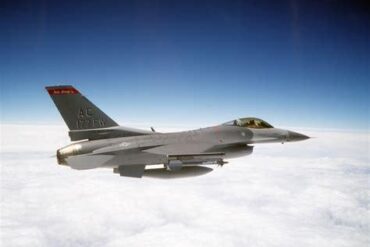
The paradox of the ongoing conflict is unmistakable: India and Pakistan are waging modern air battles using aircraft designed far outside their borders, illustrating both their strategic alignments and defense dependencies. Pakistan’s air force comprises not only Chinese J-10Cs but also JF-17 Thunder jets (jointly developed with China), American F-16s, and French Mirages.
India, for its part, operates UK-built Jaguars, Russian-origin MiGs and Sukhois, French Rafales, and Israeli Heron drones, alongside its indigenously developed HAL Tejas, which has yet to see significant combat.
This fusion of diverse air platforms introduces complexity to every engagement. Maintenance protocols, communication interoperability, and logistical support for these multinational fleets demand sophisticated command and control systems. Yet, it also introduces unpredictability in terms of pilot training, engagement doctrines, and air-to-air tactics.
Drones: The Silent Participants in the Sky War
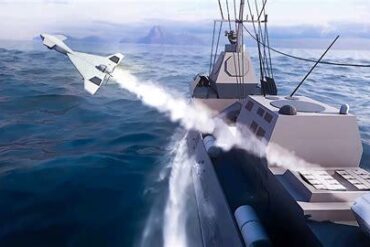
Beyond manned fighter jets, the air war has a rising number of unmanned players. Pakistan claimed it had destroyed over a dozen Indian drones, specifically Harop loitering munitions—suicide drones manufactured by Israel Aerospace Industries. These drones are designed to loiter over a combat zone and strike pre-programmed or operator-designated targets with precision explosives.
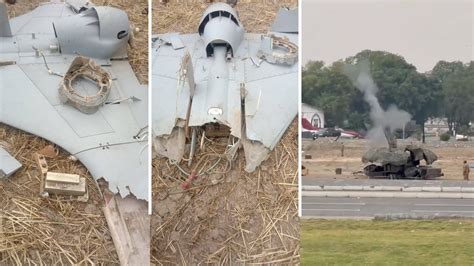
Lt. Gen. Ahmed Sharif Chaudhry, spokesperson for the Pakistani military, presented debris from several of these drones during a televised briefing, affirming that “the armed forces are neutralizing threats in real-time.” He emphasized that Pakistan’s air defenses are on full alert amid the growing threat of high-tech drone incursions.
The use of drones highlights a key evolution in warfare, where traditional air dominance is now increasingly contested by low-cost, expendable, and stealthy unmanned systems. These platforms complicate defense strategies, as they blur the line between intelligence collection, direct attack, and psychological warfare.
Operation Sindoor: India’s Calculated Aggression
India’s cross-border strikes were reportedly part of Operation Sindoor, a military operation targeting “terrorist infrastructure” in Pakistani-administered Kashmir. New Delhi framed the offensive as a calibrated and non-escalatory response to a recent terror attack in Indian-administered Kashmir, which claimed the lives of 26 civilians.
The Indian defense ministry initially stated that the strikes avoided Pakistani military installations. However, subsequent releases clarified that air defense systems and radar facilities were targeted, escalating the potential for direct military confrontation.
Pakistan has responded with mortars, artillery shelling, drone raids, and missile launches, turning the entire Line of Control (LoC) into an active war zone. Both sides have reported civilian casualties, and towns near the border have begun evacuations.
The Propaganda War: Disputed Claims and Disinformation
In every India-Pakistan confrontation, information warfare plays a parallel role, often muddying the waters of public perception. While Pakistan’s claims of downing five Indian aircraft remain unverified, US officials reportedly confirmed that Chinese J-10s were used to shoot down at least two Indian jets.
India’s silence on the matter mirrors past behavior. In the 2019 skirmish, India claimed its MiG-21 Bison downed a Pakistani F-16, but subsequent US inspections cast doubt on the assertion. This lack of clarity is often by design, allowing each country to control the narrative for domestic audiences and international stakeholders.
The consequence is a fog of war, where battlefield truth becomes as contested as the territory itself. For outside observers, this makes accurate assessment of air engagements nearly impossible in real-time.
Strategic Implications: Geopolitics and Defense Markets
Beyond national security, the current fighting holds wider geopolitical significance, especially for the international defense industry. The performance of foreign-made jets in combat—whether confirmed or perceived—could affect future arms deals.
Pakistan’s use of J-10Cs in successful engagements may boost China’s standing as a reliable arms exporter, especially in the Global South. On the other hand, any loss of India’s Rafales could invite scrutiny of Dassault’s combat record, despite the platform’s solid reputation.
Moreover, the stakes for the U.S., France, Russia, and Israel—each a key supplier in the subcontinent—go beyond mere economics. Arms sales in this region are extensions of influence, and battlefield outcomes often feed back into political alliances, diplomatic pressure, and technology transfers.
Conclusion: A Skirmish With Global Dimensions
While the current India-Pakistan conflict appears localized, its implications are global. Two nuclear powers are engaged in high-risk brinkmanship using aircraft and drones built by foreign manufacturers, underpinned by decades of strategic alignments. These engagements are not only about territorial integrity or immediate military victory—they’re also tests of international weapon systems, political alliances, and the evolving nature of 21st-century warfare.
As fighter jets and loitering munitions crisscross the skies over the Himalayas, the world watches, not just to count the kills, but to understand what the future of warfare may look like in a landscape where national will is exercised through foreign steel.