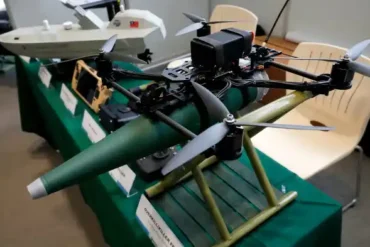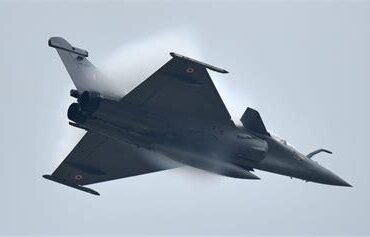
Tensions between India and Pakistan have flared once again, and this time the battleground extended into the skies above urban centers. In what has been described as the largest Indian military strike against Pakistan since 1971, a wave of Harop loitering munition drones—manufactured by Israel Aerospace Industries (IAI)—reportedly targeted key Pakistani air defense systems, leaving destruction in their wake. The drone assaults hit cities including Lahore, Karachi, and Sialkot, causing widespread alarm and raising serious geopolitical questions.
A Coordinated Aerial Strike Across Nine Cities
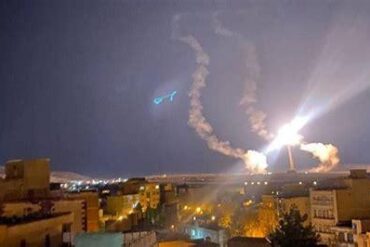
On the night of May 7-8, 2025, the Pakistan Army reported a coordinated barrage of drone explosions in multiple urban centers. According to a spokesperson, these incidents were the result of Harop loitering munition drones deployed amid soaring tensions. Pakistan claimed the attack was a deliberate and provocative act by India, describing it as a “serious escalation.” Images of crashed drone wreckage were presented at a press conference as alleged evidence.
The Indian Ministry of Defence confirmed it had targeted multiple Pakistani air defense installations, including a confirmed hit on an air defense system in Lahore, using loitering munitions. This came as a retaliatory response to Pakistan’s own attempted drone and missile attacks on key military facilities across Northern and Western India, including Srinagar, Jammu, Pathankot, and Amritsar.
India’s integrated Counter UAS Grid and Air Defence systems successfully neutralized the Pakistani drones. Debris collected from Indian territories provided proof of Pakistan’s offensive intentions, escalating what appears to be an evolving, multi-domain conflict in South Asia.
Harop: The Loitering Munition Redefining Air Superiority
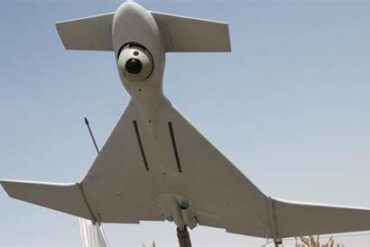
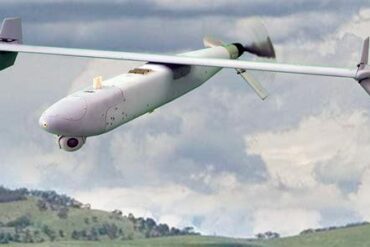
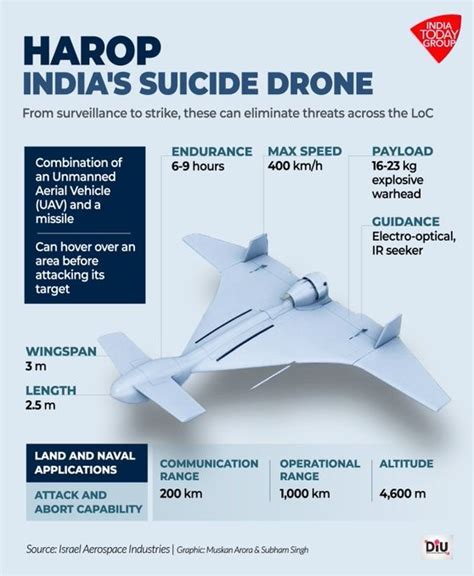
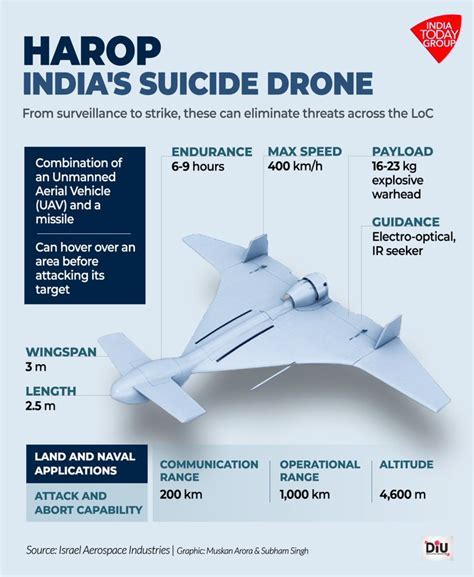
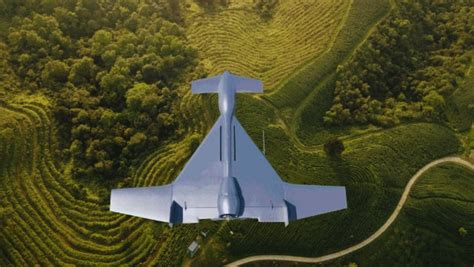
At the center of this air-based confrontation is the Harop drone, a unique hybrid between a UAV (Unmanned Aerial Vehicle) and a guided missile. Developed by Israel’s MBT Missiles Division, Harop is designed to hover over hostile zones, search for high-value targets, and dive in kamikaze-style for precision strikes. Unlike conventional drones, Harop is both a seeker and a destroyer, giving it unmatched operational flexibility.
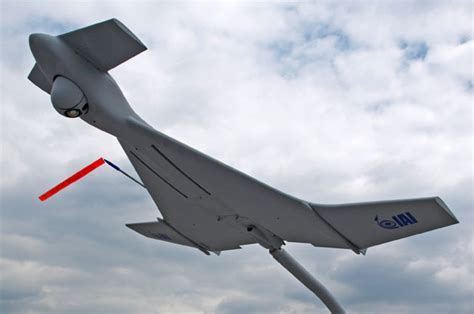
The drone is built for the express purpose of destroying strategic military assets such as:
- Air defense radars
- Surveillance posts
- Command centers
- Tanks and armored units
- Supply depots
Its electro-optical sensors provide real-time target identification and tracking. More impressively, the Harop can hover for up to nine hours, making it ideal for extended surveillance and opportunistic attacks. Once a target is identified, the drone rapidly executes a dive-bombing strike, detonating on impact.
Autonomy with Human Supervision
One of the defining features of the Harop drone is its ability to operate autonomously while still allowing for human-in-the-loop supervision. Operators can abort a strike mid-flight, giving mission commanders greater ethical and strategic flexibility.
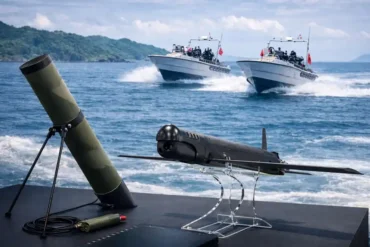
Launch capabilities are just as diverse. The drone can be fired from ground-based canisters mounted on trucks or even from naval platforms, making it a flexible tool for both land and sea-based missions. With a range of up to 200 kilometers, Harop can be launched from well outside enemy airspace, reducing risks to human operators while extending operational reach.
Proven Combat Performance and Global Use Cases
This is not Harop’s first appearance in active conflict zones. The drone has been used in several high-profile operations, particularly by Azerbaijan during the 2016 and 2020 Nagorno-Karabakh conflicts, where it played a significant role in targeting Armenian air defense systems. It was also deployed in Syria, where a Harop drone successfully destroyed a SA-22 Greyhound air defense unit in 2018, and was reportedly used in a 2024 strike as well.
India has integrated the Harop system into its broader counter-air and SEAD (Suppression of Enemy Air Defense) doctrine. With Israel being one of India’s key defense suppliers, New Delhi has procured $2.9 billion worth of Israeli military hardware over the past decade. This includes advanced surveillance systems, combat drones, missile defense units, and importantly, the Harop loitering munitions.
Operation Sindoor: Turning Point in Indo-Pak Air Tactics
Codenamed Operation Sindoor, India’s latest retaliation marks a clear shift in its military doctrine towards precision-targeted responses. The operation’s scale and effectiveness are being compared to the 1971 war, underscoring its significance in recent military history. By targeting air defense radars across nine cities, India intended to paralyze Pakistan’s ability to detect and respond to future aerial threats.
The psychological and strategic implications are immense. Firstly, it signals India’s readiness to respond symmetrically and within the same domain—air for air, drone for drone. Secondly, the destruction of Pakistan’s HQ-9 air defense missile systems represents a critical blow, rendering multiple zones vulnerable to subsequent air or missile operations.
Resistance to Jamming and Counter-EW Capability
Modern warfare increasingly depends on electronic warfare (EW), including jamming, spoofing, and denial-of-service tactics. Harop is specifically built to counter such threats. Its resistance to GNSS jamming ensures robust communication with ground control even in heavily contested electronic environments. This makes it ideal for penetrating highly defended airspaces.
Such capability proves vital in conflicts like this, where both sides are deploying a mix of surveillance, combat, and loitering drones—a convergence of technologies where control and adaptability are paramount. Harop’s resilience makes it a force multiplier in any air dominance campaign.
Aerial Deterrence and the Future of Conflict in South Asia
The use of Harop drones in Pakistan is not just a tactical maneuver—it is a strategic declaration. By employing AI-enhanced loitering drones, India is not merely retaliating but redefining how future air conflicts will be conducted. The lines between surveillance, attack, and deterrence have blurred, giving rise to an era where autonomous, pre-programmed systems dictate the rhythm of battle.
The Pakistani military, while condemning the attacks, now faces an uphill task of rebuilding its radar and air defense infrastructure, which may take months—if not years. This window of vulnerability could be exploited, either for diplomatic leverage or military advantage. Meanwhile, both domestic and international observers await how Islamabad recalibrates its military and geopolitical strategy.
Conclusion: Harop’s Message in Smoke and Wreckage
In its aftermath, the Harop drone attack has left more than just craters—it has left a lasting impact on how South Asia will perceive air warfare in the coming years. The technology, precision, and psychological impact of these AI-assisted loitering munitions show that future wars may be fought more by code than by commanders.
As geopolitical tensions continue to mount, especially in the subcontinent, the Harop drone has emerged not just as a weapon, but as a symbol of modern deterrence—hovering silently until it chooses to strike.