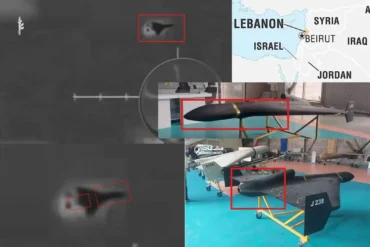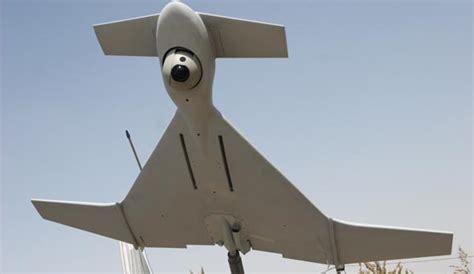
The latest conflict between India and Pakistan has intensified with the alleged deployment of Israeli-made Harop attack drones by India, sparking significant concerns across South Asia. According to Pakistan’s military, 25 Harop drones have been shot down during recent engagements, with debris scattered across multiple regions, including near Lahore. While Pakistan’s defense ministry shared videos and images of what they claim are remnants of these drones, India has so far refrained from officially acknowledging their use, although it confirmed strikes on Pakistani air defense systems.
Rising Tensions: Aerial Warfare and Claims of Escalation
The conflict took a critical turn when Pakistan reported that a Harop drone targeted a military installation near Lahore, causing injuries among its soldiers. Subsequent statements from Pakistani military officials detailed continued incursions by Indian drones, asserting that India’s aggression would not go unanswered. Notably, videos emerged showing what appear to be Pakistani air defense forces, potentially using Oerlikon GDF-002 30mm twin autocannons, actively engaging these drones.
On the Indian side, officials stated that Pakistani attacks on Indian military infrastructure—including IAF bases in Pathankot and Srinagar—prompted a robust counter-response. India’s defense ministry claimed that its forces successfully neutralized air defense radars and systems at multiple Pakistani sites, although specifics about the weapons deployed remain undisclosed. However, analysts widely suspect that the Harop drone was a key asset in these operations, given its well-documented capabilities in Suppression/Destruction of Enemy Air Defenses (SEAD/DEAD) missions.
The Harop Drone: Loitering Munition with Lethal Precision
The IAI Harop, developed by Israel Aerospace Industries, is a loitering munition designed to autonomously seek and destroy enemy air defense systems. Equipped with a 50-pound warhead, it can loiter for up to six hours or cover approximately 600 miles after launch. Its dual-mode targeting—using both a radiation seeker and an electro-optical system—allows it to hone in on active radar systems or switch to visual tracking if needed. These features make the Harop a formidable tool for taking out high-value static and mobile targets.

In previous conflicts, notably the 2021 clashes between Azerbaijan and Armenia, the Harop demonstrated devastating effectiveness. Footage from that conflict showed precision strikes that destroyed military vehicles and killed enemy combatants, underlining why India might leverage this system in its ongoing standoff with Pakistan.
Crossfire: Indian and Pakistani Air Defense Responses
While Pakistan claims success in downing Indian drones, India’s countermeasures have also been highlighted. Indian reports indicate that its integrated defense grid, combining Russian-made S-400 systems, indigenous Akash missiles, and advanced counter-UAV technology, effectively neutralized Pakistani drones and missiles. Hand-held jammers and localized air defense radars were activated in high-threat zones, maintaining a robust shield over critical military installations.
The Indian Ministry of Defense reported debris collection from Pakistani drone and missile strikes, supporting claims of thwarted incursions. According to sources, Pakistan targeted 15 military installations, focusing heavily on radar stations and airbases, but India’s layered defense successfully mitigated the impact of these attacks.
Political Fallout and Humanitarian Toll
Casualties continue to rise as both nations exchange volleys of drones and missiles. Recent reports cite at least 31 Pakistani civilian deaths attributed to India’s Operation Sindoor, while 16 Indian civilians have been reported dead from Pakistani shelling across the Line of Control in Kashmir. Pakistan claims to have killed 40 to 50 Indian soldiers, further inflaming tensions.
International reactions have been swift but measured. U.S. Secretary of State Marco Rubio urged immediate de-escalation in a conversation with India’s External Affairs Minister Subrahmanyam Jaishankar, emphasizing diplomatic solutions. The United States reiterated its condolences following the recent terrorist attack in Pahalgam, which India cited as the catalyst for its retaliatory strikes, a claim Pakistan denies.
Strategic Implications: The Drone Warfare Paradigm
The use of loitering munitions like the Harop signals a significant evolution in the region’s military strategy. These systems blur the lines between drones and cruise missiles, offering cost-effective, precise strike capabilities without risking pilot lives. For India, deploying Harops could symbolize a shift toward a more technologically sophisticated SEAD/DEAD doctrine, enhancing its capacity to neutralize enemy air defenses swiftly and assert air superiority.
Pakistan’s rapid mobilization of SHORAD assets and its focus on counter-UAV measures underscore its recognition of this new threat landscape. The duality of both nations’ approaches—employing both high-tech loitering munitions and conventional air defense systems—reflects a broader arms race that could redefine future South Asian conflicts.
Conclusion: An Uncertain Path Forward
The latest confrontation between India and Pakistan over the use of Israeli-made Harop drones exposes deepening fault lines in an already volatile region. While each side champions its narrative of military success and defensive prowess, the humanitarian cost continues to mount, and the risk of broader escalation looms large. As drone warfare becomes an entrenched feature of South Asia’s military dynamics, the path forward demands not only technological vigilance but also renewed diplomatic efforts to prevent further tragedy.