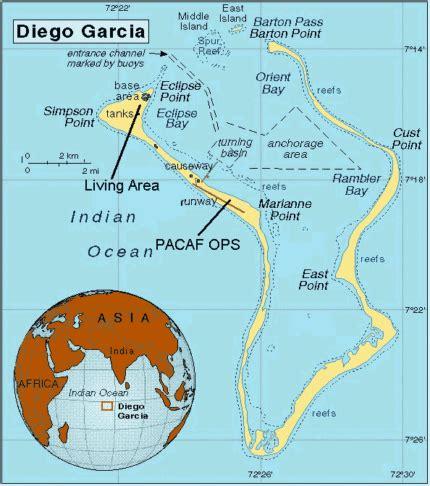
The sudden withdrawal of Britain’s Chagos Islands legislation has exposed how fragile even carefully negotiated sovereignty deals become when great-power strategy, military basing, and presidential megaphone diplomacy collide. What began as a legally tidy attempt by London to reconcile international law with strategic necessity has ended, at least for now, in an abrupt political retreat—driven not by courts or Parliament, but by a sharp public intervention from U.S. President Donald Trump.
Nearly a year after the United Kingdom promised to return sovereignty over the Chagos Archipelago to Mauritius, Britain has hit pause. The bill meant to formalize the transfer was quietly withdrawn ahead of a scheduled January 26 debate, marking a dramatic reversal that underscores how Diego Garcia, a remote coral atoll, remains one of the most geopolitically consequential pieces of land on Earth.
The episode reveals something deeper than legislative scheduling. It exposes the fault lines between international legal obligations, NATO alliance politics, and the raw calculus of Indo-Pacific power projection—with Trump’s blunt accusation of “great stupidity” acting as the spark that forced Britain’s hand.
The Deal That Looked Settled—Until It Wasn’t
In May 2025, London and Port Louis signed an agreement that appeared to close a long-running dispute. Britain would recognize Mauritian sovereignty over the Chagos Islands, complying with a 2019 International Court of Justice advisory opinion, while retaining operational control of Diego Garcia through a 99-year leaseback. On paper, it was a textbook compromise: legal legitimacy paired with strategic continuity.
The arrangement came with explicit safeguards. Base operations would remain unchanged. Security guarantees would prevent third-party interference. Annual payments to Mauritius would fund the deal without disrupting military activity. Most importantly, the agreement had received a green light from Washington after months of consultations, reassuring London that U.S. interests were protected.
That consensus shattered the moment Trump publicly weighed in.
Trump’s “Great Stupidity” Jibe and Its Shockwaves
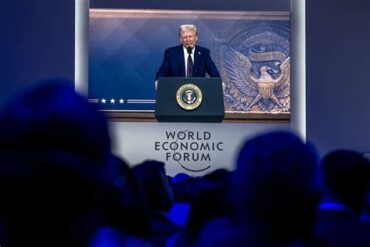
Earlier this week, Trump took to Truth Social to denounce Britain’s decision in unusually caustic terms. Handing over Diego Garcia, he argued, amounted to “an act of GREAT STUPIDITY,” jeopardizing one of America’s most vital overseas military facilities for “no reason whatsoever.” He framed the issue not as a legal technicality but as a national security blunder, tying it rhetorically to his broader arguments about territorial control and strategic acquisition.
The message landed like a depth charge in Whitehall. While the U.S. administration had previously endorsed the deal—Secretary of State Marco Rubio had explicitly welcomed it—the President’s words instantly altered the political weather. Suddenly, a settlement once portrayed as stabilizing looked, in domestic British politics, like a potential liability.
Within days, the UK government confirmed that the legislation would be postponed. The official explanation cited concerns that the bill might conflict with the 1966 UK-US treaty governing Diego Garcia—a treaty premised on direct British sovereignty, not leased access following a transfer.
Britain’s Defensive Pivot and Legal Anxiety
London’s response was swift but carefully calibrated. Government spokespeople pushed back against Trump’s characterization, insisting the deal actually secured the future of the joint US-UK base “for generations.” The lease, they argued, locked in access more robustly than the status quo, insulating operations from future legal challenges while keeping adversaries out.
Yet the withdrawal of the bill told a different story. Behind the scenes, legal advisers and opposition voices raised alarms that transferring sovereignty would fundamentally alter the legal foundation of U.S. basing rights. Under the 1966 treaty, American access flows directly from British title. Once sovereignty passes to Mauritius, those rights become derivative, mediated through a lease—an arrangement critics fear could be more vulnerable to political shifts over time.
For Prime Minister Keir Starmer, the calculus became unforgiving. Proceed and risk a public rift with Washington at a moment of global instability, or pause and absorb accusations of retreat. The choice, at least temporarily, favored caution.
Why Diego Garcia Still Matters More Than Almost Anywhere Else
The intensity of the reaction makes sense only when one understands what Diego Garcia represents. Isolated in the central Indian Ocean, roughly equidistant from Africa and Asia, the atoll sits astride critical maritime and air corridors. Its remoteness is its strength: far from population centers, beyond the reach of most short-range threats, and ideally positioned for sustained power projection.
The base functions as a logistics hub, airpower launchpad, and intelligence node. Its runways can handle long-range bombers, its harbor accommodates large naval vessels, and its infrastructure supports rapid deployments across the Middle East, East Africa, and South Asia.
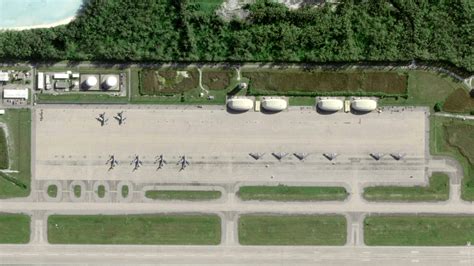
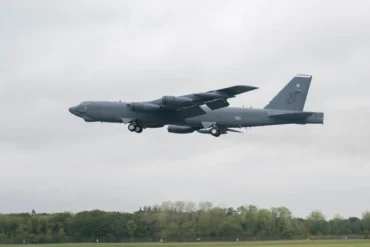
During the 1991 Gulf War, bombers flew from Diego Garcia to strike Iraqi targets. In 2003, B-1 and B-52 aircraft launched missions from the same strip during the invasion of Iraq. More recently, B-2 stealth bombers rotated through the base amid rising tensions with Iran and its regional proxies.
Strategists often describe Diego Garcia as America’s “unsinkable aircraft carrier”—a fixed platform that cannot be torpedoed, blockaded, or politically pressured by host-nation instability. That description explains why any hint of uncertainty over its status provokes such visceral reactions in Washington.
Chagos, History, and the Unfinished Moral Reckoning
The geopolitical drama overlays a much older and more painful story. The Chagos Islands were part of colonial Mauritius until the 1960s, when Britain detached them to form the British Indian Ocean Territory. That separation was driven almost entirely by strategic considerations—specifically, the desire to accommodate a U.S. military base on Diego Garcia.
Between 1968 and 1973, more than 1,500 Chagossians were forcibly removed from their homes and relocated to Mauritius and the Seychelles. The displacement remains one of the most controversial episodes of Britain’s late-colonial history, fueling decades of legal challenges and international criticism.
The ICJ’s 2019 opinion declared Britain’s continued administration unlawful, urging decolonization “as rapidly as possible.” While advisory rather than binding, the ruling reshaped diplomatic expectations. Britain’s 2025 agreement with Mauritius was widely seen as an overdue attempt to align strategy with law.
The current pause does not erase that moral debt—but it does delay its resolution.
China, the Indian Ocean, and Strategic Paranoia
Underlying Trump’s outburst is a broader anxiety about China’s expanding footprint in the Indian Ocean Region. Beijing’s naval base in Djibouti, investments in port infrastructure, and growing blue-water capabilities have unsettled Western planners. Diego Garcia, in this context, serves as a counterweight—a secure node anchoring U.S. presence far from Chinese shores.
Critics of the Chagos transfer argue that even symbolic shifts in sovereignty could open doors, however narrow, to future influence by rivals. Supporters counter that Mauritius has committed explicitly to preventing interference and that continued British refusal to comply with international law only strengthens China’s diplomatic narratives.
The clash reflects a deeper tension: whether legal legitimacy enhances strategic resilience, or whether it introduces new variables into a system that prizes control above all else.
A Transatlantic U-Turn With Long Shadows
Perhaps the most striking aspect of the episode is the speed of Washington’s reversal. In May, the Trump administration welcomed the agreement as stabilizing. By January, the President himself was condemning it as reckless. For British policymakers, the lesson is uncomfortable but clear: U.S. endorsement is conditional, and can evaporate with a single post.
London’s decision to withdraw the bill buys time, not certainty. The legal questions remain unresolved. The ICJ ruling still stands. The Chagossians’ claims persist. And the strategic importance of Diego Garcia has only grown as tensions with Iran simmer and competition with China intensifies.
What has changed is the political reality. Any future move on Chagos will now unfold under the shadow of explicit presidential scrutiny, transforming a technical decolonization process into a high-stakes test of alliance management.
The Takeaway: Sovereignty Paused, Strategy Unmoved
Britain’s U-turn does not mean the Chagos deal is dead. It means the cost of proceeding, at this moment, exceeded the cost of delay. Trump’s “great stupidity” jab functioned less as policy analysis than as strategic veto, reminding allies that when it comes to irreplaceable military assets, American tolerance for ambiguity is thin.
Diego Garcia remains what it has always been: a remote atoll carrying disproportionate weight in global security. As long as that remains true, the fate of the Chagos Islands will never be decided by law alone. It will be decided where power, perception, and politics intersect—often loudly, sometimes abruptly, and rarely on anyone’s preferred timeline.